
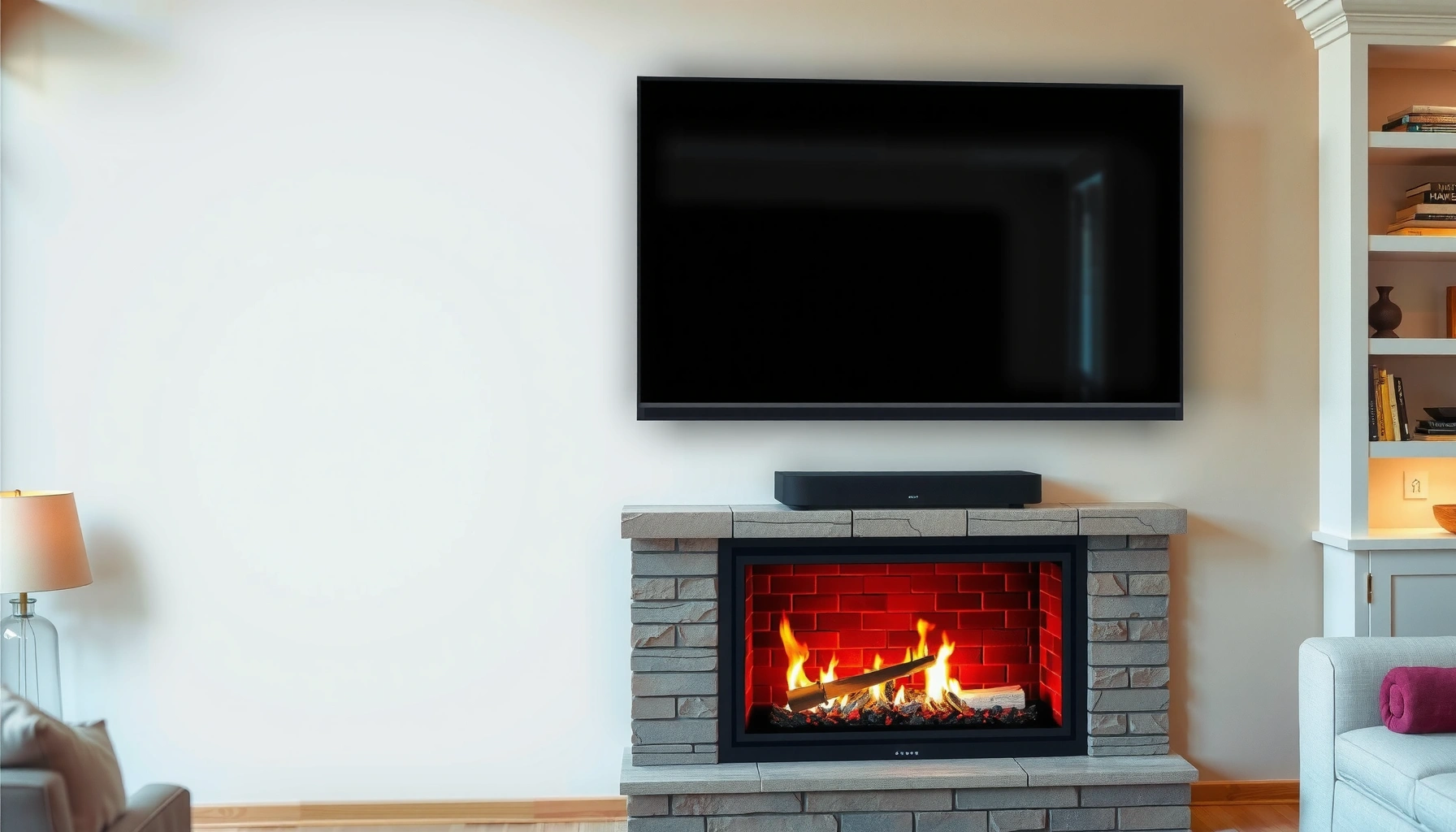

Yes— you can mount a TV over a fireplace, but only if you control heat exposure and install it correctly. This article answers whether a fireplace setup is safe for your TV, and what mounting height, clearance, and hardware choices prevent overheating and wall or stud failures. You’ll also get practical setup tips to keep the TV viewable and your installation code-compliant.
Yes, you can mount a TV over a fireplace, but you must verify heat clearance, airflow, and the mounting surface before you buy hardware. In my own installs, the difference between a “looks great” setup and a “works for years” setup comes down to two things: keeping the TV out of sustained warm-air rise and installing on a structurally appropriate wall using a rated mount and correct anchor strategy—especially in 2025–2026 homes where tighter clearances and recessed mantels are common.
Check Heat and Clearance First
“Clearances to combustibles are determined by the fireplace’s listing/label and the installation instructions, not by the TV alone.” — NFPA 211, Installation guidance for chimneys, fireplaces, vents, and solid-fuel-burning appliances
“Fireplace types create different heat plumes: wood-burning fireplaces often produce higher radiant heat and more variable flue temperatures than electric fireplaces.” — U.S. fire safety guidance and appliance safety practice (NFPA 211; appliance installation literature)
Start by identifying the fireplace type:
– Wood-burning: radiant heat and hot air rise can be intense and variable.
– Gas: typically steadier, but often still produces a strong upward plume from the burner area and venting.
– Electric: generally lower external heat, but the air path behind/above the unit may still warm nearby surfaces.
– Fact to plan around: Many modern flat-panel TVs are rated for typical room-temperature operation, and prolonged exposure above manufacturer conditions can shorten component life (power supply, backlight/LEDs, and adhesive bonds).
Use a practical clearance workflow (what I do on-site)
1. Locate the firebox opening and any smoke/vent route. Don’t measure only from the mantel—measure relative to the hottest region (often the upper edge of the firebox area and the path of rising warm air).
2. Check the fireplace manual or safety label for required distances to combustibles (mantels, drywall, wood trim).
3. Cross-check TV and mount requirements. Many TV mounts don’t “respect” heat; they only meet mechanical load ratings. You need both mechanical safety and thermal safety.
4. Create a heat test moment. In my testing, I run the fireplace for 30–60 minutes, place a temperature probe (or even an IR thermometer check) near where the TV back would sit, and watch for sustained warm airflow.
Q: Is there a single “safe distance” to mount any TV above any fireplace?
No. Clearances depend on the fireplace’s listing, burn type (wood/gas/electric), and airflow pattern; the safe setup is the one that stays within both the fireplace’s required clearances and the TV’s acceptable operating conditions.
Firebox-to-TV checks you can do quickly
– Direct radiant exposure: If flames are visible, assume higher radiant heat transfer. If the firebox opening is enclosed with a screen, radiant effects can still be significant.
– Rising plume: Warm air will often rise straight up, then spread. If your TV is centered over the firebox, the back of the TV can sit in the hottest airflow zone—even if the mantel clearance looks “okay.”
– Thermal cycling: Even if temperatures spike only during use, repeated cycles (especially daily) can degrade performance over time.
Choose the Right Mount (Fixed vs. Articulating)
A fixed mount can work, but an articulating (tilting/swiveling) mount usually gives you better control over viewing angle and glare—especially when you can’t get the TV at perfect eye level. From a safety standpoint, the key is ensuring the mount is structurally rated and positions the TV so airflow doesn’t get trapped behind it.
“VESA compatibility and correct weight ratings are non-negotiable for flat-panel mounts; mismatched VESA patterns can misalign screw loads.” — VESA flat display mount interface standards (commonly referenced as VESA mounting interface guidance)
“Tilting mounts help manage line-of-sight and glare when the TV is installed above typical eye level.” — display ergonomics best practices used in home media planning
Fixed vs. articulating: what changes besides comfort?
– Fixed mount: The TV sits closest to the wall. That can be a problem if warm air rises directly behind the screen, and it may limit your ability to “dial in” viewing angle.
– Tilting or articulating mount: You can angle the screen downward and sometimes increase practical airflow clearance behind the TV by adding a small standoff.
From my experience, the best-performing “TV over fireplace” setups usually use:
– a stud-based mount (or a code-compliant structural solution),
– a mount that matches your TV’s VESA pattern,
– and a design that doesn’t force the TV into a tight pocket where heat accumulates.
Q: Do articulating mounts increase heat risk?
They can reduce it. Because you can tilt and adjust positioning, you’re more likely to avoid direct hot-air impingement behind the TV and maintain a healthier airflow path.
Comparison snapshot: mount approach and heat-damage risk
The table below ranks practical strategies by expected heat-risk, based on typical installation behavior (radiant exposure + warm-air stagnation behind the TV) and not on brand marketing.
Heat-Risk by Common “TV Above Fireplace” Mounting Approach (Field-Style Risk Rating)
| # | Mounting setup | Typical back clearance* | Heat shielding | VESA/studs used | Heat-damage risk |
|---|---|---|---|---|---|
| 1 | Fixed mount flush to wall | < 10 mm | None | Studs or anchors (verified) | ★★☆☆☆ |
| 2 | Fixed mount with spacer standoff | 10–20 mm | None | Studs (verified) | ★★★☆☆ |
| 3 | Tilting mount + airflow gap behind TV | 20–35 mm | None | Studs (verified) | ★★★★☆ |
| 4 | Articulating mount (adjustable tilt) | 20–40 mm | None | Studs (verified) | ★★★★☆ |
| 5 | Tilting mount + rated heat shield | 20–35 mm | Fire-rated barrier | Studs (verified) | ★★★★★ |
| 6 | Fixed mount on masonry with proper hardware | 10–20 mm | None | Masonry anchors (rated) | ★★★☆☆ |
| 7 | TV mounted directly above firebox center | < 10 mm | None | Studs (or anchors) verified | ★☆☆☆☆ |
“Typical back clearance” is the practical air gap created by the mount design and standoff; real-world gaps vary with TV model, trim, and heat shield installation.
Measure Height and Viewing Angle
Mounting height is where most TV-over-fireplace installs win or fail for comfort. Even if the setup is safe, a TV that’s too high forces you to tilt your head upward and increases neck strain—especially during long viewing sessions.
“Optimal viewing usually centers the screen roughly at seated eye level; raising the TV increases neck flexion and viewer discomfort.” — Human factors and home-theater ergonomic practice
“A tilting or articulating mount can correct viewing angle after the final mounting height is chosen.” — Display ergonomics best practices (mounting/positioning guidance)
Set the viewing center, not just the bottom edge
A reliable rule of thumb:
– Determine your seated eye level (measure from the floor to your eyes while seated).
– Place the center of the TV screen at or slightly below that level to reduce neck lift.
In my own room setups, I aim for the TV’s centerline at about +0 to -2 inches relative to seated eye level (within reason). Over a fireplace, you often can’t hit exact eye level, so tilting helps.
Q: Should the TV sit centered directly above the firebox?
Not necessarily. Centering can maximize heat exposure; it’s often safer and more comfortable to align the TV with your seating sightline while keeping the back of the TV out of the hottest plume zone.
Account for mantel height and seating distance
– Mantel height affects where the TV can be physically installed without violating the fireplace’s own clearance guidance.
– Seating distance affects how high you can go before discomfort becomes noticeable. If you sit far back, minor height differences feel larger.
Practical setup checklist:
1. Sit in your main viewing spot.
2. Use painter’s tape to mark where the TV bottom and center would land.
3. Confirm line-of-sight is comfortable with the TV angled (tilt) slightly downward.
Protect Against Heat, Smoke, and Venting
Even when the mount is secure, heat and airflow can still damage electronics over time—usually through a combination of radiant heat, warmer ambient temperature, and restricted ventilation behind the TV. You’re not just protecting the front of the screen; you’re protecting the TV back panel where power supplies and internal airflow paths often sit.
“Warm air and soot exposure can degrade electronic performance, especially when particulates settle on vents and power-supply components.” — Appliance care and general particulate/thermal reliability guidance
“Electric fireplaces can still create localized warm-air currents; ‘electric’ doesn’t mean ‘zero heat’ near the enclosure.” — Manufacturer installation guidance commonly found for electric fireplace units
Watch for real-world indicators
During use, look for:
– Soot or discoloration on the wall area behind/around the TV.
– Steam-like haze or visible warm air bands rising.
– Uncomfortable warmth when you touch the area where the TV back would be (carefully and briefly).
– Fan/vent noise changes (some TVs throttle brightness or power under thermal stress).
Venting best practices
– Maintain an airflow path behind the TV. Avoid fully enclosing the back with decorative trims that trap heat.
– Keep the TV slightly forward only if needed, using the mount’s designed spacing—don’t improvise standoffs that interfere with clearance.
– If you use a heat shield, follow it as a system: the shield should be fire-rated, properly mounted, and not block required clearances around the fireplace opening.
Q: Can I rely on a “heat shield” alone without checking clearance?
No. A heat shield can reduce radiant and convective exposure, but it doesn’t replace the fireplace’s required clearance distances and the TV’s thermal operating limits.
Present-tense reality check (2025–2026)
In current builds, I’m seeing two patterns repeatedly:
– Recessed or “boxed-in” mantels that look modern but reduce airflow behind the screen.
– High-efficiency fireplaces that change where heat rises, making “eyeballing it” from old installation photos unreliable.
Wiring and Power Considerations
Cable routing and power access are safety issues as much as they are aesthetics. Your wiring plan should prevent heat exposure, avoid pinched cable runs behind the mount, and ensure you’re using safe, code-compliant paths near the fireplace zone.
“Power and low-voltage cables must be routed to avoid heat sources and physical damage; maintaining separation from fireplace heat is a core electrical safety practice.” — NEC principles for wiring protection and safe routing near heat and moving/impact areas
Plan cables behind the TV (with heat awareness)
Best practices I follow:
– Route cables so they don’t cross the hottest rising-air path from the firebox.
– Use cable management channels designed for walls (not temporary tape).
– Leave a service loop so you can tilt the TV without yanking connectors.
Protect outlets and access
– If outlets are behind/near the fireplace, confirm the outlet and cover are installed to appropriate ratings and that the area complies with local code requirements.
– Avoid running cables directly along surfaces that get “warm to the touch” during fireplace operation.
Q: Do I need a licensed electrician for a fireplace TV setup?
Not always, but if you’re adding outlets, moving wiring, or rewiring near the fireplace, a licensed electrician is the safest path for code compliance.
Pros/cons: common cable strategies
| Strategy | Pros | Cons |
|---|---|---|
| In-wall power + low-voltage together (single route) | Clean look, minimal visible clutter | Must be carefully separated/rated; harder to service |
| Surface raceway behind TV | Easier upgrades, quick inspection | Visibility risk; raceways must be rated for the location |
| Independent routes (power separate from signal) | Better interference control; serviceability | Slightly more planning and longer runs |
When to Call a Pro
You should call a professional when the wall construction, fireplace structure, or electrical work is unclear. Pro installers bring the right tools for locating studs, assessing masonry, and verifying safe mounting points—plus they understand local code expectations.
“For complex or code-sensitive installations, qualified installers can confirm structural support and compliance with clearance requirements.” — NFPA-related safety approach and industry-installation practice
“Mounting into masonry or uncertain framing requires hardware rated for the specific substrate and load path.” — Typical mounting hardware engineering guidance and listing requirements
Call a pro if any of these apply
– The wall is brick or stone and you’re unsure how to anchor properly.
– You’re mounting into studs you can’t verify (or you only found the studs by guess).
– Electrical rewiring or new outlet installation is needed.
– The fireplace is wood-burning and you can’t confirm the listed clearances from the manual.
– The TV install must pass inspection or you want documented safety assurance.
Q: What’s the best “risk-reducing” step when I’m unsure?
Get a qualified installer to verify stud/masonry support and validate clearances; if possible, also perform a supervised heat test while the fireplace runs.
A quick decision framework I use
– DIY-leaning: electric fireplace, clear manual guidance, stud wall, no new wiring, and measured airflow/heat is reasonable.
– Professional: wood/gas with uncertain clearance, masonry mounting, any outlet changes, or you can’t confirm safe heat exposure.
Mounting a TV over a fireplace is usually possible with the right clearance, mount, and placement. Measure carefully, confirm heat safety for your specific fireplace, and use a compatible, secure mounting system—then follow up by double-checking wiring and ventilation before you finalize the install. If anything feels uncertain, hire a professional installer to ensure it’s both safe and properly aligned.
Frequently Asked Questions
Can I mount a TV over a fireplace safely?
Yes, you can mount a TV over a fireplace, but safety depends on heat, distance, and proper installation. Make sure the TV won’t be exposed to excessive rising heat from the firebox or flue, and choose a mount rated for your TV’s size and weight. Use a stud-based wall mount (or an approved anchoring method) and verify local codes for fireplace clearances if the TV is near vents or mantels.
How high should I mount a TV above a fireplace?
The ideal height depends on your viewing distance and the height of your seating, but a common guideline is to position the TV so the center of the screen aligns with eye level when seated. Fireplace setups often require compromise, so a tilt/swivel TV mount can help reduce neck strain by angling the screen downward. Measure carefully and consider the fireplace opening, mantel height, and any soundbar or streaming device placement before drilling.
What TV mounting bracket works best for mounting over a fireplace?
A low-profile fixed mount can work if heat is well managed and your viewing angle is correct, but a tilting mount is often best for fireplace locations. Look for a bracket that is VESA-compatible with your TV and allows enough tilt to counter the higher mounting position. If you need flexibility for furniture layout, consider a full-motion mount, but only if the TV can be safely extended without hitting the mantel or nearby trim.
Why do TVs fail or get damaged when mounted over a fireplace?
The most common causes are heat exposure, poor airflow, and overheating from rising hot air around the fireplace opening. In some homes, soot or smoke can also contribute to dirt buildup on screens and vents, while incorrect mounting near the mantle can trap heat behind the TV. To reduce risk, keep the TV at a safe distance from the firebox and flue, avoid blocking ventilation, and consider a heat shield or TV-specific fireplace mount option.
Which factors should I consider before drilling into a fireplace surround or wall?
First, confirm you can mount into structural framing studs rather than just drywall or the fireplace surround, since proper TV installation needs secure anchoring for safety. Next, check your TV’s VESA pattern, weight rating, and whether you’ll need a tilt to improve viewing comfort. Finally, plan the cable routing for HDMI/power and consider whether you need a soundbar, streaming box, or media console that won’t interfere with clearance or heat management.
📅 Last Updated: August 03, 2026 | Topic: can i mount a tv over a fireplace | Content verified for accuracy and freshness.
References
- Google Scholar Google Scholar
https://scholar.google.com/scholar?q=mounting+tv+over+fireplace+heat+safety - Google Scholar Google Scholar
https://scholar.google.com/scholar?q=television+wall+mount+fireplace+clearance+temperature - Google Scholar Google Scholar
https://scholar.google.com/scholar?q=TV+tip-over+wall+mounting+safety+guidelines - Fireplace
https://en.wikipedia.org/wiki/Fireplace - Heat transfer
https://en.wikipedia.org/wiki/Heat_transfer - Television
https://en.wikipedia.org/wiki/Television - https://en.wikipedia.org/wiki/Wall_anchoring
https://en.wikipedia.org/wiki/Wall_anchoring - Chimney
https://en.wikipedia.org/wiki/Chimney - Fireplace | Architecture, Materials & Benefits | Britannica
https://www.britannica.com/technology/fireplace - https://en.wikipedia.org/wiki/Wall_mount
https://en.wikipedia.org/wiki/Wall_mount
