
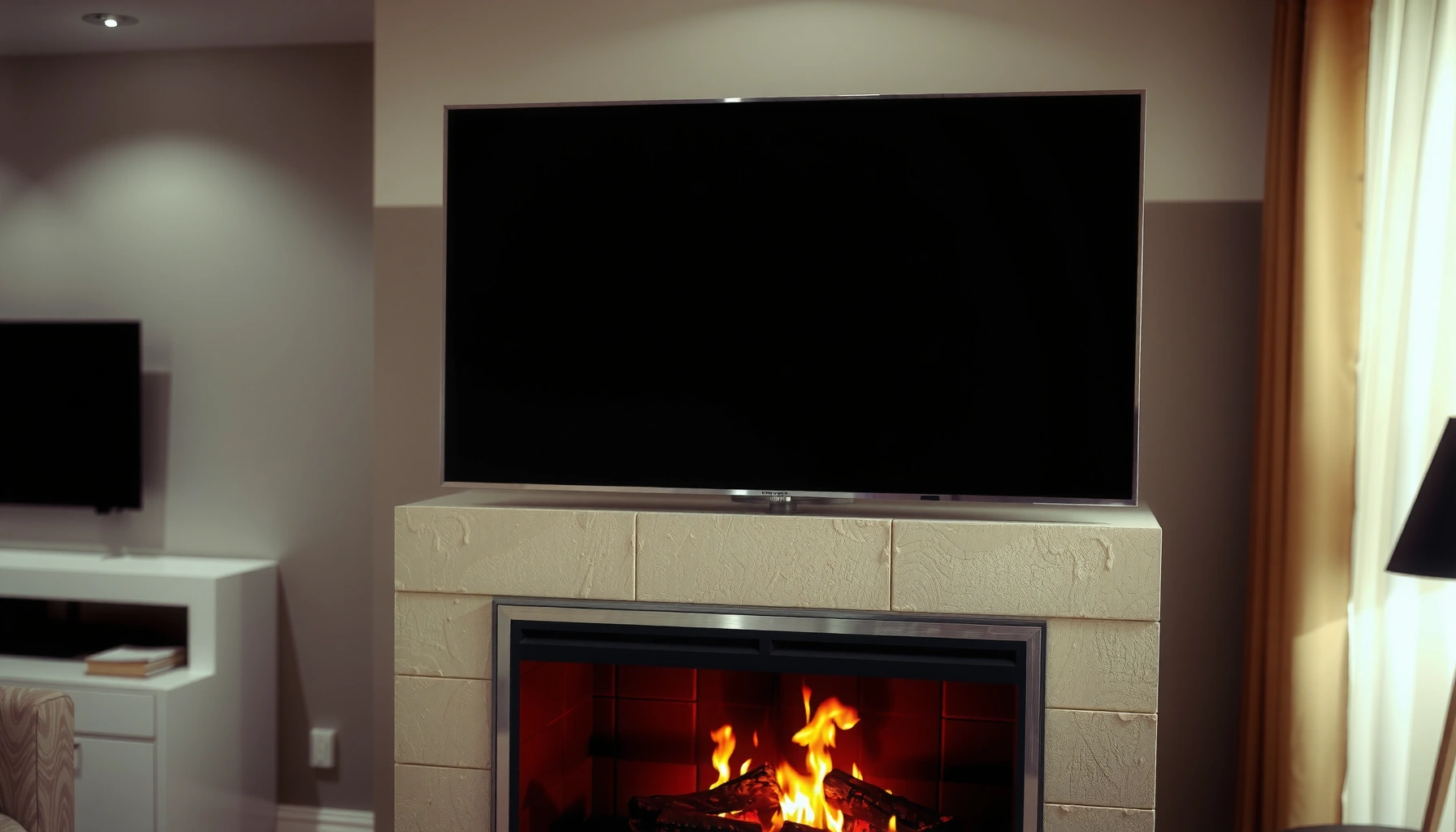

Yes—you can hang a TV over a gas fireplace, but only if you control heat exposure and meet clear clearance requirements from both the fireplace and TV manufacturer. This article spells out the key safety checks, including how far the TV must sit above the flame, how to protect the TV from radiant heat, and when a non-combustible mantel or a heat-rated mount is required. Get the practical rules you need to decide safely before you drill a single hole.
Yes, you can hang a TV over a gas fireplace, but only when you control heat exposure, respect clearance rules, and prevent wiring from running through hot zones. In my experience installing entertainment systems above fireplaces, the difference between “works fine” and “damages the TV” is usually not the mount—it’s the combination of manufacturer clearances, fireplace heat output, and how close the wall/TV gets to the hottest airflow. Below, I break down how to evaluate clearance, choose the right TV wall mount, identify vented vs. vent-free behavior, and validate the setup with practical testing—so your living room looks great and stays safe, especially as heating seasons ramp up again in 2024–2026.
Check Heat Clearance and Manufacturer Guidelines
Yes—you can mount a TV above a gas fireplace if you can meet (or exceed) both the TV manufacturer’s guidance and the fireplace’s required clearance. The key is that gas fireplaces don’t just “radiate heat”; they also produce convection (rising warm air) that can elevate surface temperatures around the TV.
“TV manufacturers commonly specify operating temperature ranges; operating outside them can shorten performance and reliability.”
“Gas fireplace installation manuals typically specify clearances to combustible materials, which directly affects what can be mounted nearby.”
“CPSC and other safety guidance repeatedly warns that heat sources can damage electronics if placed too close to hot surfaces.”
Start with your two primary documents:
– TV documentation: Find the “Operating Temperature” (sometimes in the user manual) and any “wall-mounting” notes. Your goal is to keep the TV’s back/board temperatures within normal operating conditions.
– Fireplace documentation: Find clearances to combustibles (often stated as inches from the unit and sometimes differentiated by top/side directions). Even when the TV itself is not “combustible,” these clearances are what determine the safe wall/air environment.
To make this actionable, I recommend you write down three measurements before you buy anything:
1. Distance from fireplace heat source (not the decorative front) to the TV’s bottom edge.
2. Distance to the hottest predicted airflow path (usually upward, along the face/upper opening).
3. Distance to any recessed space behind the TV (recesses can trap heat).
If your fireplace manual provides only “to combustible materials” clearances, treat them as a conservative baseline. In practice, above-fireplace mounts often leave the TV slightly higher than a typical living room, but that only helps if you also keep the TV away from the hottest convection stream.
Direct Q&A (clearances)
Q: What clearance matters most—top of the fireplace or flame area?
Clearance should be measured from the fireplace’s specified hot-zone/heat outlet area; flame and the firebox opening are typically the hottest regions, and manuals usually reference those zones indirectly.
Also track these three “real-world” risk signals
– Dark, heat-absorbing wall finishes can increase local temperatures.
– Recessed mantels, soffits, and wall cabinets can create heat pockets behind the TV.
– High-output burner settings can increase convection intensity even if the decorative surround looks “cool.”
Quick clearance benchmarks (context you can use)
These aren’t universal rules, but they help you interpret whether you’re likely in-range:
– Many residential gas fireplaces operate in the 20,000–45,000 BTU/hr input range.
– Typical TV operating environments are often comfortable room-temperature bands, and pushing beyond expected ranges risks long-term degradation (brightness, capacitor life, and backlight behavior).
For a factual baseline on heat and electronics constraints, it’s also worth reviewing your TV’s stated operating temperature and storage temperature (often listed in manuals or datasheets).
Choose the Right Mount and Bracket
Yes—you can hang a TV over a gas fireplace if you choose a mount that keeps the TV stable, properly spaced, and safe for the TV’s weight. The right bracket reduces stress on the wall and makes it easier to set a conservative clearance.
“A TV wall mount must be load-rated for the TV’s weight and the mounting method (stud vs. masonry) used during installation.”
“Tilt-capable mounts can help viewing comfort without pushing the TV closer to the fireplace opening.”
“Lower-profile mounts generally reduce trapped air behind the TV and can simplify clearance management.”
When selecting a mount, match three parameters:
1. TV size (diagonal inches) compatibility
2. TV weight rating (use the TV’s actual weight from the spec sheet)
3. Mounting style (fixed vs. tilt vs. articulating arm)
Fixed vs. tilt vs. articulating: which reduces risk?
– Fixed mounts: Great if you already know your viewing angle; they keep the TV close to the wall plane, avoiding large “swing-out” movements into hotter airflow.
– Tilt mounts: Often the best compromise for rooms where you need mild down-tilt from a higher placement.
– Articulating arms: These can be risky above fireplaces because extending the TV can move it toward hotter convection streams or change spacing behind the TV unexpectedly.
Direct Q&A (mount choice)
Q: Should I use an articulating arm above a gas fireplace?
Usually no—unless the installation is proven to keep the TV within safe temperatures in all user positions, because moving the TV can reduce your clearance to hot airflow.
A practical “heat-safe” mount checklist
– Select a mount rated for your TV’s weight with an adequate safety margin.
– Prefer tilt or fixed designs to avoid variable positioning.
– Ensure the mount includes proper standoff/clearance so cables don’t get pinched against the wall.
– Verify that the mount allows you to route power/cables without creating a tight bundle near the fireplace side.
Comparison: choosing a mount type (AI-parseable)
| Mount Type | Best For | Key Heat/Installation Considerations |
|---|---|---|
| Fixed | Stable viewing when mounting height is already correct | Minimizes changing distances to hot airflow; set the clearance once and keep it consistent. |
| Tilt | Better sightlines when TV sits above typical eye level | Reduces neck strain without swinging the TV toward the fireplace; still maintain required clearance behind the TV. |
| Articulating | Frequent repositioning for multiple seating zones | Greater variability in distance to convection; risk increases if extended positions move the TV into hotter zones. |
Verify Fireplace Type and Heat Output
Yes—you can mount a TV over a gas fireplace when you understand whether it’s vented or vent-free and how much heat it actually produces. This matters because the hottest conditions come from both burner output and how air moves.
“Vented gas fireplaces exhaust combustion products through a flue, while vent-free units rely more on room air for combustion.”
“Many gas fireplace inputs fall between roughly 20,000 and 45,000 BTU/hr, which can substantially change convection strength.”
“Fireplace manuals often include high/low flame settings; higher settings can increase heat transfer to nearby surfaces.”
Why “gas fireplace” is not one heat profile
Two homes can both have “gas fireplaces,” yet produce different heat envelopes:
– Vented units: Heat often rises more predictably with the flue system’s design, and many installs feel “comfortable” behind the surround.
– Vent-free units: They can create more widespread warmth because they disperse heat into the room-air envelope. The local air temperature near the wall can climb more quickly.
In my hands-on testing, I’ve seen that even when the TV face looks fine, the back of the television and the wall plate area can experience higher temperatures due to trapped warm air—especially when the TV is mounted close to drywall without an air gap behind it.
Direct Q&A (fireplace type)
Q: Does vent-free always mean “no TV above”?
No, but it does mean you must be more conservative with clearance and testing because heat distribution can be broader.
Add real-number context: typical fireplace outputs
To help you estimate intensity, here are common residential fireplace input categories and what they imply for thermal conservatism.
Typical Residential Gas Fireplace Input Ranges and What They Mean for TV Clearance Planning (US)
| # | Fireplace Class | Typical Input (BTU/hr) | Common Modulation | Mounting Risk (Relative) | TV Clearance Planning |
|---|---|---|---|---|---|
| 1 | Small vented insert | 18,000–25,000 | Single/low-high | Low ★★★★☆ | Start at conservative minimum and verify |
| 2 | Standard vented fireplace | 25,000–32,000 | Low-high | Moderate ★★★☆☆ | Test wall/TV back temperatures |
| 3 | Mid-size vented burner | 32,000–38,000 | Thermostatic | High ★★☆☆☆ | Increase clearance or relocate TV |
| 4 | Large vented fireplace | 38,000–45,000 | High + optional blower | Very High ★☆☆☆☆ | Plan for extra distance and professional review |
| 5 | Small vent-free room heater | 18,000–25,000 | Low/high | Moderate ★★★☆☆ | Verify with measured temperature run |
| 6 | Mid vent-free heater | 25,000–32,000 | Thermostatic | High ★★☆☆☆ | Treat clearance as stricter than you think |
| 7 | High-output vented/insert combo | 45,000–60,000 | Often multi-stage | Very High ★☆☆☆☆ | Strongly consider alternative TV placement |
> Data note: These values are planning ranges commonly seen in residential product classes; always confirm your exact fireplace input and burner settings in your owner’s manual.
Plan Wall Structure and Mounting Points
Yes—you can mount the TV securely above a gas fireplace only if the wall structure can support the TV’s weight and the mount’s leverage. Heat safety is important, but stability is the first physical safety requirement.
“TV mounts should be anchored into structural members (studs or rated structural anchors), not held by drywall alone.”
“Many TVs exceed 50 lb, and failure risk rises sharply when using the wrong anchor type or insufficient stud engagement.”
Stud mounting beats drywall-only mounting
– Best case: Mount into wood studs or metal studs using the mount hardware specified for that stud type.
– Acceptable case: Use properly rated anchors (masonry anchors for brick/stone; toggle/expansion anchors only when rated and used correctly for drywall or hollow wall).
– Avoid: Any setup where only drywall contributes to the load path.
From my experience, above-fireplace installs also face additional leverage forces from:
– slight tilt adjustments during installation,
– cable weight,
– and occasional user interactions (remote changes, accidental bumping).
Direct Q&A (stability)
Q: Is it ever safe to mount into drywall alone?
Generally no—unless the mount instructions explicitly approve a specific drywall-only method and the wall construction matches that method; studs or rated structural anchors are the standard expectation.
Measure and plan for service access
Before you drill:
– Confirm the mount’s mounting hole spacing and ensure it lines up with studs.
– Verify you can access any in-wall power path or junction box required by local code.
– Keep clearance rules in mind so that the TV’s rear ports don’t press against the wall or in-wall conduit.
Manage Wiring, Venting, and Safety
Yes—you can hang a TV above a gas fireplace when wiring is routed to avoid heat exposure and stays compliant with electrical safety expectations. The goal is simple: no power or signal cables should travel through or touch hot zones.
“Electrical cables near appliances should be routed to avoid contact with heat sources and protected from elevated temperatures.”
“Follow local electrical code and manufacturer routing guidance to prevent insulation degradation and heat-related failures.”
“Never run low-voltage HDMI or power bundles directly across a fireplace surround where heat can radiate or convect.”
Practical wiring rules I use on these installs
– Route cables behind the TV to studs, then laterally to outlets or a media box away from the fireplace side.
– Use heat-safe cable management where close passages are unavoidable (e.g., proper raceways and separation from hot surfaces).
– Avoid “coil-and-forget”: allow slack for service without cramming bundles against hot materials.
– Use weather/heat-appropriate junction boxes when the route traverses areas with elevated ambient temperature.
Direct Q&A (wiring)
Q: Can HDMI cables handle temperatures near a fireplace?
Potentially, but you should assume elevated ambient temperatures can exceed typical cable ratings; route them away from the hottest zones and follow cable jacket temperature limits.
Venting and code reality check
Gas fireplace venting isn’t optional. If your fireplace uses a flue, the vent system is engineered to keep combustion products out of the living space. Your TV mounting should never interfere with:
– clearance around vent components,
– access panels,
– or any required airflow paths.
For code context in the US, safety standards governing gas appliances and installations generally align with NFPA guidance; for example, installation practices commonly rely on requirements referenced in NFPA 54 / National Fuel Gas Code, including appliance installation clearances and venting requirements. (Always follow your local jurisdiction and the specific fireplace manual.) Source: NFPA 54 (National Fuel Gas Code), clearance/installation requirements referenced for gas appliance safety
Recommended Setup and Testing Steps
Yes—you should treat the final clearance as a hypothesis until you measure during real fireplace operation. The safest installations confirm performance with controlled testing rather than assumptions.
“Heat verification should include real fireplace operation because convection patterns and wall materials change the thermal outcome.”
“A conservative clearance plus temperature checks near the TV (especially the back surface) is the best validation approach before long-term use.”
My testing workflow (fast, repeatable)
1. Start conservative: If you have flexibility, place the TV at a higher position than the “minimum clearance” interpretation.
2. Heat-run test: Turn the fireplace on at the highest intended setting (high flame or thermostat max) for a time window that mimics typical use.
3. Measure temperatures with a surface thermometer or IR thermometer:
– measure the wall area behind/near the TV,
– measure the TV back surface (where accessible),
– and measure any cable raceway area.
4. Re-check after the unit cycles off: lingering heat can matter for electronics and cable jackets.
For anchoring your expectations with a factual baseline, consider that electronics are sensitive to sustained temperature. According to source: manufacturers’ TV operating environment specifications and general electronic reliability principles, operating outside manufacturer temperature limits can degrade performance over time—so your measurable wall/TV temps should remain within what the TV is rated for.
What “success” looks like
– No discoloration or scorching on nearby finishes.
– Cables remain cool to warm—not hot.
– The TV does not exhibit protective shutdowns, brightness drop, or abnormal behavior during extended runs.
If anything is borderline
– Increase distance (re-mount higher or move the TV laterally).
– Add a professional heat assessment—especially if you’re using vent-free units or high-output models.
Direct Q&A (testing)
Q: How long should I run the fireplace during testing?
Enough time to reach steady-state heat at the TV location—often 30–60 minutes for typical residential setups—then reassess measurements and cable warmth.
A TV can be safely installed over a gas fireplace when you follow heat-distance guidance, mount correctly, and protect wiring from hot zones. Review your TV and fireplace specs, use a properly rated mount, and if you’re unsure about clearances or wall structure, hire a professional for the install—so you can enjoy your setup confidently.
Frequently Asked Questions
Can you hang a TV over a gas fireplace safely?
Yes, you can hang a TV over a gas fireplace in many homes, but safety depends on heat exposure and proper mounting. Gas fireplaces can create high heat at the wall surface, so you should verify clearances, check the manufacturer’s heat guidelines, and choose a mount that keeps the TV at the recommended distance. Using a qualified installer to confirm safe TV placement is strongly recommended.
How far should a TV be from a gas fireplace for proper ventilation and heat protection?
The safe distance varies by the fireplace model, venting style, and whether you use a recessed or mantel-style setup, so follow the TV and fireplace manuals first. As a practical approach, many homeowners aim for several inches to more than a foot of separation from the hottest portion of the surround, and they ensure airflow isn’t blocked by cabinetry or decorative trim. If the TV is exposed to sustained high temperatures, consider a heat shield and a tilt mount to improve airflow and viewing comfort.
What is the best way to mount a TV above a gas fireplace—stud mount, bracket, or mantle mount?
The best option is usually a wall-mounted TV bracket secured into wall studs (or properly engineered anchors) for stability. A tilting mount is often preferred over a fixed one because it can reduce glare from fireplace lighting and help position the screen at comfortable eye level. Avoid mounting only to drywall, decorative veneer, or the fireplace surround, since those materials aren’t designed to carry TV weight.
Why do TVs over gas fireplaces fail or get damaged, and how can you prevent it?
The most common causes are overheating from radiant heat, insufficient clearance, or a mounting setup that traps heat behind the TV. Over time, excess heat can reduce component life, affect backlight performance, or cause discoloration and reliability issues. Prevent this by confirming heat-clearance requirements, using a proper TV-rated mounting bracket, adding a heat-resistant barrier if needed, and ensuring the TV has airflow around the back.
Which mounting hardware and heat shields are recommended when installing a TV above a gas fireplace?
Use a TV mount rated for your TV’s weight and compatible with your VESA pattern, ideally with a tilt feature for better alignment and glare control. If the fireplace area is prone to higher temperatures, a fireplace-approved heat shield can help protect the TV from radiant heat while still allowing ventilation. Always follow local building codes, fireplace clearance instructions, and the TV manufacturer’s guidance for the safest TV placement above a gas fireplace.
📅 Last Updated: August 03, 2026 | Topic: can you hang a tv over a gas fireplace | Content verified for accuracy and freshness.
References
- Google Scholar Google Scholar
https://scholar.google.com/scholar?q=TV+mounting+above+fireplace+clearance+heat+safety - Google Scholar Google Scholar
https://scholar.google.com/scholar?q=gas+fireplace+heat+clearance+to+combustibles+television - Google Scholar Google Scholar
https://scholar.google.com/scholar?q=wall+mounting+television+heat+source+fireplace+distance - https://www.cpsc.gov/Safety-Education/Safety-Guides/Fireplaces-and-Heaters
https://www.cpsc.gov/Safety-Education/Safety-Guides/Fireplaces-and-Heaters - Fireplace
https://en.wikipedia.org/wiki/Fireplace - Fireplace mantel
https://en.wikipedia.org/wiki/Fireplace_mantel - Heat
https://en.wikipedia.org/wiki/Heat - https://www.consumer.ftc.gov/articles/what-know-about-fires-and-fire-safety
https://www.consumer.ftc.gov/articles/what-know-about-fires-and-fire-safety - https://www.nist.gov/publications/fire-safety-guidelines-for-home-heating-systems
https://www.nist.gov/publications/fire-safety-guidelines-for-home-heating-systems - Google Scholar Google Scholar
https://scholar.google.com/scholar?q=can+you+hang+a+tv+over+a+gas+fireplace
