
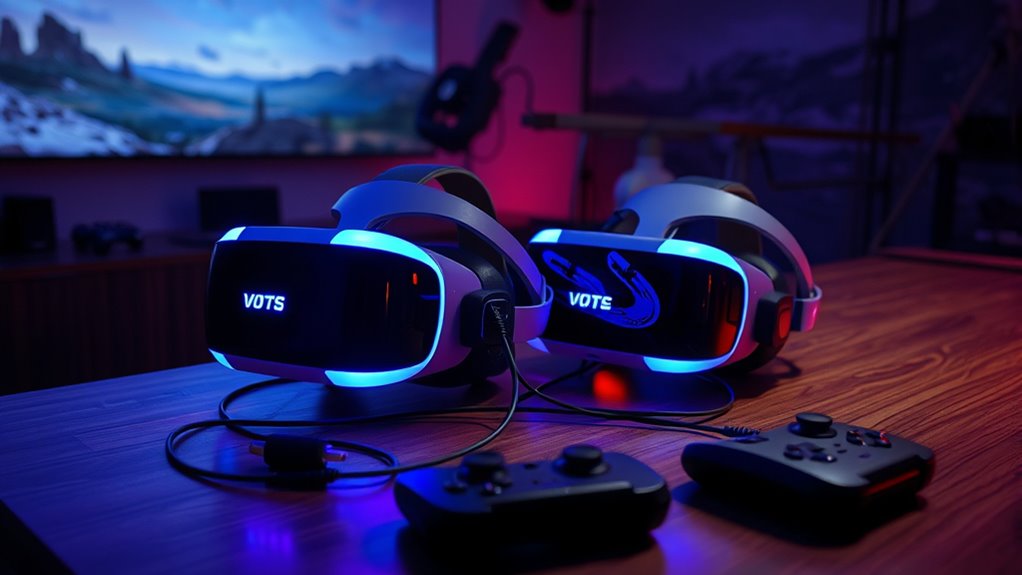

Yes, you can link two VR headsets together, but it takes some planning. You’ll need to check their compatibility, including factors like tracking systems and display resolutions. Software solutions like VRChat can enhance your shared experience, allowing for social interactions and collaboration. However, be mindful of potential challenges such as network limitations and compatibility issues. If you’re curious about the details, further insights await just ahead.
Understanding VR Headset Compatibility
When diving into the world of virtual reality, understanding headset compatibility is vital for a seamless experience. The VR ecosystem diversity means you have a range of headsets available, each with unique features and specifications. However, as headset standards evolution continues, it’s important to know which devices can communicate effectively. Not all headsets support the same platforms, so checking compatibility before diving in can save you frustration. You’ll want to take into account factors like tracking systems, display resolutions, and connection types. By grasping these elements, you can guarantee that your VR setup allows for the freedom to explore immersive worlds without limitations, maximizing your enjoyment and engagement in this exciting technology.
Types of Shared VR Experiences
Exploring the different types of shared VR experiences can greatly enhance your virtual reality adventures. One of the most popular formats is multiplayer gaming, where you can team up or compete with friends in immersive worlds. This camaraderie not only heightens the excitement but also fosters deeper connections through shared challenges and victories. Another engaging option is social interactions, allowing you to meet and communicate with others in virtual spaces, from casual hangouts to organized events. These experiences break down geographical barriers, enabling you to connect with like-minded individuals globally. By embracing these shared experiences, you’ll discover a domain of creativity and collaboration that truly expands the possibilities of what virtual reality can offer.
Hardware Requirements for Linking Headsets
To successfully link two VR headsets, you’ll need to guarantee that both models are compatible with each other. It’s also essential to have the right connection cables to facilitate a seamless experience. By understanding these hardware requirements, you can set the stage for immersive shared VR adventures.
Compatible Headset Models
If you’re considering linking two VR headsets, it’s crucial to confirm that both models meet specific hardware requirements for seamless connectivity. Popular options like the Oculus Quest and HTC Vive are well-supported for linking, but verify the software and firmware are updated. The Valve Index and PlayStation VR also offer compatibility, though they may require specific setups. Windows Mixed Reality headsets, such as the HP Reverb and Samsung Odyssey, can be linked, but check for compatibility with your chosen platform. The Pico Neo and Lenovo Explorer might work together, but results can vary. Finally, while Magic Leap is innovative, its linking capabilities with traditional headsets are limited. Always verify compatibility to enjoy a smooth shared VR experience.
Required Connection Cables
Linking two VR headsets requires the right connection cables to confirm a stable and high-quality experience. You’ll need to take into account different connection types, like HDMI, DisplayPort, or USB-C, depending on your headset models. Each connection type has its own specifications, so be sure to check compatibility before purchasing cables.
Cable lengths also matter; you’ll want to make sure they’re long enough to avoid restrictions while still maintaining performance. Longer cables can introduce latency, so finding a balance is essential. If you’re aiming for freedom of movement, opting for high-quality, sufficiently lengthy cables will enhance your experience. By paying attention to these details, you can create an immersive environment for both users.
Software Solutions for Multi-User VR
While engaging in multi-user virtual reality experiences can be exhilarating, finding the right software solutions is essential for seamless interaction. Various multi-user platforms are available that allow you to connect multiple VR headsets, enhancing your immersive experience. Look for options that prioritize software integration, ensuring compatibility across different devices and systems. Popular choices include VRChat and AltspaceVR, which offer rich environments for social interaction. Additionally, consider platforms that provide tools for custom content creation, giving you the freedom to tailor your experiences. With the right software, you can easily invite friends into your virtual world, fostering collaboration and creativity. Ultimately, the right mix of software solutions will elevate your multi-user VR adventures.
Challenges in Connecting Two VR Headsets
Connecting two VR headsets isn’t as straightforward as it sounds, mainly due to compatibility issues and network limitations. You might find that different brands or models struggle to communicate effectively, leading to frustrating experiences. Additionally, a weak or unstable network can hinder the seamless interaction you expect in a shared virtual space.
Compatibility Issues
When trying to connect two VR headsets, you might encounter several compatibility issues that can complicate the experience. One major hurdle is the lack of cross-platform support; not all headsets can seamlessly communicate with each other. If you’re using a headset from different manufacturers, you may find that they simply won’t work together. Additionally, firmware updates can create further challenges. If one headset is updated and the other isn’t, it might lead to connectivity problems or even performance issues. To truly enjoy a shared VR experience, verify both headsets are compatible and up-to-date. Understanding these compatibility issues can save you time and frustration, allowing you to plunge into the virtual world with your friends more smoothly.
Network Limitations
Even with compatible VR headsets, network limitations can pose significant challenges in establishing a shared experience. The amount of network bandwidth available plays a vital role in determining how smoothly your VR session runs. If you’re sharing a connection, bandwidth can easily get stretched thin, leading to frustrating lag. Latency issues can further complicate matters, causing delays between movements and actions, which can ruin the immersive experience VR promises. To combat these challenges, consider using a dedicated router or a wired connection to guarantee that both headsets receive a strong signal. It’s about maximizing your setup’s potential, so you can truly enjoy the freedom of virtual reality without annoying interruptions.
Potential Use Cases for Linked VR Headsets
As VR technology continues to evolve, the potential use cases for linked headsets are becoming increasingly diverse and exciting. Imagine diving into collaborative gaming, where you and your friends can explore vast virtual worlds together, strategizing and solving challenges in real time. This shared experience not only enhances gameplay but deepens social connections, allowing for more immersive interactions. Additionally, linked headsets can revolutionize educational simulations, enabling students to engage in complex scenarios as a team. Picture a group of learners maneuvering through historical events or scientific experiments, sharing insights and collaborating to solve problems. These applications highlight how linking VR headsets can foster creativity, teamwork, and learning, ultimately transforming how we connect and interact in virtual spaces.
Future of Shared Virtual Reality Experiences
While the future of shared virtual reality experiences is still unfolding, the possibilities are already enchanting. Imagine diving into immersive storytelling, where you and your friends can explore fantastical domains together, each influencing the narrative in real-time. Collaborative gaming will elevate your experiences, allowing you to strategize, solve puzzles, or defeat foes side by side, regardless of physical distance. As technology advances, expect seamless connections between headsets, fostering genuine social interactions that mimic in-person gatherings. This freedom to share experiences could redefine how you connect with others, transcending traditional gaming. With each innovation, the potential for shared virtual landscapes expands, offering you a taste of new adventures you’ve only dreamed of. The future is bright, and it’s calling for you to join in!
Frequently Asked Questions
Can I Use Different Brands of VR Headsets Together?
You can face compatibility issues when using different brands of VR headsets together. However, some platforms support cross-platform experiences, enabling limited interactions. Always check specific headset capabilities for the most seamless experience possible.
Will Linking Headsets Affect Performance Quality?
Linking headsets can affect performance quality due to potential latency issues and bandwidth limitations. You might experience delays or reduced visual fidelity, which could hinder your immersive experience. It’s crucial to take into account these factors before connecting.
Are There Any Safety Concerns When Connecting Two Headsets?
Yes, there’re safety concerns when connecting two headsets. Guarantee headset compatibility and follow safety precautions to avoid issues like overheating or electrical hazards. Always prioritize a safe environment to enjoy your VR experience fully.
Can I Link More Than Two VR Headsets Simultaneously?
You can link more than two VR headsets, but beware—synchronization challenges might arise. Achieving seamless multi-user experiences requires careful planning and technology. Immerse yourself, and explore this exhilarating domain of shared virtual adventures!
Is There a Cost Associated With Linking VR Headsets?
Yes, there’re cost implications when linking VR headsets. You’ll need to take into account budget considerations for additional hardware, software, or network requirements. It’s essential to evaluate these expenses to guarantee a seamless, enjoyable experience without overspending.
