
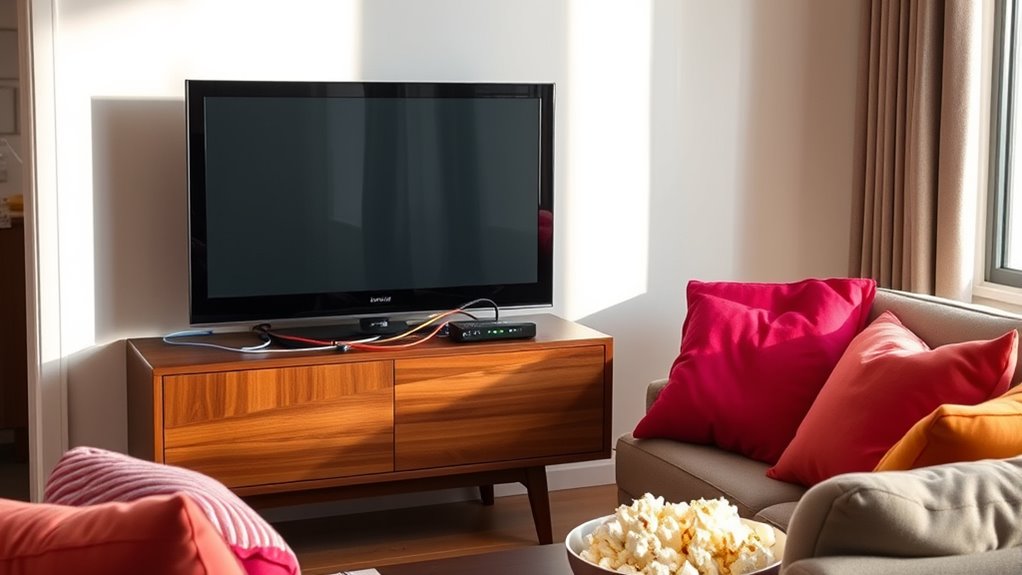

Yes, you can stream on a non-smart TV! All you need is a streaming device like Roku or Chromecast, which connects via an HDMI port. You can also use a gaming console or Blu-ray player that supports streaming. If you prefer, connect a laptop or use mobile devices for screen mirroring. With the right setup, you’ll enjoy your favorite shows and movies in no time. Keep going to discover the various options available to you!
Understanding Streaming Devices
When you’re ready to stream on a non-smart TV, understanding streaming devices is vital. These devices open up a world of streaming options, allowing you to access your favorite content without the limitations of older technology. You’ll find various devices like Roku, Amazon Fire TV, and Chromecast, each offering unique features.
It’s important to evaluate device compatibility with your TV. Most non-smart TVs have HDMI ports, so verify your chosen streaming device can connect easily. Some options might also require additional adapters for older models. By choosing the right device, you can enjoy a seamless streaming experience, diving into movies, shows, and more with just a few clicks. Embrace the freedom of streaming, and transform your viewing habits today!
Using HDMI Streaming Sticks
If you want to stream on your non-smart TV, HDMI streaming sticks are a great option. They’re popular for their easy setup and can deliver impressive streaming quality for your favorite shows and movies. Let’s explore the top devices available and what you need to evaluate for the best viewing experience.
Popular HDMI Streaming Devices
With countless options available, choosing a popular HDMI streaming device can enhance your non-smart TV experience markedly. Devices like Roku, Amazon Fire Stick, and Google Chromecast are top contenders, offering a wide range of streaming services like Netflix, Hulu, and Disney+. They’re designed to be user-friendly and support various device compatibility, ensuring you can easily connect them to your TV. Each device has unique features, from voice control to mobile device mirroring, giving you the freedom to choose what best fits your lifestyle. Plus, they often receive software updates, keeping your streaming experience fresh and up-to-date. So, whether you want to binge-watch series or enjoy live sports, a good HDMI streaming device can transform your viewing habits.
Easy Setup Process
Setting up an HDMI streaming stick is a breeze, allowing you to plunge into your favorite shows in no time. First, plug the stick into your TV’s HDMI port and connect the power supply. Most devices offer a wireless setup, so you can easily connect to your home Wi-Fi. Once you’ve done that, follow the on-screen instructions. You’ll appreciate the user-friendly interfaces that guide you step-by-step, making the process smooth and straightforward. Whether you’re using a Roku, Fire Stick, or Chromecast, you’ll find that customization options let you tailor your viewing experience. In just minutes, you’ll have access to countless streaming services and content, bringing your non-smart TV to life with freedom and entertainment.
Streaming Quality Considerations
While the convenience of HDMI streaming sticks is undeniable, streaming quality can vary considerably based on several factors. One major consideration is the streaming resolution. If you’re aiming for 4K content, make certain your internet connection meets the bandwidth requirements; otherwise, you might experience buffering or lower quality. Additionally, the stick’s capabilities will affect your experience. Some models handle higher resolutions better than others. Network stability plays an essential role too—wired connections often outperform Wi-Fi in regards to reliability. Be mindful of peak usage times, as congestion can impact performance. Ultimately, achieving the best streaming quality requires a balance of device capability, internet speed, and your content’s resolution. Enjoy the freedom to choose, but keep these factors in mind!
Connecting a Gaming Console
If you want to connect a gaming console to your non-smart TV, you’ll need to check for the right features and ports. Most consoles require an HDMI connection, so guarantee your TV has an available HDMI port. Once you’ve confirmed that, setting up the connections is usually straightforward and can reveal a world of streaming options for you.
Required Gaming Console Features
To successfully connect a gaming console to a non-smart TV, you’ll need to confirm your console has the right output options. Start by checking your gaming console specifications to verify compatibility with your TV. Here are some significant features to look for:
- HDMI Output: Most modern consoles use HDMI for video and audio.
- Composite Output: Older consoles may require RCA cables (red, white, yellow).
- Component Output: For better quality, check for component outputs (red, green, blue).
- Gaming Accessories Compatibility: Make certain any additional controllers or peripherals work seamlessly with your setup.
With the right features, you’ll be able to connect and enjoy your gaming experience on that non-smart TV without any hassle.
Setting Up Connections
Connecting your gaming console to a non-smart TV can be straightforward with the right approach. Start by ensuring your console’s HDMI or AV output matches your TV’s input. Once connected, you’ll need a stable Wi-Fi connection for online gaming or streaming. If your console supports it, use a wired Ethernet connection for better speed and reliability.
Next, focus on cable management. Keep those cords tidy to avoid a tangled mess, which can be distracting and cluttered. Use cable ties or clips to secure them along the back of your TV stand.
With everything set up, you’re ready to plunge into your gaming or streaming experience, enjoying the freedom that comes with connecting your favorite devices.
Utilizing a Blu-ray Player
While many people think of Blu-ray players solely for playing discs, they can also serve as a bridge to streaming services on a non-smart TV. With their advanced Blu-ray features and streaming capabilities, you can access a world of entertainment without needing a smart TV.
Here’s how you can utilize your Blu-ray player for streaming:
- Built-in Apps: Most modern Blu-ray players come with pre-installed streaming apps like Netflix and Hulu.
- Internet Connectivity: Connect via Wi-Fi or Ethernet to access online content.
- User-Friendly Interface: Navigate easily through your streaming services with a remote.
- Enhanced Video Quality: Enjoy superior picture quality compared to standard streaming devices.
Streaming Through Mobile Devices
If you don’t have a smart TV but want to enjoy streaming content, mobile devices can be a great solution. You can use your smartphone or tablet to access various streaming services through mobile app compatibility. Additionally, you can take advantage of screen mirroring techniques to project your favorite shows onto your non-smart TV.
Here’s a quick comparison of popular streaming methods:
| Method | Description |
|---|---|
| Mobile Apps | Download apps like Netflix, Hulu |
| Screen Mirroring | Cast content from your device |
| HDMI Adapter | Connect your device directly |
| Chromecast | Stream via Wi-Fi to your TV |
With these options, you can easily bring your streaming experience to life on any TV!
Setting Up a Media Center PC
Setting up a media center PC can transform your non-smart TV into a powerful streaming hub, allowing you to access a wide range of content with ease. You’ll need to verify your PC meets certain specifications to optimize your streaming experience. Here’s what to take into account:
- Operating System: Choose a user-friendly OS like Windows or Linux.
- Graphics Card: A decent GPU enhances video playback quality.
- Storage: Ample hard drive space for your favorite shows and movies.
- Connectivity: Wi-Fi or Ethernet options for stable internet access.
Once you’ve got the right components, connect your media center to your TV via HDMI, and install your preferred streaming apps. Enjoy the freedom of limitless content!
Frequently Asked Questions
Can I Use a Projector for Streaming Content?
You can definitely use a projector for streaming content. Different projector types offer varying streaming quality, transforming a simple wall into a cinematic escape, letting you enjoy movies like never before—freedom in every flickering frame.
Do I Need Wi-Fi to Stream on a Non-Smart TV?
Yes, you’ll need internet for streaming options on a non-smart TV. While Wi-Fi is a common choice, you can also use wired connections or devices like streaming sticks that require internet access to function.
Are There Any Monthly Fees for Streaming Devices?
Yes, there are monthly subscriptions for many streaming services. When making device comparisons, consider those fees alongside the device’s cost to find the best fit for your budget and viewing preferences. Enjoy your freedom!
Can I Stream Local Media Files on My TV?
Absolutely, you can stream local media files on your TV! Just leverage streaming protocols like DLNA or AirPlay, ensuring your media formats are compatible. It’s like releasing your personal cinema right in your living room!
What Are the Best Free Streaming Apps Available?
For free streaming, you’ve got great options like Tubi, Pluto TV, and Crackle. Check out app comparisons to find the best fit for your preferences. Enjoy endless entertainment without spending a dime!
