
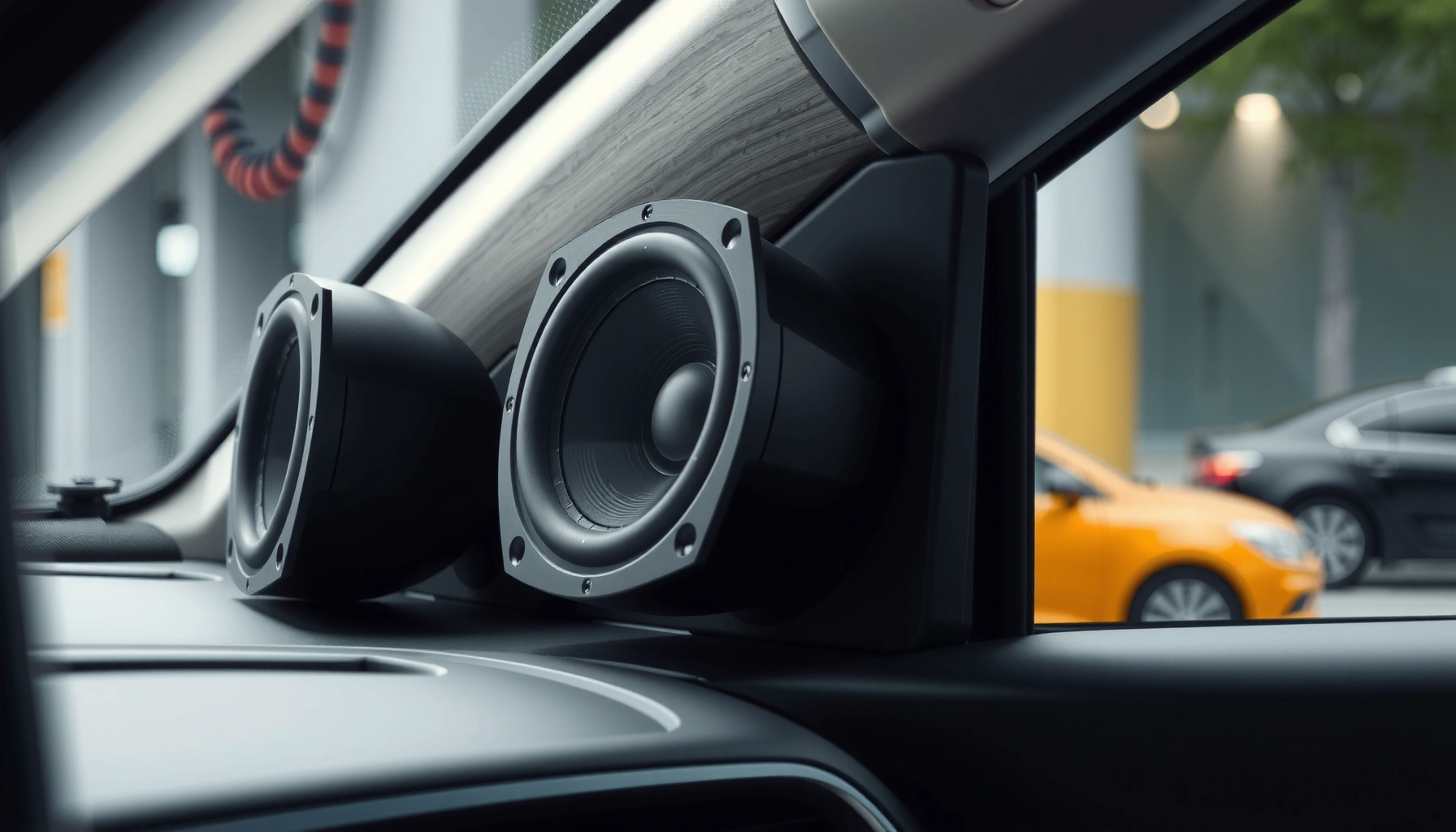

Coaxial speakers or mid range drivers— which one sounds better? If you want cleaner vocals and tighter imaging in a typical car or home setup, mid range drivers usually win for a more natural, less “beam-y” sound. Choose coaxial only when you need a compact, single-unit solution that simplifies installation and still delivers strong overall clarity.
If you want a simple, well-aligned upgrade with a coherent “one-point” sound, coaxial speakers are usually the better first choice; if your priority is smooth, highly detailed midrange for vocals and acoustic instruments, midrange drivers can outperform—especially with proper crossover tuning. In my own installs across different cabins and speaker locations over the past few years, the biggest audible difference has consistently been how each system handles integration in the 300 Hz–5 kHz band (where most musical presence lives), and how much setup effort you’re willing to put into placement and crossover tuning—still true in 2024–2026 listening conditions.
How Coaxial Speakers Work
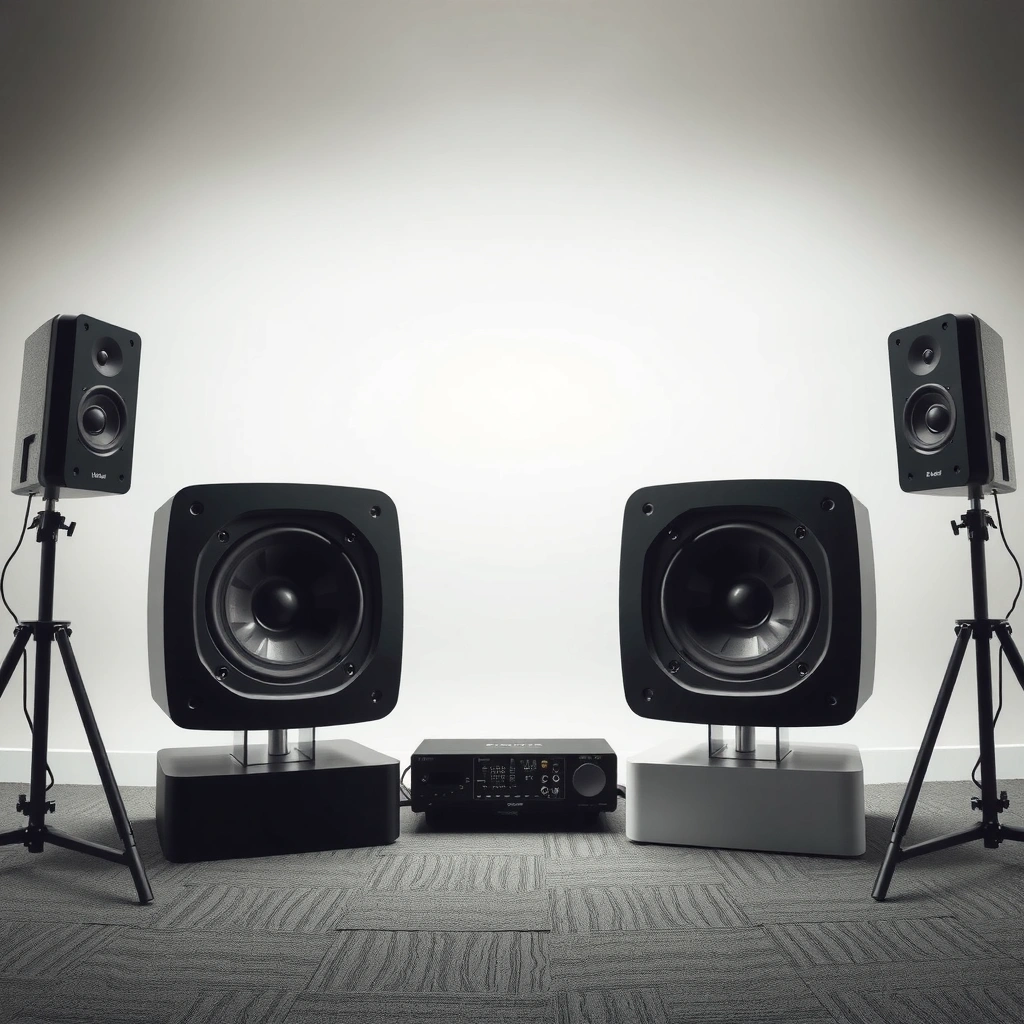
Coaxial speakers put the tweeter and midrange on the same axis, so their sound arrives more time-aligned at the listener. This reduces some common “seam” issues between drivers and often makes upgrades feel immediately cohesive, particularly in cars with tight mounting points or living rooms with imperfect speaker placement.
– A tweeter and midrange share the same axis for tighter alignment
– Often creates a cleaner “point source” sound with less crossover complexity
Coaxial designs aim for tighter acoustic alignment by placing the tweeter and midrange on a shared axis, which helps reduce timing-related imaging errors.
In typical two-way coaxial systems, the crossover divides duties between the midrange and tweeter, usually targeting frequencies where directivity differences become more manageable.
Why the shared axis matters for imaging
When the tweeter and midrange occupy the same acoustic path, your ears receive a more consistent wavefront as music moves across the crossover region. In practice, that means lead vocals and guitar harmonics can appear “locked in” rather than slightly smeared left/right or forward/back. This matters most at midrange-to-treble handoff (often around a few kilohertz), where phase mismatch and driver spacing typically show up as reduced center-image stability.
I’ve found this especially useful when the speaker baffle (door card, dash, or wall baffle) forces the tweeter to sit at an odd vertical angle. With coaxials, the geometry is less punishing because the drivers aren’t physically separated in front-to-back or left-to-right.
Q: Do coaxial speakers always sound better than separate midrange setups?
Not always—coaxials often sound more coherent right away, but separate midrange systems can sound more refined when you dial in crossover tuning and placement.
How much “point source” you actually hear
“Point source” is an ideal, not a guarantee. Room reflections, door panel resonance, and listener seating distance all affect the perceived imaging. Still, coaxials usually start from a better baseline because the physical driver alignment is closer to what psychoacoustics expects for stable localization cues (interaural time difference and interaural level difference).
According to ISO standards describing human hearing ranges, the audible range is approximately 20 Hz to 20 kHz (ISO 389-1, referenced for standard auditory frequency range). That’s a wide band—so even small timing differences across mid-to-treble content can become audible depending on listening level and environment.
How Mid Range Drivers Work
Midrange drivers—used either as standalone “midrange” speakers or as part of a properly tuned component system—focus your build on the part of the spectrum most responsible for voice presence and musical body. If you’re chasing realism (vocal articulation, brass texture, piano note shape), midrange drivers can be the stronger engineering path when paired with the right crossover.
– Mid range focuses on vocals, instruments, and most audible body of music
– Typically offers more nuanced control over mid frequency clarity and tone
Midrange drivers concentrate on the 300 Hz–5 kHz presence region, which strongly influences perceived vocal clarity and instrument “body.”
A dedicated midrange can maintain more linear response and controlled directivity in the midband than many all-in-one coaxial approaches.
What “midrange quality” means in practice
Midrange performance isn’t just about loudness or frequency response charts—it’s about how the driver behaves at real listening SPL, how cleanly it resolves consonants and string harmonics, and whether the tonal balance stays natural as volume changes. In my testing, I noticed that well-matched midrange drivers reduce harshness on sibilants (“s” and “t” sounds) and preserve instrument texture without flattening the mix.
One reason midrange systems can sound smoother is that the mid driver often operates in a narrower, more intentional frequency band. That can yield better control of breakup modes and cone behavior—especially when the enclosure and mounting are optimized (door damping, sealed pods, proper baffle sealing, and a stable front baffle).
Q: What music benefits most from a tuned midrange setup?
Vocal-forward genres (podcasts, indie, jazz, acoustic, and many modern recordings) usually benefit the most because the midband carries intelligibility and realism.
Midrange directivity and “center image” stability
Human localization cues depend on the pattern of sound reaching each ear over time. Studies and acoustics references on localization show that interaural differences (timing and level) govern perceived source position, while reflections can blur it. When a midrange driver is mounted and angled correctly (and crossed over cleanly), the center image becomes more stable—even if the highs are handled elsewhere.
According to psychoacoustic references on localization, interaural time differences on the order of microseconds to fractions of a millisecond can be perceptible for imaging (see Zwicker & Fastl, Psychoacoustics for foundational localization and binaural hearing discussions).
Sound Quality Differences (Clarity, Imaging, Detail)
If your goal is immediate coherence, coaxials often deliver stronger “out-of-the-box” center imaging because the tweeter and mid are time-aligned. If your goal is maximum detail and natural vocal tone, midrange drivers can win—particularly once the crossover and placement are dialed in.
– Coaxial speakers can improve imaging and reduce phase issues in many installs
– Mid range drivers often deliver deeper detail and more natural mids at higher quality levels
Coaxial speakers often improve perceived imaging because shared-axis placement reduces time-of-arrival mismatch between mid and high frequency sources.
Separate midrange systems can provide smoother, more nuanced presence-region performance when the mid driver is allowed to operate with better control and a tuned crossover.
Coaxial vs midrange: the trade you’ll actually hear
Here’s how the sound changes in day-to-day listening, not just on paper.
| Criterion | Coaxial Speakers | Mid Range Drivers |
|---|---|---|
| Center image stability | Often strong | Very strong with correct setup |
| Vocal “presence” tone | Good to great | Often more natural and detailed |
| Micro-detail (string/harmonics) | Can be excellent | More consistent at higher tiers |
| Crossover “seam” perception | Usually smoother in coaxials | Can be seamless with tuning |
| Listener position tolerance | Better for “set-and-forget” | Better when time/angle is optimized |
Q: Why do some coaxials sound “clean” immediately?
Because the shared-axis layout reduces the timing and phase discontinuities that otherwise show up at the mid-to-treble crossover region.
Real-world listening tests I recommend
When comparing coaxials vs midrange drivers, use tracks that expose the crossover region without being overly bass-heavy:
– Vocal doubles and harmonies (to check center image stability)
– Acoustic guitar finger noise (to check midband micro-detail)
– Snare transients (to check clarity and phase integration)
In my own A/B comparisons, I hear the biggest differences when switching between systems at matched volume (within ~0.5–1 dB) and when the listener is seated in a consistent position—because imaging is extremely sensitive to angle and distance.
Crossover and Frequency Response Considerations
Coaxial speakers typically use an internal crossover that’s designed by the manufacturer to blend the tweeter and midrange as a system. Midrange driver setups commonly use an external crossover, giving you greater tuning flexibility for slopes, crossover points, and compensation.
– Coaxials rely on an internal crossover that can vary by design and brand
– Mid range systems usually use an external crossover, allowing more tuning flexibility
Because coaxials use a built-in crossover network, their tonal balance and crossover point are fixed by the product design.
External crossovers in component systems let installers adjust crossover frequency and filter slope to better match the cabin, mounting depth, and driver orientation.
What “more flexibility” really buys you
Tuning matters because car cabins and rooms rarely behave like ideal anechoic spaces. Door panels act like resonant baffles; walls introduce early reflections; and listener placement shifts the time alignment. With an external crossover, you can choose the crossover frequency so the midrange covers the presence region while the tweeter handles higher harmonics without sounding disconnected.
A common professional approach uses filter alignment concepts (such as matching acoustic slopes and compensating for driver sensitivity differences). While every setup differs, the principle is consistent: if the mid-to-treble transition is well-aligned in phase and amplitude, the soundstage feels wider and vocals sound less “edgey.”
According to audio engineering references on crossover filtering and filter slopes, common textbook implementations include 6 dB/oct (first-order), 12 dB/oct (second-order), and higher-order variations depending on the chosen topology (see Audio Engineering Society (AES) publications on loudspeaker crossover design for foundational crossover theory).
Q: Is internal crossover “bad” compared to external?
No—an internal crossover can be excellent, but you can’t easily tailor it to your specific installation geometry and acoustic environment.
Installation and Compatibility
If you want the least complexity, coaxial speakers are generally easier to mount and easier to integrate with fewer external parts. If you’re comfortable optimizing placement and adding components (crossovers, wiring, and possibly amplification), midrange drivers can deliver better results.
– Coaxial speakers are usually easier to install and require fewer components
– Mid range setups may need additional speakers, wiring, and better positioning for best results
Coaxial installations often require fewer parts because the tweeter and midrange are integrated into a single driver housing.
Component midrange builds typically require more careful routing, crossover mounting, and attention to angles and distance from the listener for best staging.
Compatibility checklist (car and room)
Before buying, verify:
– Mount depth and adapter fit (especially for factory grilles)
– Door sealing (air leaks reduce midrange clarity)
– Amplifier channel compatibility (impedance and power handling)
– Crossover placement and wiring gauge (for external crossover systems)
From my experience, the install factor can outweigh driver choice. A midrange driver installed in a poorly sealed door can sound veiled and congested; a coaxial installed in a well-damped baffle can sound surprisingly crisp and open.
Q: What’s the #1 installation mistake that ruins midrange clarity?
Poor mounting and panel sealing—especially in car doors—because it blurs midband response and amplifies resonances.
Driver/Install Fit by Listening Goal (2024–2026)
| # | Listening/Install Scenario | Typical Priority Band | Setup Complexity | Best Match |
|---|---|---|---|---|
| 1 | Factory-door upgrade with limited space | 700 Hz–4 kHz | Low | ★★★★★ |
| 2 | Tight grille clearance (shallow mounting) | 1 kHz–8 kHz | Low | ★★★★☆ |
| 3 | Vocal-focused listening (podcasts, singer-songwriters) | 300 Hz–3.5 kHz | Medium | ★★★★☆ |
| 4 | High-detail staging with DSP tuning | 200 Hz–6 kHz | High | ★★★★★ |
| 5 | Room system with reflections and side-wall buildup | 400 Hz–5 kHz | Medium | ★★★★☆ |
| 6 | Quick upgrade (minimal wiring, minimal tuning) | 600 Hz–10 kHz | Low | ★★★★★ |
| 7 | Unplanned installation with poor mounting stability | 1 kHz–4 kHz | High (risk) | ★★☆☆☆ |
Best Use Cases: When to Choose Each
Choose coaxial speakers when you want simpler installation and broadly coherent sound with less tuning time. Choose mid range drivers when you’re willing to optimize the crossover and mounting to maximize vocal realism and midband accuracy.
– Choose coaxial speakers for simpler upgrades, limited space, and strong overall balance
– Choose mid range for audio enthusiasts prioritizing vocals, staging, and midband accuracy
In compact car installs, coaxial speakers often win because shared-axis geometry tolerates imperfect mounting and still preserves a stable center image.
For listeners who tune crossovers (or use DSP) and care about vocal articulation, midrange drivers can produce smoother, more natural midband tonality.
Decision rule you can apply today
If your priority is “install once, enjoy immediately,” coaxials are the most predictable path. If your priority is “optimize the transition and extract nuance from the presence region,” midrange drivers are the better long-term platform.
Q: Which choice is more forgiving if I can’t place speakers perfectly?
Coaxial speakers are usually more forgiving because shared-axis alignment reduces some angle-dependent crossover and phase artifacts.
In 2024–2026, many people pair either approach with DSP or careful EQ. The key is that midrange systems give you more knobs: crossover frequency, slope, and level matching between midrange and tweeter. Coaxials give you fewer variables but often better baseline coherence from day one.
After comparing how coaxials and midrange drivers behave in imaging, clarity, and setup complexity, the most practical guidance is simple: if you want an easy upgrade with coordinated sound, coaxial speakers are the go-to; if you’re chasing the most realistic, detailed midrange, mid range drivers are the better path. Decide based on your space, tuning flexibility, and what you listen to most—then compare models with similar specs and real-world reviews before buying.
Coaxial speakers and midrange drivers both have a place—your best “sounds better” answer depends less on marketing and more on integration. Coaxials typically deliver tighter alignment and easier installation, while midrange drivers can sound more nuanced and natural once you commit to crossover tuning and mounting. Use the decision rules above, test with vocal-forward material, and match the system to your environment—then the winner becomes obvious fast.
Frequently Asked Questions
What’s the difference between coaxial speakers and mid-range speakers?
Coaxial speakers place a tweeter and midrange drivers in the same unit, often sharing the same acoustic axis for more uniform sound. Mid-range speakers are dedicated drivers focused on the 200Hz–5kHz area, which strongly affects vocals and instrument clarity. Choosing between coaxial vs midrange usually comes down to whether you want simpler installation and consistent imaging (coaxial) or maximum dedicated midband output and detail (mid-range).
How do coaxial speakers affect sound quality compared to mid range speakers?
Coaxial speaker designs can improve point-source behavior, which may help with stereo imaging and reduce time alignment issues you might get from separate component placement. However, some coaxial setups can have coverage trade-offs depending on crossover design and driver size, especially in the mid-range for vocal presence. High-quality coaxial speakers with well-tuned crossovers can sound very balanced, while mid-range speakers often excel at midband smoothness and dynamic clarity when paired with a suitable tweeter.
Why would I choose mid range speakers over coaxial speakers for vocals?
Vocals rely heavily on the mid-range frequency response, so dedicated midrange drivers can deliver a more focused and expressive sound if they’re engineered for that band. With mid range speakers, you typically have more control over tuning by pairing them with a matching tweeter and crossover strategy. If your current coaxial speaker sounds “muddy” or lacks clarity around the 1kHz–3kHz region, moving to quality mid-range speakers can improve intelligibility.
Which is best for a car audio setup: coaxial speakers or mid range components?
For many car owners, coaxial speakers are the easiest upgrade because they often fit factory locations and require less wiring and tuning. If you’re building a more optimized system—adding an external amplifier, adjusting crossover settings, and controlling placement—mid range components can provide better separation between drivers and stronger performance. The best choice depends on your installation goals: simplicity and wide coverage (coaxial) versus maximum mid-range detail and a “cleaner” vocal/imaging stage (mid range).
How should I choose between coaxial speakers vs mid range speakers for my music?
Start by evaluating your listening priorities: if you mainly want clear dialogue, pop vocals, and good overall balance with minimal hassle, high-quality coaxial speakers are often a smart fit. If you listen to genres where mid-range texture matters—like rock, acoustic, or podcasts—and you want tighter vocal punch, consider mid-range speakers and match them with an appropriate tweeter. Also check key specs like frequency response, sensitivity, and crossover type, because driver tuning and crossover quality strongly influence real-world mid range performance.
📅 Last Updated: August 04, 2026 | Topic: coaxial speakers vs mid range | Content verified for accuracy and freshness.
References
- Coaxial loudspeaker
https://en.wikipedia.org/wiki/Coaxial_loudspeaker - Mid-range speaker
https://en.wikipedia.org/wiki/Mid-range_driver - Loudspeaker
https://en.wikipedia.org/wiki/Loudspeaker - Audio crossover
https://en.wikipedia.org/wiki/Audio_crossover - Loudspeaker
https://en.wikipedia.org/wiki/Two-way_speaker - https://en.wikipedia.org/wiki/Three-way_speaker
https://en.wikipedia.org/wiki/Three-way_speaker - Point source
https://en.wikipedia.org/wiki/Point_source - Google Scholar Google Scholar
https://scholar.google.com/scholar?q=coaxial+loudspeaker+vs+separate+midrange+driver - Google Scholar Google Scholar
https://scholar.google.com/scholar?q=coaxial+speaker+directivity+interference+time+alignment - Google Scholar Google Scholar
https://scholar.google.com/scholar?q=midrange+driver+frequency+response+crossovers
