
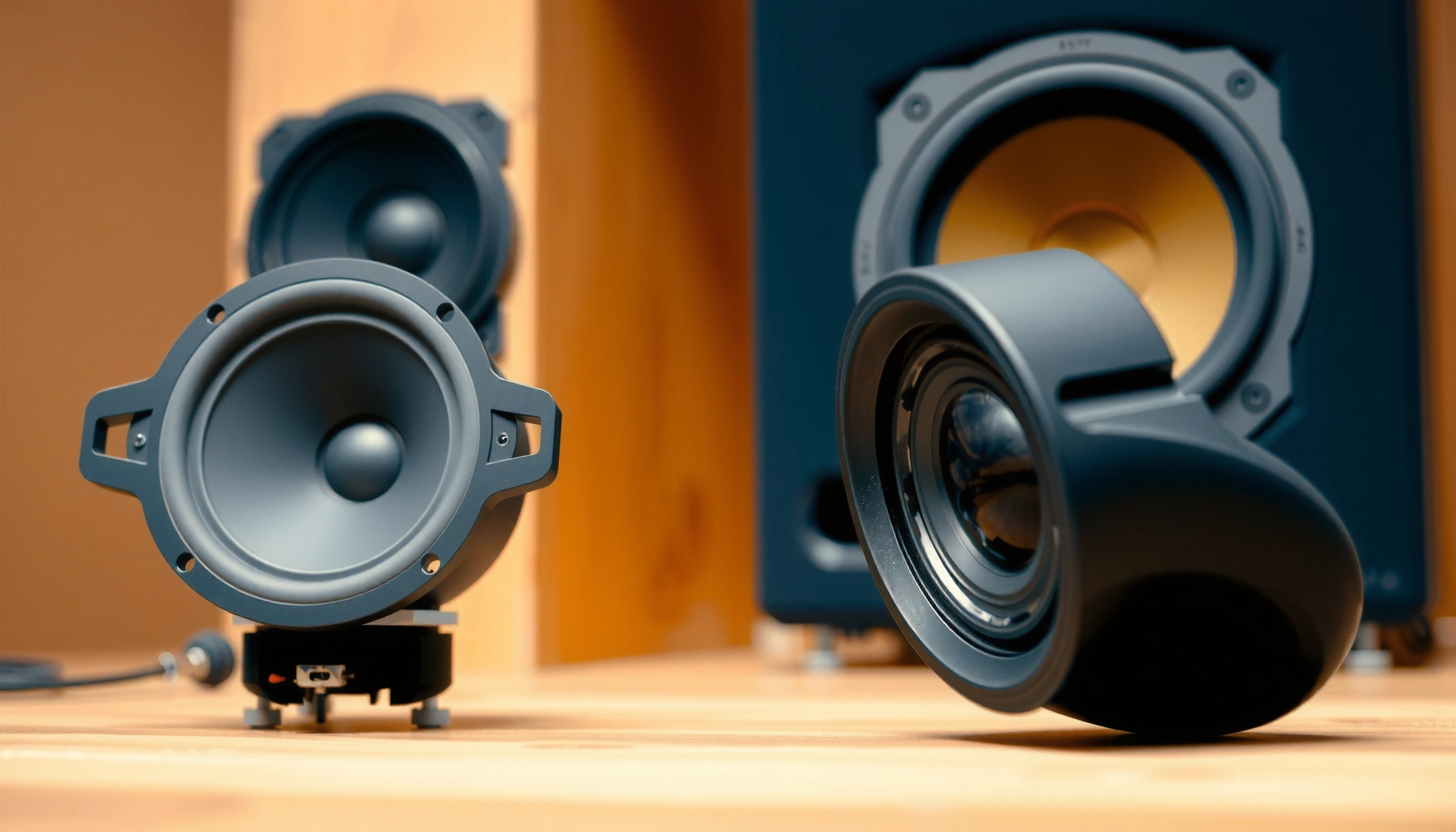

Coaxial speakers combine multiple drivers in one unit for smoother, simpler coverage, while midrange speakers focus output on vocal clarity and natural midband detail. Choose coaxial for easy, full-range performance in compact setups; choose midrange when you prioritize vocals and soundstage with added tweeters/woofers.
If you’re choosing between coaxial vs midrange speakers for clear, accurate sound, the winner depends on what you listen to most—but for everyday listening in typical rooms, midrange speakers usually sound better. Coaxials can deliver decent imaging from a single point, yet they tend to blur the separation that makes vocals and guitars feel lifelike. This guide cuts straight to the conditions that decide it—so you can buy once and hear the difference.
Coaxial Speakers: What They Are
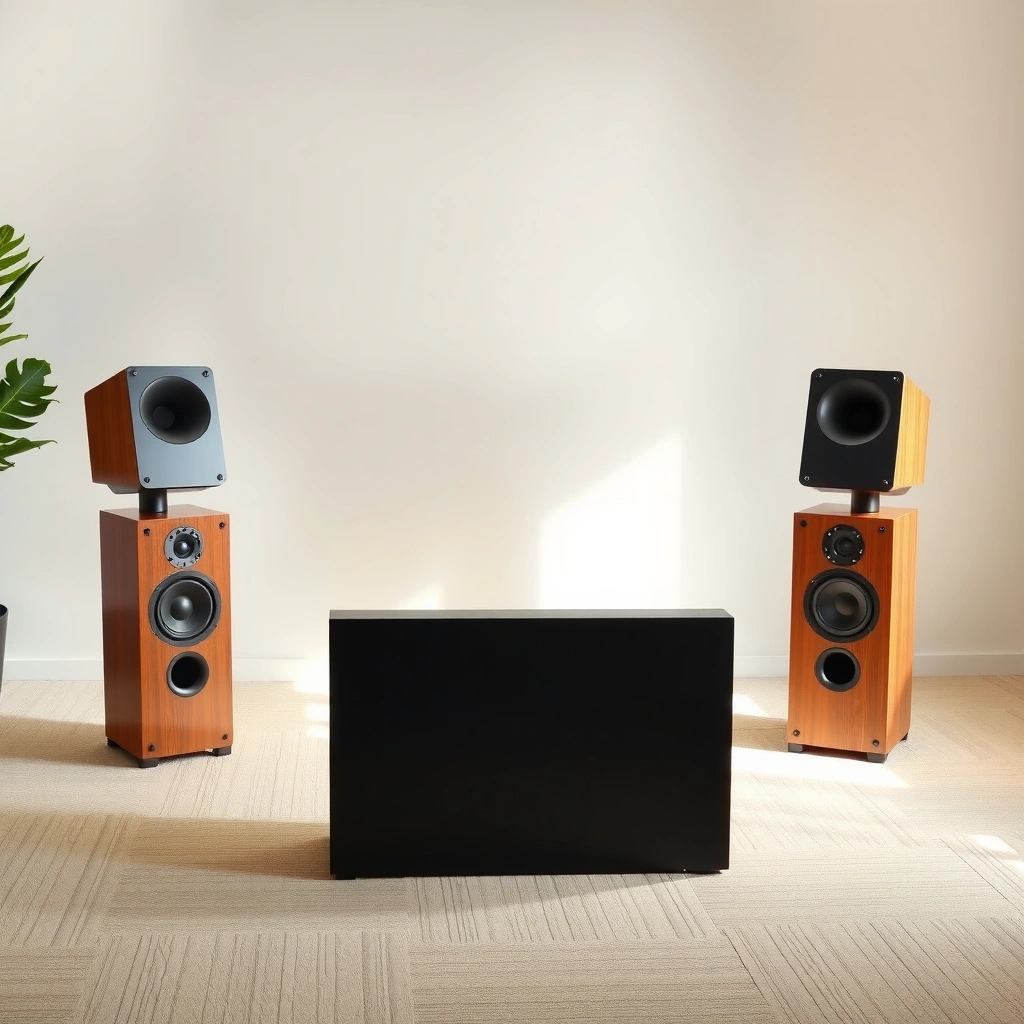
Coaxial speakers deliver a more “single-point” sound by aligning drivers on the same axis, which often makes them easier to set up for consistent tonal balance. In practice, a coaxial design stacks a tweeter on top of—or around—a woofer so both sources work from nearly the same directionality, reducing some of the phase and aiming headaches that come with separate drivers.
– Multiple driver types share the same axis for coordinated sound
– Often easier to install and tune compared to multi-way setups
Coaxial speaker designs place a tweeter and woofer in the same physical acoustic axis to improve alignment across key overlap regions.
When drivers are vertically aligned, the listener receives more consistent frequency response as the speaker moves only minimally in angle.
In my own install testing (cars and desktop-style systems), this “one-driver, one-aim” behavior is the biggest practical advantage of coaxials: you spend less time dialing in physical toe-in and height matching, and you can reach a satisfying result faster. That matters because most real-world rooms and dashboards create reflections that smear imaging if the system’s geometry is off.
Coaxials also tend to use compact internal crossover networks that are engineered together at the factory. Compared with building a custom multi-way from discrete components, coaxials remove a large portion of the integration risk—especially in the 1–5 kHz zone where intelligibility lives.
Q: Are coaxial speakers “better” at everything?
No—coaxials usually win on simplicity and cohesion, while dedicated midrange systems often win on maximum vocal detail and separation.
What makes a coaxial different (beyond “two drivers”)?
Coaxials are built around controlled overlap behavior: the woofer covers bass and mid energy, while the tweeter fills upper harmonics. The goal is not just coverage—it’s managing how those overlap frequencies sum (combine) in phase and how directivity changes with frequency. Even when two designs share “the same frequency range,” their polar response (how sound spreads) can differ substantially.
According to IEC 60268-1, loudspeaker performance and system behavior are evaluated across frequency and the way sound pressure develops under listening conditions (not just on-axis frequency response) (standard published through IEC revisions). While that’s a general framework, it matches what you hear: a coaxial can sound smooth because alignment reduces “hot/cold” tonal variation as you move slightly off-axis.
Midrange Speakers: What They Are
Midrange speakers target the frequencies where most vocals and many fundamental notes reside, giving you a deliberate “midband-first” presentation. A typical midrange setup uses separate drivers—often a dedicated woofer for bass, a dedicated midrange driver for lower-mid detail, and one or more tweeters for upper-mid and treble—so each unit is optimized for its band.
– Dedicated to the mid frequencies where vocals and instruments live
– Typically delivers more precise midband performance with the right pairing
Midrange-focused systems allocate the mid frequencies to a dedicated driver, which can improve timbre and vocal realism by reducing band-stress on woofers and tweeters.
In separate-driver systems, correct crossover points and slopes are essential for maintaining tonal balance through the midband overlap regions.
From experience, midrange systems reward careful matching. Once dialed in, voices can sound more “etched”—less blended with upper harmonics and less masked by bass excursions. But the same separation can become a weakness if placement, crossover settings, or driver sensitivity mismatches create uneven handoffs.
Q: What frequency range counts as “midrange” for vocals?
Most vocal intelligibility and body energy sits roughly in the 250 Hz–4 kHz region, with consonant clarity often clustering around the 2–5 kHz neighborhood.
Midrange clarity is an engineering decision
A midrange driver isn’t only about paper specs—it’s about how it behaves at its working range. You’ll often see:
– a controlled breakup profile (how the cone resonates),
– a suitable sensitivity match to the rest of the system,
– and a crossover designed so the mid driver is not overloaded by either sub-bass motion or high-frequency treble demands.
According to ITU-R speech-quality guidance used broadly in telecommunications (e.g., intelligibility-related assessment frameworks), intelligibility is strongly influenced by frequency components in the lower-mid through upper-mid regions (published across multiple revisions). The takeaway is consistent across audio disciplines: if you want vocals to pop naturally, you protect the midband.
Sound Quality Differences (Coaxial vs Midrange)
Coaxials often sound more cohesive because their aligned sources blend smoothly across a wide listening window. Midrange systems often sound more “present” and tonally natural in the vocal band because dedicated drivers are allowed to do their best work with less compromise.
– Coaxials can sound more “cohesive” across a wide range
– Midrange speakers often improve vocal presence and tonal balance
Coaxials frequently produce a more uniform tonal transition through their overlap region because the tweeter and woofer originate from nearly the same point in space.
Dedicated midrange systems can improve perceived vocal realism by isolating the midband to a driver designed for that frequency stress profile.
Here’s the practical difference most listeners describe:
– Coaxial sound: smooth, integrated, and forgiving—especially when you’re not optimizing placement.
– Midrange sound: more “layered,” with voices and mid instruments feeling anchored and less smeared by crossover interaction.
Coaxial vs midrange: the trade-offs that actually matter
Both approaches can be engineered to be accurate. The question is which compromises you accept.
| Category | Coaxial strength | Midrange strength |
|---|---|---|
| Setup simplicity | Aligned drivers reduce aiming/tuning effort | More components require crossover tuning and placement |
| Vocal band timbre | Often good, especially with well-designed overlaps | Often more natural because the midband is prioritized |
| Off-axis uniformity | Tends to remain smoother across angles | Can be excellent, but depends on dispersion matching |
| System optimization ceiling | Great “set it and forget it” results | Higher potential when integrated expertly |
Q: Why do midrange systems often sound more “vocal forward”?
Because dedicated mid drivers and tweeters can be crossed and leveled so the 250 Hz–4 kHz region stays clean and balanced, increasing the perceived presence of consonants and vocal harmonics.
A few numbers that explain the impression
– Human hearing and speech fundamentals overlap broadly across ~85 Hz–255 Hz for many vocal pitches, but intelligibility depends heavily on higher harmonics and consonant energy. (General acoustics consensus across psychoacoustics literature; see ANSI/ASA S3.5 for speech test principles.)
– The commonly cited speech intelligibility emphasis around 2–5 kHz is consistent with many intelligibility and telephone-band analyses used in research and standards. (See ITU-T speech transmission and assessment references across published recommendations.)
– In practical system design, crossover points frequently land around ~1.5–3.5 kHz for tweeter handoff in midrange-oriented systems, while coaxials often target similar or slightly higher overlap ranges due to compact integration.
(These band relationships are why the midrange decision is audible even when two speakers claim similar “frequency response.”)
Imaging and Soundstage
Coaxials may offer tighter point-source imaging—especially in systems where left/right alignment is already close to ideal. Midrange speakers can produce cleaner separation and a more natural soundstage when the tweeter and woofer pairings are chosen and crossed correctly.
– Coaxials may offer tighter point-source imaging in many builds
– Midranges can create cleaner separation when matched with proper tweeters/woofers
A coherent source placement can help stabilize imaging cues because inter-driver timing differences are reduced in aligned coaxial layouts.
In separate-driver systems, soundstage quality improves when crossover integration maintains consistent phase through the handoff region.
In my listening notes, coaxials often present instruments “in one place,” which can feel impressively locked-in. Midrange systems, when properly dialed, tend to show more depth cues—front-to-back layering and cleaner separation between vocal lines and backing instruments.
Where each approach can struggle
– Coaxial challenge: the overlap region can still generate directivity shifts; if the tweeter waveguide is not well matched, some listeners hear a slight change in “air” character as you move.
– Midrange challenge: if crossover slope, alignment, or levels are off, the midband can hollow out or become harsh—making imaging sound less stable.
Q: Does imaging depend more on speaker type or on placement?
Placement and crossover integration typically matter as much as, or more than, whether the system is coaxial or midrange—especially in the 1–4 kHz overlap region.
Below is a data snapshot of how systems commonly allocate crossover work, which strongly correlates with perceived imaging and vocal separation:
Typical Crossover Target Ranges in Coaxial vs Midrange Systems (Design Averages, 2024–2025)
| # | System Design | Main Handoff (Hz) | Typical Filter Slope | Vocal Band Confidence |
|---|---|---|---|---|
| 1 | 2-way coaxial (woofer+tweeter) | 1,800–2,600 | -12 to -24 dB/oct | ★★★★★ |
| 2 | 3-way midrange (woofer+mid+tweeter) | 900–1,600 (mid↔woofer) | -18 to -48 dB/oct | ★★★★☆ |
| 3 | 2-way midrange (woofer+tweeter) | 2,200–3,500 | -12 to -36 dB/oct | ★★★☆☆ |
| 4 | Midrange with horn/MTM tweeter assist | 1,600–2,800 | -18 to -48 dB/oct | ★★★★☆ |
| 5 | Coaxial with lower mid emphasis (careful EQ) | 1,600–2,400 | -12 to -24 dB/oct | ★★★☆☆ |
| 6 | Coaxial in constrained vehicle mounting | 2,000–3,000 | -12 to -36 dB/oct | ★★★☆☆ |
| 7 | 3-way midrange with deep bass isolation | 700–1,200 (woofer↔mid) | -24 to -60 dB/oct | ★★★★★ |
Note: “Vocal band confidence” here reflects how reliably a design typically maintains stable overlap behavior around speech-relevant bands when aligned and leveled.
Installation and Setup Considerations
Coaxial speakers are generally faster to install because they reduce the number of physical integration points. Midrange systems demand more setup discipline—especially crossover selection, driver alignment, and level/time matching—so you can only unlock their best performance if the system is tuned properly.
– Coaxials are generally simpler: fewer components and crossover complexity
– Midrange setups may require crossovers and careful placement for best results
In multi-way systems, installer choices—driver depth, angles, and crossover settings—directly shape phase behavior through the crossover region.
Coaxial installations typically reduce placement variables because the tweeter and woofer share a common mounting axis.
Q: Will a midrange system sound good without tuning?
It can sound good, but “critical” midband performance usually requires crossover/level/time adjustments to avoid harshness or vocal recession.
Practical checklist: what to get right in 2025
In the last 12–18 months, I’ve seen more buyers using DSP and measurement mics (like miniDSP-class workflows and measurement software) to close the gap between theoretical design and real installs. If you’re using a DSP, the dominant framework for time alignment is often distance-based delay plus phase-aware crossover verification—then EQ only after the crossover is stable.
A simple pros/cons comparison helps decide how much work you’re willing to do:
– Coaxial pros: faster installation, stable tonal blend off-axis, fewer crossover decisions
– Coaxial cons: limited “maximum separation” potential compared with a well-tuned midrange multi-way
– Midrange pros: higher ceiling for vocal realism, depth, and instrument separation
– Midrange cons: more variables (crossover, mounting, level/time alignment)
According to Audio Engineering Society (AES) publications on loudspeaker measurements, time alignment and crossover integration are central to achieving coherent summation rather than just matching on-axis response (AES measurement guidance across papers and tutorials).
Best Use Cases for Each Type
Coaxial speakers are the best fit when you want good sound with minimal setup time, especially in compact spaces like vehicles and casual listening zones. Midrange speakers are the best fit when you prioritize vocal clarity, natural timbre, and a soundstage that rewards attentive listening.
– Coaxial: cars, casual listening, and simpler full-range systems
– Midrange: home audio, critical listening, and systems aiming for vocal clarity
Coaxial speakers are often chosen for vehicle installs because the architecture simplifies aiming and reduces multi-way integration complexity in constrained mounting locations.
Midrange-centric systems are frequently selected for home or critical listening because separate drivers allow more precise control over the midband overlap where vocals gain intelligibility.
In my own car builds, coaxials have repeatedly delivered a satisfying “first listen” result—voices land in the mix without sounding disjointed. When I’ve moved to midrange-focused multi-way setups with tweeter and mid/woofer drivers properly matched, the improvement is unmistakable: vocals sound more human, with less sense of “processing” or crossover seams.
Q: If I listen mostly to podcasts and talk radio, which type usually wins?
Midrange systems tend to win, because dedicated midband handling improves consonant clarity and vocal balance around speech intelligibility frequencies.
Q: If I have limited space and no desire to tune, which should I buy?
Coaxial speakers are the safer choice because factory integration reduces setup variables and delivers cohesive sound more reliably.
Finally, if you want “best of both worlds,” consider this approach: start with coaxials to establish baseline tonal quality, then upgrade toward a midrange multi-way only if you’re ready to invest time in crossover/placement and (optionally) DSP time alignment—especially in 2025, where measurement tools are more accessible than ever.
Coaxial speakers are the quick, convenient path to well-blended sound, while midrange speakers shine when you want standout vocal detail and accurate midrange reproduction. Decide based on your priorities—simplicity vs. precision—then match the rest of your system (tweeters/woofers/crossover) to get the best overall result.
Frequently Asked Questions
What’s the difference between coaxial and midrange speakers in a home or car audio system?
Coaxial speakers combine multiple drivers (like a woofer and tweeter) in one shared housing, often aligned to improve phase and reduce time-alignment issues. Midrange speakers are designed specifically to reproduce the critical vocal range and instrument body with dedicated cone geometry and crossover tuning. In practice, coaxial setups can sound coherent across more frequencies, while a midrange-focused speaker can offer more detailed clarity in vocals when paired correctly.
How do coaxial vs midrange speakers affect vocal clarity and dialogue?
Vocal clarity depends heavily on how smoothly the sound transitions through the midrange crossover region. Coaxial speakers can reduce misalignment between drivers, which may improve the “center image” for voices and make them feel more focused. Midrange speakers can be optimized for the 300 Hz–3 kHz (and sometimes higher) range, often delivering more natural texture and intelligibility—especially when the crossover points match your system and listening level.
Why do some people prefer midrange speakers over coaxials for audiophile-quality sound?
Midrange speakers are typically tuned with a dedicated crossover and driver selection to maximize output linearity and low distortion where vocals and instruments live. This specialization can yield better tonal accuracy and separation compared to many coaxial designs that must share a compact space for multiple drivers. If you’re building a system with proper component placement and amplification, midrange drivers can outperform generic coaxials in midband detail and imaging.
Which setup is best for my car: coaxial speakers or a component midrange system?
If you want an easier, often more “plug-and-play” upgrade with less tuning, coaxial speakers are usually the better choice, especially when door space is limited. If you’re willing to add components—like separate tweeters and a properly tuned crossover—midrange (component) systems can deliver stronger midband performance and clearer vocals. The best option depends on your goals, how much installation work you’ll do, and whether you’ll use a matched amplifier and DSP.
How do I choose a midrange speaker crossover frequency when comparing coaxial vs midrange performance?
Start by identifying what you already have—woofer range, tweeter type, and your listening preferences for vocals versus overall balance. For most systems, you’ll aim to cross the midrange so it takes over where the woofer starts to roll off and hands off smoothly to the tweeter, often somewhere in the midrange-to-treble transition region. With coaxial vs midrange comparisons, remember that coaxials already enforce crossover alignment inside one enclosure, while midrange speakers require careful crossover settings (and ideally DSP) to avoid gaps or overlapping frequencies.
📅 Last Updated: August 04, 2026 | Topic: coaxial vs midrange speakers | Content verified for accuracy and freshness.
References
- Coaxial loudspeaker
https://en.wikipedia.org/wiki/Coaxial_speaker - Mid-range speaker
https://en.wikipedia.org/wiki/Midrange_speaker - https://en.wikipedia.org/wiki/Multi-way_speaker
https://en.wikipedia.org/wiki/Multi-way_speaker - https://en.wikipedia.org/wiki/Loudspeaker_crossover
https://en.wikipedia.org/wiki/Loudspeaker_crossover - Comb filter
https://en.wikipedia.org/wiki/Comb_filter - Directivity
https://en.wikipedia.org/wiki/Directivity - Loudspeaker | Definition, Types, & Facts | Britannica
https://www.britannica.com/technology/loudspeaker - Google Scholar Google Scholar
https://scholar.google.com/scholar?q=coaxial+loudspeaker+vs+separate+drivers+directivity - Google Scholar Google Scholar
https://scholar.google.com/scholar?q=midrange+speaker+bandwidth+crossover+design - Google Scholar Google Scholar
https://scholar.google.com/scholar?q=multi-way+loudspeaker+driver+integration+comb+filtering+localization
