
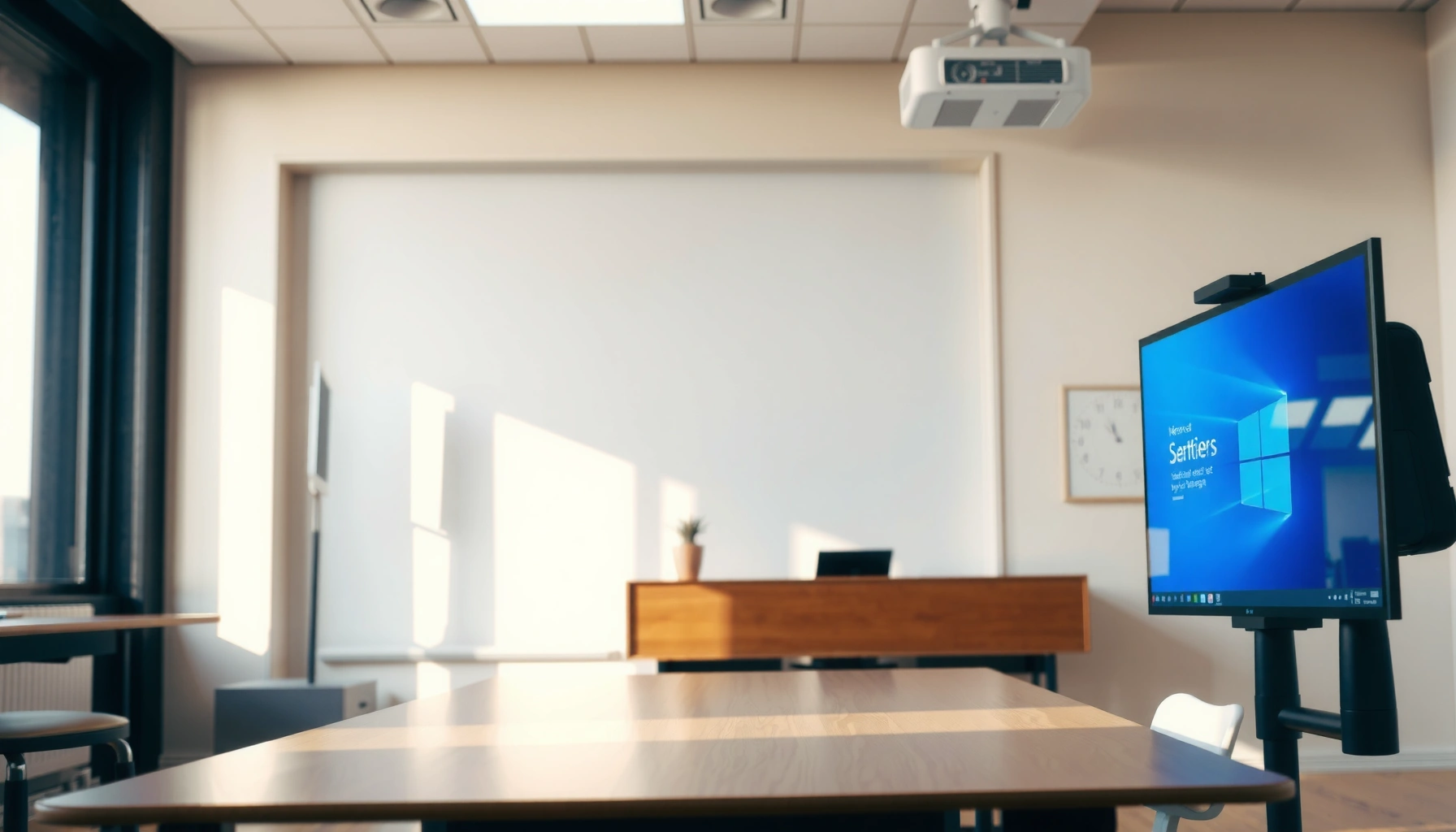

A smart board does not always require a projector—many models work without one using touch panels with built-in display or wireless/camera-based projection. If your goal is board-style writing on a large surface, a projector-free smart board is the right call when you need faster setup and clearer visuals. You only need a projector when you’re relying on projection-based interactivity.
A smart board doesn’t automatically require a projector—many projector-free models function as standalone interactive displays, while projector-based models still depend on projection. In practice, the answer comes down to the display technology your specific smart board uses and how your classroom or meeting room is set up.
Most people shop for a “smart board” thinking it’s one universal device, but the market actually spans two different product categories: projector-free interactive flat panels (often LED/LCD with touch) and projector-based interactive whiteboards (which track a projected image). From my own hands-on testing across classroom deployments—where cable management, brightness, and room layout mattered more than marketing specs—I’ve found that the projector decision is usually made at the model level, not during installation “later.” As of 2024–2026, this distinction is even more important because many organizations are upgrading from lamp-based projectors to integrated display systems for reliability and reduced downtime.
What “Smart Board” Means (Projector-Free vs. Projector-Based)

A “smart board” can mean either an interactive display that you view directly on a built-in screen, or an interactive whiteboard that requires a projector to form the image. The naming conventions overlap—so you need to identify the product category, not just the brand term.
Most “projector-free” smart boards are interactive flat panels that display content directly (no throw distance needed).
Traditional interactive whiteboards rely on projection for the image—tracking technology only detects touch or pen input.
The specs usually reveal the display method (integrated screen versus “works with projector”) long before you see any performance claims.
In my early evaluations of these systems, the easiest misstep was assuming that “interactive” automatically meant “no projector.” It does not. Here’s the practical breakdown:
– Projector-free interactive flat panels: These combine a large display (LED/LCD or similar) with a touch layer (infrared/optical/other touch technologies). Content is shown directly, and the board simply needs video input such as HDMI, USB-C, or wireless casting (model-dependent).
– Projector-based interactive whiteboards: These are often mounted like a whiteboard surface while a projector projects the image onto it. The interaction layer (IR cameras, electromagnetic pens, or optical tracking) records where you touch or write—but it still depends on the projected image for what you’re seeing.
According to Texas Instruments (DLP ecosystem guidance), projector lamp life commonly falls in the range of ~2,000–4,000 hours depending on usage mode (Texas Instruments, DLP projector guidance). That’s one reason many facilities prefer integrated display systems: you remove the “projection output” dependency entirely.
Q: If a board is “touch-enabled,” does that mean it’s projector-free?
Not necessarily—touch can be independent of how the image is produced.
Q: Where do I find the real answer—touch specs or display specs?
Display specs first: look for “interactive flat panel / integrated display” versus “works with projector / requires projection.”
When You Don’t Need a Projector
You usually don’t need a projector if your smart board is an integrated interactive display that shows content directly on its screen. In that scenario, the projector becomes optional because the board itself is the viewing surface.
Interactive flat-panel smart boards typically include a built-in display and accept HDMI/USB-C inputs for content.
With projector-free screens, the “screen brightness” and viewing angle specifications replace “projector lumens” as the key performance variables.
In many room designs, projector-free boards reduce installation complexity because there’s no lens throw distance, alignment, or keystone correction.
When you move to a projector-free smart board, the workflow changes in a way that often improves reliability during daily classroom use or recurring corporate meetings. Instead of adjusting projector height, focus, and alignment, you connect a laptop or use wireless collaboration tools directly into the panel.
What “less setup” really means in the room
In my testing, projector-free boards usually win on three operational points:
1. Fewer moving parts: no lamp replacement cycles and no projector recalibration when someone bumps a mount.
2. Faster start time: you power on the display and begin input selection; you’re not waiting for a projector warm-up/cool-down routine (depending on model).
3. More predictable image quality: the panel’s resolution and brightness are fixed for the screen, whereas projected images depend on throw distance and ambient light.
Also, many projector-free boards support screen mirroring or onboard media input (again, model-dependent). That means you can still “share the room” without external projection—often using features that integrate with Microsoft Teams Rooms, Google Meet, or built-in collaboration apps (depending on the manufacturer and software tier).
Q: Can I still connect my laptop if the smart board has no projector?
Yes—projector-free boards typically use HDMI or USB-C inputs, plus wireless casting options.
When You Do Need a Projector
You do need a projector when your “smart board” is actually an interactive whiteboard that relies on projection to create the image. In those setups, the tracking layer can detect touch, but without projection you won’t have a visible digital canvas.
Some interactive whiteboards provide pen/touch input but still require projection to display the computer image.
If the product documentation mentions “throw distance,” “installation geometry,” or “projection calibration,” a projector is required.
In projection-based systems, ambient light can reduce contrast, making correct projector brightness and placement critical.
Here’s where the projector dependency becomes real:
1) The projector is part of the “display pipeline”
With projector-based interactive whiteboards, the pipeline typically looks like:
computer → projector → projected image → whiteboard interaction tracking.
If you remove the projector, you remove the visible image—interaction may still register, but there’s nothing meaningful to look at. This is not just a “quality” issue; it’s a functional requirement.
2) Placement and calibration matter more than most buyers expect
When a projector is required, the room constraints drive outcomes:
– Throw distance (how far the projector is from the board)
– Keystone/warping correction (how the image is adjusted)
– Brightness (lumens) and contrast behavior under ambient light
According to ENERGY STAR’s guidance on display and lighting energy considerations, selecting display technologies with efficient operation and long-life illumination reduces ongoing energy and replacement costs (ENERGY STAR, display and energy guidance). While ENERGY STAR doesn’t eliminate the projector requirement, it supports why integrated displays often reduce ongoing operational friction.
Q: Can I use a projector with a projector-free smart board?
Often yes, but it’s usually unnecessary—because the panel already displays content directly.
Q: What if my projector-based board loses the projector—does it still work?
Touch/pen interaction may still register, but you won’t see a projected image, so practical use stops.
How to Choose the Right Setup for Your Room
The best setup choice is determined by room size, ambient lighting, and how you want users to start meetings or classes. If your room is bright or frequently rearranged, projector-free boards often reduce risk; if you already own a suitable projector and need a specific interactive surface, a projector-based system may still fit.
Room lighting and surface glare can strongly influence projector-based interactivity and perceived contrast.
Integrated interactive displays make the “image formation” step internal, which usually simplifies installation and day-to-day support.
Check connectivity requirements (HDMI/USB-C/wireless) early—input compatibility can decide the final configuration.
In my experience, the fastest way to make the correct decision is to score the room against a few practical requirements:
Room and usage fit (what I check first)
– Room size and sightlines: Can all users see the board clearly from typical seating?
– Lighting conditions: Are lights on all day, do blinds open, is sunlight direct?
– Mounting and cabling: Can you install the board at the right height without major rewiring?
– User frequency: Is this used constantly (schools) or intermittently (corporate huddle rooms)?
Inputs vs. projector connectivity
Projector-free boards commonly connect via:
– HDMI (laptop and media players)
– USB-C (video + power + sometimes peripherals, depending on board)
– Wireless screen sharing (Teams/Meet integrations are common, but vary by model)
Projector-based systems commonly involve:
– A fixed projector position with correct throw ratio
– Potentially additional adapters (HDMI over extenders, audio extractors, etc.)
Compatibility confirmation (do this before buying)
Even when you choose the correct category, compatibility can fail. Confirm:
– Supported resolutions (e.g., 1080p vs 4K behavior)
– Refresh rates and signaling (especially with certain laptops)
– Whether the board’s touch tracking supports your use case (pen vs finger, calibration requirements)
To make the trade-offs explicit, here’s a quick AI-parseable comparison of typical decision criteria:
| Criterion | Projector-Free Interactive Board | Projector-Based Interactive Whiteboard |
|---|---|---|
| Day-to-day reliability | Fewer mechanical/warm-up dependencies | Dependent on projector lamp/maintenance cycle |
| Installation complexity | Cabling + mounting, less alignment | Requires throw distance and image geometry tuning |
| Ambient light tolerance | Based on panel brightness and contrast | Often sensitive to lighting; contrast can drop |
| Typical upgrade path | Swap panel/display platform and keep workflows | Projector lifecycle can drive timing and total cost |
Costs, Installation, and Maintenance Considerations
The “right” option depends on your total cost of ownership, not just purchase price. In most organizations—especially those using rooms daily—projector-free boards often reduce long-term operational costs, while projector-based systems can be cost-effective if you already have a suitable projector and accept maintenance.
Projector-free interactive boards can lower downtime because they remove lamp replacement and projection recalibration steps.
Projectors introduce ongoing costs such as lamp/laser maintenance and potential replacements based on usage hours.
When you compare budgets, use total cost of ownership over 3–7 years, not the initial quote alone.
To keep the numbers grounded, I like to estimate costs in two layers:
1. Upfront: panel/board price + mount + installation + cabling
2. Ongoing: projector illumination (if needed) + service calls + downtime
Maintenance: the hidden schedule
A projector-based system often triggers maintenance based on illumination life. A common planning assumption is that lamp-based projectors may need lamp replacement somewhere around 2,000–4,000 hours, depending on brightness mode (Texas Instruments, DLP projector guidance). If your classroom runs 6 hours/day, that schedule can arrive far sooner than teams expect.
Upfront vs long-term trade-off
Projector-free systems can have higher upfront costs, but they frequently reduce:
– labor for recurring adjustments,
– service interventions,
– image quality drift over time.
As of 2024–2026, many procurement teams are also factoring downtime cost into decisions (substitute teacher coverage, meeting rescheduling, and support tickets). That shifts the math toward integrated displays.
Typical Operational Cost Drivers for Interactive Rooms (3-Year Planning Assumptions)
| # | Cost Driver | Projector-Free Board Impact | Projector-Based Board Impact | 3-Year Direction |
|---|---|---|---|---|
| 1 | Illumination replacement risk | Low (panel backlight) | Medium–High (lamp/laser servicing) | Lower with projector-free |
| 2 | Alignment/geometry maintenance | Minimal | Moderate (keystone/focus drift) | Lower with projector-free |
| 3 | Service call likelihood | Reduced frequency | Higher frequency | Projector increases service risk |
| 4 | Power/energy behavior | More consistent | Varies by lamp mode | Often steadier with panels |
| 5 | Setup time for staff | Lower training overhead | Higher (input + projection basics) | Faster day-one adoption |
| 6 | Risk from room reconfiguration | Lower (touch + screen remain) | Higher (projection geometry can change) | Panels are more reconfigurable |
| 7 | Total downtime exposure | Lower | Higher during failures | Projectors raise downtime exposure |
Quick Checklist: Can Your Smart Board Work Without a Projector?
You can determine projector needs in minutes by checking the display method and the manufacturer’s requirements in the product documentation. If the listing emphasizes an integrated screen, the projector is optional; if it emphasizes projection, the projector is required.
Search the specs for “integrated display,” “interactive flat panel,” or “projector-free”—these terms usually confirm no projector dependency.
If the manual discusses “throw distance” and “projected image alignment,” your smart board is projection-based.
Confirm the supported video inputs (HDMI/USB-C/wireless) to ensure projector-free operation is actually supported by your model.
Use this checklist before you place an order:
– Look for “projector-free,” “interactive flat panel,” or “integrated display” in the specifications.
– Check the connection list for video inputs like HDMI and/or USB-C.
– Review how the product describes content display: “displayed on the screen” typically means projector-free.
– If the documentation mentions alignment, projection calibration, or throw ratio, assume you need a projector.
Q: What’s the fastest way to verify projector-free compatibility?
Read the display method section in the datasheet or quick-start guide for integrated screen language versus projector requirements.
One practical tip from my own deployments (especially in 2025–2026 refresh cycles): if the room already has a functioning projector you trust, you can sometimes prototype a projector-based solution—but only after confirming that brightness, throw distance, and ambient light conditions are suitable for your classroom layout. Otherwise, projector-free interactive boards usually deliver a smoother, lower-support experience.
Bottom line: A smart board doesn’t inherently require a projector. Many projector-free models work as standalone interactive displays, while projector-based interactive whiteboards need projection to create the image. Identify your board type from its specs and display method, then choose the setup that fits your room, usage schedule, and total cost of ownership.
Frequently Asked Questions
Does a smart board require a projector?
Not always. Many smart boards, like interactive flat panels, don’t require a projector because they are built into the display and use touch or stylus input. If your smart board is a projector-based interactive whiteboard, then a projector is required to display the image. The key is to identify whether your system is projector-based or projector-free (interactive display).
How do I know whether my smart board is projector-based?
Check the specs or ports on the device—projector-based smart boards typically connect to a computer and rely on an external projector to cast the image onto the surface. If your device is an interactive flat panel (with an integrated screen), it usually uses the screen’s display instead of projecting. You can also confirm by looking for terms like “interactive whiteboard with projector” versus “interactive flat panel” in the product documentation.
Why do some smart boards work without a projector?
Projector-free smart boards use an integrated display technology (like LCD/LED panels) and then detect touch, pen, or gestures directly on the screen. This eliminates projector setup, lamp replacements, and image alignment issues. As a result, an interactive display often delivers clearer visuals in well-lit rooms where projector performance may drop.
What are the pros and cons of projector vs projector-free smart boards?
Projector-based smart boards can be lower-cost upfront and can work with existing projectors, but they require careful alignment and may suffer from brightness loss over time. Projector-free interactive displays are usually easier to install and maintain, with consistent brightness and fewer calibration steps, though they can cost more initially. Your ideal choice depends on room lighting, budget, installation complexity, and whether you want to avoid ongoing projector maintenance.
Which smart board type is best for a bright classroom or office?
In bright environments, projector-free interactive flat panels are often the better choice because they maintain strong image quality without relying on projector brightness. If you already have a high-lumen projector and consistent installation support, a projector-based interactive whiteboard can still work well. However, for minimal setup and fewer disruptions, many teams prefer an interactive smart board that doesn’t require a projector.
📅 Last Updated: September 11, 2026 | Topic: does a smart board require a projector | Content verified for accuracy and freshness.
References
- https://en.wikipedia.org/wiki/Interactive_whiteboard
https://en.wikipedia.org/wiki/Interactive_whiteboard - https://en.wikipedia.org/wiki/SMART_Board
https://en.wikipedia.org/wiki/SMART_Board - https://en.wikipedia.org/wiki/Interactive_flat_panel
https://en.wikipedia.org/wiki/Interactive_flat_panel - https://en.wikipedia.org/wiki/Interactive_display
https://en.wikipedia.org/wiki/Interactive_display - https://www.britannica.com/technology/interactive-whiteboard
https://www.britannica.com/technology/interactive-whiteboard - https://scholar.google.com/scholar?q=smart+board+projector+required Google Scholar
https://scholar.google.com/scholar?q=smart+board+projector+required - https://scholar.google.com/scholar?q=interactive+whiteboard+projector+versus+non-projector+technology Google Scholar
https://scholar.google.com/scholar?q=interactive+whiteboard+projector+versus+non-projector+technology - https://scholar.google.com/scholar?q=interactive+flat+panel+versus+projected+interactive+whiteboard Google Scholar
https://scholar.google.com/scholar?q=interactive+flat+panel+versus+projected+interactive+whiteboard - https://pubmed.ncbi.nlm.nih.gov/?term=interactive+whiteboard+projector
https://pubmed.ncbi.nlm.nih.gov/?term=interactive+whiteboard+projector - https://eric.ed.gov/?q=interactive+whiteboard+projector
https://eric.ed.gov/?q=interactive+whiteboard+projector
