
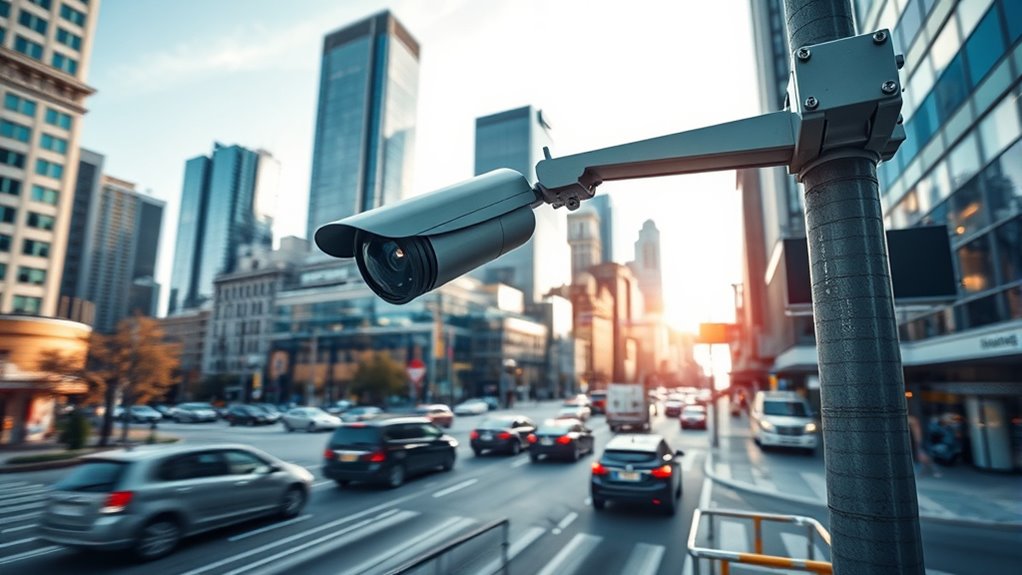

AI enhances traffic monitoring through video analytics by identifying and categorizing vehicles, cyclists, and pedestrians in real-time. It employs anomaly detection to spot accidents or unexpected congestion, allowing for quick responses. Analysis of this data empowers traffic management teams to make informed decisions, optimizing signal timing and improving road safety. By continuously monitoring patterns and trends, AI systems adapt to changing conditions, ensuring smoother traffic flow. Explore further to uncover more about AI's potential in urban traffic management.
Understanding the Role of AI in Traffic Management
As cities grow and traffic congestion becomes an increasingly complex issue, understanding the role of AI in traffic management is essential for developing effective solutions. AI algorithms enhance traffic signals by optimizing their timing based on real-time data integration. This approach allows for improved congestion analysis, which can considerably reduce wait times at intersections. Through machine learning, these systems adapt to changing traffic patterns, making urban planning more efficient. Vehicle recognition technology further enhances safety by monitoring road usage and identifying potential hazards. By implementing AI-driven strategies, cities can create a dynamic traffic management system that prioritizes freedom of movement while ensuring safety enhancement. Embracing these innovations can transform urban landscapes and alleviate the burdens of congestion.
The Process of Video Analytics in Traffic Monitoring
While traffic congestion poses significant challenges for urban areas, video analytics offers a powerful solution for real-time monitoring and management. You'll find that the process begins with video classification, where algorithms identify and categorize vehicles, cyclists, and pedestrians. This classification allows for a clearer understanding of traffic patterns and flows. Next, anomaly detection kicks in, identifying irregularities such as accidents or unexpected congestion. By analyzing deviations from established norms, these systems can alert traffic management teams to take corrective actions. The integration of these technologies guarantees that you have accurate, timely data at your fingertips, empowering better decision-making and ultimately enhancing the freedom of movement within urban landscapes. Video analytics therefore becomes an essential tool for modern traffic management.
Real-Time Data Processing and Decision Making
Real-time data processing plays an essential role in enhancing traffic management systems, ensuring that decisions are based on the most current information available. By leveraging data integration techniques, AI systems can aggregate information from various sources—like traffic cameras, sensors, and GPS data—creating a thorough view of traffic conditions. This holistic perspective allows you to utilize decision algorithms that quickly analyze data patterns, enabling rapid responses to changing circumstances. For example, if congestion arises, the system can instantly adjust traffic signals or reroute vehicles, greatly improving flow and reducing delays. With real-time data, decision-making becomes not just reactive but proactive, allowing for a more fluid and efficient traffic environment that promotes your freedom on the roads.
Identifying Traffic Patterns and Trends
In identifying traffic patterns and trends, you're leveraging real-time data analysis to gain insights into current conditions. By employing predictive traffic modeling, you can forecast potential congestion points based on historical trend evaluation. This data-driven approach not only enhances traffic management but also aids in making informed decisions for future infrastructure planning.
Real-time Data Analysis
As traffic conditions fluctuate throughout the day, the ability to analyze data in real-time becomes essential for identifying patterns and trends. You can leverage AI-driven video analytics to gain real-time insights that allow you to respond swiftly to changing traffic dynamics. By continuously monitoring traffic flow, the system can detect traffic anomalies—like sudden congestion or accidents—before they escalate. This immediate data analysis not only enhances situational awareness but also aids in optimizing traffic management strategies. You'll find that understanding these patterns can empower you to make informed decisions, improving not just traffic flow but also overall safety on the roads. With real-time data at your fingertips, you can enjoy greater freedom in traversing urban landscapes.
Predictive Traffic Modeling
While traffic conditions can be unpredictable, predictive traffic modeling considerably enhances your ability to anticipate and manage future traffic patterns. By leveraging sophisticated traffic prediction models, you can analyze historical data, real-time inputs, and various influencing factors to forecast congestion more accurately. This data-driven approach enables you to identify recurring patterns and trends, allowing for proactive measures to mitigate traffic issues before they arise. For instance, congestion forecasting can help you optimize traffic signal timings and adjust routes, enhancing overall traffic flow. By embracing these advanced models, you gain greater autonomy over your travel plans, reducing unexpected delays and improving your overall driving experience. Ultimately, predictive traffic modeling empowers you with the foresight needed to navigate urban landscapes effectively.
Historical Trend Evaluation
Understanding historical traffic trends is essential for effective traffic management and planning. By leveraging historical data, you can identify patterns that reveal peak times, accident-prone areas, and the effects of seasonal changes on traffic flow. Trend analysis allows you to make informed decisions, optimizing resources and reducing congestion. When you analyze this data over time, it becomes easier to forecast future traffic conditions and implement proactive measures. This approach not only enhances road safety but also supports sustainable urban development. Ultimately, by understanding these trends, you regain a sense of freedom on the roads, as efficient traffic management translates to improved mobility for everyone. Embracing AI in analyzing historical data is the key to achieving these goals.
Enhancing Safety Through Predictive Analytics
Predictive analytics has the potential to transform traffic monitoring systems by using historical data and real-time information to anticipate accidents and congestion before they occur. By focusing on risk assessment, these systems can implement safety enhancements that save lives. Imagine knowing when and where accidents are likely to happen, allowing you to adjust your route accordingly.
| Time of Day | Risk Level | Suggested Action |
|---|---|---|
| Morning | High | Avoid main roads |
| Afternoon | Moderate | Stay alert |
| Evening | Low | Safe to drive |
| Night | High | Limit travel |
| Weekends | Moderate | Plan ahead |
This proactive approach empowers you to navigate safer, granting you the freedom to travel with peace of mind.
Reducing Congestion With AI Insights
As traffic patterns shift throughout the day, AI insights can play an essential role in reducing congestion and improving overall flow. By leveraging advanced data analysis, you can enhance congestion management through:
- Real-time traffic predictions
- Identification of bottlenecks
- Optimized signal timing
- Dynamic route adjustments
These AI-driven strategies allow for a more fluid traffic experience, minimizing delays and fostering freedom of movement. By accurately predicting traffic trends, you can implement proactive measures that alleviate congestion before it worsens. The result is not just a smoother journey but also an empowered community that benefits from efficient transportation solutions. When you harness the power of AI, you're not only enhancing mobility but also reclaiming valuable time in your day.
Infrastructure Planning and Development
Effective infrastructure planning and development is essential for accommodating the evolving demands of urban mobility. By leveraging AI-driven data analytics, you can make informed decisions about infrastructure investment. Analyzing traffic patterns helps identify high-demand areas, allowing for targeted investments that enhance accessibility and reduce congestion. Integrating AI into urban planning processes facilitates a proactive approach to managing growth, ensuring that transportation networks can adapt to changing populations and economic conditions. Furthermore, real-time data offers insights into usage trends, enabling you to optimize resource allocation. Ultimately, embracing AI in your planning strategies not only promotes efficiency but also empowers communities, fostering a sense of freedom as citizens navigate their urban environments with ease.
Case Studies of Successful AI Implementation
You'll find that various smart city initiatives have effectively integrated AI to enhance traffic management. For example, real-time incident detection systems have markedly reduced response times, while traffic flow optimization algorithms have improved overall roadway efficiency. Analyzing these case studies reveals the tangible benefits of AI, providing valuable insights for future implementations.
Smart City Initiatives
While urbanization continues to escalate, cities around the globe are leveraging AI technologies to enhance traffic monitoring and optimize transportation systems. These smart city initiatives exemplify how AI integrates with smart infrastructure to improve urban mobility.
Consider these successful implementations:
- Barcelona: Uses AI for real-time traffic analysis, reducing congestion by 30%.
- Singapore: Employs predictive analytics to manage traffic flow, cutting travel times considerably.
- Los Angeles: Deploys AI-powered cameras to monitor vehicle behavior, improving safety.
- Amsterdam: Integrates AI in public transport, increasing efficiency and user satisfaction.
These case studies illustrate that adopting AI isn't just about technology; it's about empowering citizens with smoother, more efficient travel options, ultimately enhancing their freedom in urban environments.
Real-Time Incident Detection
As urban traffic patterns become increasingly complex, real-time incident detection powered by AI is proving essential for enhancing road safety and efficiency. Case studies demonstrate how cities leverage AI for rapid incident identification, considerably reducing response times. For instance, a pilot program in Los Angeles utilized video analytics to achieve over 90% accuracy in anomaly detection, allowing traffic management centers to respond to accidents within minutes. Similarly, in Singapore, AI systems analyzed traffic feeds to detect unusual congestion patterns, enabling timely interventions. These implementations not only improve safety but also minimize delays, granting drivers the freedom to navigate urban landscapes with greater assurance. The data-driven nature of these systems guarantees that incidents are addressed promptly, fostering a smarter, more responsive traffic infrastructure.
Traffic Flow Optimization
Efficiency in traffic flow optimization is becoming increasingly achievable through the implementation of AI technologies. By harnessing advanced algorithms, cities can enhance their traffic management systems considerably. Here are some key benefits:
- Traffic signal optimization leads to reduced wait times.
- Congestion mitigation strategies help in keeping traffic moving smoothly.
- Real-time data analysis allows for adaptive traffic management.
- Improved safety measures through predictive analytics.
Case studies from cities like Los Angeles and Barcelona illustrate how AI-driven solutions have resulted in up to a 30% reduction in congestion. By integrating these technologies, you can envision a future where your commute is less stressful, and roadways are safer and more efficient. Embracing AI in traffic flow optimization is your pathway to freedom on the roads.
Future Trends in AI and Traffic Monitoring
With advancements in machine learning and sensor technology, the future of AI in traffic monitoring is poised to revolutionize urban mobility. You'll see smart intersections equipped with AI systems that analyze real-time data, optimizing traffic flow and reducing congestion. As autonomous vehicles become mainstream, AI will facilitate seamless integration with existing traffic management systems, enhancing safety and efficiency. Imagine a network of interconnected vehicles communicating with smart infrastructures, adjusting speeds and routes dynamically based on traffic conditions. This data-driven approach can predict traffic patterns, allowing for proactive measures to mitigate delays. By embracing these trends, cities can empower citizens with the freedom to travel more efficiently and safely, fostering a more fluid urban environment.
Frequently Asked Questions
How Does AI Handle Privacy Concerns in Traffic Monitoring?
AI addresses privacy concerns by implementing anonymization techniques to obscure personal identities and utilizing data encryption to safeguard sensitive information. This guarantees that while monitoring occurs, individual freedoms and confidentiality are respected and maintained.
What Types of Cameras Are Best for AI Traffic Analysis?
Choosing the perfect camera for AI traffic analysis is like finding a needle in a haystack. You'll want high-resolution cameras with specific lens specifications, considering installation tips for ideal placement and performance. The right setup matters!
Can AI Traffic Monitoring Work in Rural Areas?
Yes, AI traffic monitoring can work in rural areas, but it relies on robust rural infrastructure and data connectivity. Without these, data collection may be inconsistent, limiting the system's effectiveness and your ability to manage traffic efficiently.
How Is Data Accuracy Ensured in AI Systems?
Ensuring data accuracy in AI systems is like fine-tuning a musical instrument; it requires careful data validation and algorithm optimization. This meticulous process helps maintain reliability, giving you the freedom to trust the insights generated.
What Is the Cost of Implementing AI Traffic Monitoring Solutions?
When evaluating the cost of implementing AI traffic monitoring solutions, you'll need a thorough cost analysis. Budget considerations include initial setup, ongoing maintenance, and potential savings from improved traffic efficiency and reduced congestion over time.
