
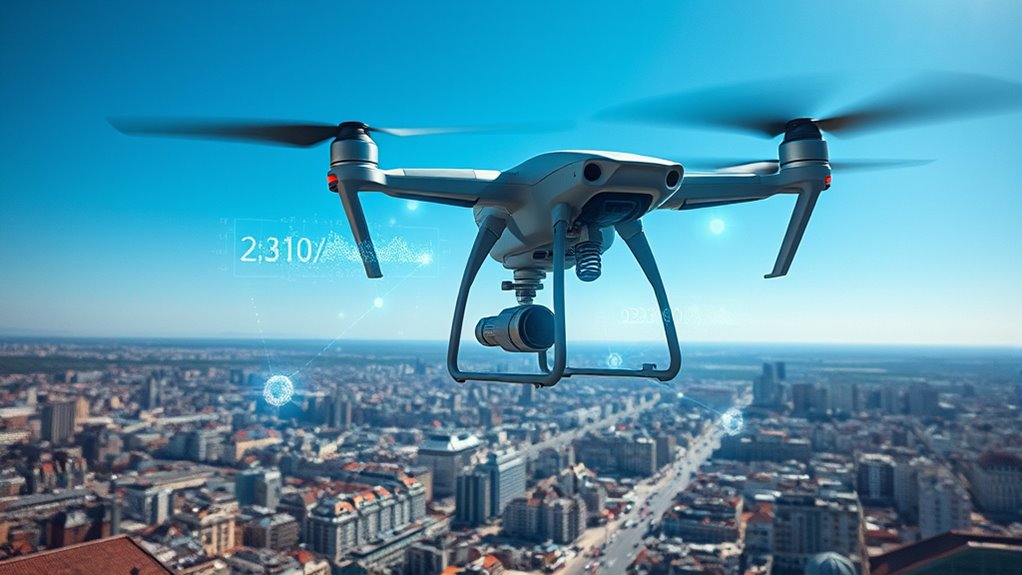

AI-powered drone surveillance combines advanced algorithms with real-time data collection to enhance monitoring capabilities. Drones utilize machine learning to analyze vast datasets, enabling features like object detection and tracking. Predictive analytics help identify potential threats, ensuring a swift response when needed. This technology not only improves efficiency but also supports community safety and environmental monitoring. If you want to explore more about the applications and implications of these drones, there's a lot more to discover.
The Evolution of Drone Technology
Drone technology has come a long way since its early days in the military domain. You've seen the incredible drone evolution, where advancements in technology have transformed these flying machines into versatile tools for various applications. Initially developed for surveillance and combat, drones now serve in agriculture, emergency response, and even recreational use.
As you explore the landscape of modern drones, you'll notice how innovations in battery life, materials, and navigation systems have enhanced their capabilities. These technology advancements allow for longer flight times, greater payloads, and improved safety features. With each leap forward, drones are empowering individuals and businesses, granting you newfound freedom to explore the skies while harnessing their potential for creativity and efficiency.
Understanding Artificial Intelligence in Drones
As technology continues to evolve, artificial intelligence (AI) is playing a pivotal role in enhancing the functionality of modern drones. With the integration of machine learning algorithms, drones can analyze vast amounts of data quickly, allowing them to identify patterns and make informed decisions. This capability not only improves efficiency but also enhances safety during operations. AI enables autonomous navigation, allowing drones to fly without constant human intervention. They can navigate complex environments, avoid obstacles, and reach their destinations with precision. This level of autonomy gives you greater freedom to focus on more critical tasks, knowing your drone is equipped to handle unpredictable conditions. Embracing AI in drones opens up exciting possibilities for various applications, from surveillance to delivery services.
How AI Enhances Data Collection and Analysis
AI greatly improves data collection and analysis in drone surveillance by enabling real-time data processing. This means you can receive immediate insights, allowing for quicker decision-making. Additionally, the integration of predictive analytics helps you anticipate future trends and scenarios based on the collected data.
Real-time Data Processing
While monitoring vast areas, the integration of advanced technologies allows for real-time data processing that greatly enhances data collection and analysis. With AI-powered drones, you can leverage real-time analytics to gather essential information instantly. This means you're not waiting for days or weeks; instead, you get immediate insights that can inform decisions and actions. The process of data fusion takes various inputs from sensors and combines them, giving you an extensive view of your environment. This synergy not only improves accuracy but also reduces the chances of oversight. As a result, you can act swiftly and effectively, ensuring that freedom and safety coexist in your operations. Embracing these technologies empowers you to stay ahead in an ever-changing landscape.
Predictive Analytics Integration
When integrating predictive analytics into drone surveillance, you're not just collecting data; you're transforming it into actionable insights. By employing predictive modeling, you can analyze trends and patterns in real-time, allowing you to anticipate potential issues before they escalate. This proactive approach enhances your risk assessment capabilities, helping you identify vulnerable areas and allocate resources more effectively. With AI-driven drones, you're not merely observing; you're engaging in strategic decision-making that promotes safety and efficiency. The integration of predictive analytics empowers you to act with foresight, ensuring that you're not just responding to events but preventing them. In this way, you harness technology to safeguard your freedom and enhance operational effectiveness.
Key Components of AI-Powered Drone Surveillance
Surveillance technology has evolved remarkably with the integration of advanced components that enhance the capabilities of drones. Key elements like sensor technology enable real-time data collection, while image recognition algorithms help identify objects and patterns. Flight autonomy allows drones to navigate independently, ensuring operational efficiency during missions. A user-friendly interface simplifies mission planning, making it accessible for operators. Furthermore, data encryption safeguards sensitive information, addressing privacy concerns and regulatory challenges. As you explore AI-powered drone surveillance, it's important to reflect on how these components work together to create a robust system that respects individual freedoms while ensuring effective monitoring. This balance is vital for the responsible deployment of drone technology in various applications.
Real-Time Object Detection and Tracking
As you explore real-time object detection and tracking, you'll discover how AI algorithms empower drones to identify and follow moving objects with impressive accuracy. Utilizing advanced object recognition algorithms, drones can distinguish between various objects, whether they're vehicles, people, or animals. This capability enhances tracking accuracy, allowing drones to maintain a steady focus on targets as they change direction or speed.
- Drones can operate autonomously, reducing the need for constant human oversight.
- Real-time data processing guarantees timely responses to dynamic environments.
- Enhanced surveillance capabilities contribute to improved safety and security.
Predictive Analytics in Surveillance Applications
In surveillance applications, predictive analytics plays an essential role in enhancing security measures. By utilizing advanced data analysis techniques, you can identify potential threats before they escalate. This proactive approach not only improves response times but also helps in resource allocation for better overall safety.
Data Analysis Techniques
While you might think of traditional surveillance methods as reactive, data analysis techniques like predictive analytics are transforming how we monitor and respond to potential threats. By utilizing advanced algorithms, these techniques help identify patterns and trends, enabling proactive measures.
Key aspects include:
- Data Visualization Techniques: Turning raw data into insightful visuals for quick comprehension.
- Anomaly Detection Methods: Spotting unusual activities that may indicate security risks.
- Real-Time Analysis: Allowing immediate responses to emerging threats, enhancing safety and security.
With these tools, you can harness the power of data to not only observe but also anticipate, ensuring a more secure environment while preserving your freedom. Predictive analytics empowers you to stay one step ahead of potential dangers.
Threat Identification Methods
Effective threat identification is vital for enhancing surveillance applications, especially when predictive analytics is involved. You'll find that threat assessment relies heavily on advanced algorithms to analyze vast amounts of data. These algorithms help identify patterns that might indicate potential risks. Anomaly detection plays an important role here, as it signals unusual behaviors or events that deviate from the norm. By integrating these methods, AI-powered drones can quickly assess situations and alert you to potential threats before they escalate. This proactive approach not only enhances safety but also respects individual freedoms by focusing on genuine risks rather than invasive monitoring. Ultimately, mastering these techniques guarantees a balance between security and personal liberty, empowering you to maintain a safe environment.
Applications of AI-Powered Drone Surveillance
As technology advances, AI-powered drone surveillance is transforming various sectors by enhancing security, efficiency, and data collection. You'll find these drones playing crucial roles in diverse applications, improving outcomes for both communities and the environment.
- Public Safety: Monitoring urban areas to deter crime and guarantee rapid response.
- Environmental Monitoring: Observing ecosystems to support wildlife conservation and assess environmental health.
- Infrastructure Inspection: Regularly surveying bridges and roads to prevent disasters and assure safety.
These applications highlight how AI-powered drones are not just tools, but indispensable partners in enhancing disaster response, agricultural assessment, traffic management, and security enforcement. You can see how this technology empowers you to take proactive measures in safeguarding your surroundings while promoting efficiency and sustainability.
Ethical Considerations and Future Implications
Given the rapid integration of AI-powered drone surveillance into various sectors, it's vital to address the ethical considerations and future implications of this technology. You might be concerned about privacy issues, as drones can capture images and data without consent. The ethical implications are significant; we need to balance security needs with individual rights. If left unchecked, this technology could lead to a surveillance state where personal freedoms are compromised. It's important to advocate for regulations that guarantee transparency and accountability in drone usage. As we move forward, engaging in open discussions about these concerns will help shape a future where innovation coexists with respect for privacy and civil liberties. Your voice in this conversation matters.
Frequently Asked Questions
How Does Weather Affect Drone Surveillance Performance?
Imagine a drone dancing through the sky; yet, temperature impacts its battery life, while fierce wind conditions can send it spiraling. You'll find that weather profoundly affects surveillance performance, often limiting its capabilities.
What Are the Legal Restrictions for Drone Surveillance?
You've got to navigate complex legal restrictions for drone surveillance, including privacy concerns and regulatory frameworks. Understanding these rules is essential to guarantee you respect individual rights while exercising technological freedom.
Can AI Drones Operate Autonomously Without Human Intervention?
Yes, AI drones can operate autonomously without human intervention, utilizing advanced autonomous navigation and decision-making capabilities. This technology enables them to perform tasks efficiently, but it raises questions about privacy and regulatory concerns you should consider.
How Secure Is the Data Collected by AI Drones?
Imagine your secrets floating through the air, vulnerable. The data collected by AI drones isn't foolproof; while data encryption enhances security, privacy concerns remain. You deserve to know how your information's being protected.
What Is the Cost of Implementing Ai-Powered Drone Surveillance?
When considering the cost of implementing AI-powered drone surveillance, you'll need a thorough cost analysis. Budget considerations include hardware, software, maintenance, and training, ensuring you balance effectiveness with financial freedom and sustainability.
