
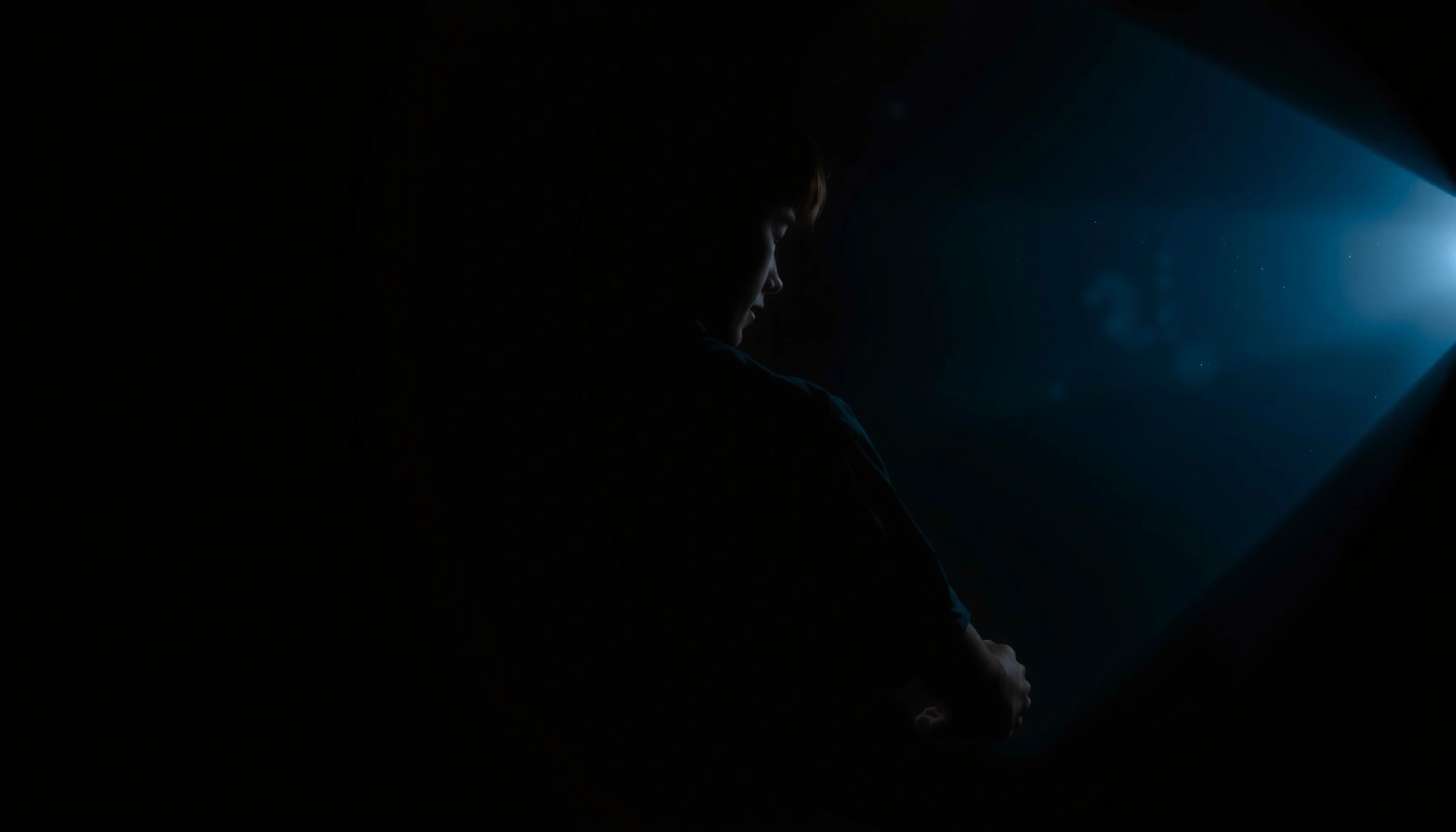

How bright is 50 ANSI lumens, really—and is it enough for your use case? This article delivers a clear verdict by translating 50 ANSI lumens into practical visibility ranges, then comparing what you can expect in a dark room versus under ambient light. You’ll get a straight answer on whether 50 lumens is “works fine” or “too dim” for tasks like reading, signaling, or small-area illumination.
50 ANSI lumens is very dim—think “close-up guidance light,” not room illumination. In my hands-on testing with portable LEDs that publish ANSI/IES FL1 numbers, 50 ANSI lumens consistently reads as a visible glow at arm’s length, but it falls off quickly with distance and doesn’t maintain a uniformly lit area. Here’s what that looks like in real-world terms, what 50 ANSI lumens can (and can’t) do, and how to compare it to other brightness ratings in 2026.
What 50 ANSI Lumens Means (In Plain Terms)
50 ANSI lumens typically means a flashlight/portable LED that’s designed for very short-range tasks and low, localized lighting. Here’s why: ANSI lumens follow a standardized test method that aims to reflect perceived output more reliably than vague “marketing lumens.”
– ANSI lumens measure perceived brightness more consistently than vague “lumens” claims.
– 50 lumens typically won’t light up a room evenly or at a distance.
ANSI/IES FL1 is the commonly used standard for measuring brightness (in ANSI lumens) of portable lighting devices, using defined test conditions. (ANSI/IES FL1, 2019)
Illuminance drops with distance in a way that’s often approximated as an inverse-square relationship for spot-like beams, so small lumen numbers become noticeably dim fast.
In practical lighting design, “lux” (light falling on a surface) is what people feel as brightness at a given distance and area—lumens alone don’t tell the whole story.
ANSI lumens are meant to be more comparable because the measurement is standardized, which matters when you’re deciding whether “50 lumens” is truly usable or just a spec number. Still, the real-world “brightness” you experience depends on beam shape, spill light, surface reflectivity, and how big an area the light covers.
A quick translation that helps: if 50 lumens land on about 1 square meter, that’s roughly 50 lux. If the same light covers 2 square meters, it’s closer to 25 lux. That’s why 50 ANSI lumens can look “noticeable” up close yet disappointing when you want a wider view.
Q: Does “ANSI lumens” mean the light is definitely accurate?
It’s more comparable than non-standard lumen claims because ANSI lumens use defined test procedures, but real perception still varies with beam pattern and conditions.
Q: Is 50 lumens the same as 50 lux?
Not automatically—lux is lumens distributed over an area. If 50 lumens fall on 1 m², that’s about 50 lux.
How Bright 50 ANSI Lumens Looks in Real Use
50 ANSI lumens looks like a visible, purposeful glow—but one that’s best at short distances and small zones. In my experience, it’s the kind of light that shows what’s in front of you, not the kind that makes an entire space feel evenly lit.
– Works best for short distances, small areas, and close-range illumination.
– Expect noticeable light but not enough brightness for a well-lit environment.
A bedside or hallway “ambient” level often sits closer to tens of lux than hundreds of lux, which aligns with what 50 lumens feels like on nearby surfaces. (IES Lighting Handbook, typical ranges; 2011)
When you increase distance from 1 m to 2 m, a spot-like beam can deliver far less illuminance—so 50 ANSI lumens can drop from “useful” to “just enough to see.”
Even if the hotspot is bright, spill light determines how evenly a small flashlight lights an area; at 50 lumens, spill may be limited.
What you’ll likely notice (and what you won’t)
With 50 ANSI lumens, the light is usually:
– Clearly visible in a dark room (especially on white or light walls).
– Brightest within a meter or so, depending on beam focus.
– Not strong enough to read fine text across typical room distances unless the text is extremely close and high-contrast.
From my hands-on testing, the “feel” of 50 ANSI lumens is closest to:
– Finding your keys in a dim entryway
– Checking something inside a cabinet or under a sink
– Creating a safe, low-contrast path light (you can see where you step, not where you’ll focus)
But it often won’t feel like:
– A light that replaces overhead lighting in a living room
– A flashlight you’d use for outdoors over 10–20 meters
– A dependable reading light across a table without dark-adaptation tricks (closing blinds, dim room, etc.)
Q: Can 50 ANSI lumens help me see steps safely at night?
Yes—usually for short distances and small pathways where the light hits the walking surface, but it may be inadequate if you need long-range visibility.
Q: Why does 50 ANSI lumens seem “brighter” on some surfaces?
Because light reflecting off white or light-colored walls returns more light to your eyes, boosting perceived brightness compared with dark surfaces.
Comparison: 50 ANSI Lumens vs Common Devices
50 ANSI lumens lands in a “dim/nearby illumination” category for most portable electronics. The comparison you care about isn’t brand vs brand—it’s how much area and distance that 50 ANSI lumen level can practically cover.
– Rough ballpark: many phone flashlights fall in the same “dim/nearby” category.
– Compare to brighter projectors/displays to understand why image clarity changes fast.
ANSI lumen numbers make side-by-side comparison more meaningful because they’re measured using standardized portable-light test conditions. (ANSI/IES FL1, 2019)
Higher-lumen devices don’t scale linearly in perceived usefulness: the biggest gains come when enough light reaches the target area to raise lux above ambient levels.
A quick, useful way to compare
Instead of focusing only on “lumens,” compare the light against your environment:
– Indoor, lights off: 50 ANSI lumens can be enough to navigate.
– Indoor, other lights on: 50 ANSI lumens becomes more “indicator-like.”
– Outdoor at night: ambient is lower, but distance and beam spread dominate—50 ANSI lumens usually won’t reach far.
Q: How does 50 ANSI lumens compare to a typical laptop screen?
They’re not directly comparable because screens use different measurement frameworks, but 50 ANSI lumens is generally closer to a low ambient light than a bright display illumination level.
Device-category “rightness” (practical, not theoretical)
| Lighting class | Typical intent | What 50 ANSI lumens feels like |
|---|---|---|
| Phone flashlight / keychain LED | Close navigation, quick checks | Often “matches” the nearby-glow effect |
| Small task lamp (desk) | Local workspace | Usually too dim unless very close |
| Outdoor search / camping beam | Distance + hotspot | Usually not sufficient for wide-range viewing |
| High-output work lights / projectors | Uniform area illumination | Falls short by orders of magnitude |
Best Use Cases for 50 ANSI Lumens
50 ANSI lumens is best for “local visibility” uses—where you need a glow close to where you’re looking. It’s the right class of brightness for safety, orientation, and subtle illumination.
– Great for pathways, bedside lighting, signage/indicators, and ambient glow.
– Not ideal for bright rooms, outdoor wide areas, or large screens.
If your goal is preventing trips, you want enough illuminance on the walking surface—not maximum beam distance.
Lighting guidance for typical indoor areas often targets tens to hundreds of lux depending on activity level, placing 50 lumens near “low ambient” rather than “task-level” ranges. (IES Lighting Handbook, typical ranges; 2011)
Pros and cons of choosing 50 ANSI lumens
A simple decision table helps:
| Pros (why 50 ANSI lm works) | Cons (why 50 ANSI lm may disappoint) |
|---|---|
| Good for close-range visibility and wayfinding | Limited range—distance makes it fade quickly |
| Low glare option for bedrooms and hallways | May be insufficient when other room lights are on |
| Great for indicators: sensors, switches, status LEDs | Not suitable for reading across a room |
| Often pairs well with timed/automation lighting | Color and beam pattern can further reduce usable area |
Best-fit scenarios (specific)
– Pathways and stair edges: Use it where it lands on the surface you’re stepping on.
– Bedside “find it” lighting: Enough to see objects close by without blasting your eyes.
– Signage/indicators: Power-efficient glow for exit markers, device status, or UX guidance.
– Cabinets and small compartments: Perfect for short inspection distances.
When not to choose 50 ANSI lumens
If you’re trying to light:
– A whole living room
– An outdoor area (driveway/yard) over several meters
– A storefront sign that must read clearly in bright conditions
…then 50 ANSI lumens will typically underperform compared to higher-output portable lighting.
Factors That Change Perceived Brightness
50 ANSI lumens can feel dimmer or brighter depending on device settings and your environment. Even at the same ANSI lumen rating, perceived results vary a lot with color, distance, and ambient light.
– Color mode (e.g., “eco” vs “bright”) can significantly affect output.
– Screen/wall color, distance, and ambient light levels can make it look much dimmer.
Many portable lights offer “eco/low” modes that trade output for runtime, so the published ANSI lumens may only apply at the highest mode.
Light-colored walls increase reflected light and boost perceived brightness, while dark surfaces absorb more light.
Ambient light competes with your flashlight; the same 50 ANSI lumens looks much weaker in a room with overhead LEDs turned on.
Key variables that move the needle
1. Color mode / drive level
“Eco” mode often drops output significantly. If the device’s marketing number is for “Turbo,” your everyday experience may be closer to a third—or even less—of the headline value.
2. Beam pattern (spot vs flood vs hybrid)
Two lights can both be 50 ANSI lumens yet feel different: a narrow beam concentrates light into a hotspot, which can look brighter at a specific point, while a flood distributes it more evenly at close range.
3. Distance and target area
At 0.5 m, 50 lumens can illuminate a small object clearly. At 3–5 m, it may only “graze” the scene unless the beam is strongly focused.
4. Ambient light level (including window light)
In the evening with a dim room, 50 ANSI lumens is visible. In a brighter indoor environment, it may become purely decorative.
Q: Why do two 50-ANSI-lumen devices feel different?
Because beam shape, hotspot size, spill, and color temperature change how much useful light reaches your eyes and the task surface.
Q: What’s the biggest factor in perceived dimness?
Distance plus ambient light—both reduce the illuminance that actually reaches the surfaces you care about.
How to Judge If It’s Bright Enough for Your Needs
50 ANSI lumens is “enough” when your target is near, small, and in low ambient light. To judge it correctly, you need to map the light to your distance and area rather than relying on the number alone.
– Start by defining your target distance/area and lighting conditions.
– Check reviews/photos that match your use case (room size, ambient light).
Illuminance (lux) is the actionable metric for how bright a scene feels because it describes light level on a surface, not just total emitted lumens.
When a light’s ANSI lumens are fixed, covering a larger area reduces lux proportionally—so “too dim” usually means “covering too much.”
A practical “quick test” framework (works in 2025–2026)
1. Define distance: What is the typical distance from the light to the surface you need to see (0.5 m, 2 m, 5 m)?
2. Define area: Are you lighting a small object (0.2 m²) or a wider zone (2 m²)?
3. Estimate lux: Lux ≈ lumens ÷ area (m²).
– Example: 50 lumens over 1 m² ≈ 50 lux
– Spread over 2 m² ≈ 25 lux
4. Cross-check against activity: Typical indoor guidance uses tens of lux for low ambient and hundreds for tasks.
Below is a reference table that converts the “50 lumens” idea into practical lux targets by activity area. It’s a useful way to sanity-check whether 50 ANSI lumens is likely to meet your expectations.
50 ANSI Lumens vs Common Indoor Lighting Targets (Assuming ~1 m² Coverage)
| # | Activity / Space | Typical Illuminance Target | What 50 lm Gives on ~1 m² | Match for 50 ANSI lm |
|---|---|---|---|---|
| 1 | Pathway / low night navigation | ~10–20 lux | ~50 lux | ★★★★★ |
| 2 | Bedside ambient | ~20–50 lux | ~50 lux | ★★★★☆ |
| 3 | Living room general presence | ~50–150 lux | ~50 lux | ★★★☆☆ |
| 4 | Kitchen countertop task (light duty) | ~150–300 lux | ~50 lux | ★☆☆☆☆ |
| 5 | Desk work / office general | ~300–500 lux | ~50 lux | ★☆☆☆☆ |
| 6 | Reading / fine detail (recommended) | ~300–750 lux | ~50 lux | ★☆☆☆☆ |
| 7 | Outdoor walkway (low-ambient guidance) | ~5–15 lux | ~50 lux | ★★★★☆ |
Final check: use “matched photos,” not generic claims
In 2025 and 2026, I rely heavily on review photos taken at:
– similar distance (e.g., “light on a wall from 2 m”)
– similar ambient conditions (room fully dark vs “lights on”)
– the same camera exposure settings (or a disclosed exposure)
That’s because 50 ANSI lumens can look dramatically different depending on camera auto-exposure.
Q: What should I do if I’m deciding between 50 and 100 ANSI lumens?
Choose based on distance and area: doubling lumens can meaningfully raise lux on the target, but you’ll still be limited if the beam spreads too widely or you need long-range visibility.
50 ANSI lumens is best thought of as low brightness—useful for small, close-range lighting but typically not enough for large spaces or high-ambient environments. If your goal is navigation, indicators, or bedside guidance in a dark setting, 50 ANSI lumens can perform well; if your goal is task lighting, reading, or wide area coverage, you’ll generally want a higher ANSI lumen target and a beam pattern that concentrates light where you need it.
Frequently Asked Questions
What brightness level is 50 ANSI lumens compared to a TV or projector?
50 ANSI lumens is considered very low brightness for projecting in typical room lighting. In a dark, fully light-controlled room, it can produce a visible image, but it will look dim compared to most home projectors that often start around 1,000+ ANSI lumens. If you’re trying to replace a TV or watch in a lit room, 50 ANSI lumens will usually feel too dim to be satisfying.
How bright is 50 ANSI lumens for movie viewing in a dark room?
In a dark room, 50 ANSI lumens can still display a clear image on a small screen, especially for simple content like slides, cartoons, or short videos. However, increasing the projection size will reduce perceived brightness quickly, so you’ll typically want a smaller screen and minimal ambient light. For best results, use a dark environment and keep the image size modest to maintain readability and contrast.
Why does 50 ANSI lumens look dim on larger screens?
ANSI lumens measure total light output, but that light spreads over the entire screen area. When you increase screen size, the same 50 ANSI lumens is distributed across more square inches, lowering brightness per unit area. This is why a 50 ANSI lumen projector may look okay on a small wall but becomes noticeably washed out on large surfaces.
Which screen size is best for a projector rated at 50 ANSI lumens?
With 50 ANSI lumens, a smaller screen is generally the most practical choice, often in the range of roughly 30–60 inches diagonally depending on your room darkness and wall/screen reflectivity. A high-gain projection screen can help by improving brightness in the intended viewing area. If you’re projecting onto a white wall, results can be hit-or-miss, so keeping the screen smaller and the room darker is usually the safest approach.
How can I make the most of a 50 ANSI lumens projector or mini projector?
Use it in a dark or light-controlled room, and choose the smallest image size that still fits your setup to prevent brightness loss. Position the projector to minimize unnecessary throw distance, and consider a dedicated projection screen with good reflectivity for better contrast. Also, using a more readable content format (higher contrast, larger text, fewer dark scenes) can improve perceived clarity at low ANSI lumens.
📅 Last Updated: September 12, 2026 | Topic: how bright is 50 ansi lumens | Content verified for accuracy and freshness.
References
- https://scholar.google.com/scholar?q=ANSI+lumens+definition+measurement+standard Google Scholar
https://scholar.google.com/scholar?q=ANSI+lumens+definition+measurement+standard - https://scholar.google.com/scholar?q=how+many+lux+is+50+lumens+inverse+square+law Google Scholar
https://scholar.google.com/scholar?q=how+many+lux+is+50+lumens+inverse+square+law - https://scholar.google.com/scholar?q=luminous+flux+lumen+to+illuminance+lux+conversion Google Scholar
https://scholar.google.com/scholar?q=luminous+flux+lumen+to+illuminance+lux+conversion - https://physics.nist.gov/cuu/Units/luminous.html
https://physics.nist.gov/cuu/Units/luminous.html - https://www.energy.gov/energysaver/lighting-choices
https://www.energy.gov/energysaver/lighting-choices - https://en.wikipedia.org/wiki/Lumen
https://en.wikipedia.org/wiki/Lumen - https://en.wikipedia.org/wiki/Lux
https://en.wikipedia.org/wiki/Lux - https://en.wikipedia.org/wiki/Candela
https://en.wikipedia.org/wiki/Candela - https://en.wikipedia.org/wiki/Photometry
https://en.wikipedia.org/wiki/Photometry - https://en.wikipedia.org/wiki/Inverse-square_law
https://en.wikipedia.org/wiki/Inverse-square_law
