
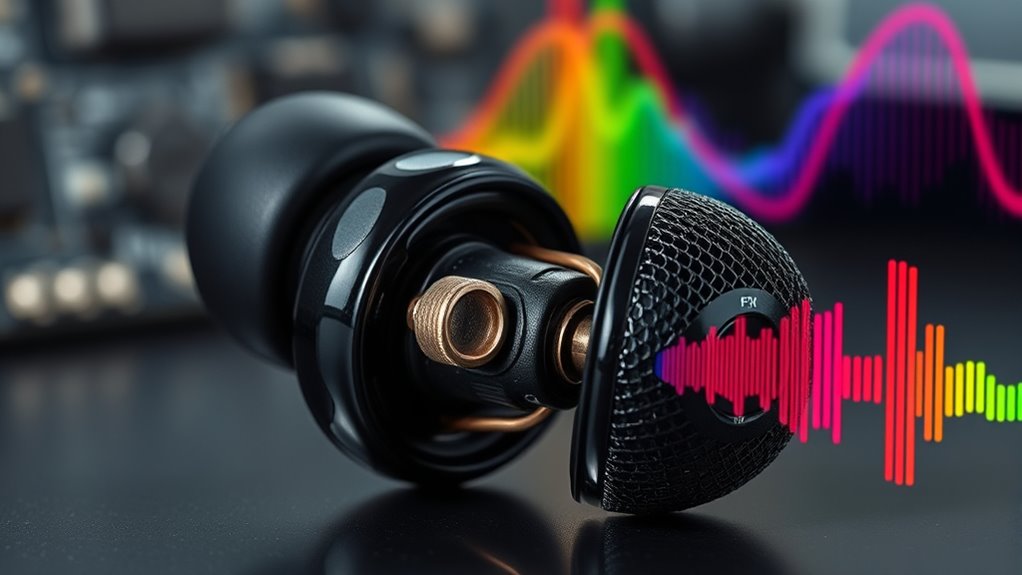

Earbuds work by converting electrical signals into sound waves through miniature components. A driver creates vibrations that translate into audio you hear. The housing protects these parts while also influencing sound quality. Drivers vary from dynamic to balanced armature and planar magnetic types, each impacting sound performance differently. Impedance affects compatibility with audio sources, ensuring ideal output. With advancements in wireless technology and comfort materials, modern earbuds offer enhanced experiences. Explore further to uncover more about their intricate designs and functionalities.
The Anatomy of Earbuds
Earbuds are compact audio devices designed for personal listening, and their anatomy plays an important role in sound delivery. Understanding the earbud components is vital for appreciating their functionality. The driver, typically a dynamic type, converts electrical signals into sound waves, while the housing protects the driver and influences sound quality. The silicone or foam tips guarantee a snug fit, enhancing both comfort and noise isolation. Over the years, design evolution has focused on miniaturization and improved acoustic performance, leading to the incorporation of features like built-in microphones and touch controls. These advancements empower you to enjoy high-quality audio while maintaining freedom of movement, reflecting a balance between technology and personal listening preferences.
How Sound Is Produced
To understand how sound is produced in earbuds, it’s crucial to examine the generation of sound waves and the role of transducers. When an audio signal is sent through the earbuds, the transducer converts electrical energy into mechanical energy, creating vibrations. These vibrations then generate sound waves that travel through the air, reaching your ears.
Sound Wave Generation
When sound is produced, it begins with the conversion of electrical signals into mechanical vibrations, which then create sound waves. These sound waves exhibit various properties and behaviors that are essential for your auditory experience.
| Property | Description | Example |
|---|---|---|
| Frequency | Determines pitch | High-pitched whistle |
| Amplitude | Influences loudness | Soft vs. loud music |
| Wavelength | Affects sound wave behavior | Short waves = treble |
Understanding these sound wave properties helps you appreciate how your earbuds deliver audio. Sound wave behavior, including reflection and absorption, also plays a role in how you perceive sound, providing a richer listening experience that aligns with your desire for freedom in sound exploration.
Transducer Functionality
Transducers play an essential role in converting electrical signals into audible sound, ensuring that your listening experience is both accurate and enjoyable. The functionality of these components hinges on various transducer types and materials, each impacting sound quality differently.
- Dynamic Drivers: Utilize a voice coil and diaphragm for efficient sound reproduction.
- Balanced Armature Drivers: Known for their compact size and precise sound output.
- Planar Magnetic Drivers: Offer excellent transient response using a flat diaphragm.
- Electrostatic Drivers: Provide high fidelity through a thin diaphragm suspended in an electric field.
- Piezoelectric Drivers: Use specific materials to produce sound via mechanical oscillation.
Understanding these transducer types and materials helps you appreciate the technology behind your earbuds, enhancing your listening freedom.
Understanding Drivers
To grasp how earbuds function, you need to understand the various types of drivers used in their construction. Each driver type employs a distinct sound production mechanism, impacting audio quality and performance. Additionally, the size of the drivers plays a vital role in determining the overall sound output and frequency response.
Types of Drivers
Understanding the various types of drivers is essential for grasping how earbuds produce sound. The choice of driver impacts audio quality, frequency response, and overall listening experience. Here are the primary types:
- Dynamic Drivers: These are the most common and deliver a rich bass response.
- Balanced Armature Drivers: Known for their clarity, they excel in mid and high frequencies.
- Planar Magnetic Drivers: They provide a detailed soundstage and are often used in high-end models.
- Electrostatic Drivers: Renowned for their accuracy, these require special amplification.
- Hybrid Drivers: Combining dynamic and balanced armature drivers, they offer a versatile sound profile.
Sound Production Mechanism
The sound production mechanism in earbuds hinges on the interaction between electrical signals and the drivers, which act as transducers to convert these signals into audible sound waves. As the electrical currents pass through the driver, they create vibrations that correspond to specific sound frequencies. This manipulation of frequencies is essential for achieving audio clarity, enabling you to distinguish between various notes and tones effectively. The diaphragm within the driver moves in response to these vibrations, generating sound waves that travel through the air and into your ears. By fine-tuning the electrical signals sent to the drivers, earbuds can enhance sound reproduction, ultimately delivering an immersive audio experience that allows you to enjoy your favorite music as intended.
Driver Size Impact
Driver size greatly influences the audio performance of earbuds, impacting sound quality, frequency response, and overall listening experience. When considering driver performance, it’s vital to understand how size comparison affects these elements:
- Bass Response: Larger drivers typically produce deeper bass.
- Clarity: Smaller drivers can excel in higher frequencies, providing clearer vocals and instruments.
- Volume: Bigger drivers often allow for higher volume levels without distortion.
- Soundstage: Larger drivers can create a more immersive audio environment.
- Portability: Smaller drivers make earbuds more compact and travel-friendly.
Ultimately, choosing the right driver size is fundamental for achieving your desired audio experience. Understanding these nuances empowers you to make informed decisions about your earbud selection.
The Role of Impedance
Impedance plays a critical role in determining how earbuds interact with audio sources and deliver sound quality. It’s essential to achieve proper impedance matching between your earbuds and the device, ensuring ideal audio quality without distortion.
| Impedance Level | Device Compatibility |
|---|---|
| Low (16-32 ohms) | Mobile devices, laptops |
| Medium (32-80 ohms) | Portable amplifiers, DACs |
| High (80+ ohms) | Studio equipment, high-end audio devices |
When impedance mismatches occur, you might notice diminished sound fidelity or unwanted noise. Understanding these nuances empowers you to select earbuds that perform best with your audio sources, enhancing your listening experience and granting you the freedom to enjoy music as intended.
Types of Earbud Designs
While choosing earbuds, understanding the various design types can greatly impact your overall listening experience. The evolution of earbud styles has led to a range of options, each tailored to different preferences and use cases. Here are some common designs you should consider:
Understanding different earbud designs is essential for enhancing your listening experience and finding the perfect fit for your needs.
- In-ear: Fits snugly within the ear canal, providing excellent noise isolation.
- On-ear: Sits on the outer ear, balancing comfort and sound quality.
- Open-back: Allows ambient sound in, offering a more natural listening experience.
- Noise-canceling: Uses technology to block external sounds, ideal for travel.
- Wireless: Eliminates cords for maximum freedom of movement.
Selecting the right earbud design not only influences sound quality but also enhances comfort and usability, making your listening experience more enjoyable.
Wireless Technology in Earbuds
As technology advances, wireless earbuds have revolutionized how you experience sound, offering unparalleled convenience and freedom from tangled cords. At the core of this innovation is Bluetooth connectivity, which enables seamless pairing with your devices. This wireless protocol operates within a specific range, allowing you to move freely without compromising audio quality.
Battery efficiency has also markedly improved, ensuring that you can enjoy extended listening sessions without frequent recharging. Many models utilize advanced battery management systems, optimizing power consumption based on usage patterns, which enhances your overall experience. With these technological advancements, you can enjoy high-fidelity sound and effortless connectivity, making wireless earbuds an essential accessory for those who value mobility and versatility in their audio experience.
Materials That Enhance Comfort
To guarantee a comfortable fit during prolonged use, manufacturers of earbuds often select materials that prioritize both ergonomics and sound isolation. Key materials contribute to a more enjoyable listening experience, allowing you to focus on your music without discomfort.
Earbud manufacturers prioritize ergonomic materials for comfort and sound isolation, enhancing your listening experience during extended use.
- Foam cushioning: Adapts to your ear shape for a snug fit.
- Silicone tips: Provide a softer touch while enhancing sound isolation.
- Ergonomic design: guarantees natural alignment with your ear canal.
- Adjustable fit: Offers customization for individual preferences.
- Breathable materials: Reduce moisture buildup, enhancing comfort during long sessions.
Noise Isolation vs. Noise Cancellation
When considering how earbuds manage external sounds, it is essential to distinguish between noise isolation and noise cancellation, as each technology addresses sound interference differently.
| Feature | Noise Isolation | Noise Cancellation |
|---|---|---|
| Method | Passive noise blocking | Active noise reduction |
| Technology | Physical earbud design | Microphones and algorithms |
| Effectiveness | Less effective for loud sounds | Highly effective in low-frequency noise |
| Ideal Use | General listening | Travel and urban environments |
Noise isolation relies on the physical design of earbuds to block sound, while noise cancellation uses active noise technology to counteract external sounds. Understanding these differences helps you choose the right earbuds for your needs and enhances your listening experience.
The Future of Earbud Technology
The evolution of earbud technology promises significant advancements that could redefine how you experience sound. Future innovations are set to integrate smart features that enhance audio quality and user experience. Here’s what you can expect:
- Adaptive sound profiles that tailor audio to your environment
- Voice-activated controls for seamless interaction
- Health monitoring capabilities that track your well-being
- Enhanced battery life with faster charging options
- Advanced noise management that combines isolation and cancellation
These audio enhancements will not only elevate your listening experience but also offer greater freedom in how you connect with your devices. Embracing these advancements means you’ll enjoy a more personalized and immersive sound experience in the near future.
Frequently Asked Questions
Can Earbuds Damage My Hearing Over Time?
Yes, earbuds can damage your hearing over time. Studies show that 1 in 5 teens experience hearing loss due to excessive volume. Always use volume control wisely; keeping levels below 60% can help protect your ears.
How Do I Clean My Earbuds Properly?
To clean your earbuds properly, use a soft, dry cloth for surfaces and a gentle brush for the mesh. Regular earbud maintenance prevents buildup. Avoid moisture and harsh chemicals to guarantee longevity and peak performance.
Are Expensive Earbuds Worth the Investment?
Expensive earbuds usually offer superior sound quality, better materials, and enhanced durability. When considering a price comparison, investing in high-quality earbuds often leads to a more satisfying listening experience, giving you both freedom and clarity in sound.
What Is the Average Lifespan of Earbuds?
The average lifespan of earbuds is typically 1 to 3 years, depending on earbud longevity and maintenance. Proper care, like avoiding moisture and storing them correctly, can greatly extend their usability and performance.
Can I Use Earbuds With Hearing Aids?
Yes, you can use earbuds with hearing aids, but hearing aid compatibility may vary. Sound quality comparison shows that some combinations enhance clarity, while others might not meet your expectations. Experiment to find your ideal setup.
