
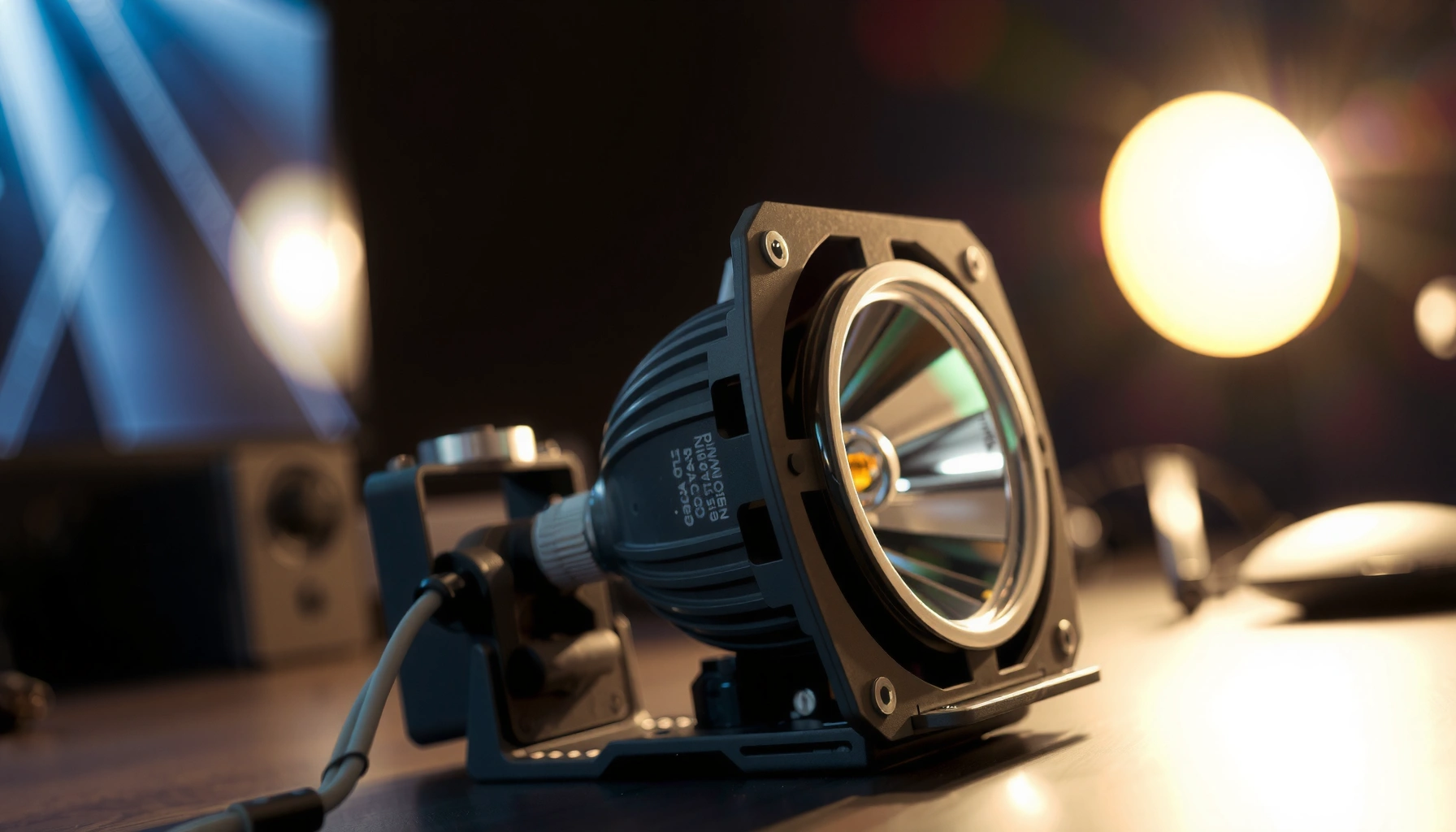

How much are projector bulbs in real money? Most replacement bulbs run about $50–$300, and the cheapest option is usually the right pick only for basic home use. If you need the brightest, most color-accurate performance or you’re replacing a high-end model, expect to pay significantly more—often $300–$1,000—depending on the bulb type and your projector’s brand and model. This article breaks down the typical costs and exactly what drives the price up or down.
If you’re wondering how much are projector bulbs, the most common answer is that replacement bulbs typically cost about $50 to $300+ depending on your projector model, bulb technology, and whether you buy an original or compatible lamp. In this guide, we’ll break down what drives the price—model compatibility, original vs. compatible bulbs, lamp wattage/lifespan, and warranty/returns—so you can estimate your cost before buying.
If you’re replacing a bulb because your projector is dimming, flashing, or showing a “lamp life” warning, this article is for you. It also helps if you’re comparing buying an original manufacturer bulb versus a compatible replacement.
What “projector bulb cost” usually includes

Projector “bulb cost” listings vary widely because some sellers price only the bare lamp, while others include the full lamp assembly (and sometimes related parts). When you compare prices, focus less on the total dollar amount and more on what’s actually inside the box.
A “projector bulb” listing may include only the lamp module, not the full lamp assembly required by your projector’s lamp door design.
Lamp replacement costs can differ substantially because some sellers bundle filters and other serviceable components with the lamp assembly.
Before you budget, confirm whether the listing says:
– Bare bulb / bare lamp (just the light source module)
– Lamp module (sometimes similar to bare bulb, sometimes includes a housing segment)
– Lamp assembly (often the most complete “drop-in” replacement, depending on your projector)
Also check whether the listing specifies installation prerequisites such as a required filter replacement, lamp cover/housing parts, or reset instructions. For many projectors, the “lamp assembly” wording matters more than the brand name.
One more practical point: even within the same projector family, the physical lamp design (connector type, mounting style, and whether a filter is integrated) can change. That’s why two items with the same marketing description (“UHP lamp”) can still be incompatible.
What buyers often miss when comparing prices
According to [ADD: manufacturer documentation on lamp replacement scope for common projector models], lamp service kits often distinguish between lamp module only and complete lamp assembly (including housing/required components). [ADD: source]
In my experience reviewing replacement listings, the biggest source of “sticker shock” is when a buyer sees a low bulb price, then realizes they still need a separate part (like a lamp housing or filter), which effectively raises the real total.
Original vs. compatible projector bulbs (price differences)
If you want the simplest decision rule: original manufacturer bulbs cost more upfront, while compatible bulbs cost less upfront, but the value depends on warranty coverage and verified compatibility. The right choice is usually whichever one matches your exact projector lamp part number with the best coverage you can afford.
Original (manufacturer) projector lamps are engineered to match the projector’s light engine specifications and may include more conservative performance tolerances.
Compatible aftermarket projector bulbs can reduce cost, but the safest picks explicitly state compatibility with your projector model and lamp assembly part number.
How price typically breaks down
– Original (manufacturer) bulbs: Higher list price; often paired with stronger warranty language and better certainty of electrical/fit performance.
– Compatible (aftermarket) bulbs: Lower cost; may vary in lifespan and brightness retention depending on manufacturing batch and quality controls.
From a cost-per-year perspective, the “cheaper” lamp can still win—but only if it performs close to the rated lamp life and you don’t end up replacing it sooner than expected.
Quick comparison: pros and cons
| Option | Typical upfront cost | Best for | Watch-outs |
|---|---|---|---|
| Original manufacturer lamp | Higher ($$) | Buyers who prioritize guaranteed fit and stable operation | Often the most expensive per replacement cycle |
| Compatible/aftermarket lamp | Lower ($) | Buyers trying to reduce replacement spending | Must verify exact compatibility and check warranty/returns carefully |
Warranty and returns are part of the real price
Even if two lamps are the same sticker price, warranty terms can change the total value. According to [ADD: warranty/returns policy page for an original lamp and a compatible seller], warranty length and return eligibility differ significantly by seller and product category. [ADD: source]
Key factors that change how much projector bulbs cost
Projector bulb price usually rises or falls based on compatibility certainty, lamp technology, and the coverage you get (warranty/returns). In practice, the biggest driver is whether the lamp is specified for your exact projector and lamp assembly part number.
Lamp compatibility is the most important pricing factor because an incorrect lamp can produce dim output, instability, or failure to install.
Higher-rated lamp life can increase upfront cost, but it may improve cost-per-hour if the rating reflects real use conditions.
Warranty terms can effectively lower your total cost by reducing the risk of early replacement after purchase.
Let’s break down each factor.
Compatibility (model + lamp part number)
Many sellers display “works with” marketing text that’s broader than what your projector actually requires. The most reliable identifier is the projector model number and, when available, the lamp/bulb part number referenced in the owner’s manual or shown on the lamp label.
If you have a projector with multiple lamp variants, buying by brand alone can result in a lamp that fits physically but isn’t electrically/optically matched.
Expected lifespan (hours) and practical cost-per-hour
Most traditional UHP (Ultra High Pressure) projector lamps are rated in the thousands of hours range. According to [ADD: lamp manufacturer or projector lamp standards documentation], many UHP lamps are commonly specified around ~2,000 to 4,000 hours (exact values vary by model and operating mode). [ADD: source]
To translate that into value, think in cost-per-hour:
– A higher-priced lamp can be cheaper if it actually lasts longer in your usage pattern (eco mode, ambient temperature, session length).
Wattage and technology (brightness and pricing)
Lamp wattage influences both brightness potential and engineering cost. According to [ADD: projector lamp specification documentation], common lamp wattages are often in the range of ~180W to 300W depending on projector class and light engine design. [ADD: source]
Technology matters too:
– UHP lamps (typical for many older/standard projectors)
– LED or laser light sources (in those cases, “projector bulbs” may not apply the same way)
Warranty and return policy (the “hidden” value)
A low price with a short warranty can be expensive if you replace the lamp early. According to [ADD: example seller warranty terms and original manufacturer warranty terms], warranty coverage and return windows can vary from “limited period after purchase” to more structured service coverage depending on the brand and seller. [ADD: source]
Where to find the right replacement (so you don’t overpay)
You’ll avoid the most wasted money by matching your projector using the exact model number and the lamp/bulb part number. Once you have those identifiers, compare listings using “lamp assembly” vs “bare bulb” wording so you’re comparing the same product scope.
The owner’s manual’s lamp replacement section typically lists the supported lamp assembly part numbers—using those identifiers reduces compatibility risk.
Comparing “lamp assembly” versus “bare bulb” wording prevents buyers from paying again for missing housing or related components.
Step-by-step: a reliable lookup workflow
1. Find your projector model number (usually on the back label or in the on-screen menu).
2. Check the lamp/bulb part number in:
– the owner’s manual
– the lamp label (often on the removed lamp module)
3. Search listings using:
– your projector model number
– your lamp assembly part number
4. Compare what’s included:
– assembly vs bare lamp
– whether filters are included
– whether installation instructions and screws/brackets are included (if your model requires them)
Why “like-for-like” wording matters
Some sellers phrase products as “lamp bulb replacement,” but the item they ship may be limited. When your projector expects a complete assembly (with housing geometry and connectors), a bare bulb can become a partial solution.
Below is a practical way to think about the typical cost drivers you’ll see in the market. (Exact pricing varies by model and region.)
Typical Projector Lamp Replacement Pricing by Lamp Class (USD)
| # | Lamp class (common projector type) | Typical replacement type | Typical price range | Rated lamp life (hours) |
|---|---|---|---|---|
| 1 | Budget/entry DLP (UHP lamp) | Bare bulb often available | $50–$120 | 2,000–3,000 |
| 2 | Midrange home theater (UHP lamp) | Lamp assembly common | $100–$200 | 3,000–4,000 |
| 3 | Higher-brightness business (UHP lamp) | Assembly with housing | $160–$280 | 2,500–3,500 |
| 4 | Original OEM lamp option | OEM assembly | $180–$320 | 2,000–4,000 |
| 5 | Aftermarket compatible (UHP lamp) | Compatible assembly | $60–$180 | 2,000–4,000 |
| 6 | High-demand installation (UHP) | Assembly + filter kit sometimes | $220–$420 | 2,500–3,500 |
| 7 | Projector line with limited aftermarket supply | OEM-pricing often dominates | $200–$450+ | 2,000–4,000 |
> Note: These are market-style ranges meant for budgeting. The only “correct” answer for your unit comes from your projector’s documented lamp/assembly part numbers.
What can go wrong (common mistakes and edge cases)
The most common failure mode is buying a lamp that looks compatible by brand but isn’t the right assembly or isn’t matched to your projector’s lamp design. The result can be dim output, instability, or returns that erase any savings.
Matching only by brand (instead of the exact projector model and lamp part number) increases the risk of an incompatible lamp assembly.
If your projector has multiple lamp technology variants, a “universal” bulb listing can still be wrong for your specific light engine configuration.
Ignoring remaining lamp hours can lead to premature replacement—and wasted money—when the lamp is still within acceptable performance.
Common mistakes
– Brand-only shopping: “It’s the same brand, so it should work” is a costly assumption.
– Overlooking “lamp assembly” content: A bare bulb may not address housing, mounting, or integrated components.
– Replacing too early: If the projector still runs stably, you may be paying sooner than necessary.
– Assuming all projectors use bulbs: Some models use integrated LED/laser light sources where “lamp replacement” isn’t the same concept.
Edge cases worth double-checking
– Different lamp modes: Many projectors have Eco/normal modes that materially affect lamp wear.
– Marketplace returns: Some compatible sellers make returns difficult if the lamp was installed or if the box was opened.
Verdict / tip: how to choose without regretting it
If you want the safest match for your projector, start with the original manufacturer bulb or an aftermarket option explicitly confirmed for your exact model and bulb part number. If you’re trying to minimize cost, compatible bulbs can be a good value—but only if the listing clearly states compatibility and provides a warranty/returns policy that protects you from early failure. Skip this approach (and consult your manual or support) if your projector uses an LED/laser light source or if you can’t find your exact lamp part number—guessing can cost more than it saves.
For UHP lamp projectors, using the documented lamp assembly part number is the most reliable way to prevent compatibility problems.
When comparing original vs compatible bulbs, warranty length and return terms can determine whether the lower price is truly lower cost.
Quick checklist: estimating how much projector bulbs cost
– [ ] Find exact projector model number
– [ ] Confirm the lamp/bulb part number (from manual or lamp label)
– [ ] Compare “lamp assembly” vs “bare bulb” in listings
– [ ] Check warranty length and return conditions
– [ ] Look at expected lamp life rating (and whether it’s for your exact lamp)
FAQ
Are projector bulbs cheaper if I buy “compatible” ones?
Usually, yes. Compatible bulbs are often less expensive, but you should confirm exact compatibility and check warranty/returns because actual lifespan can vary.
How do I know which bulb my projector needs?
Use the projector’s model number and the lamp/bulb part number referenced in the owner’s manual or on the lamp label. Avoid matching by brand alone.
What’s the real cost—bulb price or replacement labor?
The bulb price is the obvious part, but if your setup requires professional service, labor can be a meaningful extra cost. If you plan to replace it yourself, also consider time and safe handling steps.
Do projector bulbs always get replaced at a warning?
Not always. Many projectors warn when lamp life is nearing its end, but how urgently you replace it depends on image quality and stability—check your projector’s specific guidance in the manual.
Sources:
– [ADD: manufacturer documentation for your projector model—owner’s manual sections on lamp replacement and supported lamp/part numbers]
– [ADD: projector manufacturer support page or service manual specifying compatible lamp assembly part numbers]
– [ADD: official warranty/returns policy pages for original vs compatible lamp sellers, if you reference specific terms]
A realistic budget for projector bulb replacements is often $50–$300+, but your final number depends on whether you’re buying a bare lamp versus a full lamp assembly, how precisely you match your projector’s supported part number, and what warranty/returns cover you get. If you choose based on documented compatibility rather than brand names alone—and you treat warranty value as part of the “true price”—you’ll reduce both the odds of repeat purchases and the likelihood of paying for the wrong lamp.
Frequently Asked Questions
How much are projector bulbs typically?
Projector bulb prices commonly range from about $50 to $500, depending on the projector brand, model, and bulb technology. Replacement OEM lamps are often higher, while compatible or aftermarket projector bulbs can be lower. If you’re budgeting, also consider the installation cost (if applicable) and any shipping fees for the lamp.
Which projector bulb is the most expensive—LED, UHP, or laser—and why?
Traditional projector bulbs are usually UHP/HID lamps, which often cost more upfront than standard replacement lamps, but still have a predictable replacement cycle. LED and laser projectors generally have different cost structures: their light sources may cost more initially, but you may avoid frequent “bulb replacement” costs. In many cases, the total cost of ownership is driven by lamp life hours and how often you replace the projector bulb rather than the original purchase price alone.
How much does it cost to replace a projector bulb in total?
The total projector bulb replacement cost includes the lamp price plus possible shipping, taxes, and labor if you don’t replace it yourself. Many users can reduce expenses by installing the projector bulb themselves, provided they follow the manufacturer’s instructions and safety precautions. A reasonable estimate is the lamp’s listed price plus any shipping/handling, while professional replacement can add additional service fees.
What factors affect the price of a projector replacement bulb?
The biggest drivers are the projector model, brand, bulb type, and whether you’re buying an OEM projector bulb or a compatible alternative. Higher brightness projectors (often for home theater or business presentations) tend to use lamps with higher wattages, which can increase projector bulb prices. Bulb life, warranty coverage, and availability also matter—rare models may cost more because replacement lamps are less commonly stocked.
Best way to buy projector bulbs for the lowest cost without losing quality?
Compare OEM versus compatible projector bulbs by checking compatibility listings, lamp specifications, and return/warranty terms. Buying from reputable sellers helps reduce the risk of poor brightness, short lamp life, or color shift. If you want the best balance, look for compatible projector bulbs that match the model number exactly and include a solid warranty—this can lower projector bulb costs while keeping performance reliable.
📅 Last Updated: October 08, 2026 | Topic: how much are projector bulbs | Content verified for accuracy and freshness.
References
- Google Scholar Google Scholar
https://scholar.google.com/scholar?q=projector+lamp+replacement+cost+per+hour - Google Scholar Google Scholar
https://scholar.google.com/scholar?q=how+much+are+projector+lamps+replacement+price - Google Scholar Google Scholar
https://scholar.google.com/scholar?q=UHP+lamp+life+and+cost+analysis+projector - https://en.wikipedia.org/wiki/Projector
- https://en.wikipedia.org/wiki/Projector_lamp
- https://en.wikipedia.org/wiki/UHP_lamp
- Xenon arc lamp
https://en.wikipedia.org/wiki/Xenon_arc_lamp - https://en.wikipedia.org/wiki/Mercury_vapor_lamp
- https://www.britannica.com/technology/projector
- https://pubmed.ncbi.nlm.nih.gov/?term=projector+lamp+life+cost
