
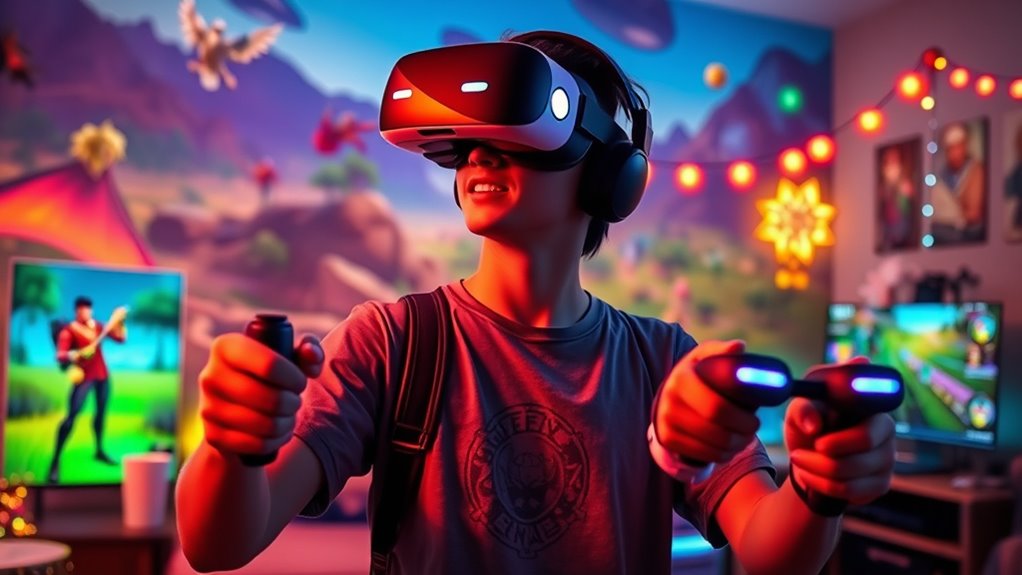

To play Fortnite with a VR headset, you’ll need a compatible headset like the Oculus Rift or HTC Vive, and a gaming rig that meets the system requirements. Set up a clear space and optimize lighting for better tracking. Install the necessary VR software, download Fortnite from the Epic Games Launcher, and customize your settings for an immersive experience. Master movement and building techniques to excel in the game. There’s much more to explore on enhancing your gameplay!
Understanding VR Compatibility for Fortnite
While many gamers are excited about the possibility of playing Fortnite in virtual reality, understanding VR compatibility is vital before diving in. First, you need to confirm your VR headset meets the Fortnite system requirements. Popular headsets like Oculus Rift and HTC Vive offer immersive experiences, but not all models are created equal. Check the specs for VR headset compatibility; some older models may struggle to run Fortnite smoothly. Additionally, your gaming rig must have adequate processing power and graphics capabilities to support VR gameplay. A powerful GPU and CPU are essential for a seamless experience. So, before you jump into the battle royale world, make sure your gear is up to par, guaranteeing you can enjoy Fortnite the way it was meant to be played.
Choosing the Right VR Headset
Once you’ve confirmed your VR setup can handle Fortnite, the next step is choosing the right VR headset to enhance your gaming experience. You’ll want to take into account various factors, such as VR headset types, budget considerations, and comfort features. Here’s a quick comparison to help you decide:
| Feature | Options |
|---|---|
| VR Headset Types | Oculus, HTC, Valve |
| Budget Considerations | $300 – $1,000 |
| Comfort Features | Adjustable straps, cushioned |
| Resolution Differences | 1080p, 4K |
| Wireless Options | Yes, No |
Check user reviews and brand comparisons to guarantee you’re making an informed choice. Don’t forget to look for accessories availability that can enhance your gameplay!
Setting Up Your VR Environment
To guarantee an immersive experience in Fortnite, it’s essential to set up your VR environment properly. Start by creating a safe space; clear any clutter around you to avoid accidents while you’re engrossed in the game. Make sure there’s enough room for you to move freely without risking injury. Next, focus on optimizing lighting—dim the lights to reduce glare on your headset and enhance the virtual experience. If possible, use adjustable ambient lighting to prevent harsh shadows that might distract you. Finally, check your headset’s tracking sensors to ensure they’re unobstructed. With a well-prepared environment, you’ll plunge into Fortnite’s world with full freedom, enjoying every moment without distractions or interruptions. Happy gaming!
Installing Fortnite for VR
Installing Fortnite for VR isn’t just about downloading the game; it requires a few additional steps to confirm ideal performance and compatibility. First, verify your gaming rig meets the system requirements. You’ll need a powerful GPU and a solid CPU to run both Fortnite and your VR software seamlessly. Next, download and install the necessary VR software, like Oculus or SteamVR, depending on your headset. After that, grab Fortnite from the Epic Games Launcher. Make sure to check for any updates during installation to confirm you’re running the latest version. With everything in place, you’ll be ready to plunge into the battle royale experience in VR. Embrace the freedom of movement and immersion that VR brings to Fortnite!
Configuring VR Settings in Fortnite
After getting Fortnite installed for VR, the next step is configuring the VR settings to optimize your gameplay experience. You’ll want to guarantee that your graphics and performance settings are tailored to your VR headset for the best immersion. Here’s how to get started:
Configuring VR settings is essential for an immersive Fortnite experience tailored to your headset.
- Configuring Graphics: Adjust the resolution and texture quality to balance visual fidelity with frame rates. Higher settings can look great but may hinder performance.
- Optimizing Performance: Lower unnecessary settings like shadows and effects to boost frame rates, guaranteeing smoother gameplay.
- Field of View: Adjust the FOV to enhance your peripheral vision, allowing for better situational awareness in-game.
With these adjustments, you’re setting yourself up for an exhilarating VR Fortnite experience!
Tips for Navigating the VR Interface
While diving into the immersive world of Fortnite VR, you’ll quickly notice that maneuvering the interface can be quite different from traditional gaming. To enhance your experience, start by experimenting with interface customization. Adjust HUD elements to fit your preferences, making critical information readily accessible. Use VR navigation tips like spatial awareness; look around to locate menus and options rather than relying on a flat screen. Familiarize yourself with the unique gestures or controller buttons needed to interact with the interface. Don’t hesitate to explore different settings; the ideal setup can greatly boost your gameplay. Finally, practice makes perfect—spend time getting comfortable with the VR environment, and soon, maneuvering the interface will feel as natural as it does in standard gameplay.
Mastering Controls and Movement in VR
To truly excel in Fortnite VR, mastering the controls and movement is essential, as it directly impacts your gameplay experience. Understanding the various control schemes and how they affect movement dynamics can elevate your performance. Here are three key areas to focus on:
- Locomotion: Familiarize yourself with walking, running, and sprinting mechanics to navigate the environment fluidly.
- Aiming and Shooting: Adjust your grip and stance for precision aiming, ensuring your shots land where intended.
- Jumping and Crouching: Practice these actions to enhance your agility, allowing you to dodge attacks or reach higher platforms.
Strategies for Building in VR
When building in VR, mastering spatial awareness is essential to guarantee your structures are both effective and efficient. You’ll want to implement quick build techniques to stay ahead of your opponents while managing your resources wisely. By honing these strategies, you can elevate your gameplay and secure more victories in Fortnite.
Mastering Spatial Awareness
As you immerse yourself in building in VR, mastering spatial awareness becomes essential for enhancing your gameplay in Fortnite. Developing effective spatial awareness techniques can elevate your experience and help you navigate the virtual environment fluidly. Here are three strategies to reflect on:
- Practice Depth Perception: Regularly engage in activities that challenge your perception of distance, like placing structures at varying heights and distances.
- Visualize Structures: Before building, mentally visualize the layout and positioning of your structures to guarantee you’re maximizing space.
- Use the Environment: Familiarize yourself with the terrain and obstacles in Fortnite, allowing you to build strategically while taking advantage of natural cover.
Quick Build Techniques
Building quickly in VR can greatly enhance your gameplay in Fortnite, especially when you’re in the heat of battle. To master quick build techniques, practice using your VR controllers for swift movements. Start by familiarizing yourself with the button layout; efficient building relies on muscle memory. Use the “turbo building” feature to maintain a constant flow, allowing you to place structures rapidly. Incorporate the “90-degree turn” technique to gain height quickly, giving you a tactical advantage. Remember, combining your builds with strategic positioning can outmaneuver opponents. Utilize these quick build techniques not just to defend but also to launch surprise attacks. With practice, you’ll find your building speed and efficiency will become second nature, revolutionizing your Fortnite experience.
Resource Management Strategies
Effective resource management in Fortnite is essential for maintaining a competitive edge, especially in VR where every decision counts. To optimize your resource allocation and enhance your inventory management, consider these strategies:
- Prioritize Materials: Always gather wood, brick, and metal based on your playstyle. Wood’s quick build time is great for immediate cover, while metal offers durability in late-game.
- Monitor Your Inventory: Regularly check your stock to guarantee you have enough materials for critical builds. Aim to keep a balanced inventory to adapt to different combat situations.
- Build Smartly: Use your resources strategically. Don’t waste materials on unnecessary structures; instead, focus on smart builds that maximize defense while conserving your inventory.
Enhancing Your Gameplay Experience
While you might think playing Fortnite in VR is just about the immersive visuals, there are several ways to enhance your overall gameplay experience. By leveraging the virtual reality advantages, you can transform how you interact with the game. Here’s a quick overview:
| Feature | Benefit |
|---|---|
| 360-degree view | Better situational awareness |
| Motion controls | Natural, intuitive gameplay |
| Customizable settings | Tailored experience |
| Immersive audio | Enhanced sound directionality |
| Social interactions | Connect with friends virtually |
These elements contribute to creating an immersive gameplay experience. By embracing these features, you’ll find that VR not only elevates your gameplay but also allows for a more engaging and dynamic adventure in Fortnite.
Joining the Fortnite VR Community
As you immerse yourself in the exhilarating world of Fortnite VR, connecting with the community can greatly enhance your experience. Engaging with fellow players opens up a domain of creativity and collaboration. Here are three ways to join the Fortnite VR community:
Immerse yourself in Fortnite VR and connect with the community for a creative and collaborative gaming experience.
- Participate in Fortnite community events – These events often feature competitions, giveaways, and unique challenges that encourage teamwork and camaraderie.
- Utilize VR social interactions – Tools like Discord or in-game voice chat help you communicate effectively, strategizing with friends or making new ones.
- Join online forums and social media groups – Sharing tips, tricks, and experiences enriches your understanding and keeps you updated on the latest trends.
Embrace these opportunities, and you’ll find a supportive network that amplifies your Fortnite VR journey!
Frequently Asked Questions
Can I Use a VR Headset With Any Gaming Console?
Not all gaming consoles support VR headset compatibility. While PS4 and PS5 do, others like Xbox don’t natively support VR. Always check your console’s specifications for the latest on console gaming and VR integration.
Is Fortnite VR Available on All PC Platforms?
Fortnite isn’t officially available in VR on all PC platforms, though many gamers enjoy mods. Curiously, 50% of players report improved VR performance, enhancing their gaming experience. Explore compatibility options to maximize your fun!
Are There Any VR Accessories That Enhance Gameplay?
You’ll find VR controller options that provide immersive interactions and VR audio enhancements that deepen your experience. These accessories truly elevate gameplay, giving you a sense of freedom and engagement that standard setups can’t match.
Can I Play Fortnite VR With Friends in Non-Vr Mode?
Yes, you can play Fortnite in VR with friends who aren’t in VR mode! The game supports cross-platform play, allowing seamless friend matchmaking between different devices, enhancing your gaming experience and fostering camaraderie. Enjoy!
How Do I Troubleshoot VR Headset Connectivity Issues?
To troubleshoot VR headset connectivity issues, check your VR headset compatibility, restart the device, make certain all cables are secure, update software, and try connecting to different USB ports. These steps often resolve common connectivity problems.
