
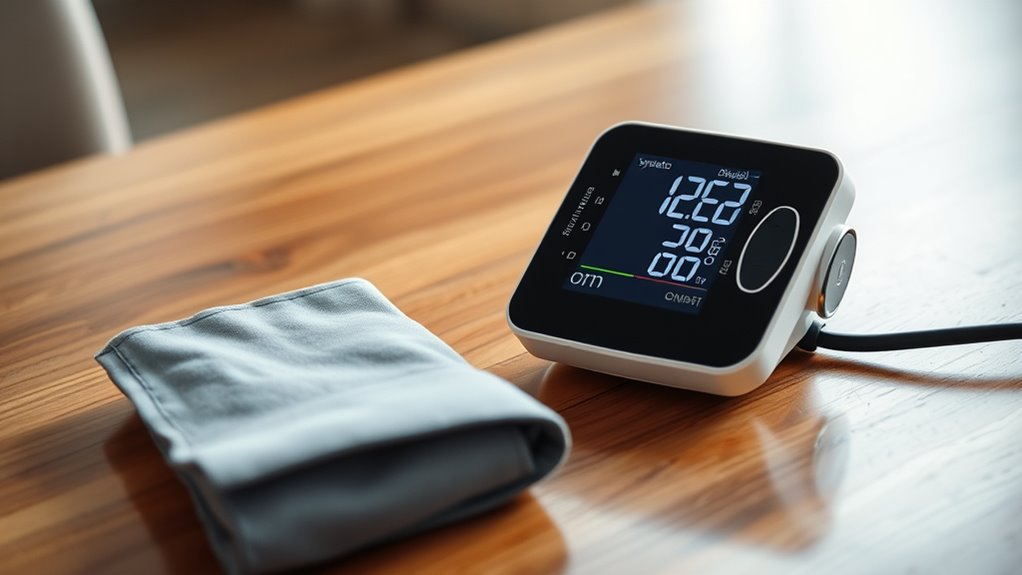

To read a blood pressure monitor, start by noting two numbers: systolic and diastolic. Systolic measures the pressure when your heart beats, while diastolic shows pressure when your heart rests. Normal is under 120/80 mmHg. Make sure to sit quietly for at least five minutes before measuring, keeping your arm at heart level. A higher systolic might indicate increased cardiovascular risk, so it’s important to monitor regularly. Discover more about interpreting trends and maintaining healthy levels.
Understanding Blood Pressure Readings
Understanding blood pressure readings is essential for monitoring your cardiovascular health. Many people fall prey to blood pressure myths, believing that only those with high numbers need to worry. In reality, both high and low readings can signal issues. Lifestyle factors—like diet, exercise, and stress—play a significant role in your blood pressure levels. It’s important to recognize how your daily choices impact your readings. For instance, excessive salt intake or a sedentary lifestyle can elevate your pressure, while regular physical activity and a balanced diet can help manage it. By staying informed and debunking these myths, you can take control of your health and make empowered decisions that promote a healthier life.
The Components of a Blood Pressure Measurement
A blood pressure measurement consists of two key components: systolic and diastolic readings. The systolic number measures the pressure in your arteries when your heart beats, while the diastolic number reflects the pressure when your heart rests between beats. Understanding these components is essential for monitoring your cardiovascular health effectively.
| Component | Description |
|---|---|
| Systolic Reading | Pressure during heartbeats |
| Diastolic Reading | Pressure when the heart is at rest |
| Cuff Types | Varying styles like manual, automatic |
When choosing a blood pressure monitor, consider its features, such as ease of use and accuracy. Selecting the right cuff type can also enhance your measurement experience, ensuring you’re empowered in your health journey.
How to Use a Blood Pressure Monitor
Using a blood pressure monitor effectively starts with proper preparation for measurement. It’s essential to follow specific steps to guarantee your readings are accurate. Once you have your results, knowing how to interpret them correctly will help you understand your health better.
Preparing for Measurement
Before you take a measurement with your blood pressure monitor, it’s essential to prepare properly to guarantee accurate results. Start by finding a quiet space where you can sit comfortably for at least five minutes. Check that your monitor is calibrated and in good working order. When you’re ready, make certain your arm is supported at heart level and the cuff fits snugly without being too tight. Avoid common mistakes like crossing your legs or talking during the measurement, as these can affect your readings. Following these best practices will help assure you get reliable results every time, allowing you to monitor your health effectively and confidently.
Interpreting Readings Accurately
Once you’re settled and ready to take your blood pressure measurement, understanding how to interpret the readings is key to evaluating your health. Blood pressure is expressed in two numbers: systolic over diastolic. A normal reading is typically around 120/80 mmHg. Be aware of common blood pressure myths; for instance, a single high reading doesn’t always mean you have hypertension. Factors like stress, activity level, and even time of day can cause reading variations. If you see a number outside the normal range, don’t panic—it’s essential to take multiple readings over time for an accurate assessment. Always consult with a healthcare professional to interpret your results in the context of your overall health.
Interpreting Systolic and Diastolic Numbers
When you read a blood pressure monitor, you’ll notice two key numbers: systolic and diastolic. Systolic pressure measures the force of blood against your arteries when your heart beats, while diastolic pressure indicates the pressure when your heart is at rest between beats. Understanding these numbers is essential for evaluating your cardiovascular health.
Understanding Systolic Pressure
Systolic pressure, the first number you’ll see on a blood pressure monitor, represents the force of blood against your artery walls when your heart beats. Understanding its significance can empower you to take charge of your health. Here are three key points to reflect on regarding systolic pressure:
- Systolic significance: A higher systolic reading can indicate increased cardiovascular risk, while a lower reading may suggest better heart health.
- Pressure factors: Factors like stress, diet, and physical activity can influence your systolic pressure, so monitoring it regularly is essential.
- Healthy range: Aim for a systolic pressure below 120 mmHg for ideal health and well-being.
Familiarizing yourself with these points can enhance your understanding of your overall cardiovascular health.
Understanding Diastolic Pressure
Diastolic pressure, the second number displayed on a blood pressure monitor, measures the force of blood in your arteries when your heart is at rest between beats. Understanding the diastolic significance is vital for evaluating your overall cardiovascular health. Typically, a normal diastolic reading ranges from 60 to 80 mmHg. Higher readings may indicate increased risk for heart disease or hypertension, while lower values might suggest inadequate blood flow. When using measuring techniques, make sure the cuff fits snugly and you’re in a relaxed position to get accurate results. Regular monitoring of both systolic and diastolic pressures empowers you to take charge of your health, allowing you to make informed decisions about lifestyle changes and medical consultations when necessary.
Recognizing Normal and Abnormal Readings
Understanding how to recognize normal and abnormal blood pressure readings is essential for maintaining your health and well-being. Blood pressure readings are typically expressed as two numbers: systolic over diastolic. Normal ranges usually fall below 120/80 mmHg. When monitoring your blood pressure, keep an eye out for these key points:
- Normal Readings: A systolic under 120 and diastolic under 80 indicates healthy blood pressure.
- Elevated Readings: Systolic 120-129 and diastolic under 80 are warning signs that you may be at risk.
- Abnormal Indicators: Readings of 130/80 mmHg or higher may signal hypertension and should prompt further investigation.
Recognizing these indicators can empower you to take control of your health.
Tips for Accurate Blood Pressure Monitoring
Accurate blood pressure monitoring is essential for obtaining reliable readings that reflect your true health status. To guarantee this, pay attention to monitoring frequency; regular checks can help you spot trends and changes in your blood pressure. Ideally, measure your blood pressure at the same time each day for consistency. Also, don’t overlook device calibration; verify your monitor is properly calibrated according to the manufacturer’s guidelines. This can greatly affect the accuracy of your readings. Sit quietly for a few minutes before testing, and use the correct cuff size for your arm. Finally, avoid caffeine, exercise, or smoking for at least 30 minutes prior to monitoring to make sure your readings aren’t influenced by temporary factors.
Frequently Asked Questions
Can Anxiety Affect My Blood Pressure Readings?
Yes, anxiety can definitely affect your blood pressure readings. Anxiety symptoms, like increased heart rate, can elevate your numbers. Practicing stress management techniques may help stabilize your readings and promote overall well-being.
How Often Should I Check My Blood Pressure?
“An ounce of prevention’s worth a pound of cure.” You should check your blood pressure regularly as part of your daily routine, ideally at the same time each day for consistent measurement timing and accurate tracking.
Is It Safe to Use a Blood Pressure Monitor at Home?
Yes, it’s safe to use a blood pressure monitor at home, as long as you follow safety guidelines. Regular home monitoring can empower you to manage your health effectively, giving you greater freedom and control.
Can Medications Influence My Blood Pressure Readings?
Yes, medications can definitely influence your blood pressure readings. Different medication types and their dosage effects may either raise or lower your blood pressure, so it’s essential to monitor your levels regularly while on any medication.
What Should I Do if My Readings Are Consistently High?
If your readings are consistently high, don’t worry—just make some lifestyle changes and dietary modifications. Embrace healthier habits; it’s a fun way to take control of your health while feeling free and empowered!
