
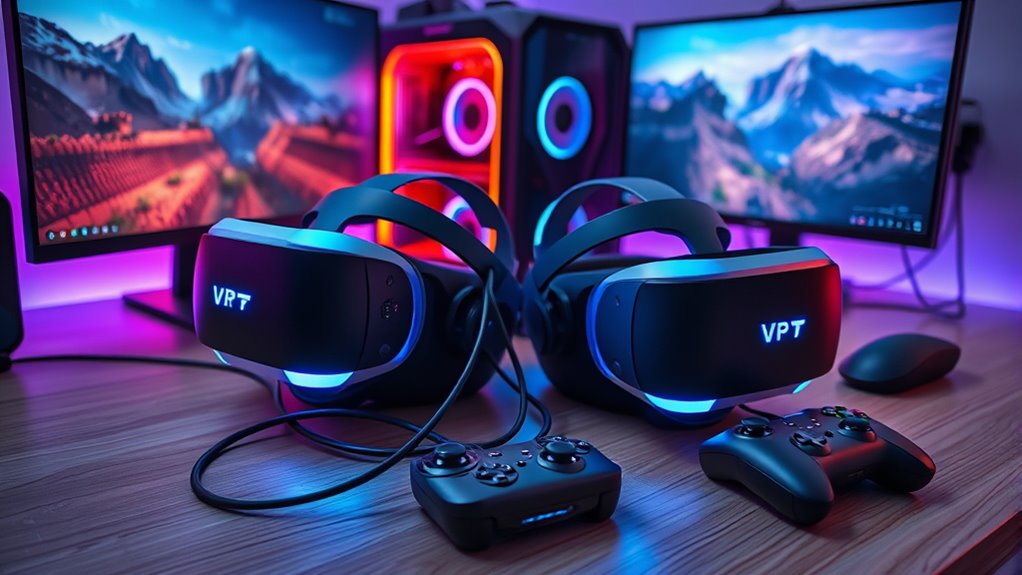

To run two VR headsets on one PC, start by checking your hardware compatibility, ensuring your GPU and CPU can handle the load. You’ll need enough USB and HDMI ports, possibly using a powered USB hub and HDMI splitter. Choose software that supports multi-headset functionality and allows user profiles. Finally, configure the settings for each headset to optimize performance. With the right setup, you can create shared VR experiences that are fun and memorable. Discover more tips and tricks as you go along!
Understanding VR Hardware Compatibility
When you’re looking to run two VR headsets on one PC, understanding hardware compatibility is essential. Start by checking the VR headset compatibility of both devices. Each headset may have specific requirements that your PC must meet regarding processing power, graphics capabilities, and USB connections. Review the VR hardware specifications for each headset and confirm your graphics card can handle the demands of both simultaneously. Additionally, consider the availability of ports and bandwidth; using USB hubs might be necessary. Finally, keep in mind that not all headsets are designed to work together, so verify that your chosen models can be operated concurrently without conflicts. Taking these factors into account will set you on the path to an immersive dual VR experience.
Setting Up Your PC for Dual VR Headsets
To set up your PC for dual VR headsets, you’ll need to guarantee your hardware meets specific requirements. After that, you can proceed with the necessary software configuration steps. Let’s go over what you need to get started.
Hardware Requirements
Setting up dual VR headsets on a single PC requires specific hardware to guarantee a smooth experience. First, verify your graphics card is compatible with both headsets. A high-end GPU, like those from NVIDIA or AMD, is vital for handling the extra workload. You’ll also need to check your power requirements; a robust power supply unit (PSU) is essential to support the demands of dual VR. Aim for at least 750W to secure stability during intense sessions. Additionally, make sure your motherboard has enough USB ports for the headsets and any accessories. Finally, consider ample RAM—at least 16GB—to keep everything running seamlessly. With the right hardware, you’ll release the freedom to explore virtual worlds together.
Software Configuration Steps
Before diving into the software configuration, verify that both VR headsets are properly connected to your PC. Start by launching your VR platform, like SteamVR or Oculus. Navigate to the software settings where you’ll find options for headset synchronization. Confirm both headsets are detected and properly configured. Adjust settings to match your desired experience, focusing on resolution and refresh rate for each headset. For seamless performance, check for updates to your VR software and drivers. Once everything’s set up, test the synchronization by launching a compatible VR application. This will help you confirm that both headsets are functioning together. Enjoy the freedom of dual VR experiences, and don’t hesitate to tweak settings as needed for peak performance!
Choosing the Right Software for Multi-Headset Support
While choosing the right software for multi-headset support might seem challenging, it’s vital for ensuring a seamless VR experience. Start by evaluating software compatibility with both headsets. Not all programs can handle multiple devices simultaneously, so verify that the software you select supports your specific models.
Next, consider multi-user management features. This aspect is significant if you want to switch between users without hassle. Look for software that allows easy user profiles, ensuring each person gets their personalized settings.
Additionally, check for updates and community support; a thriving user base often means better troubleshooting resources. By focusing on these elements, you can confidently choose software that enhances your VR experience and grants you the freedom to explore together.
Connecting the Headsets to Your Computer
To connect two VR headsets to your computer, you’ll need to guarantee you have the right hardware components. Check that your system has enough USB and HDMI ports to accommodate both headsets. Once connected, you’ll also need to follow specific software configuration steps to get everything running smoothly.
Required Hardware Components
Connecting two VR headsets to a single PC requires specific hardware components to guarantee smooth operation. First, verify your graphics card is compatible with both headsets. A powerful GPU is essential for maintaining high frame rates and preventing lag, which can ruin your experience. Look for a card that supports headset synchronization; this will help manage the input from both devices seamlessly. Additionally, consider having an adequate CPU and plenty of RAM to handle the increased workload. Using an external USB hub can also help to connect all necessary peripherals without overloading your ports. By investing in the right hardware, you’ll enjoy a hassle-free VR experience for both headsets, giving you the freedom to explore virtual worlds together.
USB and HDMI Ports
With the right hardware in place, the next step involves connecting both VR headsets to your PC using USB and HDMI ports. First, check your PC’s USB compatibility; make sure it has enough ports to support both devices. If you’re short on USB slots, consider using a powered USB hub for a reliable connection. For the HDMI connections, you’ll likely need HDMI splitters to share the video output between the two headsets. Verify the splitters support the necessary resolution and refresh rates for an excellent experience. Once you’ve connected the headsets, double-check each connection to avoid any issues later. With everything hooked up, you’re one step closer to enjoying dual VR experiences on a single PC.
Software Configuration Steps
Once your VR headsets are physically connected, you’ll need to configure the software to recognize both devices. Start by launching your VR platform’s settings. In the software settings, look for an option to add additional headsets. Follow the prompts to guarantee both headsets are detected. You’ll likely need to create separate user profiles for each headset, allowing for personalized experiences. Assign specific settings to each profile, like resolution and tracking preferences, to optimize performance. After saving your configurations, restart the software to apply the changes. Once everything’s set up, you should be ready to enjoy VR with both headsets seamlessly. Remember, flexibility in settings can enhance your overall experience, so don’t hesitate to tweak them as needed.
Configuring VR Settings for Multiple Users
As you prepare to configure VR settings for multiple users, it’s essential to guarantee that each headset operates seamlessly. Start by creating user profiles for each individual who’ll be using the VR system. This guarantees personalized settings, enhancing the overall experience. Each profile can store specific preferences, like control layouts and display settings.
Next, adjust user permissions to determine who has access to certain features and content. This step prevents accidental changes and maintains a smooth experience for everyone involved. Remember to regularly update these profiles as users change preferences or new individuals join in. By managing user profiles and permissions effectively, you’ll foster a more enjoyable and tailored VR experience for all.
Optimizing Performance for Smooth Experiences
To guarantee both VR headsets deliver a smooth experience, you’ll need to optimize your PC’s performance effectively. Start by ensuring your graphics drivers are up to date, as this can greatly impact performance optimization. Close any unnecessary background applications to free up system resources. Adjust your VR settings, lowering graphical fidelity where needed to maintain smooth gameplay without compromising too much on quality. Consider upgrading your RAM or GPU if you frequently encounter performance issues. Additionally, keep your PC well-ventilated to prevent overheating, which can cause throttling. Finally, regularly monitor your system’s performance using software tools to identify and address any bottlenecks, ensuring both headsets operate seamlessly during your VR sessions.
Sharing VR Experiences: Tips and Tricks
While sharing VR experiences can enhance the fun, it requires some planning to guarantee everything runs smoothly. First, make sure both headsets are properly connected and recognized by your PC. Use compatible software for shared gameplay, allowing both users to plunge into the same virtual world simultaneously. Next, set up your play area to accommodate both players, making certain there’s enough space to avoid collisions during immersive interactions. Consider using voice chat or a shared screen feature to communicate effectively in-game. Finally, choose experiences that are designed for multiplayer to maximize enjoyment. With these tips, you can create memorable VR moments that let you and your friend explore together, enhancing the thrill of virtual adventures.
Troubleshooting Common Issues With Dual Headsets
When you’re running two VR headsets on one PC, you might encounter some common issues that can disrupt your experience. Here’s how to tackle them effectively:
- Headset detection: Verify both headsets are recognized by your system. Check connections and settings.
- Performance issues: Lower graphics settings to improve frame rates and reduce lag.
- Software conflicts: Confirm all VR software and drivers are updated to avoid compatibility problems.
- Audio problems: Verify your audio settings and ascertain the correct output device is selected for each headset.
- VR calibration: Calibrate each headset individually to enhance tracking accuracy and user comfort.
Frequently Asked Questions
Can I Use Different Brands of VR Headsets Together?
Yes, you can use different brands of VR headsets together, but brand compatibility and headset synchronization may pose challenges. Make sure your PC can handle both and check software compatibility for a smoother experience.
Will Running Two Headsets Decrease Performance Significantly?
Running two headsets can feel like juggling flaming torches; resource allocation often leads to performance impact. You might notice a dip in frame rates or responsiveness, but optimizing settings can help maintain an enjoyable experience.
Do I Need Additional Hardware for Dual VR Setups?
Yes, you’ll need additional equipment for dual VR setups. Confirm your headsets are compatible with your PC and each other. Extra USB ports and potentially a more powerful GPU might be necessary to maintain performance.
How Do I Switch Between Headsets During Use?
Picture yourself gliding through virtual worlds. To switch headsets, simply disconnect one and connect the other, ensuring the software recognizes the change. This seamless headset switching enhances your user experience, allowing effortless exploration. Enjoy your adventure!
Are There Any Software Limitations for Dual VR Systems?
Yes, there are software compatibility issues and VR platform limitations you might encounter. Not all applications support dual headsets, and performance can suffer. It’s essential to check compatibility before attempting to use both simultaneously.
