
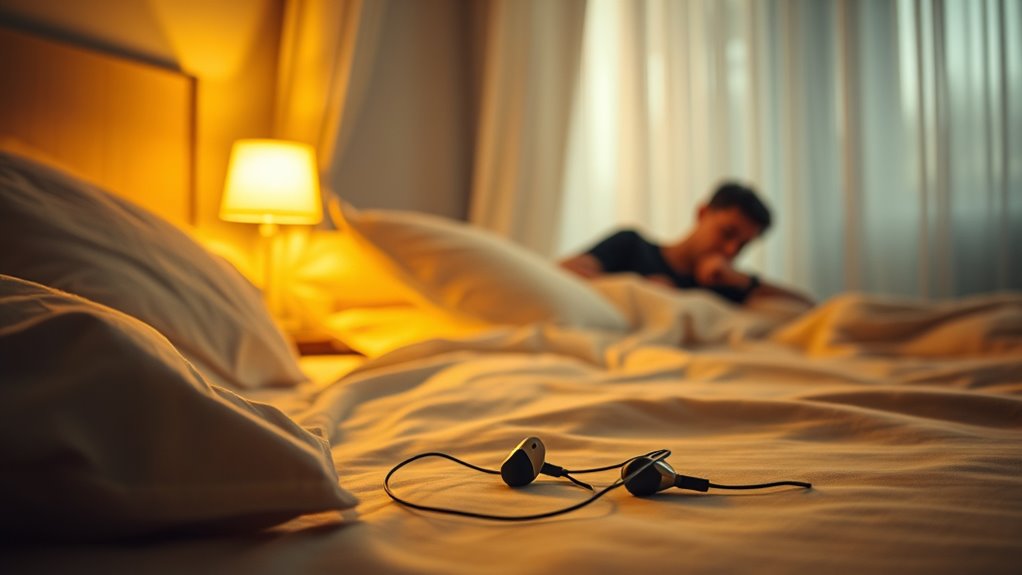

Falling asleep with earbuds in can offer benefits like drowning out disruptions and enhancing relaxation, but it also comes with risks. Prolonged use might cause earwax buildup or increase the chance of infections. High volume levels can lead to hearing loss, and dependency on audio might disrupt your sleep patterns. Comfort and safety are vital, too. Exploring alternatives to earbuds could provide a better sleep experience. Keep going to discover more about audio and sleep options.
Potential Benefits of Sleeping With Earbuds
Although many people worry about the potential downsides of sleeping with earbuds in, there are several benefits that can enhance your sleep experience. For instance, you can tailor your relaxation techniques by listening to soothing sounds or white noise that align with your sound preferences. This can help drown out disruptive noises, allowing you to drift off more easily. In addition, using earbuds can create a personal audio environment, encouraging deeper relaxation and a more restorative sleep. Whether it’s calming music, nature sounds, or guided meditations, having the right audio can greatly impact your ability to unwind. By incorporating earbuds into your nighttime routine, you’re taking control of your sleep quality and embracing a more personalized approach to relaxation.
Risks to Ear Health and Hygiene
While falling asleep with earbuds in can offer a cozy soundscape, it also raises concerns about ear health and hygiene. You might not realize that keeping earbuds in for extended periods can lead to various issues:
- Earwax Buildup: Prolonged use can prevent natural earwax from clearing, leading to discomfort.
- Infection Risk: Moisture trapped by earbuds creates an ideal environment for bacteria to thrive, increasing the likelihood of infections.
- Irritation: Constant contact with your ears can cause irritation or allergic reactions, especially if earbuds are not cleaned regularly.
- Hearing Loss: Listening at high volumes while sleeping can damage your hearing over time.
Being mindful of these risks can help you enjoy your nightly audio without sacrificing ear health.
Impact on Sleep Quality and Patterns
Falling asleep with earbuds in can considerably influence your sleep quality and patterns, particularly if you’re not mindful of volume levels and duration. While auditory stimulation can help some people drift off, high volumes might disrupt your sleep cycles, leading to fragmented rest. This interference can prevent you from reaching deeper stages of sleep, which are essential for rejuvenation. Furthermore, relying on music or podcasts might create a dependency, making it harder for you to sleep without them. You might find yourself waking frequently, adversely affecting your overall sleep architecture. To maintain ideal sleep quality, consider lowering the volume and limiting usage, ensuring that your sleep environment remains conducive to restful slumber.
Comfort and Safety Considerations
Comfort and safety are significant factors to take into account when using earbuds for sleep. While you might enjoy the soothing sounds, you should also consider how they impact your comfort levels and potential safety concerns. Here are some key points to keep in mind:
- Earbud Material: Opt for soft, breathable materials that won’t irritate your ears overnight.
- Fit: Make sure your earbuds fit snugly but not too tight, reducing pressure points while you sleep.
- Volume Levels: Keep the volume low to avoid hearing damage and allow for a more restful night.
- Wired vs. Wireless: Wireless options eliminate the risk of entanglement, enhancing safety during sleep.
Balancing comfort and safety can improve your overall sleep experience while using earbuds.
Alternatives to Earbuds for Nighttime Listening
If you’re looking for alternatives to earbuds for nighttime listening, there are several options that can provide a more comfortable and safe experience. Consider using sleep masks equipped with built-in speakers. These devices allow you to enjoy soothing sounds or guided meditations without the discomfort of earbuds. Another great option is a white noise machine, which can help mask disruptive background noises, promoting a more restful sleep environment. Alternatively, you might explore sound pillows, designed to play calming sounds directly into your pillow, ensuring you won’t disturb your partner. Finally, smart speakers can also be a great choice, allowing you to stream relaxing audio while remaining hands-free. Embrace these alternatives for a peaceful night’s sleep without sacrificing comfort.
Frequently Asked Questions
Can Falling Asleep With Earbuds Cause Hearing Loss Over Time?
Falling asleep with earbuds can lead to hearing loss over time due to prolonged sound exposure. To protect your hearing, consider using lower volumes and taking breaks, ensuring you prioritize your auditory health while enjoying music.
Are Wireless Earbuds Safer Than Wired Ones for Sleeping?
Wireless earbuds can be safer for sleeping due to their lack of cords, reducing strangulation risks. However, consider battery life and sound quality; quality matters for comfort, ensuring you get a restful night’s sleep.
What Types of Music Are Best for Sleep With Earbuds?
For sleep, ambient soundscapes and soothing melodies work best. They promote relaxation and help you drift off peacefully. Avoid intense rhythms or lyrics that might disrupt your rest, focusing instead on calming audio experiences.
How Do Earbuds Affect Snoring or Sleep Apnea?
You might find that using earbuds for soothing sounds can aid in snoring reduction and apnea management. Imagine drifting off to sleep as calming waves mask the disruptive noises, promoting deeper, uninterrupted rest and freedom from disturbances.
Do Different Earbud Materials Impact Comfort During Sleep?
Yes, different earbud materials can greatly impact your comfort during sleep. Silicone comfort offers flexibility, while foam cushioning provides better sound isolation and a softer fit, enhancing your overall sleep experience without discomfort.
