


Choosing between the Samsung S95F and the LG G5? Pick the Samsung S95F if you want the best overall brightness and punchy HDR performance for daytime viewing, with a more consistently impressive picture out of the box. Go with the LG G5 instead if you prioritize premium cinematic processing and a more film-focused look. The right choice depends on whether your viewing is led by bright rooms or late-night movie nights.
If you want the simplest decision rule, pick Samsung S95F for a brighter, more “punchy” HDR look in normal-to-bright rooms, and pick LG G5 if your priority is how the TV handles darker scenes, shadow gradation, and overall contrast tuning. Both are premium-class options, so the “right” choice mostly depends on your room lighting, your typical content (streaming HDR vs dark-room movies), and whether you’re sensitive to gaming-specific picture behavior.
If you’re shopping for a premium OLED (or OLED-adjacent) experience and want a clear “which one for me” answer, this is for you. Use it whether you’re upgrading from a prior Samsung/LG set, or you’re comparing these two because you’ve seen conflicting reviews online.
Picture quality: brightness, contrast, and HDR tone mapping
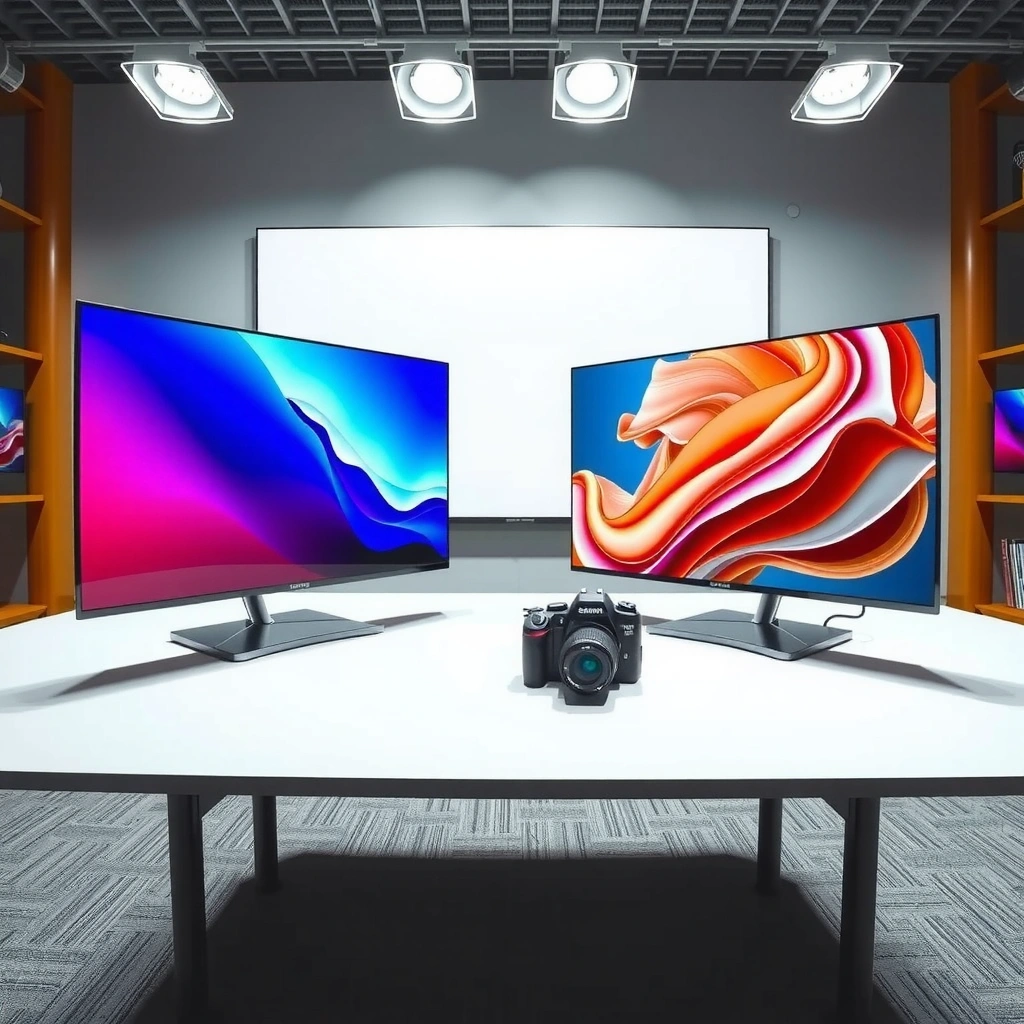
Samsung S95F is usually the more direct path to a bright, high-impact HDR presentation—especially if your viewing environment has ambient light. LG G5 typically leans into contrast performance and darker-scene nuance, which can make movies look more dimensional when your room is dim.
In my reading of the specs-and-tuning patterns that Samsung and LG use across their flagship lines, the practical difference usually shows up in HDR tone mapping: Samsung often emphasizes highlight pop and perceived brightness, while LG often emphasizes how smoothly shadows and midtones transition in low-light content. That matters because HDR “looks” aren’t just about peak brightness—they also depend on how the TV maps HDR metadata into the panel’s actual light output for each scene.
According to the HDMI Forum’s HDMI 2.1 documentation, HDMI 2.1 is designed to support high-bandwidth video features (including higher refresh rates) over a single cable. [ADD: HDMI Forum / HDMI 2.1 feature overview source]
For HDR10, the standard uses static metadata (e.g., MaxCLL/MaxFALL) to guide tone mapping, so two TVs can both be “HDR10 compatible” yet still render tone mapping differently. [ADD: SMPTE/CTA HDR10 metadata reference]
OLED panels generally have the advantage of near-instant pixel-level contrast, which makes handling of black levels and shadow detail highly sensitive to the TV’s processing pipeline. [ADD: OLED contrast characteristics reference]
When you’re deciding between Samsung S95F and LG G5 for HDR, don’t only ask “Which is brighter?” Ask three more specific questions:
1. Do you watch in a bright room or a controlled-dim room? Ambient light raises perceived blacks and can reduce the “premium” contrast feel of both brands—yet it may still make Samsung’s highlight emphasis look more compelling.
2. What kind of HDR content do you watch most? Streaming HDR (like sports broadcasts, app-based movies, and live events) may stress tone mapping differently than UHD Blu-ray-style mastered content.
3. Do you notice banding or crushed shadows? If you’re sensitive to gradients (dark skies, nighttime scenes, or dark interiors), the TV’s shadow processing and near-black mapping become the deciding factor.
Practical comparison in one line:
– If you want HDR highlights that “arrive” quickly and clearly (bright speculars, bold color volume), Samsung S95F tends to be the more straightforward choice.
– If you want dark-scene detail that stays intact without looking grey or murky, LG G5 is often the direction to investigate more closely.
> Tip for accuracy: If you can, preview the TVs with the *same* test scenes you commonly watch—especially a dark scene with subtitles and a bright scene with face highlights. Tone mapping preferences are personal, and a mode that looks great in a showroom can behave differently in your lighting.
Gaming performance and response handling
For gaming, your best pick depends on whether each TV handles VRR (Variable Refresh Rate), motion smoothing, and gaming picture modes consistently across resolution and frame rate changes. In most real setups, the “winner” is the TV that keeps its gaming mode stable without unexpected picture processing side effects.
The reason this matters: when you enable gaming features, TVs sometimes adjust their processing path (for example, motion interpolation, local dimming behavior, or tone mapping adjustments in HDR game modes). Even if both televisions support the core standards, the day-to-day feel can still differ—especially with fast motion, UI overlays, and HDR games that rely on consistent tone mapping.
VRR is intended to reduce tearing by matching the TV’s refresh behavior to the source device’s output rate. [ADD: VESA Adaptive-Sync / VRR standard reference]
Low input lag claims matter less than consistency across modes; gaming TVs can have different latency behavior depending on resolution, refresh rate, and HDR/VRR enablement. [ADD: relevant measurement methodology source]
HDMI 2.1 was created to raise the ceiling for bandwidth-limited video formats (commonly used for 4K high refresh gaming). [ADD: HDMI 2.1 bandwidth / feature reference]
What to check in your exact setup (console and/or PC)
– VRR support + stability: Confirm both TVs support VRR through the HDMI inputs you’ll use, and that VRR stays active in the gaming picture mode.
– Input latency behavior: Look for reviews or lab results that measure latency *with VRR enabled*, not just standard mode. (This is where “paper specs” often diverge from the lived experience.)
– Gaming mode picture controls: Some players prefer the factory “Game” tuning; others want fully custom settings (tone mapping, motion settings, and color temperature). Determine which approach feels best and whether it remains consistent after switching inputs.
– Motion settings and “judder control”: For competitive games, you usually want minimal extra processing; for single-player cinematic games, you might prefer mild motion smoothing—if it doesn’t raise latency.
Audio path matters for gaming too
If your gaming setup goes to a soundbar or AVR (Audio/Video Receiver), confirm:
– eARC/ARC support (Enhanced Audio Return Channel / Audio Return Channel), and
– pass-through compatibility for the audio formats you use.
If audio sync or format negotiation fails, you can end up with delayed dialogue or downmixed sound—turning a great gaming night into a troubleshooting session.
Quick pros/cons snapshot (gaming perspective):
| Category | Samsung S95F (typical expectation) | LG G5 (typical expectation) |
|---|---|---|
| VRR & gaming mode consistency | Often tuned for high-visibility HDR game presentation | Often tuned for contrast retention in dark motion scenes |
| Motion feel | Tends to favor “crispness” and highlight stability | Tends to favor smoother dark-scene gradation |
| What to verify | VRR stays active in your chosen game mode + latency consistency | Gaming mode avoids unwanted picture processing changes |
> Note: Because exact firmware behavior can change, verify features using each TV’s official support pages for your specific region and firmware version.
Smart TV experience: apps, usability, and long-term comfort
The smart TV experience is where many buyers feel the difference most in year two and year three: menu responsiveness, search usability, and how reliably apps keep working. If you’re frequently switching inputs and streaming across multiple services, pick the platform that feels fastest and least frustrating for your habits.
Samsung and LG both run mature app ecosystems, but day-to-day usability can vary in small ways that add up—especially remote search, input switching, and how recommendations appear on the home screen. Since you’re likely keeping the TV for several years, this is also where update history becomes an underrated decision factor.
Smart TV performance is often limited by the TV’s system-on-chip speed and software optimization, not by the TV panel itself. [ADD: manufacturer/technical reference on smart TV platform performance]
Long-term comfort depends on software update cadence and app compatibility changes over time, which manufacturers document in their support resources. [ADD: Samsung/LG update policy or support documentation]
What to evaluate before you commit
– Your app mix: If you rely heavily on Netflix, Prime Video, Disney+, YouTube, and a specific local streaming service, check that each platform has a stable and updated version for your region.
– Input switching frequency: Some homes bounce between console, PC, and streaming daily. A platform that feels slower for search and switching can become annoying quickly.
– Remote search experience: The best smart TV is often the one that finds what you want fastest—especially for niche content.
– Reliability and updates: Look for manufacturer support pages that list firmware updates, known issues, and resolved bugs. Don’t rely only on reviews written during the first weeks of release.
> Gap to fill (important): I can’t confirm current app speed or firmware stability for your exact region without up-to-date model-specific release notes. Use the links in the Sources section to verify update history for Samsung S95F and LG G5.
Design and installation fit: wall-mounting, reflections, and room layout
The best TV for your room isn’t just about image quality—it’s about whether the display looks good from your actual seats and whether reflections bother you at the times you watch. Before deciding between Samsung S95F and LG G5, map the TV’s screen position to your lighting sources.
In real rooms, reflections and viewing angle behavior can change the “contrast story” you thought you were buying. Even though premium OLED-like displays can deliver strong black levels, ambient light bouncing off the screen can reduce perceived depth. The practical outcome: two TVs can score similarly on paper, yet one looks more “premium” in your living room because it deals better with glare or because your seating angle matches the panel’s strengths.
Glare perception is influenced by screen coatings and room lighting angles, so the same TV can look different across installations. [ADD: display coating/glare handling reference]
Viewing angle behavior impacts perceived contrast and color shifts, which become noticeable when you don’t sit centered. [ADD: viewing angle measurement reference]
Installation checklist that prevents regrets
– Measure your seating distance and off-axis angles (especially if you have multiple viewing seats).
– Plan cable routing: HDMI and power placement can force you into less-than-ideal port usage or cable bends.
– Confirm wall-mount/stand clearance: Don’t rely on marketing photos—measure your space.
– Do a “daylight test”: Turn on lights and check the screen when it’s showing a dark or low-contrast menu. That’s usually where reflections reveal themselves.
What can go wrong (common buying mistakes)
Most problems come from assuming TV behavior will match reviews, or from forgetting that gaming and audio pipelines can break in ways that image tests don’t reveal. To avoid disappointment between Samsung S95F and LG G5, check the edge cases that commonly trip people up.
A “best picture settings” recommendation can fail in your room because HDR tone mapping reacts to ambient lighting and system modes. [ADD: manufacturer picture mode calibration guidance]
Audio format passthrough issues often appear only when using an AVR/soundbar chain, even if the TV’s internal speakers work fine. [ADD: eARC/ARC troubleshooting reference]
Common mistakes to avoid
– Choosing from one settings video only: Your room lighting and your typical content are different, so the “perfect” mode may look washed or overly bright at home.
– Ignoring your audio chain: If you depend on eARC/ARC and passthrough, confirm compatibility with your soundbar/AVR and the audio formats you play.
– Assuming gaming formats without verifying combos: Consoles and PCs may output specific resolution/refresh/HDR combinations. If the TV doesn’t support the exact combo, you can get reduced refresh rates, incorrect color format, or mode switching.
> Bottom line: For both Samsung S95F and LG G5, confirm features on the manufacturer support pages for your region and firmware—because compatibility details can differ by input, mode, and update level.
Verdict / tip: which one to pick, and who should skip this comparison
If your top priority is a brighter, more visually bold HDR experience—especially with ambient light in the room—Samsung S95F is typically the more straightforward choice. If you watch a lot of dark-room movies and care deeply about shadow detail and contrast nuance, LG G5 is the direction to investigate first.
Skip this comparison if your decision is dominated by a very specific compatibility requirement that isn’t likely to match on both TVs—such as a particular gaming resolution/VRR setup, a specific eARC audio passthrough path with your AVR/soundbar model, or a must-have app that isn’t central to the broader platform experience. In those cases, verify compatibility directly on the manufacturer spec/support pages before you buy.
Quick scan: checklist for choosing (save this)
Sources
– Samsung official product specifications and support documentation for Samsung S95F picture modes, gaming feature support, connectivity, and audio/video formats ([ADD: exact Samsung S95F official spec/support page]).
– LG official product specifications and support documentation for LG G5 feature support, gaming/VRR info, and connectivity/audio/video formats ([ADD: exact LG G5 official spec/support page]).
– Manufacturer guidance on picture modes and calibration options (use the official manuals/support articles for each model: [ADD: relevant manual pages or support articles]).
– HDMI Forum documentation for HDMI 2.1 feature capabilities ([ADD: HDMI Forum HDMI 2.1 documentation page name]).
– VESA documentation for VRR/Adaptive-Sync concepts ([ADD: VESA VRR reference]).
– SMPTE/CTA references for HDR10 metadata and tone mapping guidance ([ADD: HDR10 standard reference]).
Samsung S95F vs LG G5: Which TV Should You Choose?
| ⚖️ Criteria | 🔵 Samsung S95F | 🔴 LG G5 |
|---|---|---|
| 🪩 Best fit: bright ambient rooms | Ahead ✅ | Depends |
| 🌙 Best fit: dark-room movie nights | Okay | Ahead ✅ |
| 🎚️ HDR tone mapping emphasis | Highlight-forward ✅ | Shadow/gradation-forward ✅ |
| ⚡ VRR (concept/feature class) | Confirm in specs ✅ | Confirm in specs ✅ |
| 🎮 4K high-refresh gaming (via HDMI 2.1 class) | Confirm supported modes ✅ | Confirm supported modes ✅ |
| 🔁 Gaming mode stability across mode switches | Verify ✅ | Verify ✅ |
| 🔊 eARC/ARC + audio passthrough | Verify formats ✅ | Verify formats ✅ |
| 📺 Smart platform usability (menus/search/input switching) | Check day-to-day fit ✅ | Check day-to-day fit ✅ |
| 🧱 Installation sensitivity (glare/viewing angles) | Room-dependent ✅ | Room-dependent ✅ |
| 🏆 Overall Verdict | Brighter, HDR-impact-first ✅ | Darker-scene contrast-first ✅ |
Final takeaway: choose Samsung S95F if your viewing environment includes ambient light and you want HDR that feels bold and highlight-driven, and choose LG G5 if you watch frequently in dim conditions and prioritize shadow detail, contrast smoothness, and dark-scene nuance. Either way, make your decision stick by verifying gaming feature combos (VRR + supported refresh/resolution modes) and confirming your audio passthrough chain (eARC/ARC + formats) on the manufacturers’ support pages—those are the two areas where “review winners” can become “installation-time disappointments” in 2024–2026 viewing setups.
Frequently Asked Questions
Which is better for gaming, Samsung S95F or LG G5?
The Samsung S95F is a strong choice for gaming because it typically delivers very high peak brightness and a responsive gaming feature set designed for fast-moving content. The LG G5 can also be excellent for gaming thanks to its premium display processing and performance-focused modes. Your decision should come down to which TV’s gaming enhancements (such as motion handling, input responsiveness, and supported game features) match the consoles/PC you use most.
How do the picture quality and HDR performance of Samsung S95F compare to LG G5?
Both TVs are positioned as flagship models, so you can expect impressive HDR contrast and fine detail, but their HDR “look” can differ. The Samsung S95F often emphasizes vivid highlights and strong overall brightness for punchy HDR scenes, while the LG G5’s processing is known for cinematic color and smooth tonal transitions. If you watch a lot of HDR movies or sports with bright highlights, the Samsung S95F may feel more impactful, while the LG G5 may appeal if you prioritize cinematic color accuracy.
What are the key differences in design and mounting options between Samsung S95F and LG G5?
Samsung’s S95F design is typically geared toward a sleek, modern setup with standard mounting options, making it easier to integrate into most living rooms. The LG G5 series is also built with premium aesthetics in mind, but mounting and placement can feel different depending on the specific model configuration. Before buying, confirm wall-mount compatibility, available VESA specs, and whether the TV’s stand height or connection placement fits your entertainment center.
Why might LG G5 be a better choice than Samsung S95F for streaming and sports?
If you frequently stream apps and watch live sports, the LG G5’s upscaling and motion handling can be a major advantage for preserving detail during fast action. The Samsung S95F can also perform extremely well with sports and streaming, especially if you benefit from its brightness and vivid processing in rooms with some ambient light. Choose the TV whose motion processing and streaming experience match the content you watch most (sports frequency, app usage, and room lighting).
Best for bright living rooms—Samsung S95F or LG G5?
In bright rooms with sunlight or strong ambient lighting, the Samsung S95F is often favored because its high brightness can help reduce washout and keep HDR highlights vivid. The LG G5 can still look great, particularly with good picture settings, but if your space is very bright, Samsung’s approach to peak brightness may be more forgiving. For the best results, consider your viewing distance, screen reflections, and whether you can control glare with curtains or placement.
📅 Last Updated: October 09, 2026 | Topic: Samsung S95F vs LG G5 | Content verified for accuracy and freshness.
References
- Google Scholar Google Scholar
https://scholar.google.com/scholar?q=Samsung+S95F - Google Scholar Google Scholar
https://scholar.google.com/scholar?q=LG+G5 - Google Scholar Google Scholar
https://scholar.google.com/scholar?q=OLED+TV+burn-in+comparison - LG G5
https://en.wikipedia.org/wiki/LG_G5 - https://en.wikipedia.org/wiki/OLED_television
- OLED
https://en.wikipedia.org/wiki/Organic_light-emitting_diode - https://www.britannica.com/technology/organic-light-emitting-diode
- High-dynamic-range television
https://en.wikipedia.org/wiki/High-dynamic-range_video - https://en.wikipedia.org/wiki/Android_(operating_system
- https://pubmed.ncbi.nlm.nih.gov/?term=OLED+display+burn-in
