
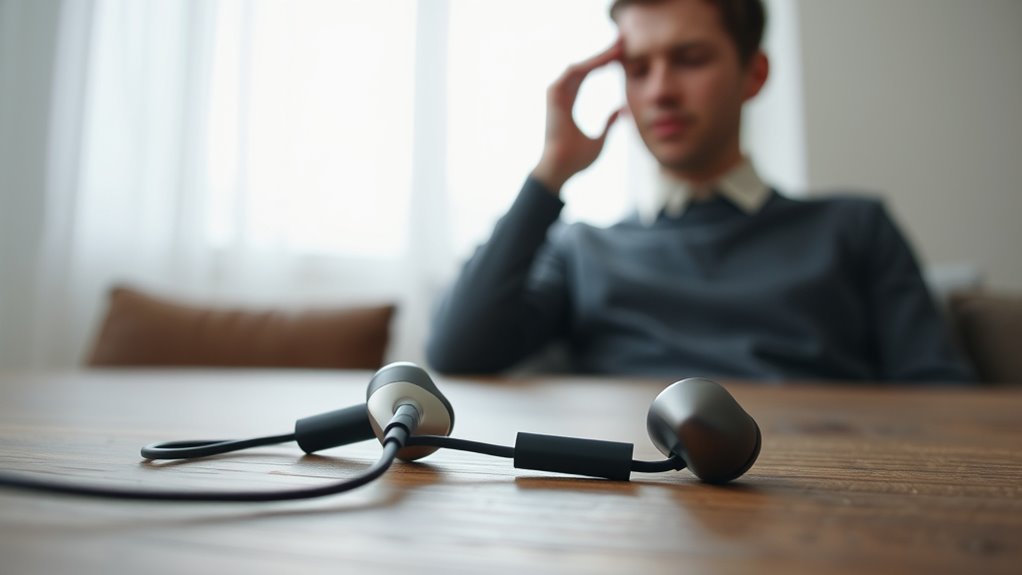

Wearing earbuds while you’re feeling dizzy isn’t recommended. They can mask important environmental sounds, leading to increased disorientation and a higher risk of falls. The immersive sound may distract you from your surroundings, worsening your balance issues. Instead, it’s safer to remove earbuds and rest until the dizziness passes. Prioritizing your well-being is essential, and there are better ways to manage your symptoms. Discover more about safer audio alternatives and how to cope with dizziness.
Understanding Dizziness: Causes and Symptoms
When you experience dizziness, it’s essential to understand its potential causes and symptoms, as they can vary widely. Dizziness types include vertigo, lightheadedness, and disequilibrium, each presenting unique feelings. Recognizing symptoms is vital; for instance, vertigo might make you feel like the room is spinning, while lightheadedness may leave you feeling faint or weak. Other signs can include nausea or a sense of unbalance. By identifying these symptoms early, you can better communicate with healthcare providers and seek appropriate treatment. Understanding your specific dizziness type and recognizing related symptoms empowers you to take control of your well-being, ensuring you make informed decisions about your health and lifestyle.
The Impact of Earbuds on Balance and Coordination
Dizziness can greatly affect your balance and coordination, making it important to contemplate how external factors, like earbuds, might exacerbate these issues. Earbuds can alter your auditory perception, potentially masking sounds that help you stay aware of your surroundings. The acoustics produced by earbuds can create an immersive experience, but this may also lead to disorientation when you’re already feeling dizzy. As your brain relies on auditory cues for spatial awareness, wearing earbuds could hinder your ability to maintain balance. Furthermore, the snug fit of earbuds might add physical pressure, which could intensify your discomfort. Ultimately, if you’re experiencing dizziness, it’s wise to assess how earbuds might impact your overall stability and coordination before deciding to wear them.
Safety Considerations When Experiencing Dizziness
Although you may feel tempted to carry on with your usual activities, safety should be your top priority if you’re experiencing dizziness. Dizziness effects can impair your balance, making falls and injuries more likely. When wearing earbuds, you may inadvertently create audio distractions that mask important environmental sounds, like traffic or people nearby, further increasing your risk. It’s essential to recognize that while music or podcasts can be enjoyable, they might interfere with your ability to gauge your surroundings accurately. If you’re feeling dizzy, consider removing your earbuds and taking a break in a safe, quiet space. Prioritizing your well-being guarantees you can enjoy your freedom without unnecessary risks during these uncomfortable moments.
The Role of Sound in Managing Dizziness
While you might not think about it often, sound plays a significant role in managing dizziness. Sound therapy can be a helpful tool, providing soothing audio experiences that promote relaxation. When you’re feeling dizzy, using auditory distraction can shift your focus away from the unsettling sensations. Gentle music or nature sounds can create a calming environment, helping to ease anxiety often associated with dizziness. You might find that certain frequencies or rhythms resonate with you, providing relief. Additionally, engaging with sounds can encourage mindfulness, grounding you in the present moment. By incorporating sound therapy into your routine, you can harness the power of auditory stimulation to navigate through dizzy spells more effectively and regain a sense of balance.
Alternatives to Earbuds for Relaxation and Distraction
When considering how to manage dizziness, it’s important to explore various options beyond earbuds for relaxation and distraction. You might find that listening to soothing music through a speaker creates a calming atmosphere without the potential discomfort of earbuds. Alternatively, nature sounds, like gentle rain or ocean waves, can help ground you and reduce feelings of unease. These sounds can be easily accessed through apps or online playlists, allowing you to choose what resonates with you best. Additionally, engaging in mindful breathing exercises while enjoying these auditory experiences can enhance relaxation. By selecting these alternatives, you can create a peaceful environment that promotes comfort and distraction, all while avoiding any added pressure that earbuds may cause.
When to Seek Medical Advice About Dizziness
If you’re experiencing persistent or severe dizziness, it’s crucial to seek medical advice promptly. Dizziness can stem from various causes, including inner ear issues, dehydration, or neurological conditions. A medical evaluation can help diagnose the underlying problem.
Here’s a quick guide on when to see a healthcare professional:
| Symptoms to Watch For | Action Required |
|---|---|
| Dizziness lasting more than a few minutes | Seek medical advice immediately |
| Accompanied by severe headaches | Visit a doctor as soon as possible |
| Occurring after head injury | Get evaluated right away |
| Associated with vision changes | Consult a healthcare provider |
| Feeling faint or disoriented | Don’t hesitate to seek help |
Taking your dizziness seriously can lead to better outcomes and peace of mind.
Tips for Staying Safe While Enjoying Audio During Dizziness
When you’re feeling dizzy, it’s important to assess your symptoms before using earbuds. Make sure you’re in a safe environment where you can sit or rest if needed. Choosing the right setting can help you enjoy your audio experience while minimizing risks.
Assess Your Symptoms
While enjoying your favorite audio content might seem tempting, it’s crucial to assess your symptoms first. Begin with a dizziness evaluation to identify the severity and type of your dizziness. Are you feeling lightheaded, spinning, or off-balance? Documenting these sensations can help you understand your condition better. Pay attention to any accompanying symptoms such as nausea or headaches, as these can influence your decision to wear earbuds. A symptom assessment can guide you in determining if it’s safe to enjoy audio or if you should prioritize rest and recovery. Ultimately, listening to your body is key; if you’re unsure or your symptoms worsen, it’s best to avoid distractions and seek professional advice. Safety should always come first.
Choose Safe Environments
Choosing the right environment is essential for staying safe while enjoying audio during episodes of dizziness. First, seek out safe spaces where you can sit or rest comfortably. Avoid crowded or noisy areas that may overwhelm your senses. If you’re out and about, consider quieter parks or benches where you can take a moment to breathe.
Practice mindful listening by keeping the volume at a moderate level to stay aware of your surroundings. This way, you can respond to any potential hazards without distraction. Always have a friend or family member nearby if possible, as their support can be invaluable. By prioritizing safety and awareness, you can enjoy your audio experience even during dizzy spells.
Frequently Asked Questions
Can Wearing Earbuds Worsen My Dizziness Symptoms?
Yes, wearing earbuds can worsen your dizziness symptoms. Earbud pressure may increase discomfort, and sound sensitivity might make you feel more disoriented. It’s best to avoid them until you’re feeling better and more balanced.
Are Noise-Canceling Earbuds Safe for Dizzy Individuals?
Noise-canceling earbuds can be safe for you if you’re dizzy, as they reduce noise levels and help with auditory sensitivity. However, always listen to your body and consult a healthcare professional if symptoms worsen.
How Do Earbuds Affect My Perception of Dizziness?
Ever wondered how earbuds influence your balance perception? They can alter auditory feedback, potentially exacerbating dizziness or providing a sense of stability. It’s essential to assess how they affect your unique experience before using them.
Should I Avoid Music With Heavy Bass During Dizziness?
Yes, you should avoid heavy bass music during dizziness. The bass sensitivity can amplify discomfort, while fast music tempo might exacerbate your symptoms. Opt for calm, soothing tunes to help you feel more stable and relaxed.
Can Using Earbuds Lead to Ear Infections When Dizzy?
Using earbuds doesn’t directly cause infections, but poor ear hygiene can. If you’re dizzy, it’s best to avoid them for infection prevention. Prioritize your ear health, and let your ears breathe freely.
