
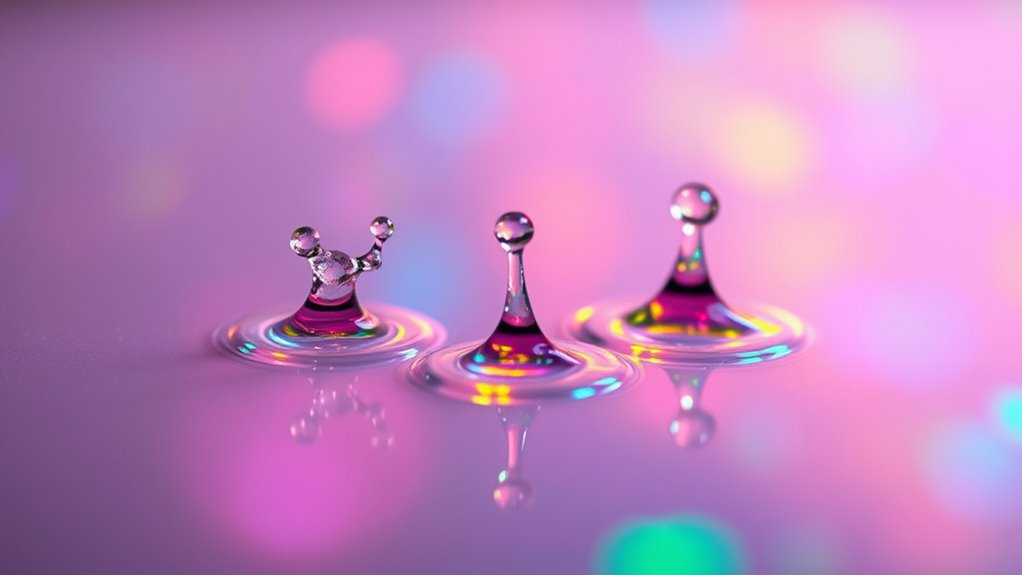

Electrowetting displays use electric fields to manipulate droplet behavior, effectively changing surface wettability. When voltage is applied, it reduces contact angles, allowing droplets to spread across surfaces, which enhances display capabilities. The physics of surface tension and electric forces work together to optimize liquid interaction on these displays. Despite many advantages, such as energy efficiency and vibrant colors, there are challenges to overcome. If you want to understand more about its impact and innovations, keep exploring.
Understanding Electrowetting: The Basics
Electrowetting is a phenomenon that alters the wettability of a surface through the application of an electric field. This effect enables you to manipulate liquid behavior on a substrate, leading to significant changes in droplet dynamics. When an electric field is applied, the contact angle of a droplet decreases, allowing it to spread more easily across the surface. This behavior is vital in applications like displays, where precise control of droplets is essential for image quality. By understanding these principles, you can appreciate how electrowetting enhances the functionality of devices. The interplay between electric fields and liquid properties opens up new avenues for innovation, giving you the freedom to explore advanced technologies that rely on dynamic liquid manipulation.
The Physics of Surface Tension
Surface tension arises from the cohesive forces between liquid molecules, creating a distinct interface that can influence liquid behavior. In the context of electrowetting, understanding these fundamentals is essential as they dictate how a liquid droplet interacts with a surface under varying electrical conditions. By analyzing the electrowetting mechanism, you can grasp how surface tension is manipulated to achieve desired display characteristics.
Surface Tension Fundamentals
Understanding the principles of surface tension is essential for grasping how fluids behave at interfaces. Surface tension arises from the imbalance of forces acting on molecules at the liquid’s surface, leading to a minimized surface area and a phenomenon known as surface energy. This energy dictates how liquids interact with solid surfaces, influencing their wettability and spreading behavior. Essentially, the liquid behavior you observe—like droplets forming or spreading—stems from these surface interactions. The balance between cohesive forces within the liquid and adhesive forces with the surface determines the angle of contact and the overall dynamics of fluid movement. By comprehending these fundamentals, you can appreciate the mechanics underlying various applications, including electrowetting technologies.
Electrowetting Mechanism Explained
When an electric field is applied to a liquid droplet on a solid surface, the interplay of surface tension and electric forces causes a dynamic alteration in the droplet’s shape and wettability. This process, known as the electrowetting phenomenon, hinges on the balance between surface energy and electrical energy. As you increase the voltage, the electrostatic forces counteract surface tension, allowing for precise liquid manipulation. The droplet flattens, reducing its contact angle with the surface, which enhances wettability. This transformation enables the droplet to spread or retract, facilitating diverse applications from display technologies to microfluidics. By understanding these fundamental principles, you gain insights into how electric fields can control liquid behavior for innovative uses.
How Electric Fields Manipulate Liquids
Electric fields play an essential role in manipulating liquids, allowing for precise control over droplet behavior in electrowetting displays. By altering the electric field behavior, you can influence how the liquid interacts with the surface, changing its shape and movement. This manipulation not only enhances display capabilities but also opens possibilities for various applications.
| Electric Field Strength | Droplet Contact Angle | Liquid Behavior |
|---|---|---|
| Low | High | Minimal liquid spread |
| Medium | Moderate | Moderate liquid spread |
| High | Low | Significant liquid spread |
Understanding these interactions is vital for optimizing electrowetting technologies, giving you the freedom to innovate in display design and functionality.
The Components of Electrowetting Displays
In understanding electrowetting displays, you need to grasp the basic principles that govern liquid manipulation through electric fields. Key material components play an essential role in the effectiveness and efficiency of these displays, while the architecture design influences overall performance and functionality. Each element contributes to the intricate balance required for ideal operation.
Basic Electrowetting Principles
Electrowetting displays leverage the fundamental principles of fluid dynamics and surface science to manipulate fluids at the micro-scale. By applying an electrical voltage, you can alter the wettability of a surface, effectively controlling droplet manipulation. This control enables precise adjustments in liquid dynamics, allowing droplets to change shape, spread, or retract as needed. The interplay between electrostatic forces and surface tension is vital, as it governs how liquids behave in response to external stimuli. Understanding these principles is essential for optimizing display performance, enhancing image quality, and reducing power consumption. Ultimately, the ability to harness liquid dynamics empowers you to create versatile, energy-efficient displays that adapt seamlessly to your needs.
Key Material Components
The performance of electrowetting displays hinges on the selection of key material components that interact effectively with one another. You’ll find that conductive liquids are essential, as they enable the manipulation of liquid interfaces under electric fields. Dielectric materials play a significant role in insulating the electrodes, while appropriate electrode designs guarantee efficient charge distribution. Surface coatings influence wetting properties, affecting how liquids spread or retract. Furthermore, colorant selection is critical for achieving desired visual effects, and it must align with the chosen fabrication techniques to assure compatibility. Finally, stability factors, such as temperature and chemical resistance, must be considered to secure longevity and performance consistency. Careful integration of these components is fundamental for peak display function.
Display Architecture Design
While designing the architecture of electrowetting displays, it is crucial to understand the interplay of various components that contribute to efficient operation. You need to focus on the precise arrangement of layers, including the substrate, electrodes, and liquid interfaces. Effective display optimization strategies involve fine-tuning these elements to enhance responsiveness and color fidelity. Additionally, user experience design plays a critical role; the display must not only perform well technically but also engage users visually and interactively. By addressing factors such as viewing angles, refresh rates, and energy consumption, you can create a more immersive experience. Ultimately, a well-thought-out architecture integrates these components harmoniously, ensuring the display meets the dynamic needs of users while maintaining high performance.
Advantages of Electrowetting Technology
When considering display technologies, the advantages of electrowetting are compelling. This technology offers several key benefits that make it a strong contender in the market:
- Energy efficiency: Electrowetting displays consume considerably less power than traditional displays.
- Color accuracy: You’ll enjoy vibrant colors and precise hues, enhancing overall visual experience.
- Manufacturing costs: The materials and processes used can lead to lower production expenses.
- Design flexibility: Electrowetting allows for innovative and adaptable designs, suitable for various applications.
- Improved visibility: These displays perform well in bright environments, providing better readability.
Incorporating these advantages, electrowetting technology presents a viable, efficient alternative to conventional display solutions, catering to both aesthetic and functional needs.
Applications in Consumer Electronics
As consumer electronics continue to evolve, electrowetting displays are finding their niche in a variety of devices, thanks to their unique advantages. These displays enhance smartphone interfaces, providing vibrant visual quality and responsiveness. Their energy efficiency supports longer battery life, aligning with current market trends favoring sustainable technology. Furthermore, the flexibility of electrowetting displays allows for innovative designs, accommodating unique form factors and interactive screens that adapt to user preferences. Design innovations in this field could revolutionize how you interact with devices, creating a seamless user experience. As manufacturers adopt these technologies, expect to see an increase in flexible displays that not only look great but also perform exceptionally well, meeting the demands of modern consumers.
Potential Impact on Future Display Technologies
The advancements in electrowetting display technology are poised to considerably influence future display innovations across various sectors. As you explore this potential, contemplate the following aspects:
- Enhanced energy efficiency for longer battery life
- Superior visibility in diverse lighting conditions
- Flexible form factors enabling novel applications
- Lower production costs promoting wider market adoption
- Environmentally friendly materials reducing waste
These factors not only promise to reshape consumer electronics but also extend into medical devices, automotive displays, and signage solutions. As manufacturers recognize the advantages, rapid market adoption could transform how we interact with technology, creating opportunities for groundbreaking designs and functionalities. Ultimately, electrowetting displays could redefine user experiences, making them more engaging and versatile than ever before.
Challenges and Limitations of Electrowetting Displays
Despite their promising advantages, electrowetting displays face several significant challenges and limitations that may hinder widespread adoption. One major hurdle is the manufacturing challenges involved in creating consistent, high-quality displays. The precision required for fluid manipulation can lead to increased production costs, affecting market adoption. Additionally, environmental concerns regarding the materials used in these displays pose risks, particularly when considering sustainability. This can impact user experience, as consumers become increasingly aware of ecological footprints. Moreover, achieving competitive performance regarding color accuracy and response time compared to established technologies remains a challenge. Addressing these obstacles is essential for the future of electrowetting displays, ensuring they meet user expectations while maintaining environmental integrity.
Frequently Asked Questions
How Does Electrowetting Compare to Traditional Display Technologies?
When you compare electrowetting to traditional technologies, you’ll find OLED advantages, like superior color and contrast, while LCD limitations, such as slow response times and narrow viewing angles, hinder their performance in dynamic applications.
What Materials Are Commonly Used in Electrowetting Displays?
In electrowetting displays, you’ll encounter a fascinating fusion of liquid materials and surface coatings. These components create intriguing contrasts, enabling dynamic displays that offer you a vivid visual experience while maintaining energy efficiency and responsiveness.
Can Electrowetting Displays Be Flexible or Bendable?
Yes, electrowetting displays can be flexible and bendable, enabling innovative applications. Their design allows for versatile use in various environments, providing opportunities for integration into flexible applications like wearable tech and adaptable surfaces, enhancing user experience.
Are Electrowetting Displays Energy-Efficient in Real-World Usage?
In real-world applications, electrowetting displays can reduce energy consumption by up to 90% compared to traditional displays. This efficiency allows you to enjoy vibrant visuals while minimizing environmental impact, enhancing user experience and freedom of choice.
What Is the Lifespan of an Electrowetting Display?
When considering an electrowetting display’s lifespan, you’ll find that its durability often exceeds conventional technologies. However, factors like usage conditions and environmental stressors can greatly influence the overall technology longevity, affecting performance over time.
