
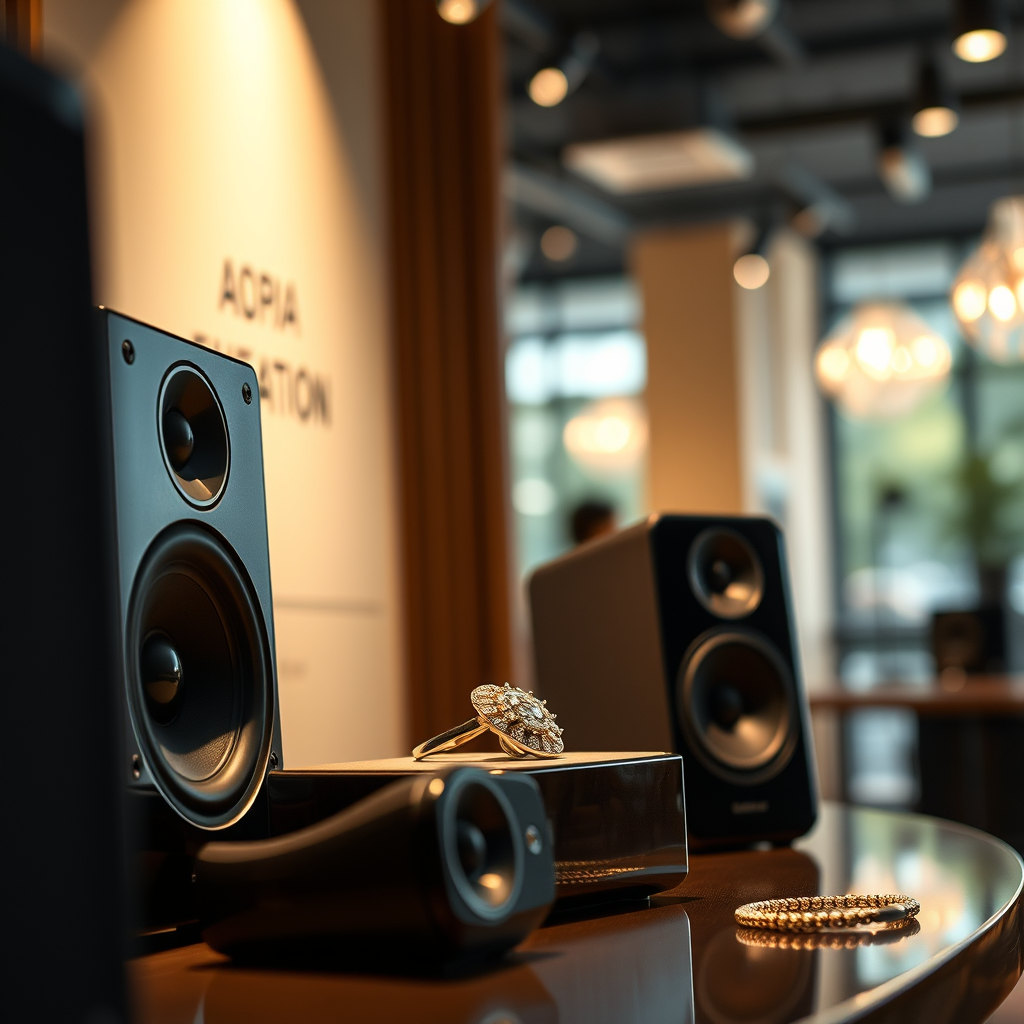

Speakers are essential devices that convert electrical signals into sound, playing a vital role in various audio systems, music playback, and communication devices. Understanding the different types of speakers and their functionalities can significantly enhance your audio experience, whether at home, in a public venue, or on the go. This article will delve into the various types of speakers, how they operate, their applications, and factors to consider when choosing the right speakers for your needs.
Types of Speakers
– Dynamic Speakers: Dynamic speakers are the most common type of speaker found in consumer audio products. They operate using a diaphragm that vibrates in response to electrical signals, producing sound waves. This type of speaker is favored for its robustness, efficiency, and ability to reproduce a wide range of frequencies, making it suitable for various audio applications.
– Electrostatic Speakers: Electrostatic speakers are known for their ability to produce a more transparent and detailed sound. They utilize an electrically charged diaphragm suspended between two conductive plates. When an audio signal is applied, the diaphragm moves to create sound waves. This method allows for greater accuracy and clarity, making electrostatic speakers a popular choice among audiophiles.
How Speakers Work
– Sound Conversion: Speakers work by transforming electrical energy into mechanical energy. When an audio signal travels through the speaker, it creates an electromagnetic field around the voice coil, which is attached to the diaphragm. This interaction causes the diaphragm to vibrate, generating sound waves that we perceive as music or speech.
– Components: Key components of a speaker include the diaphragm, voice coil, and magnet. The diaphragm is typically made from lightweight materials for quick response times. The voice coil is a coil of wire that generates a magnetic field when current passes through it, while the magnet provides the necessary magnetic field for the voice coil to function. Together, these components work harmoniously to produce sound.
Applications of Speakers
– Home Audio Systems: In home audio systems, speakers are crucial for delivering high-quality sound for music, movies, and gaming. The right speaker setup can enhance the overall audio experience, providing clarity and depth to soundtracks and dialogue.
– Public Address Systems: Speakers are integral to public address systems, amplifying voices and announcements in large venues such as stadiums, auditoriums, and conference halls. They ensure that messages are heard clearly by an audience, making them an essential tool for events and gatherings.
Top 7 Speaker Types by Popularity and Use Cases (2024)
| # | Speaker Type | Frequency Range | Power Handling (W) | Best For |
|---|---|---|---|---|
| 1 | Dynamic Speakers | 20 Hz – 20 kHz | 50-200 W | Home Audio |
| 2 | Electrostatic Speakers | 30 Hz – 20 kHz | 100-600 W | Audiophile Listening |
| 3 | Subwoofers | 20 Hz – 200 Hz | 150-1000 W | Home Theater |
| 4 | Ceiling Speakers | 70 Hz – 20 kHz | 50-100 W | Background Music |
| 5 | Portable Bluetooth Speakers | 100 Hz – 20 kHz | 10-50 W | On-the-Go Use |
| 6 | Soundbars | 40 Hz – 20 kHz | 30-300 W | TV Audio Enhancement |
| 7 | Outdoor Speakers | 50 Hz – 20 kHz | 20-100 W | Outdoor Activities |
Factors to Consider When Choosing Speakers
– Impedance: Impedance, measured in ohms, is a critical factor affecting the compatibility of speakers with amplifiers. Most home audio systems use speakers with an impedance of 4, 6, or 8 ohms. When matching speakers to an amplifier, it’s essential to ensure that the impedance levels are compatible to avoid damaging either component.
– Power Handling: Power handling refers to the maximum wattage a speaker can handle without distortion or damage. It’s crucial to choose speakers with a power rating that matches or exceeds the output of the amplifier. This ensures that the speakers can deliver optimal performance and sound quality without risk of failure.
Maintenance and Care for Speakers
– Cleaning: Regular cleaning of speakers is essential for maintaining sound quality and longevity. Dust and debris can accumulate on speaker grills and diaphragms, affecting performance. Using a soft, dry cloth and a gentle vacuum on low settings can help keep speakers clean without causing damage.
– Placement: The placement of speakers significantly impacts the acoustics of a room. For optimal sound, speakers should be positioned at ear level and spaced appropriately from walls and corners to minimize interference and maximize sound clarity. Experimenting with speaker placement can lead to a more immersive listening experience.
Innovations in Speaker Technology
– Smart Speakers: The rise of smart speakers has revolutionized audio systems by integrating artificial intelligence and smart home technology. These speakers can respond to voice commands, stream music from various services, and control other smart devices in the home, offering convenience and enhanced functionality.
– Portable Speakers: Advances in battery technology and sound engineering have led to the development of portable speakers that deliver high-quality sound in compact sizes. These speakers are designed for on-the-go use, often featuring Bluetooth connectivity and long battery life, making them ideal for outdoor activities and travel.
In summary, speakers are indispensable devices that enhance our audio experiences across various applications, from home entertainment to public announcements. By understanding the different types of speakers, their functions, and maintenance needs, you can make informed choices that elevate your audio enjoyment. Explore the vast options available and invest in speakers that best suit your audio requirements for an optimal listening experience.
Frequently Asked Questions
What are speakers and how do they work?
Speakers are electroacoustic transducers that convert electrical energy into sound. They work by using an electromagnetic coil to move a diaphragm back and forth, creating sound waves that we hear. Understanding how speakers function can help you choose the right type for your audio needs.
How do I choose the best speakers for my home theater?
To choose the best speakers for your home theater, consider factors like room size, speaker type (floor-standing, bookshelf, or satellite), and sound quality. Look for speakers that offer a good balance of bass and treble, and ensure they match your audio system’s power output for optimal performance.
Why is speaker placement important for sound quality?
Speaker placement is crucial for sound quality because it directly affects how sound waves interact in a room. Proper positioning minimizes reflections and enhances audio clarity, allowing for a more immersive listening experience. Experimenting with placement can significantly improve your overall sound.
Which type of speaker is best for outdoor use?
The best type of speaker for outdoor use is a weather-resistant or waterproof speaker designed to withstand the elements. Look for features like UV-resistant materials and a robust design to ensure durability and sound quality, making them ideal for outdoor gatherings or activities.
How do I connect my speakers to a Bluetooth device?
To connect your speakers to a Bluetooth device, first ensure your speakers are powered on and in pairing mode. On your Bluetooth device, go to the settings menu, enable Bluetooth, and select your speaker from the list of available devices. Once connected, you can enjoy wireless audio streaming effortlessly.
References
- Loudspeaker
https://en.wikipedia.org/wiki/Loudspeaker - Loudspeaker | Definition, Types, & Facts | Britannica
https://www.britannica.com/technology/loudspeaker - https://www.sciencedirect.com/topics/engineering/loudspeaker
https://www.sciencedirect.com/topics/engineering/loudspeaker - https://pubmed.ncbi.nlm.nih.gov/30519758/
https://pubmed.ncbi.nlm.nih.gov/30519758/ - https://www.nature.com/articles/s41598-019-54837-5
https://www.nature.com/articles/s41598-019-54837-5 - Google Scholar Google Scholar
https://scholar.google.com/scholar?q=what+are+speakers - Google Scholar Google Scholar
https://scholar.google.com/scholar?q=loudspeaker+technology - Google Scholar Google Scholar
https://scholar.google.com/scholar?q=loudspeaker+acoustics - https://www.acoustics.org/education/what-is-a-loudspeaker/
https://www.acoustics.org/education/what-is-a-loudspeaker/ - what are speakers – Search results
https://en.wikipedia.org/wiki/Special:Search?search=what+are+speakers

[…] “router changed something” scenario is common in 2025 and 2026—especially in households where smart speakers and phones also share the same Wi‑Fi. A smart TV reset limited to networking usually fixes the […]