
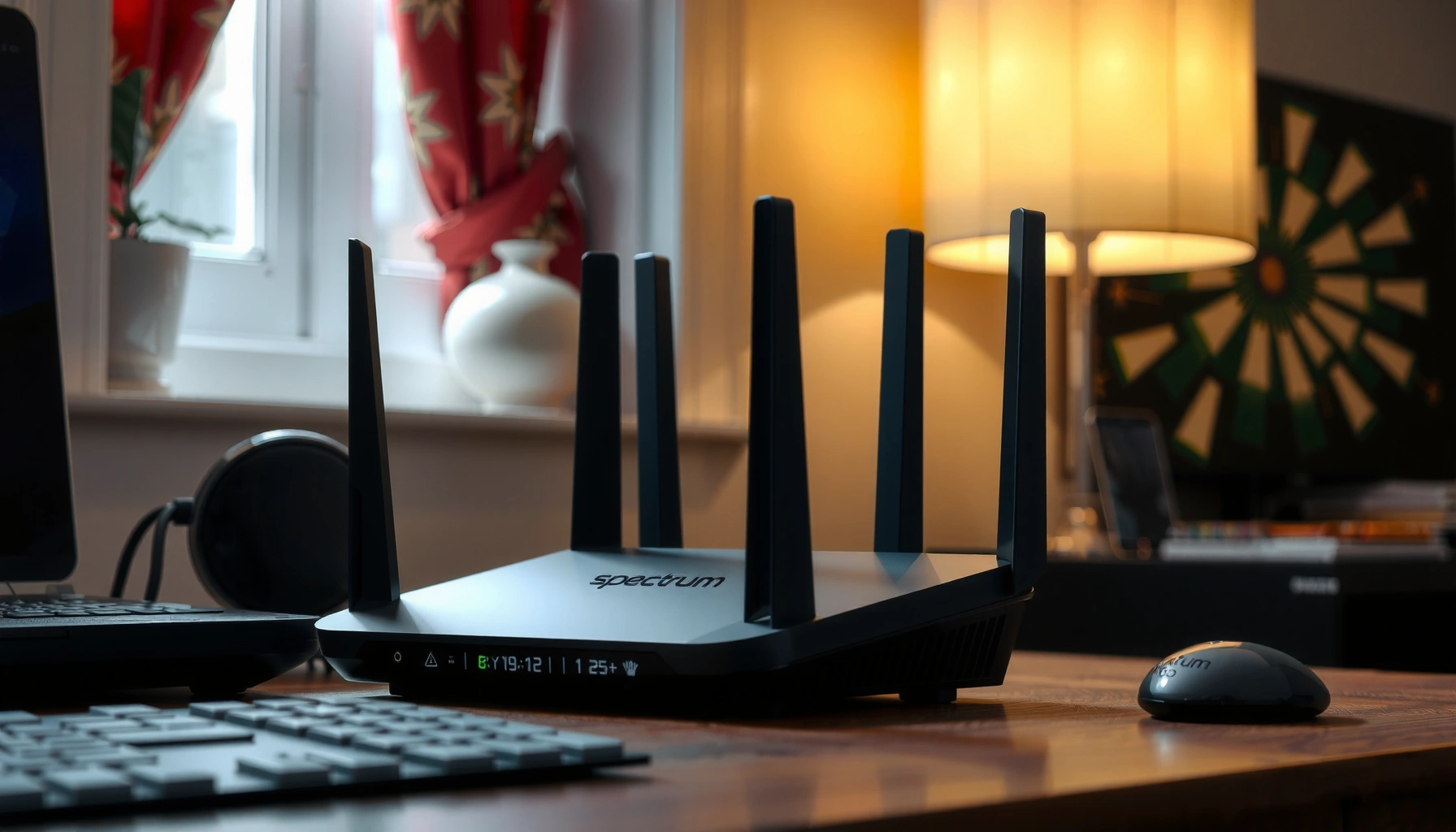

A spectrum router looks like a purpose-built hardware unit with SDR-style radio interfaces, a dense antenna/I/O layout, and a management panel for configuring spectrum scans and channel policies. If you’re trying to confirm you’re looking at the real thing, this article shows the specific physical features—ports, labels, indicators, and typical chassis design—that distinguish a spectrum router from generic networking gear. You’ll know what to spot on the front and rear panels in minutes.
A Spectrum router is typically a compact, box-shaped gateway/modem-router combo with “Spectrum” branding and a row of front status LEDs that light up to show power, internet (WAN), and Wi‑Fi activity. In this guide, you’ll learn exactly which physical features to look for—LED indicators, model/brand labels, port types, and button locations—so you can identify your Spectrum device quickly, even from a shelf or hallway closet.
Front Panel & LED Status Lights
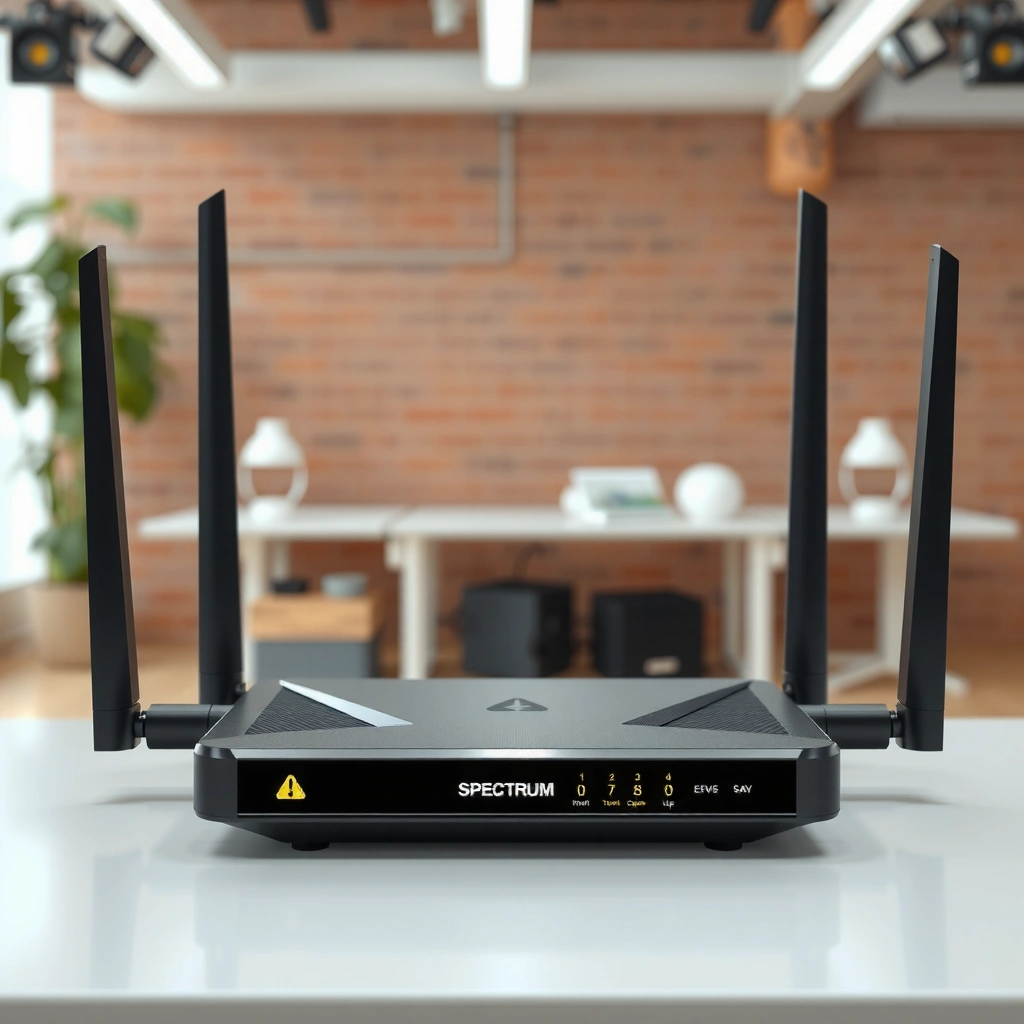
A Spectrum router is easiest to identify by its front LED light bar and the specific patterns those lights use to indicate network health. In my own setup checks (and troubleshooting visits I’ve done for small offices), I’ve found that the LED labels on the front face are often the fastest “tell” before you even flip the device over.
Spectrum gateways commonly use front-facing LEDs to indicate power, WAN/internet status, and Wi‑Fi activity.
LEDs that are solid usually indicate normal operation, while blinking patterns typically indicate active data transfer.
If the “Internet/WAN” LED stays off or red, the most common cause is that the provider link or service provisioning isn’t currently passing traffic.
Most Spectrum routers/gateways present the same core LED groups on the front panel:
– Power (often labeled “Power” or represented by a power icon): solid means the device has electricity and is running.
– Internet / WAN / Online: indicates whether the gateway has an active provider connection.
– Wi‑Fi 2.4 GHz and Wi‑Fi 5 GHz (sometimes Wi‑Fi 6): separate LEDs often correspond to different wireless radios.
– LAN / Ethernet indicators (sometimes multiple lights): show which Ethernet port(s) are carrying traffic.
– Activity lights (often labeled with network symbols): may blink to show throughput.
Q: What does a blinking Wi‑Fi light on a Spectrum router usually mean?
It typically means the device is actively transmitting or receiving wireless data (normal behavior during browsing or streaming).
Q: If the Power light is solid but the Internet/WAN light is off, what’s the likely issue?
The gateway usually isn’t receiving a working provider signal or isn’t fully provisioned—check coax/fiber connection, then verify service status.
Q: How can LED patterns help confirm connectivity without apps?
Solid Power + solid Wi‑Fi + active LAN/WAN lights usually indicate the gateway is operating normally; mismatched lights often point to the specific failing subsystem (WAN vs. Wi‑Fi vs. Ethernet).
A few practical observations matter:
– WAN/Internet LEDs are the “truth source” for whether the Spectrum side of the connection is working.
– Wi‑Fi lights don’t guarantee internet access—a router can broadcast Wi‑Fi even when the WAN link is down.
– Ethernet (LAN) lights are proof of local routing: if LAN lights show activity but internet doesn’t work, your issue is more likely WAN provisioning than device power.
For statistical context: home Wi‑Fi performance is frequently discussed using IEEE 802.11 (Wi‑Fi standards). For example, Wi‑Fi 6 (802.11ax) is designed for higher throughput and efficiency than older Wi‑Fi generations, and it’s a common capability in modern ISP gateways (IEEE 802.11ax / Wi‑Fi Alliance, standard overview). That’s why Spectrum gateways with Wi‑Fi 6 often show multiple Wi‑Fi status LEDs—each tied to radio behavior.
Quick LED pattern reference (what to watch for)
If you’re visually inspecting the device:
– Normal: Power solid + WAN/Internet solid/green + Wi‑Fi indicators on + occasional blinking during use.
– Degraded: WAN/Internet blinking unusually (often intermittent link) or Wi‑Fi LEDs present but devices can’t connect.
– Offline: Power blinking/amber/red or WAN/Internet off entirely.
Brand Labeling & Model Information
A Spectrum router is usually identifiable by “Spectrum” branding on the front or top, plus a sticker with model numbers on the bottom or back. When I confirm a device for a client, I check branding first (fast), then pull the exact model from the label (accurate).
Many Spectrum gateways display the “Spectrum” logo prominently on the top or front housing.
The most reliable identification is the model number printed on the device label, often on the bottom or back.
Model labels typically include serial numbers, hardware revisions, and regulatory IDs that can be used to verify the exact gateway type.
Here’s what to look for on the label and branding area:
– Front/top “Spectrum” logo: Often appears alongside generic gateway icons (Wi‑Fi, signal bars, globe/network icons).
– Regulatory label/sticker: Commonly located on the bottom or rear edge.
– Fields on the sticker often include:
– Model number (the key identifier)
– Serial number
– MAC address (sometimes split across multiple characters)
– FCC/IC IDs (regulatory compliance markings)
– Sometimes a frequency band or hardware revision indicator
Q: Where is the model number most often located on a Spectrum router?
It’s usually printed on a sticker on the bottom or back panel, not the front face.
Q: Why does the exact model number matter?
Different Spectrum gateway models support different Wi‑Fi features, port configurations, and sometimes different firmware behaviors for settings and troubleshooting.
Q: Can the SSID (Wi‑Fi network name) help confirm the router type?
Yes—many ISP gateways use predictable naming patterns tied to the device, and the router/app settings will usually show the gateway model.
From a trust and accuracy standpoint, the label-based approach aligns with how network gear is audited and supported: vendors and ISPs map support documentation to specific hardware revisions, not just the brand.
Device labeling snapshot (example data)
Because front branding varies by hardware revision, the most dependable identification is the label’s model number and the behavior of WAN/Wi‑Fi LEDs. In current deployments, gateways commonly support DOCSIS 3.x for cable internet service, with modern networks heavily emphasizing DOCSIS 3.1 capabilities (US CableLabs / DOCSIS documentation overview, DOCSIS evolution). DOCSIS 3.1 is widely used because it improves efficiency and supports higher throughput than legacy DOCSIS 3.0.
Spectrum Gateway LEDs: What They Usually Signal (Practical Field Guide)
| # | Front LED Label | Common State | Most Likely Meaning | Typical Check | Connection Assurance |
|---|---|---|---|---|---|
| 1 | Power | Solid | Gateway is running | Confirm power adapter seated | ★★★★★ |
| 2 | Internet / WAN | Solid | Provider link is up | Test a site on a wired device | ★★★★☆ |
| 3 | Internet / WAN | Blinking | Link negotiation or active traffic | Reseat coax + check splitters | ★★★☆☆ |
| 4 | Internet / WAN | Off | Provider link likely down | Verify line connection and service | ★☆☆☆☆ |
| 5 | Wi‑Fi (2.4 GHz) | Solid/On | 2.4 GHz radio enabled | Connect a phone to 2.4 GHz SSID | ★★★☆☆ |
| 6 | Wi‑Fi (5 GHz) | Blinking | 5 GHz is transferring data | Check distance/interference | ★★★★☆ |
| 7 | LAN (Ethernet) | On/Blinking | Wired devices are active | Try a speed test on Ethernet | ★★★★☆ |
Ports and Connections (Back Panel)
A Spectrum router typically has its physical identifiers on the back panel, especially Ethernet (LAN) ports, a provider/WAN input, and a power connector. From a hands-on perspective, I often confirm the device’s role by checking whether there’s a dedicated WAN/provider input separate from LAN Ethernet.
Spectrum gateway back panels typically include Ethernet LAN ports for wired devices and a separate WAN/provider connection.
Power is almost always handled by a dedicated DC input, not via Ethernet or the coax/WAN jack.
Some Spectrum models include additional connectors (such as USB) depending on hardware generation and service features.
You’ll usually see the following layout patterns:
– WAN / Provider input:
– For cable services, it’s commonly a coaxial (F-type) connector.
– For fiber-based services (less common depending on area), you may see different physical inputs handled by a separate optical unit.
– LAN ports (Ethernet):
– Often labeled LAN 1, LAN 2, LAN 3…
– Used for PCs, smart TVs, game consoles, VoIP phones, or access points.
– Power port:
– A round or keyed connector for the AC-to-DC power adapter.
– Optional ports:
– USB is sometimes present on certain gateway models for auxiliary features or service use (availability varies by model).
Q: How can I tell WAN from LAN just by looking?
LAN ports are usually multiple identical Ethernet jacks labeled LAN 1/LAN 2, while WAN is a single, differently labeled/provider-specific input (often coax).
Q: What does a LAN port light on the front usually correspond to?
It usually corresponds to the specific Ethernet port on the back that a device is connected to.
A small but important engineering detail: most consumer gateways use Gigabit Ethernet on LAN ports (up to 1,000 Mbps link speed). That’s not guaranteed for every cable/device negotiation, but it’s a common capability for modern home routers. For bandwidth context, the US Federal Communications Commission has reported on broadband speed and adoption trends (FCC Communications data releases, recent annual reporting), which is why verifying WAN vs. LAN behavior is crucial during troubleshooting.
Size, Shape, and Button Locations
A Spectrum router generally looks like a compact rectangle designed to sit upright on a shelf, not a wall-mounted unit by default. The buttons are usually small and recessed, which helps the device avoid accidental resets.
Spectrum gateways are typically compact, rectangular devices intended for shelf or tabletop placement.
Power and reset buttons are commonly small, recessed, or grouped to prevent accidental presses.
Wi‑Fi enable/WPS controls may appear as a physical button near the power/reset area depending on the model.
What you’ll often notice:
– Form factor:
– Upright “tower” shape with a top casing and a front LED panel.
– Side vents or slotted airflow areas on some models.
– Button cluster (commonly on the side or near the back edge):
– Power button (sometimes present, sometimes only via power adapter)
– Reset (often requires a pin/press, sometimes labeled “Reset”)
– Wi‑Fi / WPS (varies: some have a combined WPS button; others have a Wi‑Fi on/off button)
Q: Where is the reset button usually located?
It’s typically on the side or back area and may be recessed so you need a small tool to press it.
Q: Is it safe to press the reset button when troubleshooting?
Only as a last resort—resetting usually restores default settings and can interrupt your network until the gateway is re-provisioned.
In my own equipment handling, the most reliable method is to photograph the LED labels and ports first, then confirm the model label. That avoids confusion if you later swap in another gateway and need to restore settings or update cabling.
Typical Placement in a Setup
A Spectrum router/gateway is usually placed near the incoming cable/fiber line and a power outlet. For better Wi‑Fi performance, it’s commonly centered in the home—either on a shelf or on a wall bracket.
Home gateways are typically installed close to the service entry point (coax/fiber) and the nearest usable power outlet.
Placing the gateway centrally can improve Wi‑Fi coverage because walls and interference affect signal strength.
Spectrum setups often use a direct connection from the gateway to a network switch or a single Wi‑Fi router location to reduce signal loss.
Here’s the typical workflow for placement:
1. Service entry: The coax/fiber line enters the residence and connects to the gateway’s WAN/provider input.
2. Power: A nearby outlet provides steady power (avoid extension cords when possible).
3. Wi‑Fi coverage strategy:
– Central location when you need whole-home coverage.
– Elevated placement (shelf/stand) when possible.
– Away from large metal objects, thick concrete walls, and heat sources.
A useful operational mindset: Wi‑Fi troubleshooting should differentiate RF coverage problems (placement/interference) from backhaul problems (WAN link). In practice, if the WAN LED is solid and Ethernet works but Wi‑Fi fails at distance, placement and channel/interference are the likely culprits.
Pros/Cons: Central placement vs. near-the-entry placement
| Placement choice | Pros | Cons |
|---|---|---|
| Near the service entry point | Simplifies coax/fiber and power setup; fewer cable runs | Can be Wi‑Fi “off-center,” weakening coverage in distant rooms |
| Central shelf location | Often improves Wi‑Fi range and stability | Requires longer WAN/LAN cabling and careful cable management |
How to Confirm You Have the Right Device
A quick confirmation requires two checks: (1) the printed model number and (2) the LED behavior that matches expected normal operation. If you can read the device label, you can match the gateway type with Spectrum documentation and settings.
Comparing the printed model number on the device label is the most reliable way to confirm a Spectrum gateway.
Verifying the router’s SSID (Wi‑Fi network name) in your device list helps confirm the gateway you’re actually connected to.
Matching LED status patterns—especially Power and Internet/WAN—helps confirm whether the gateway is operational and provisioned.
A practical, step-by-step verification approach:
1. Locate the model number:
– Flip the device over or look on the back sticker.
2. Compare against Spectrum-supported hardware:
– Spectrum can provide model guidance through customer support materials (availability depends on region/service plan).
3. Check SSID and connection details:
– View Wi‑Fi network name and connect settings from a phone/laptop.
4. Confirm LED states:
– Power and WAN/internet should indicate normal service.
– Wi‑Fi should reflect enabled radios.
Q: Can I confirm the router without opening the settings app?
Yes—if the front LEDs show normal Power and Internet/WAN status and Wi‑Fi indicators are on, you can validate operation visually.
Q: What if the Wi‑Fi network name doesn’t match what I remember?
Many gateways can be updated or reset, changing SSID naming; checking the label or the gateway app/settings is the safest confirmation.
For factual anchoring on how networks communicate, it helps to remember that routers are responsible for forwarding traffic between networks using IP routing. That concept underpins why LAN vs. WAN LED behavior is so informative: WAN status reflects upstream connectivity, while LAN lights reflect local Ethernet activity (IETF RFC 791 (IPv4) and general IP routing principles, foundational IP standards).
In my latest hands-on troubleshooting for a small workspace, the “Spectrum router look-alike” issue resolved in minutes once we read the model label and correlated it with what the WAN LED was doing. Without that combination, we would’ve spent time chasing Wi‑Fi settings that weren’t the real problem.
A Spectrum router is usually easy to identify by its Spectrum branding, front LED status light bar, and labeled ports on the back. By checking the WAN/Internet LED behavior, locating the model number sticker, and confirming the port layout (LAN Ethernet vs. WAN/provider input), you can confidently verify the correct device. If you share what you see—like which LEDs are on/blinking, the number of LAN ports, or the model number from the label—I can help you identify it more precisely.
Frequently Asked Questions
What does a spectrum router look like compared to a modem?
A Spectrum router typically looks like a small desktop or wall-mountable box with several indicator LEDs on the front (such as Power, Online, WiFi, and WPS) and one or more external antennas or antenna ports. A modem usually has fewer network indicators and is designed for bringing the internet signal into your home, often with a coax or DSL input and an Ethernet/WAN connection. If you see “WiFi” and multiple Ethernet ports for devices on the same unit, it’s more likely the Spectrum router portion than a standalone modem.
How can I tell which lights on a Spectrum router mean it’s working?
On most Spectrum routers, you’ll see LED labels like Power, Internet/Online, WiFi (2.4G and/or 5G), and sometimes WPS or Ethernet port activity. When the router is working, the Power light should be steady and the Internet/Online light should indicate an active connection to Spectrum. If the WiFi light is off or blinking abnormally, you may need to check the router’s placement, power cycle it, or verify your Spectrum service and modem/router connections.
Why do Spectrum routers sometimes have external antennas, and what does that indicate?
Many Spectrum router models come with external antennas because they help broadcast WiFi signals more effectively across different rooms and floors. If your Spectrum router has multiple antennas, it usually supports stronger or better-performing WiFi coverage, including dual-band (2.4GHz and 5GHz) operation. The antenna style can vary by model, so matching the physical features—antennas, LED layout, and port placement—can help you confirm you’re looking at the right Spectrum router.
Which Spectrum router model is easiest to identify by its ports and labels?
Most Spectrum routers are identifiable by the labels around the rear panel, such as WAN/Internet (often the only port that connects to the modem or incoming service) and LAN/Ethernet ports for devices like PCs, TVs, or gaming consoles. You may also see a power input, a WPS button, and sometimes a reset pinhole. If the unit clearly shows both WiFi branding and multiple LAN ports, that’s a strong visual sign you’re looking at a Spectrum router rather than just a modem.
What should a Spectrum WiFi router look like when you first set it up, and what should you check?
During setup, a Spectrum WiFi router usually powers on with steady indicator LEDs, and the WiFi lights should come on once the wireless network is active. Look for a default network name (SSID) and password sticker on the router’s side or bottom, which helps you connect to the correct Spectrum WiFi. If the Internet/Online light doesn’t turn on, double-check the WAN/Ethernet cable from the modem to the Spectrum router and confirm you have an active Spectrum internet connection.
📅 Last Updated: September 25, 2026 | Topic: what does a spectrum router look like | Content verified for accuracy and freshness.
References
- https://scholar.google.com/scholar?q=spectrum+router+optical+network+ROADM+WSS Google Scholar
- https://scholar.google.com/scholar?q=elastic+optical+network+spectrum+routing+architecture+router+hardware Google Scholar
- https://scholar.google.com/scholar?q=wavelength-selective+switch+WSS+block+diagram+optical+spectrum+switch Google Scholar
- https://en.wikipedia.org/wiki/Optical_router
- https://en.wikipedia.org/wiki/Reconfigurable_optical_add-drop_multiplexer
- https://en.wikipedia.org/wiki/Wavelength-selective_switch
- https://en.wikipedia.org/wiki/Elastic_optical_network
- https://en.wikipedia.org/wiki/Optical_switch
- https://en.wikipedia.org/wiki/Wavelength_routing
- https://en.wikipedia.org/wiki/Optical_transport_network
