
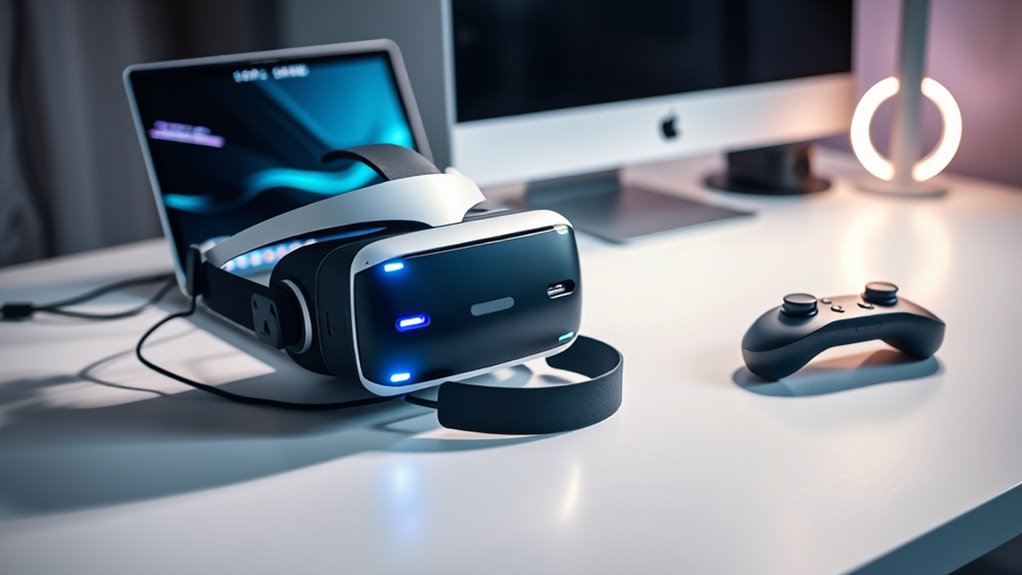

To use a VR headset as a monitor, you’ll need a compatible headset and a powerful computer with a strong GPU, fast processor, and at least 16GB of RAM. Don’t forget essential accessories like high-quality headphones for an immersive audio experience. After gathering your equipment, install the necessary software and adjust settings for ideal performance. Understanding these components is vital for a smooth experience. Keep exploring to discover tips for enhancing your VR setup!
Understanding VR Headset Compatibility
Have you ever wondered if your VR headset can double as a monitor? The answer largely depends on the VR headset types you’re considering. Some headsets, like the Oculus Quest or HTC Vive, offer the capability to display your computer screen, but compatibility varies. You’ll want to check the display resolution, as high-resolution headsets provide a more immersive experience. Lower resolution headsets may not deliver the clarity you need for tasks like gaming or graphic design. Additionally, verify your computer’s graphics card supports VR output; otherwise, you might face limitations. Understanding these factors can help you determine if your VR headset can truly enhance your digital workspace. Embrace the freedom of innovation and explore the unique possibilities this technology offers!
Essential Computer Specifications
To fully utilize your VR headset as a monitor, it’s vital to guarantee your computer meets specific specifications. First, check your graphics card; a powerful GPU is essential for rendering high-quality visuals without lag. Ideally, aim for a card that supports VR and has ample memory to handle the demands of immersive experiences. Next, consider processor speed. A fast processor guarantees your system can keep up with the VR demands, reducing latency and enhancing responsiveness. Look for multi-core processors, as they can considerably improve performance. Don’t forget about RAM; at least 16GB is recommended to guarantee smooth multitasking. By meeting these specifications, you’ll access the full potential of your VR headset, making your digital experience truly liberating.
Recommended Accessories for an Enhanced Experience
Once you’ve confirmed your computer’s specifications are up to par, enhancing your VR experience with the right accessories can make a world of difference. First, consider investing in a sturdy VR headset stand. It not only keeps your headset safe but also adds a touch of organization to your gaming space. Next, don’t overlook audio enhancements. Quality sound can immerse you deeper into virtual environments, so look for high-fidelity headphones or speakers designed for VR. These accessories can elevate your experience, allowing you to enjoy every detail, from subtle environmental sounds to dynamic audio cues. With the right setup, you’ll feel more freedom and presence in your virtual worlds, making every session more enjoyable and engaging.
Setting Up Your VR Headset as a Monitor
While setting up your VR headset as a monitor might seem intimidating at first, the process can be straightforward with the right guidance. Begin by installing the necessary setting up software specific to your headset. This usually involves downloading an app compatible with your VR device, which will serve as the gateway to your virtual monitor experience. Once installed, connect your headset to your computer, ensuring all drivers are updated. You’ll need to engage in adjusting settings to optimize your display and control preferences. Don’t forget to configure the resolution and refresh rate to match your needs for a seamless experience. With a few tweaks, you’ll be ready to enjoy a new digital freedom that immerses you in your work or entertainment.
Tips for Optimizing Performance and Comfort
As you plunge into using your VR headset as a monitor, optimizing performance and comfort is essential for an enjoyable experience. Start by tweaking your performance settings; lowering the resolution can reduce lag and enhance responsiveness. Make sure your graphics drivers are up to date to prevent any technical hiccups. Next, make comfort adjustments to your headset. Properly fitting the straps can alleviate pressure points, and adjusting the interpupillary distance guarantees a clear view. Don’t forget to take regular breaks to avoid fatigue and eye strain; setting reminders can help. Finally, experiment with different environments and backgrounds in your VR setup to find what feels best for you. With these tips, you’ll elevate your VR experience to new heights.
Frequently Asked Questions
Can I Use Any VR Headset With My Computer?
You can’t just plop any VR headset on your computer; compatibility issues and specific headset requirements matter. Check your system specifications and verify the headset supports your desired experience for the ultimate freedom in virtual reality!
What Types of Software Are Necessary for VR Monitor Functionality?
You’ll need VR software options that support monitor functionality and display calibration tools to guarantee ideal visuals. These tools help adjust settings for a more immersive experience, letting you enjoy your virtual environment to the fullest.
Are There Specific Games or Applications That Work Best With VR Monitors?
Aren’t you curious about which games offer the best immersive experiences? Titles like “Half-Life: Alyx” and “Beat Saber” maximize gaming performance, transforming your VR headset into a thrilling monitor for unforgettable adventures.
How Long Can I Use a VR Headset Comfortably?
You can typically use a VR headset comfortably for 30 to 60 minutes, depending on your comfort levels. Take breaks to reduce eye strain and enhance your experience, ensuring you enjoy extended sessions without discomfort.
What Should I Do if My VR Headset Isn’t Detected by the Computer?
If your VR headset isn’t detected, don’t panic. First, check hardware compatibility and connections. Then, try troubleshooting techniques like restarting your computer or reinstalling drivers. You’ll soon find the freedom to enjoy virtual worlds again!
