
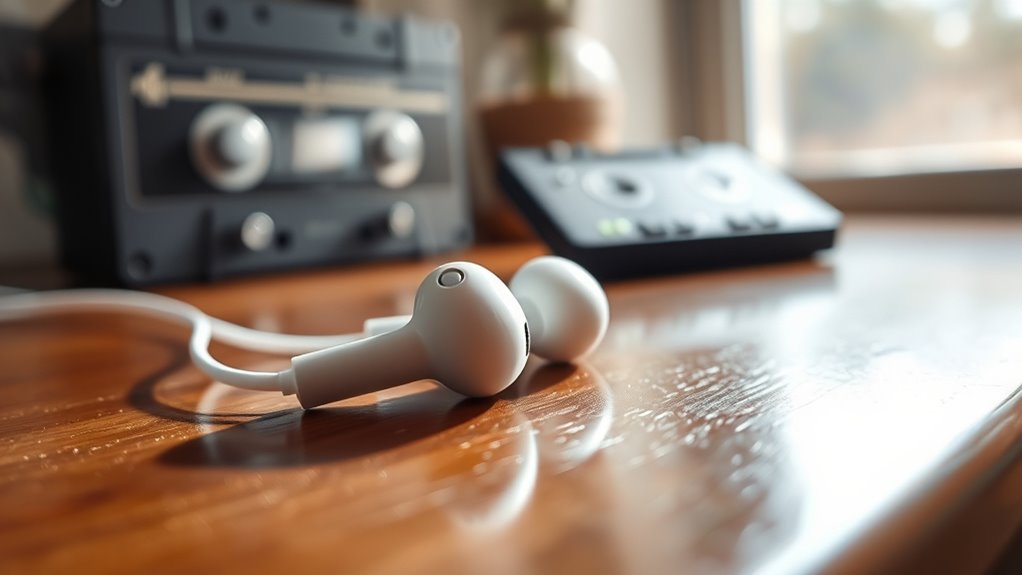

Earbuds made their first significant commercial debut in the 1980s, evolving from basic designs into essential audio accessories. Initially, they prioritized convenience over sound quality. However, as personal music devices like the Walkman rose in popularity, the demand for better listening experiences grew. This led to innovations in design and technology, especially with the shift to wireless models. If you’re curious about how earbuds developed further and what’s next, there’s a lot more to explore.
The Origins of Earbuds: A Brief History
Although many people associate earbuds with modern technology, their origins trace back to the late 20th century, reflecting a significant evolution in personal audio devices. Initially, earbuds were crafted from basic materials like plastic and rubber, prioritizing portability over sound quality. As demand grew, manufacturers began experimenting with diverse earbud materials, aiming for both comfort and enhanced audio performance. This shift allowed for better acoustics, giving you the freedom to enjoy music, podcasts, and calls without sacrificing quality. The combination of innovative designs and improved materials led to a new era in personal audio, making earbuds an essential part of daily life. Understanding this history helps you appreciate the sophisticated technology that now fits snugly in your ears.
The First Commercial Earbuds: 1980s Innovations
In the 1980s, the landscape of personal audio transformed with the introduction of commercial earbuds, marking a pivotal moment in sound technology. You’ll see how early design concepts paved the way for major manufacturers to innovate, leading to significant advancements in audio quality and portability. This era not only set the standard for future earbuds but also changed how you experience music on the go.
Early Design Concepts
As the 1980s rolled in, the quest for portable audio solutions led to the development of the first commercial earbuds, which revolutionized how people experienced music on the go. Early prototypes were often clunky and uncomfortable, but they sparked a design evolution that prioritized both sound quality and wearability. You’d notice that initial designs used larger drivers, making them less discreet and harder to integrate into daily life. As manufacturers experimented with materials and ergonomics, earbuds began to shrink in size while enhancing acoustic performance. These innovations allowed for a more immersive listening experience, giving you the freedom to enjoy your favorite tunes anytime, anywhere. The 1980s laid the groundwork for what would become an essential accessory for music lovers worldwide.
Major Manufacturers’ Contributions
The evolution of earbuds in the 1980s wouldn’t have been possible without the significant contributions of major manufacturers. Sony innovations led the charge, introducing compact designs that prioritized portability. Bose acoustics set new standards for sound quality, enhancing the listening experience. Sennheiser quality became synonymous with clarity, while Panasonic designs focused on user-friendly interfaces. Jabra ergonomics guaranteed comfort for extended use, appealing to music lovers everywhere. Apple features began to emerge, hinting at future integration with personal devices. Samsung advancements followed suit, pushing technological boundaries further. Finally, Beats aesthetics captured the market’s attention with stylish designs. Each of these companies played an essential role in shaping the earbuds we recognize today, laying the foundation for future innovations.
Technological Advancements Timeline
While many people might associate earbuds with modern music consumption, their roots trace back to the innovations of the 1980s, marking a pivotal shift in personal audio technology. This era saw the introduction of the first commercial earbuds, which offered a more portable and discreet alternative to traditional headphones. They provided users with enhanced sound quality, allowing for a richer listening experience. As technology progressed, wireless connectivity emerged, changing the game entirely. You could move freely without tangled cords, enjoying your favorite tunes on the go. This combination of compact design and improved audio performance laid the groundwork for the advanced earbuds that are recognized today, giving you the freedom to enjoy music wherever life takes you.
The Rise of Portable Music: Walkman and Earbuds
As you explore the rise of portable music, it’s essential to recognize how the Walkman revolutionized the way we listen. This iconic device not only marked the birth of personal music consumption but also spurred significant changes in earbud design to enhance the experience. Ultimately, these innovations reshaped our listening habits, making music more accessible and personal than ever before.
Birth of Portable Music
Since the dawn of personal music consumption, the desire for portability has shaped the way we enjoy our favorite tunes. The introduction of the Walkman revolutionized music accessibility, allowing you to carry your portable sound wherever you went. Suddenly, music wasn’t just confined to home or the radio; it became an integral part of your daily life.
| Feature | Walkman |
|---|---|
| Year Released | 1979 |
| Format | Cassette |
| Impact | Enhanced music accessibility |
| Portability | Lightweight and compact |
This innovation ignited a passion for personal music devices, laying the groundwork for future advancements like earbuds. The quest for freedom in how you listen to music was just beginning.
Evolution of Earbud Design
The evolution of earbud design reflects the ongoing quest for convenience and enhanced audio experiences in portable music consumption. Early earbuds lacked ergonomic features, often causing discomfort during extended use. As design aesthetics improved, manufacturers incorporated sound isolation and noise cancellation technologies, allowing you to immerse yourself fully in your favorite tracks. The advent of wireless convenience transformed the experience; without tangled cords, you could move freely. Battery life has also advanced markedly, enabling longer listening sessions without interruptions. Material innovations led to more durable, lightweight designs, while user customization options, like interchangeable tips and colors, cater to individual preferences. This progression in design not only enhances your auditory experience but also aligns with a lifestyle that values mobility and personal expression.
Impact on Listening Habits
With the evolution of earbud design enhancing user experience, listening habits underwent a significant transformation alongside the rise of portable music devices like the Walkman. These advancements shifted audio consumption patterns, making music accessibility a priority for many. You now have the freedom to choose your personal preference without being tethered to a stationary device. The introduction of noise isolation features allowed you to immerse in your favorite tunes, reshaping social dynamics by encouraging solitary listening in public spaces. Additionally, earbuds improved multitasking efficiency, enabling you to enjoy music while maneuvering through daily tasks. However, it is important to reflect on health considerations, as prolonged use at high volumes could lead to hearing issues. Balancing enjoyment and well-being is vital in this audio-saturated world.
The Transition to Wireless: Bluetooth Technology
As technology evolved, the change from wired to wireless earbuds became inevitable, largely driven by the rise of Bluetooth technology. This advancement offered you newfound freedom and convenience, revolutionizing how you enjoy music and podcasts. Here’s why Bluetooth connectivity is a game-changer:
- No Tangled Wires: Say goodbye to the hassle of tangled cords.
- Portability: Easily carry your earbuds without worrying about wire damage.
- Enhanced Comfort: Enjoy a more comfortable fit without the constraints of wires.
- Multi-Device Pairing: Connect to various devices seamlessly, switching between your phone, tablet, or laptop.
The shift to wireless earbuds not only embodies technological progress but also enhances your listening experience, making it more liberating than ever.
The Impact of Apple’s AirPods
Apple’s AirPods, released in late 2016, revolutionized the wireless earbud market and set a new standard for design and functionality. With their seamless integration into the Apple ecosystem, they offered unmatched wireless convenience and an enhanced user experience. The sound quality was impressive, making them popular among audiophiles and casual listeners alike.
| Feature | AirPods | Competitors |
|---|---|---|
| Sound Quality | High | Varies |
| Wireless Range | 30+ feet | 20-30 feet |
| Battery Life | 5 hours | 4-6 hours |
| Noise Cancellation | No | Yes (some models) |
| Price | $159 | $100-$300 |
Their success pushed competitors to innovate, raising the bar in market competition.
Current Trends in Earbud Technology
Recent advancements in earbud technology are transforming the listening experience, making them more versatile and user-friendly than ever before. Here are some current trends you should know:
- Noise Cancellation: Enjoy your tunes without external distractions.
- Fitness Tracking: Many earbuds now monitor your activity levels, helping you stay fit.
- Sound Quality: Expect rich audio with improved bass and clarity, tailored to your preferences.
- Ergonomic Design: Comfort is key; modern designs guarantee a better fit for extended use.
Additionally, smart features enhance usability, while battery life keeps you connected longer. With a growing focus on environmental sustainability, brands are prioritizing eco-friendly materials. Audio customization also allows you to create your perfect sound profile, offering a truly personalized listening experience.
The Future of Earbuds: What Lies Ahead
While the current landscape of earbuds showcases remarkable advancements, the future promises even more transformative changes. Imagine earbuds equipped with smart features that adapt to your environment, automatically adjusting sound profiles based on noise levels or even your mood. You’ll soon enjoy personalized sound experiences tailored to your unique preferences, enhancing every listening moment.
Moreover, innovations like health-tracking capabilities could redefine how you interact with your earbuds, transforming them into essential wellness tools. As artificial intelligence becomes more integrated, your earbuds might learn from your listening habits, offering curated playlists that resonate with you. The freedom to customize audio experiences in real-time signifies a new era, making earbuds not just devices, but extensions of your lifestyle and creativity.
Frequently Asked Questions
Who Invented the First Earbuds?
They say necessity is the mother of invention. The first earbuds, created by Sony in 1982, marked a turning point in earbud history, shaping the invention timeline and giving you portable audio freedom like never before.
Are Earbuds Harmful to Hearing?
Yes, earbuds can be harmful to your hearing if used excessively or at high volumes. Poor sound quality may lead you to crank up the volume, increasing the risk of hearing loss over time.
What Are the Different Types of Earbuds?
Think of earbuds as your personal soundscape. You’ve got wireless earbuds for freedom, wired for reliability, and noise-cancelling technology that creates a serene bubble, letting you escape the chaos around you while enjoying quality audio.
How Do I Clean My Earbuds Properly?
To clean your earbuds properly, use gentle cleaning techniques like a soft cloth and mild soap. Regular maintenance tips include avoiding moisture and storing them in a case, ensuring longevity and ideal performance for your listening experience.
Can Earbuds Be Repaired if Damaged?
Absolutely, earbud repair is possible! With proper earbud maintenance, you can often fix minor issues. Explore online tutorials or consult a professional for significant damage, ensuring your cherished earbuds can continue their sonic service.
