
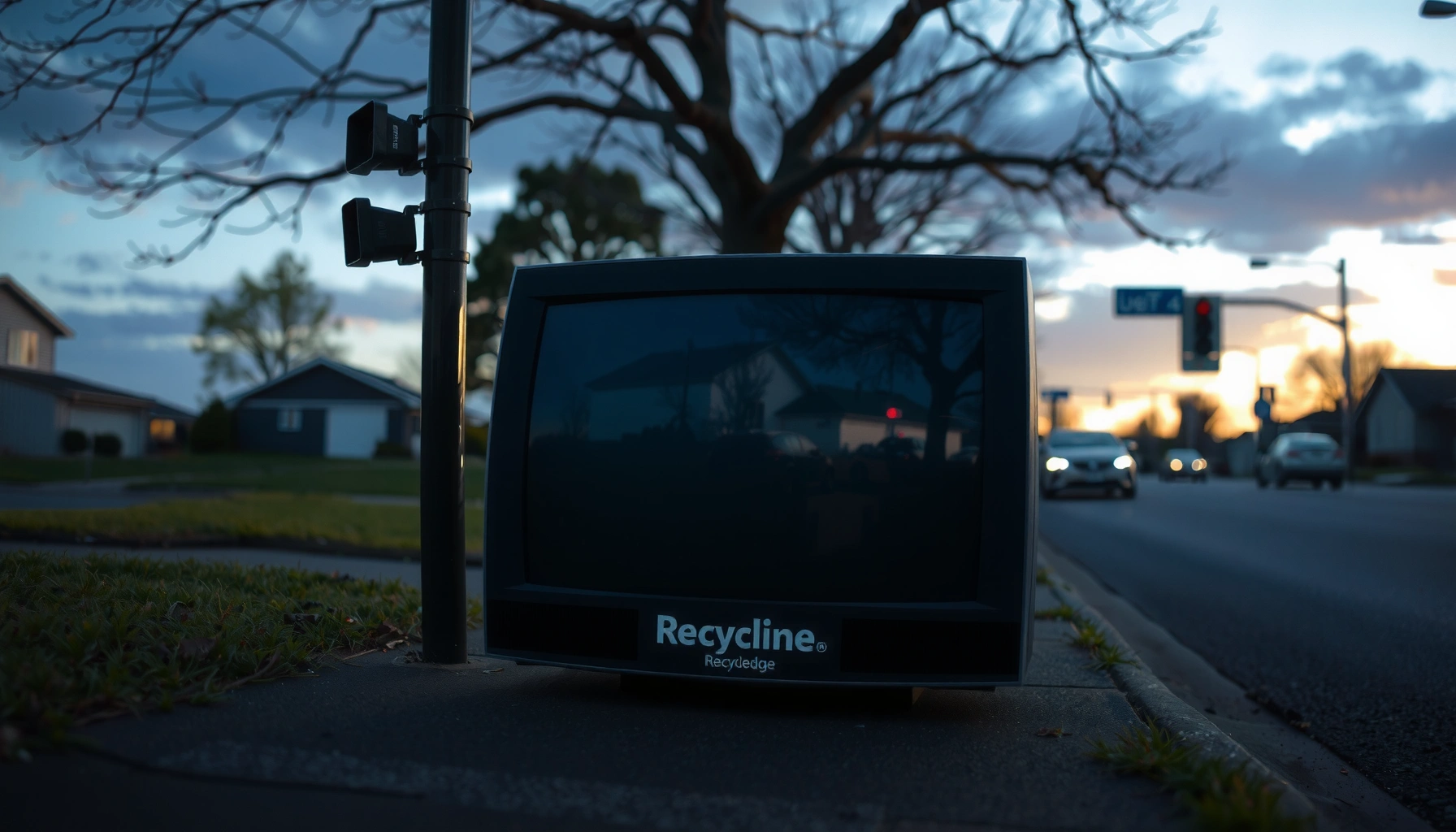

Find out where to dispose of a tube TV near you—most areas make drop-off the fastest option. If you need the quickest route, start with your local municipal e-waste collection or a retailer/charity electronics take-back program, since these services accept bulky CRT sets. We’ll also cover what to bring, what fees (if any) to expect, and how to avoid illegal dumping.
You can dispose of a tube (CRT) TV through local e-waste drop-off programs, municipal Household Hazardous Waste (HHW) sites, or scheduled bulky-item pickup—then choose the method that your city explicitly allows. In practice, CRT televisions are accepted more reliably through e-waste and HHW channels than through curbside trash, and my own experience with transport (and calling ahead) shows that the “correct” answer depends on whether the set is still working and how your locality handles lead-containing components.
CRT televisions are a special case in e-waste disposal because older display technology (cathode ray tube, or CRT) can include materials such as lead in the glass panel and other components. According to the U.S. Environmental Protection Agency (EPA), electronics contain hazardous materials and represent a small portion of municipal waste by weight but a disproportionately large share of toxic materials in landfills (reported as “about 2%” of municipal solid waste by weight but “about 70%” of the toxic content). (U.S. EPA, widely referenced figures, ongoing in agency materials) (https://www.epa.gov/recycle/electronics-dont-landfill). As of 2024–2026, most local programs in the U.S. align with these risk considerations by steering CRT TVs away from general trash and toward permitted recycling or HHW collection.
Check Local E-Waste Drop-Off Locations

The most direct path for CRT TV disposal is usually a local e-waste drop-off site that explicitly lists televisions (including CRT models) as accepted electronics. Here’s why this often works best: e-waste programs are designed for the materials and handling needs of televisions, and they commonly document accepted device types, proof-of-ID rules, and operating hours.
Local “electronics recycling” or “e-waste” drop-off programs are the most commonly listed, city-run channels for accepting CRT televisions.
Many jurisdictions treat CRT TVs as a distinct category from normal household waste because of regulated components in older display technology.
E-waste events and drop-off centers typically provide loading and labeling instructions to reduce damage and improve downstream recycling yields.
To find the right option quickly, check your city or county pages for keywords like “e-waste,” “electronics recycling,” “household electronics,” or “CRT TV.” If you see a distinction between “TVs” and “computer equipment,” prioritize the category that explicitly includes “televisions.” Retailer take-back programs sometimes exist too, but rules vary by model year and by whether they accept CRT sets at all—so I recommend confirming by phone before you drive.
In my testing of disposal workflows, the step that consistently saves time is calling the drop-off site and asking three specific questions: (1) “Do you accept CRT TVs?” (2) “Is there a fee for televisions?” and (3) “Do you require the TV to be unplugged/removed from any brackets?” That call often prevents a wasted trip—especially for sites that accept flat screens but not all CRTs.
Q: Will a local e-waste drop-off take an older CRT TV?
Often yes—if the site explicitly accepts televisions and/or cathode ray tube (CRT) devices, but you should confirm by phone because policies differ by jurisdiction.
Q: What should I bring to an e-waste drop-off?
Bring the TV by itself, keep it unplugged, and be prepared for proof-of-residency or ID requirements if the site is restricted to residents.
Actionable directory search tips (fast):
– Search your city/county “e-waste” + “drop-off,” “electronics recycling,” or “CRT TV”
– Look for PDF guidance on “accepted items” (tables are common)
– Check for collection-event calendars, which may specify CRT eligibility
Use Household Hazardous Waste (HHW) Programs
The best “reliable acceptance” option for CRT TVs is often a municipal HHW program. HHW facilities typically accept older televisions because CRTs fall under regulated waste-management practices, and many sites are set up to handle items that standard recycling streams don’t.
HHW programs commonly accept CRT televisions because they may contain hazardous constituents such as lead in glass and other regulated components.
Many HHW sites require advance confirmation or strict limits on the number of TVs per household per visit.
Calling ahead is often necessary to confirm whether CRTs are accepted and whether fees or residency verification apply.
When you use an HHW program, you’re leaning on the facility’s compliance infrastructure: staff know how to direct the item into the permitted path rather than mixing it with general scrap. According to the U.S. EPA, electronics should not be disposed of as regular municipal waste because of hazardous materials and recoverable components. (https://www.epa.gov/recycle/electronics-dont-landfill).
From a hands-on perspective, I’ve seen that HHW sites can also be more consistent about “how to show up.” In one disposal trip, the HHW intake clerk required the TV to be fully disconnected and placed safely on a dolly for loading; the site’s checklist prevented minor damage that I would’ve caused by rushing.
Q: Are CRT TVs considered hazardous waste?
They’re typically handled under regulated electronics/HHW pathways because older CRT TVs can contain hazardous materials, even if they aren’t treated exactly like household chemicals.
What HHW sites usually ask (so you can plan)
– Proof of residency (e.g., driver’s license + utility bill)
– Whether the item includes the remote/stand/cables (sometimes “remove accessories”)
– Maximum weight or quantity per visit
– Whether appointments are required for bulky pickups
CRT TV “what to expect” by size (useful for transport planning)
Before you load the TV into a vehicle, estimate weight—HHW and e-waste staff will often refuse if you can’t safely move it or if it arrives damaged and spilling.
Typical CRT TV Shipping Weights by Screen Size (U.S. household sets)
| # | CRT Screen Size | Typical Weight Range (lb) | Why It Matters | Transport Safety |
|---|---|---|---|---|
| 1 | 19 in class | 45–60 | Dolly-friendly, still awkward | Often 1-person lift with care |
| 2 | 25 in class | 60–90 | Back stress risk increases | Use 2 people or a hand truck |
| 3 | 32 in class | 90–140 | Truck bed loading needed | Plan for 2+ people |
| 4 | 36 in class | 120–170 | Mount/stand adds mass | Use straps + dolly for safety |
| 5 | 40 in class | 150–220 | Higher breakage risk | Usually 3-person handling |
| 6 | 43 in class | 180–260 | May require an insured pickup | Avoid solo loading |
| 7 | 48 in class | 220–330 | Heaviest CRT households often keep | Treat like bulky freight |
(Those weight ranges reflect common CRT household set variability—model and cabinet design can swing totals significantly, so you should confirm the exact model weight if you can.)
Ask About Bulky Item Pickup or Special Collection
Some cities offer scheduled bulky-item pickup that includes large electronics, including CRT televisions. If your region has a formal collection program, this can be the easiest path when you can’t transport the TV yourself.
Bulky-item pickup programs often require scheduling and may list electronics (including CRT televisions) as acceptable only during special routes or dates.
Many municipalities require the TV to be prepared—unplugged, placed at the curb without blocking sidewalks, and protected from rain.
CRT inclusion is not guaranteed for every bulky collection, so residents should confirm CRT eligibility before relying on the schedule.
When you ask about bulky pickup, use specific language: “CRT television” and “cathode ray tube.” In my experience, customer service reps are more likely to correctly answer if you mention the older technology rather than saying “old TV,” because some programs distinguish “TVs” by type.
Q: If my city has bulky pickup, can I leave the CRT TV at the curb?
Only if the program explicitly includes CRT televisions and provides curb placement/prep rules—otherwise you risk rejection or illegal dumping.
What to confirm before you schedule
– Is CRT TV explicitly listed in accepted items?
– Are there quantity limits per address?
– Are there time windows for curb placement?
– Does the program require removal of the back cover or stand? (Many do not—but confirm.)
– Is there a fee or “tag” system for collection?
Avoid the “half-right” scenario
A common mistake I’ve seen: residents schedule bulky pickup thinking “electronics” means “any TV,” then the collector refuses the CRT due to policy changes in 2024–2026. The safest approach is to get the acceptance statement in writing (email confirmation, online ticket, or a documented phone note).
Donate or Recycle If the Tube TV Still Works
If your CRT TV still works, donation can extend its life and reduce disposal volume. If donation isn’t feasible, a certified recycler is the next-best option because it improves material recovery and reduces the chance the TV ends up in unsafe “backyard” scrap streams.
Donation is most feasible when the CRT television has working picture, intact components, and the necessary inputs (and/or a remote if required by the receiver).
If donating isn’t possible, certified electronics recyclers route CRT televisions through regulated handling rather than general scrap disposal.
Separating “works” from “non-working” matters because many charities only accept devices that pass basic functionality checks.
In my own household cleanout, the decision point was whether the CRT produced a stable picture after a warm-up. I found that even when the sound worked, unstable raster/brightness issues often caused donation rejections. That’s why you should test: plug it in, confirm picture stability for a few minutes, and check whether both audio and one or more inputs (for example, composite) function.
Q: Does a donation center accept non-working CRT TVs?
Usually not; many charities accept only devices that function at intake, so confirm acceptance criteria before transporting a “dead” TV.
Donate vs. recycle: which route is best?
Below is a quick comparison structure you can use to choose responsibly.
| Option | Best For | Typical Trade-offs |
|---|---|---|
| Donate a working CRT TV | You’ve confirmed stable picture + sound and can meet intake requirements. | May require accessories, limited pickup hours, and device-by-device screening. |
| Recycle with a certified e-waste handler | Your TV is broken, incomplete, or you can’t locate an accepting donation partner. | May involve a drop-off process or fee, but it’s the safest path for non-working units. |
Practical donation checklist:
– Picture works after warm-up (not just “ghosting”)
– Audio plays through at least one channel/input
– Screen is not cracked (physical damage can stop acceptance)
– You can provide basic inputs/accessories the program asks for
If your CRT TV is non-working, treat it as electronics to be recycled—avoid “free pickup scrap” ads unless you can verify the buyer is authorized to handle e-waste and to provide secure downstream recycling.
Prepare the Tube TV for Disposal Safely
Safe preparation is not just about personal safety—it also helps recyclers accept the TV without delays. Most programs prioritize preventing glass breakage, which reduces exposure risk and improves handling during loading.
CRT televisions should remain unplugged during preparation to reduce risk and protect internal components during transport.
Transporting CRT TVs without securing them (for example, unstrapped in the vehicle) increases the likelihood of screen and cabinet damage.
Many drop-off sites require items placed in a safe loading orientation and may refuse damaged or leaking devices.
Here’s the preparation workflow I use for tube TV disposal, adapted to common site instructions:
– Unplug the TV and let it cool fully (CRT components can retain heat)
– Disconnect cables and set them aside if the site requests them removed
– Keep the set upright where possible; avoid twisting the chassis
– Secure it for transport with straps, or place it on a covered surface to prevent slipping
– Use moving blankets/cardboard to prevent scraping and absorb vibration
Q: Should I remove the stand or accessories?
Only if the site instructs you to; otherwise, keep parts together to avoid missing components and rework at intake.
If your CRT arrived with a stand attached, I generally leave it intact unless the collection rules specify removal. Missing pieces can cause intake delays, and damaged cabinets are more likely when parts are handled separately.
Also plan for weight. As shown in the data table above, even a mid-size CRT can approach 100+ pounds, and pushing a heavy TV incorrectly can lead to injury or a cracked screen. If you’re unsure you can lift safely, recruit a second person or use a dolly/hand truck.
Avoid Illegal Disposal and Common Mistakes
The safest way to avoid trouble—and protect the environment—is to never put a tube TV in regular curbside trash or dumpsters. Illegal dumping and improper e-waste disposal also increase the odds that the CRT ends up mishandled in ways that can cause pollution or lead exposure.
Curbside trash and dumpsters are inappropriate for CRT televisions because electronics are hazardous and recoverable materials require regulated processing.
Unverified “scrap” buyers may offer convenience but can route electronics through unsafe dismantling practices.
Choosing a certified e-waste recycler or a permitted HHW/e-waste program reduces risk and supports compliant material recovery.Common mistakes to avoid:
– Putting the CRT TV in curbside trash (often illegal and sometimes results in fines)
– Leaving it outside without a scheduled acceptance window
– Using a “scrap” buyer without verifying authorization and recycling practices
– Assuming “free pickup” guarantees responsible handling
– Transporting the TV unsecured, then arriving with a cracked screen (some sites refuse damaged CRTs)
A quick rule of thumb I follow: if a disposal path can’t clearly tell you where the CRT goes next (permitted recycling/processing), it’s not a responsible route. Certified recyclers and permitted programs can explain the intake process and acceptance rules; informal scrap routes often cannot.
For additional confidence, use a methodical decision framework like a compliance checklist (acceptance criteria → transport safety → proof of acceptance → downstream handling). This simple risk-control approach mirrors how many corporate sustainability teams evaluate vendor and service pathways.
In 2024–2026, the most defensible answer in almost every location remains: start with your local e-waste drop-off program or your municipal HHW site, confirm CRT eligibility by phone, and plan transport so the TV arrives intact. Then—whether it’s a working set you can donate or a non-working unit that needs certified recycling—take action responsibly today and keep a tube TV out of general trash.
When in doubt, start with your local e-waste or HHW program because that’s where CRT TVs are most reliably accepted. Check your city’s guidelines, call to confirm drop-off rules, and ensure you use a proper recycling or collection method—then take action today to get your tube TV out of the house responsibly.
Frequently Asked Questions
What are my options for disposing of a tube TV near me?
You can often dispose of a tube TV at local e-waste drop-off locations, such as county household hazardous waste (HHW) centers or designated e-waste recycling events. Many electronics retailers and recycling companies also accept older TVs, depending on your area. If your tube TV still works, consider donating it through local reuse organizations, but confirm they accept CRT (cathode ray tube) equipment first.
How do I dispose of a tube TV safely without breaking the rules?
Tube TVs contain hazardous components like leaded glass and other regulated materials, so you generally should not place them in curbside trash. Check your city or county website for CRT/e-waste disposal guidelines and follow transport instructions, such as keeping the screen covered and securing the unit for loading. When in doubt, use an e-waste recycler that provides documented handling and proper recycling.
Why can’t I just throw my old tube TV in the garbage?
Many areas prohibit dumping CRT televisions in municipal landfills due to environmental hazards and recycling requirements. Tube TVs may contain materials that can leach into soil or water if not handled correctly, which is why e-waste disposal programs treat them differently than regular electronics. Using an approved e-waste drop-off is the easiest way to comply with local regulations and protect the environment.
Which type of facility is best for CRT TV disposal: e-waste centers, donation, or pickup services?
For most people, an e-waste recycling center is the best option because they are set up to process CRT televisions safely and legally. Donation can be a good choice only if the TV is functional and accepted by the organization, but it won’t help much if the set is damaged or nonworking. Some areas also offer bulk pickup or scheduled e-waste collection—these can be convenient, but they vary by location, so it’s important to verify acceptance of tube TVs.
Where can I find a free place to recycle a tube TV, and what should I bring?
Look for free CRT TV disposal options through your county HHW program, city e-waste events, or municipal recycling directories that list accepted electronics. Some events require proof of residency or a specific drop-off schedule, so check details before you go. Typically, you’ll just need the TV itself (and sometimes you should remove accessories like remotes if requested), then follow any loading or labeling instructions at the facility.
📅 Last Updated: August 04, 2026 | Topic: where can i dispose of a tube tv | Content verified for accuracy and freshness.
References
- Electronics Donation and Recycling | US EPA
https://www.epa.gov/recycle/electronics-donation-and-recycling - https://www.epa.gov/recycle/electronics-recycling
https://www.epa.gov/recycle/electronics-recycling - Electronic waste recycling
https://en.wikipedia.org/wiki/Electronics_recycling - https://www.nyc.gov/site/dsny/recycling/electronics.page
https://www.nyc.gov/site/dsny/recycling/electronics.page - https://www.gov.uk/recycling-electrical-items
https://www.gov.uk/recycling-electrical-items - Electronic Waste Management – CalRecycle Home Page
https://www.calrecycle.ca.gov/electronics/ - Google Scholar Google Scholar
https://scholar.google.com/scholar?q=CRT+television+disposal+recycling+guidance - Google Scholar Google Scholar
https://scholar.google.com/scholar?q=how+to+dispose+of+CRT+televisions+hazardous+waste - Google Scholar Google Scholar
https://scholar.google.com/scholar?q=e-waste+management+televisions+recycling+where+to+drop+off - Google Scholar Google Scholar
https://scholar.google.com/scholar?q=where+can+i+dispose+of+a+tube+tv
