

To achieve the best audio experience in your home theater, the placement of surround speakers plays a critical role. Properly positioning your surround speakers can transform your movie nights and music listening sessions into immersive experiences that captivate your senses. In this article, we will delve into the ideal locations for surround speakers, height and angle considerations, the impact of room layout and size, calibration techniques, common mistakes to avoid, and actionable tips to ensure you enjoy the fullest sound quality possible.
Understanding Surround Sound Basics
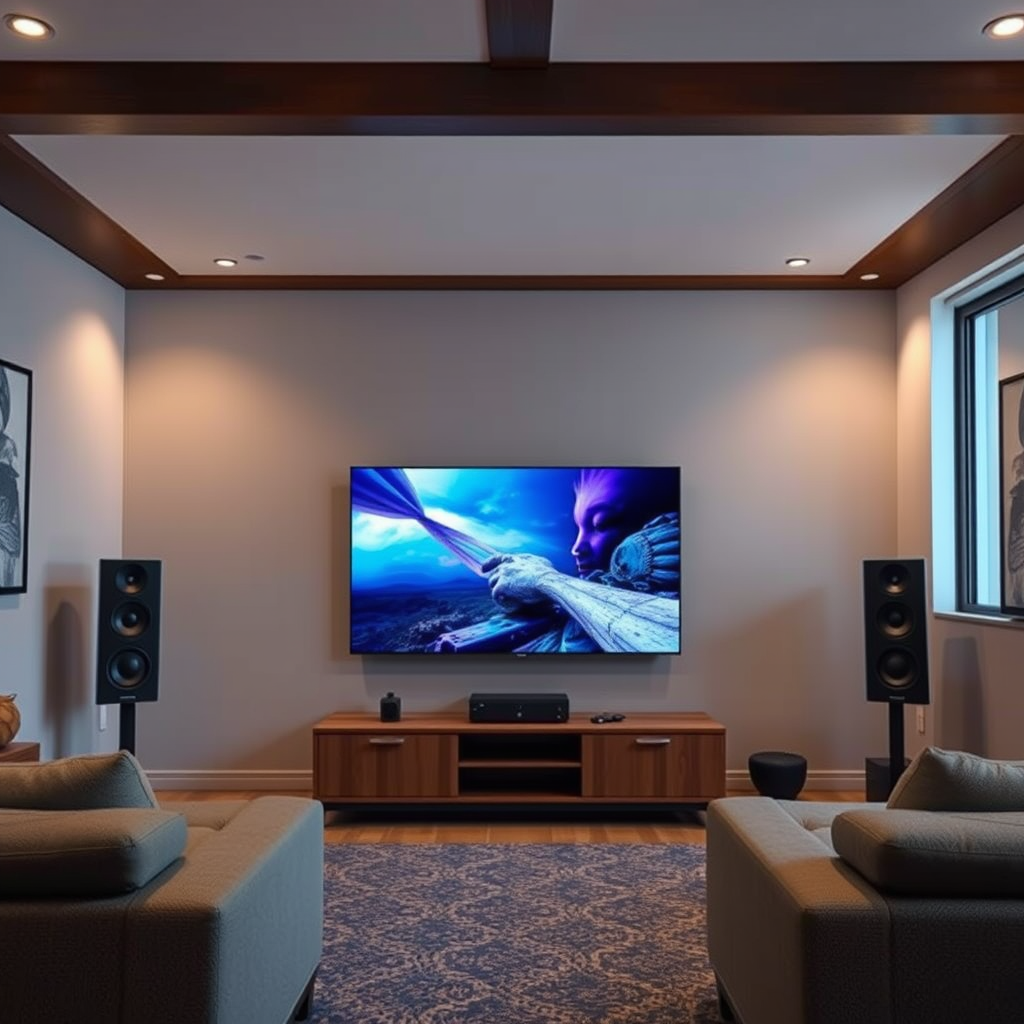
Surround sound systems are designed to create a multi-dimensional audio environment that immerses the listener. Typically, these systems consist of multiple speaker types, including front left, front right, center, and rear (or surround) speakers. The primary goal is to replicate a realistic soundstage where sounds can be perceived as coming from various directions, enhancing the overall viewing and listening experience. This is achieved through the strategic placement of speakers and the use of advanced audio processing technologies.
In a standard 5.1 surround sound setup, which includes five speakers and one subwoofer, the surround speakers are crucial for delivering ambient sounds and effects that make the audio experience more engaging. Understanding how to position these speakers effectively is essential for achieving optimal sound quality.
Ideal Placement for Surround Speakers
1. Rear Placement: The recommended position for rear or surround speakers is behind the listening area, approximately 1-2 feet above ear level. This height allows for sound to be cast downward towards the listeners, creating a more immersive experience. Ideally, these speakers should be spaced evenly apart, aiming for an angle of about 110 to 120 degrees relative to the primary listening position.
2. Side Placement: Alternatively, surround speakers can be placed to the sides of the listening position, slightly above ear level. This setup is particularly effective in smaller rooms where rear placement may not be feasible. In this configuration, the speakers should be angled towards the audience to enhance sound immersion.
In both cases, the goal is to create a sound field that envelops the listener without any distinct localization of sound, allowing for a seamless audio experience.
Height and Angle Considerations
The height and angle of your surround speakers significantly impact sound direction and quality. Ideally, surround speakers should be at ear level when the listener is seated. This positioning helps in delivering sound more directly to the ears, which is critical for dialogue and ambient sound effects.
Experimenting with the angle of the speakers can also improve sound immersion. It is advisable to angle the speakers slightly inward towards the listening area. This adjustment can enhance the perception of sound and create a more cohesive audio environment.
In larger rooms, you might consider using adjustable mounts or stands to help achieve the optimal height and angle.
Room Layout and Size Impact
The size and layout of your room play a vital role in how sound propagates. In larger spaces, you may need additional speakers or adjustments to the placement to ensure that audio reaches all listening areas effectively. For instance, in a very large room, a 7.1 or even 9.1 surround sound system may be more appropriate to fill the space with sound.
Also, consider any potential obstacles that may obstruct sound pathways. Large furniture, curtains, and other objects can dampen audio quality, so ensuring a clear line of sight from the speakers to the listening area is critical. Arranging furniture thoughtfully can help optimize the audio experience while maintaining a comfortable seating arrangement.
Calibration and Fine-Tuning
Once you have positioned your surround speakers correctly, the next step is calibration. Calibration ensures that each speaker delivers sound at the appropriate volume and balance. Using a sound meter or any calibration tool can greatly assist in this process.
Most modern AV receivers come equipped with auto-calibration features that can analyze your room’s acoustics and adjust settings accordingly. However, manual adjustments may also be necessary to achieve the best sound quality. Pay attention to individual speaker levels, ensuring that no speaker dominates the soundstage unless intended for specific effects.
Additionally, it’s essential to adjust the speaker settings through your AV receiver to optimize sound clarity and balance. This may involve fine-tuning the crossover settings, adjusting equalization, and ensuring that your subwoofer is properly integrated into the system.
Common Mistakes to Avoid
Proper speaker placement is crucial, but several common mistakes can undermine the audio experience:
1. Proximity to Walls: Avoid placing surround speakers too close to walls, as this can lead to sound distortion and unwanted reflections. Ideally, surround speakers should be positioned at least a foot away from walls.
2. Blocking Sound: Ensure that your speakers are not obstructed by furniture or other objects. This can dampen audio quality and lead to a less immersive experience.
3. Ignoring Calibration: Failing to calibrate your speakers can result in an imbalanced sound field. Take the time to calibrate your system for the best results.
4. Neglecting Room Acoustics: Room acoustics can significantly impact sound quality. Consider using acoustic panels or other soundproofing techniques if you have a particularly echo-prone room.
5. Static Speaker Positioning: Don’t be afraid to experiment with speaker placement. Sometimes, small adjustments can lead to significant improvements in sound quality.
Optimal Speaker Placement Recommendations
| # | Speaker Type | Ideal Height | Placement Angle | Distance from Walls |
|---|---|---|---|---|
| 1 | Front Left/Right | Ear Level | 0-30° | 1-2 ft |
| 2 | Center | Ear Level | 0° | 1-2 ft |
| 3 | Surround Left/Right | 1-2 ft Above Ear Level | 110-120° | 1-2 ft |
| 4 | Subwoofer | Floor Level | N/A | 1-2 ft |
| 5 | Rear Surround | 1-2 ft Above Ear Level | 110-120° | 1-2 ft |
| 6 | Height Surround | Above Ear Level | 135° | 1-2 ft |
| 7 | Atmos Speakers | Above Ceiling Level | N/A | 1-2 ft |
To get the most out of your surround speakers, remember the importance of strategic placement and room acoustics. By following these guidelines, you can create a captivating audio environment that enhances your movie and music experiences. Don’t forget to test and adjust your setup for the best possible sound!
Frequently Asked Questions
Where should I place my surround speakers for optimal sound quality?
For optimal sound quality, surround speakers should be placed at ear level, ideally 1 to 2 feet above ear height when seated. Position them approximately 90 to 110 degrees from the main listening position, creating an enveloping sound experience. Additionally, ensure they are spaced evenly from the main seating area to avoid sound imbalances.
How high should surround speakers be mounted on the wall?
Surround speakers should generally be mounted 1 to 2 feet above ear level when seated, typically around 5 to 7 feet high. This height allows for better sound dispersion and a more immersive audio experience. Avoid placing them too high, as this can diminish the surround effect and make sounds less directional.
What is the best placement for surround speakers in a home theater setup?
The best placement for surround speakers in a home theater setup is to position them on the side walls, slightly behind the main listening position, angled towards the audience. Alternatively, you can use rear surround speakers for a 7.1 system, positioned directly behind the seating area. This configuration enhances the surround sound field and creates a more cinematic experience.
Why is speaker placement important for surround sound systems?
Speaker placement is crucial for surround sound systems because it directly affects audio clarity, directionality, and the overall immersive experience. Inaccurate placement can lead to sound imbalances, where certain sounds may be too loud or too quiet, disrupting the intended audio experience. Proper placement helps achieve a balanced soundstage that enhances movie watching and gaming.
Which types of surround speaker setups work best for smaller rooms?
For smaller rooms, a 5.1 surround sound setup with compact bookshelf speakers or satellite speakers works best. These speakers can be easily mounted on walls or placed on stands, providing a full surround effect without overwhelming the space. Additionally, consider using wireless surround speakers to reduce cable clutter and create a cleaner aesthetic in a smaller area.
References
- Surround sound
https://en.wikipedia.org/wiki/Surround_sound - https://www.mayoclinic.org/healthy-lifestyle/consumer-health/in-depth/surround-sound/art-20460152
https://www.mayoclinic.org/healthy-lifestyle/consumer-health/in-depth/surround-sound/art-20460152 - https://www.sciencedirect.com/topics/engineering/surround-sound
https://www.sciencedirect.com/topics/engineering/surround-sound - https://www.bbc.com/future/article/20201209-how-surround-sound-is-changing-music
https://www.bbc.com/future/article/20201209-how-surround-sound-is-changing-music - https://www.theguardian.com/music/2020/dec/12/how-surround-sound-is-changing-music
https://www.theguardian.com/music/2020/dec/12/how-surround-sound-is-changing-music - Google Scholar Google Scholar
https://scholar.google.com/scholar?q=surround+speakers+placement - Google Scholar Google Scholar
https://scholar.google.com/scholar?q=surround+sound+speaker+setup - Google Scholar Google Scholar
https://scholar.google.com/scholar?q=home+theater+speaker+placement - https://www.nature.com/articles/s41599-018-0200-0
https://www.nature.com/articles/s41599-018-0200-0 - https://www.pubmed.ncbi.nlm.nih.gov/28330890/
https://www.pubmed.ncbi.nlm.nih.gov/28330890/
