
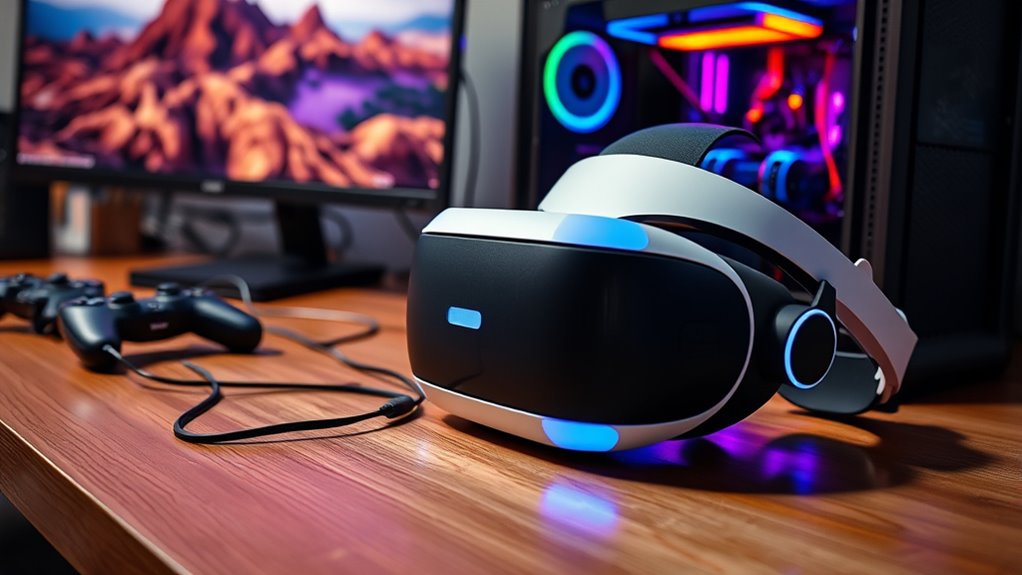

To use your PS VR headset on a PC, you’ll need to connect it via a processor unit and guarantee your software, like SteamVR, is compatible. The headset utilizes advanced hardware, including dual OLED screens and 3D audio, providing immersive experiences. Setting up involves proper camera positioning and checking your USB ports. If issues arise, common fixes include resolving tracking problems and optimizing graphics settings. Continue on to discover more tips for enhancing your VR experience.
Understanding the PS VR Hardware Components
To truly grasp how the PS VR headset functions, it’s vital to dissect its hardware components. The headset features impressive hardware specifications, including a 1080p resolution display that delivers sharp, immersive visuals. Inside, you’ll find dual OLED screens, which enhance component functionality by providing a wider field of view and minimizing motion blur. The 90Hz refresh rate guarantees fluid motion, vital for an engaging experience. Additionally, the headset incorporates a 3D audio system, creating a spatial sound environment that complements the visuals. The tracking system, equipped with external cameras, accurately monitors your movements, guaranteeing a seamless connection between your real-world actions and virtual experiences. Understanding these components is essential for maximizing your PS VR exploration on PC.
Required Software for PC Compatibility
Achieving seamless compatibility between the PS VR headset and your PC requires a few essential software components. First, you’ll need a reliable VR runtime, such as SteamVR, which facilitates the connection between your headset and various PC games. Next, verify you meet the software requirements for your specific VR applications, as some may demand additional plugins or drivers. Conducting compatibility checks is vital; confirm that your PC’s operating system and hardware align with the headset’s needs. Finally, consider using third-party applications, like Trinus VR, to enhance functionality. By addressing these software requirements, you’ll pave the way for a smoother virtual reality experience, allowing you to fully explore the freedom that PS VR offers on your PC.
Setting Up the PS VR Headset
While setting up the PS VR headset might seem challenging at first, following a structured approach can make the process straightforward and efficient. Begin by ensuring you have all the necessary components—headset, camera, and cables. Next, position the camera at eye level, ensuring it has a clear view of your play area. When you’re ready for setting up the headset connection, connect the headset to the processor unit and then link that unit to your PC. Pay attention to the orientation of the cables; incorrect connections can lead to performance issues. Finally, adjust the headset for a comfortable fit. Once everything’s in place, you’re one step closer to diving into the virtual world. Enjoy the freedom that awaits!
Connecting PS VR to Your PC
Connecting your PS VR headset to a PC can be a seamless experience if you follow the right steps. First, you’ll want to verify your PC meets the requirements for PS VR compatibility. Once you’ve confirmed that, the process can open up a world of VR gaming benefits that elevate your experience.
Here are three key things to keep in mind:
- Check your ports: Make sure your graphics card has the necessary HDMI and USB ports.
- Use the official adapters: They guarantee peak performance and reduce connection issues.
- Keep your drivers updated: This helps avoid compatibility problems and enhances overall performance.
Configuring VR Software and Drivers
To guarantee your PS VR headset operates smoothly on your PC, you’ll need to configure the appropriate VR software and drivers. Start by ensuring you’ve got the latest drivers installed, as outdated ones can lead to performance issues. Visit the manufacturer’s website for driver installation instructions specific to your graphics card and VR setup. Once you’ve tackled the drivers, focus on software updates for your VR applications. Regular updates not only enhance functionality but also fix bugs that could hinder your experience. Don’t forget to check compatibility with your operating system, as this can impact performance. By staying current with driver installation and software updates, you can access the full potential of your PS VR headset, ensuring a seamless VR experience.
Optimizing Graphics Settings for VR
As you plunge into the world of virtual reality with your PS VR headset on PC, optimizing your graphics settings is essential for achieving an immersive experience. You’ll want to focus on a few key adjustments to enhance your performance and visual fidelity.
- Adjusting resolution can dramatically impact clarity, making the virtual environment feel more lifelike.
- Lowering graphic settings like shadows and texture quality can greatly boost frame rates, ensuring smoother gameplay.
- Enabling VR-specific settings can enhance depth perception and responsiveness, drawing you deeper into the experience.
Troubleshooting Common Issues
Even with optimized graphics settings, you might encounter some common issues while using your PS VR headset on PC. One common error is the headset not being recognized by your system. To fix this, verify all drivers are updated and the correct USB ports are used. Another issue could be tracking problems, which often stem from insufficient lighting or obstructions between the headset and the cameras. For troubleshooting tips, try adjusting your play area or repositioning the sensors. If you experience latency, lowering the resolution might help improve performance. Remember, staying organized with your cables and connections can prevent many headaches. With a bit of patience, you can enjoy an immersive VR experience free from interruptions.
Enhancing Your VR Experience With Accessories
Upgrading your PS VR experience can greatly enhance immersion and overall enjoyment, transforming your gaming sessions into truly enchanting adventures. To maximize your VR journey, consider these accessory recommendations:
- Comfortable Headset Cushions: Soft, breathable materials can keep you engaged for longer without discomfort.
- Motion Controllers: Precision tools that make interactions feel natural, adding depth to your gaming experience.
- VR Face Covers: These not only provide hygiene but also improve fit, enhancing immersion by reducing distractions.
Exploring VR Games and Applications on PC
When you’re ready to explore VR games and applications on your PC, understanding the compatible software options is essential. Setting up your PS VR headset involves specific configuration steps that can enhance your gaming experience greatly. Let’s break down what you need to know to get started effectively.
Compatible Software Options
Exploring the domain of VR games and applications on PC reveals a wealth of compatible software options tailored for the PS VR headset. With the right choices, you can enhance your gaming experience while ensuring software compatibility and performance optimization. Here are some standout options:
- SteamVR: Access a vast library of VR games that push the boundaries of immersion.
- Oculus Home: Explore exclusive titles and social experiences that make VR feel alive.
- Virtual Desktop: Enjoy your PC workspace in VR, blending productivity with entertainment.
Setup and Configuration Steps
Setting up your PS VR headset on a PC involves a series of straightforward steps that secure peak performance and compatibility. First, verify your PC meets the necessary specifications for PS VR compatibility. Next, connect the headset to your PC using the appropriate adapters and cables. Once connected, download and install software like SteamVR, which is essential for experiencing the latest VR gaming trends. After installation, configure the headset settings through the software to optimize your experience. Test the setup using a VR game or application to confirm everything’s functioning smoothly. With this configuration, you’ll be ready to plunge into immersive worlds, enjoying the freedom and excitement that VR games offer. Happy gaming!
Frequently Asked Questions
Can I Use PS VR With Non-Sony Gaming Platforms?
Yes, you can use PS VR with non-Sony platforms, but compatibility varies. You’ll need specific software and hardware setups to achieve ideal performance. Exploring these options can enhance your immersive gaming experience beyond the PlayStation environment.
Is PS VR Compatible With All VR Games on PC?
The PS VR isn’t universally compatible with all PC VR games. You might encounter compatibility issues that affect game performance, limiting your experience. Exploring alternatives can lead you to greater freedom and enjoyment in virtual reality adventures.
What Is the Maximum Resolution Supported by PS VR on PC?
The maximum resolution supported by PS VR on PC is 1920×1080. While it offers decent visuals, you’ll find better options available if you’re looking for higher fidelity and greater PC compatibility with other headsets.
Does Using PS VR on PC Void Its Warranty?
Using PS VR on PC doesn’t automatically void your warranty, but warranty implications can arise from user experiences like modifications or damage. Always check Sony’s guidelines to safeguard your investment and guarantee a smooth experience.
Can I Use PS VR Without a Playstation Console?
Yes, you can use PS VR without a PlayStation console, but it requires a complex PS VR setup and adequate PC compatibility. Make certain your PC meets specific requirements to guarantee a smooth, immersive experience.
