
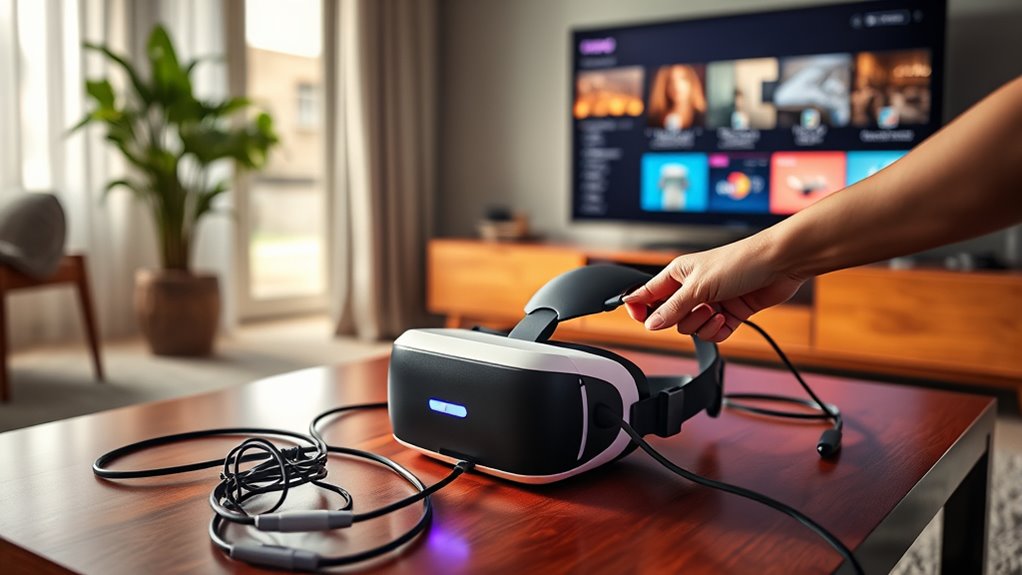

To connect your VR headset to your TV, first check compatibility by consulting your device manuals. You’ll typically need an HDMI or USB-C cable. Gather necessary equipment and make certain both devices are powered on. Connect the headset to your TV, adjusting display settings like resolution and color for a superior experience. Troubleshoot common issues, such as loose cables or incorrect inputs. If you’d like to enhance the shared VR experience, there’s much more to explore.
Understanding Your VR Headset and TV Compatibility
When it comes to connecting your VR headset to your TV, how do you know if they’re compatible? First, identify your VR headset types, as different models have varying connection options. Most modern headsets, like the Oculus Quest or HTC Vive, support HDMI or USB-C connections. Next, check your TV resolution. Ideally, you want a 4K TV for the best visual experience, as lower resolutions may not fully utilize your headset’s capabilities. Verify your TV has the required ports and supports the necessary refresh rates to match your VR headset. Finally, consult your device manuals for specific compatibility details. Understanding these factors will help you seamlessly connect your VR headset to your TV and enhance your virtual reality experience.
Gathering the Necessary Equipment
To connect your VR headset to your TV, you’ll need specific cables and adapters based on your equipment. Make sure your TV model is compatible with your VR headset for the best experience. Gathering these items beforehand will streamline the setup process.
Required Cables and Adapters
Gathering the right cables and adapters is vital for a successful connection between your VR headset and TV. Start by identifying the cable types your headset uses, such as HDMI, USB-C, or DisplayPort. Most VR headsets require an HDMI cable for video output. If your TV doesn’t have the right port, you’ll need adapter options like HDMI to DisplayPort or USB-C to HDMI. It’s important to guarantee that the cables are long enough to reach your TV comfortably, allowing for freedom of movement. Also, consider the quality of the cables; high-speed HDMI cables can enhance your experience. Double-check compatibility before purchasing, as this can save you time and frustration down the line.
Compatible TV Models
Choosing the right TV model is essential for optimizing your VR experience. To guarantee smooth gameplay and stunning visuals, check your TV specifications. Look for models that support HDMI 2.0 or higher, as this allows for higher refresh rates and better resolution, which enhances VR headset compatibility. Brands like Samsung, LG, and Sony often offer models designed for gaming, featuring low input lag and high dynamic range. Don’t forget to take into account screen size and resolution; a 4K TV can greatly improve your immersion. Before purchasing, always verify that your chosen VR headset is compatible with your TV. Doing this homework will help you create an engaging environment that maximizes your virtual reality adventures. Enjoy the freedom of immersive gaming!
Connecting Your VR Headset to the TV
Connecting your VR headset to the TV can enhance your gaming experience by allowing others to see what you’re seeing in virtual reality. Depending on your VR headset type, the connection method may vary. Here’s a simple guide to get you started:
| Connection Method | Recommended VR Headset Types |
|---|---|
| HDMI | Oculus Rift, HTC Vive |
| USB-C | Oculus Quest 2, Pico G2 |
| Wireless | Valve Index, PlayStation VR |
First, choose the right method based on your headset. Then, connect the VR headset to the TV using the appropriate cable or wireless setup. Finally, adjust your TV display settings to match the headset’s output. Enjoy sharing your VR adventures!
Adjusting Display Settings for Optimal Viewing
Once you’ve connected your VR headset to the TV, it’s essential to adjust the display settings for the best viewing experience. Start by setting the display resolution to match your headset’s capabilities; this guarantees sharp, clear visuals. Next, explore color calibration. Access your TV’s settings and tweak the brightness, contrast, and color balance to achieve vibrant, realistic colors. Don’t forget to enable any motion smoothing features, as they can enhance fluidity during fast-paced scenes. Finally, test different content to see how these adjustments affect your viewing experience. By optimizing these settings, you’ll create an immersive environment that truly brings your VR experience to life. Enjoy your freedom to explore virtual worlds with stunning visuals!
Troubleshooting Common Connection Issues
If you encounter issues while trying to connect your VR headset to your TV, don’t worry—troubleshooting these problems can often be straightforward. First, check your cables and make certain they’re securely connected. Loose connections can lead to frustrating connection errors. Next, verify that both your headset and TV are powered on and set to the correct input source. If you’re using wireless connections, make sure your Wi-Fi is stable and that both devices are on the same network. For persistent issues, try restarting both your TV and headset. Finally, consult the user manuals for specific troubleshooting tips. This should help you get back to enjoying your immersive experience without any hiccups.
Enhancing Your Shared VR Experience
Sharing your VR experience can bring a whole new level of fun and engagement. By setting up together, you can enjoy the benefits of cooperative gameplay and shared reactions. Let’s explore how to enhance your VR sessions for you and your friends or family.
Benefits of Shared VR
While virtual reality often immerses individuals in solitary experiences, connecting your VR headset to a TV can greatly enhance the shared experience. This setup invites others to join in on the fun, fostering social interaction and creating memorable moments together. Here are some benefits of shared VR:
- Collective enjoyment: Watch and react to immersive experiences together.
- Enhanced communication: Discuss strategies and experiences in real-time.
- Learning opportunities: Share tips and tricks while exploring new VR worlds.
- Increased motivation: Encourage each other to overcome challenges and achieve goals.
Setting Up Together
To enhance your shared VR experience, setting up the environment together is essential. Start by clearing the play area to guarantee safety and comfort for everyone. Make sure your VR headset is connected to the TV, allowing everyone to see the gameplay in real-time. This fosters social interactions, as you can discuss strategies and reactions while playing. Choose multiplayer games that encourage shared gameplay, letting you compete or collaborate in a virtual space. Don’t forget to adjust the headset settings to accommodate different users, making certain everyone enjoys a seamless experience. Finally, encourage feedback during your sessions to improve your setup and gameplay strategies, making each shared experience even more enjoyable.
Frequently Asked Questions
Can I Connect Multiple VR Headsets to One TV?
You can connect multiple VR headsets to one TV if they’re compatible. This setup allows for a shared viewing experience, letting friends enjoy content together, but make certain your TV can handle multiple connections effectively.
Will Connecting My VR Headset Affect Its Performance?
Connecting your VR headset to a TV might cause slight performance impact and potential latency issues. However, if you manage settings properly, you can enjoy both experiences without significant drawbacks, maintaining your freedom to explore virtual worlds.
Can I Use Wireless Connections for My VR Headset and TV?
Yes, you can use wireless connections for your VR headset and TV. Just guarantee your wireless technology supports high bandwidth to maintain streaming quality. This way, you’ll enjoy a seamless experience without being tethered.
What Is the Best Distance Between the TV and VR Headset?
The ideal viewing distance is typically around 6 to 10 feet for the best VR experience. Studies show that this range enhances immersion, ensuring you enjoy your virtual adventures without distractions or discomfort.
Are There Any Specific TV Models Recommended for VR Use?
For VR use, consider OLED displays for vibrant colors, high-refresh-rate gaming monitors for smooth gameplay, or 4K resolution TVs for clarity. These features enhance your experience, ensuring you enjoy immersive virtual worlds without lag or distortion.
