


When shopping for speakers, prioritize sound quality, compatibility, and your specific needs to ensure you make the best choice. Understanding the different types of speakers and their features is crucial for finding the perfect audio solution for your home or mobile setup. This comprehensive guide will help you navigate the speaker market, providing insights into types, sound quality, compatibility, room acoustics, budgeting, testing, and researching.
Understanding Speaker Types
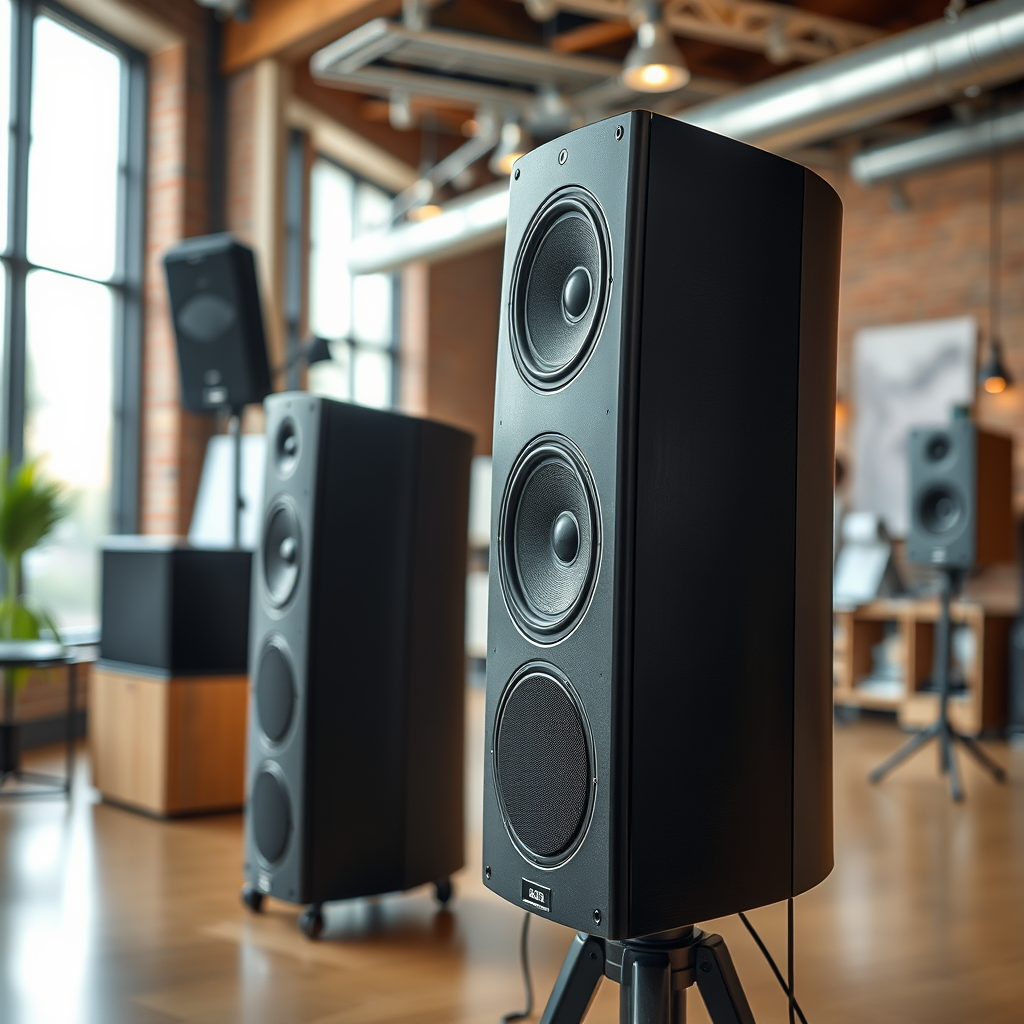
Choosing the right type of speaker is essential to meet your audio needs and preferences. There are two primary categories of speakers: passive and active.
– Passive vs. Active Speakers: Passive speakers require an external amplifier to power them, which means you have more flexibility in customizing your audio system. On the other hand, active speakers have built-in amplification, making them simpler to set up and use. If you’re new to audio equipment, active speakers might be the more straightforward choice, while audiophiles may prefer the customization options of passive speakers.
– Bookshelf, Floor-Standing, and Portable: The size and style of your speakers should align with the space you have and how you intend to use them. Bookshelf speakers are ideal for small to medium-sized rooms, providing excellent sound without taking up much space. Floor-standing speakers, being larger, are better suited for open areas where they can deliver a more powerful sound. For those who need music on the go, portable speakers offer the convenience of Bluetooth connectivity and battery operation, making them perfect for outdoor gatherings or travel.
Assessing Sound Quality
Sound quality is a critical factor in speaker selection, as it significantly impacts your listening experience.
– Frequency Response: A speaker’s frequency response indicates the range of sound frequencies it can reproduce. A wider frequency range typically offers a richer sound experience. Look for speakers with a frequency response of 20Hz to 20kHz to ensure you can enjoy the full spectrum of audio, from deep bass to high treble.
– Sensitivity Rating: The sensitivity rating of a speaker, usually measured in decibels (dB), indicates how efficiently it converts power into sound. Speakers with higher sensitivity ratings can produce louder sound levels with less power, making them ideal in situations where power supplies may be limited, such as with battery-operated devices.
Compatibility with Audio Sources
Ensuring compatibility with your audio sources is vital for a seamless listening experience.
– Connection Types: Modern speakers often support various connection types, including Bluetooth, Wi-Fi, and traditional wired connections. Make sure to check that the speakers you choose can connect to your devices, whether you’re using a smartphone, laptop, or home theater system. Bluetooth speakers allow for wireless convenience, while wired options often provide more stable sound quality.
– Home Theater Systems: If you’re looking to integrate speakers into a home theater system, compatibility with your receiver and other components is crucial. Ensure that the speakers you select can seamlessly work with your existing setup to deliver an immersive audio experience.
Room Acoustics Considerations
The acoustics of your room can dramatically affect how sound is perceived.
– Speaker Placement: Proper speaker positioning can enhance sound quality significantly. Place speakers at ear level and consider the distance from walls, as too close can create distortion. Experimenting with placement can yield the best results; for instance, placing speakers away from corners often reduces unwanted bass buildup.
– Room Size and Shape: The dimensions and shape of your room dictate how sound travels and resonates. Larger rooms may require more powerful speakers or additional subwoofers to fill the space adequately. Conversely, small rooms can benefit from smaller speakers or bookshelf models that won’t overwhelm the acoustics.
Top Speaker Brands by Features (2024)
| # | Brand | Type | Frequency Response | Sensitivity (dB) | Price ($) | Rating |
|---|---|---|---|---|---|---|
| 1 | Bose | Active | 40Hz – 20kHz | 88 | 299 | ★★★★☆ |
| 2 | Sonos | Wireless | 55Hz – 20kHz | 87 | 499 | ★★★★★ |
| 3 | Klipsch | Passive | 32Hz – 24kHz | 95 | 399 | ★★★★☆ |
| 4 | JBL | Active | 50Hz – 20kHz | 90 | 249 | ★★★★☆ |
| 5 | Audioengine | Active | 60Hz – 22kHz | 95 | 349 | ★★★★☆ |
| 6 | Focal | Passive | 35Hz – 20kHz | 87 | 599 | ★★★★★ |
| 7 | KEF | Passive | 45Hz – 28kHz | 90 | 799 | ★★★★☆ |
Budgeting for Your Speakers
Setting a budget is a fundamental step in your speaker shopping journey.
– Setting a Price Range: Before you start shopping, determine a price range that fits your financial situation. Speakers can range from budget-friendly options at around $50 to high-end models exceeding $1,000. Establishing your budget upfront will help narrow down your options and prevent impulse purchases.
– Value vs. Price: It’s essential to assess whether a speaker’s features justify its price. Consider factors like sound quality, brand reputation, and warranty. A slightly more expensive speaker may offer better durability and sound performance, providing value over time compared to cheaper alternatives.
Testing and Listening
Testing speakers before purchasing allows you to make an informed decision.
– In-Store Listening: If possible, visit an audio store to listen to speakers in person. Bring your favorite tracks on a USB drive or a streaming service to evaluate how the speakers perform with the music you enjoy. Pay attention to clarity, bass response, and overall balance.
– Return Policies: Always check the store’s return policy. A good return policy allows you to take the speakers home and test them in your environment, ensuring they meet your expectations before making a final commitment.
Reading Reviews and Research
Research is critical for making an informed choice when selecting speakers.
– User and Expert Reviews: Look for both user feedback and expert reviews to gauge real-world performance and reliability. Online forums and review sites can provide insights into common issues, strengths, and weaknesses of specific models.
– Comparing Brands: Research reputable brands known for their sound quality and durability. Brands like Bose, Sonos, and Klipsch consistently receive high marks from consumers and critics alike, making them worth considering in your search.
Summarizing the key points discussed, remember that shopping for speakers involves understanding the types available, assessing sound quality, ensuring compatibility, and considering your budget. Take your time to test and research before making a purchase. Happy shopping, and enjoy your enhanced audio experience!
Frequently Asked Questions
What should I consider when shopping for speakers?
When shopping for speakers, consider factors like the speaker type (bookshelf, floor-standing, or portable), sound quality, wattage, and compatibility with your audio system. Additionally, think about your space size, aesthetic preferences, and whether you need wired or wireless options. Reading customer reviews can also provide insights into the performance and durability of the speakers.
How do I determine the right size of speakers for my room?
To determine the right size of speakers for your room, assess the dimensions of your space and the acoustics, as larger rooms typically benefit from larger speakers that can produce more volume and depth. As a general rule, for small to medium rooms, bookshelf speakers are often sufficient, while larger rooms may require floor-standing or subwoofer options to fill the space with sound effectively.
Why are some speakers more expensive than others?
Some speakers are more expensive due to factors such as build quality, brand reputation, advanced technology, and sound performance. Higher-end speakers often use premium materials and components that enhance sound clarity, bass response, and durability. Additionally, features like wireless connectivity, smart technology, and aesthetic design can also contribute to the price.
What are the best speaker brands for home audio systems?
Some of the best speaker brands for home audio systems include Bose, Sonos, Klipsch, and JBL, known for their exceptional sound quality and innovative designs. Each brand offers a range of products catering to different budgets and preferences, so it’s essential to explore their offerings and try them out in-store if possible to find the best fit for your needs.
Which features should I look for in wireless speakers?
When looking for wireless speakers, consider features like Bluetooth and Wi-Fi connectivity for easy streaming, battery life for portability, and built-in voice assistants for added convenience. Additionally, look for speakers with multi-room capabilities if you plan to use them throughout your home, and check for sound quality ratings to ensure an immersive listening experience.
References
- Loudspeaker
https://en.wikipedia.org/wiki/Loudspeaker - https://www.sciencedirect.com/topics/engineering/loudspeaker
https://www.sciencedirect.com/topics/engineering/loudspeaker - Loudspeaker | Definition, Types, & Facts | Britannica
https://www.britannica.com/technology/loudspeaker - https://pubmed.ncbi.nlm.nih.gov/20455767/
https://pubmed.ncbi.nlm.nih.gov/20455767/ - https://www.ncbi.nlm.nih.gov/pmc/articles/PMC4100736/
https://www.ncbi.nlm.nih.gov/pmc/articles/PMC4100736/ - https://www.nature.com/articles/s41598-017-06415-7
https://www.nature.com/articles/s41598-017-06415-7 - Google Scholar Google Scholar
https://scholar.google.com/scholar?q=how+to+shop+for+speakers - Google Scholar Google Scholar
https://scholar.google.com/scholar?q=loudspeakers+buying+guide - Google Scholar Google Scholar
https://scholar.google.com/scholar?q=best+practices+for+selecting+speakers - https://www.theguardian.com/music/2021/jul/19/best-bluetooth-speakers-review
https://www.theguardian.com/music/2021/jul/19/best-bluetooth-speakers-review
