
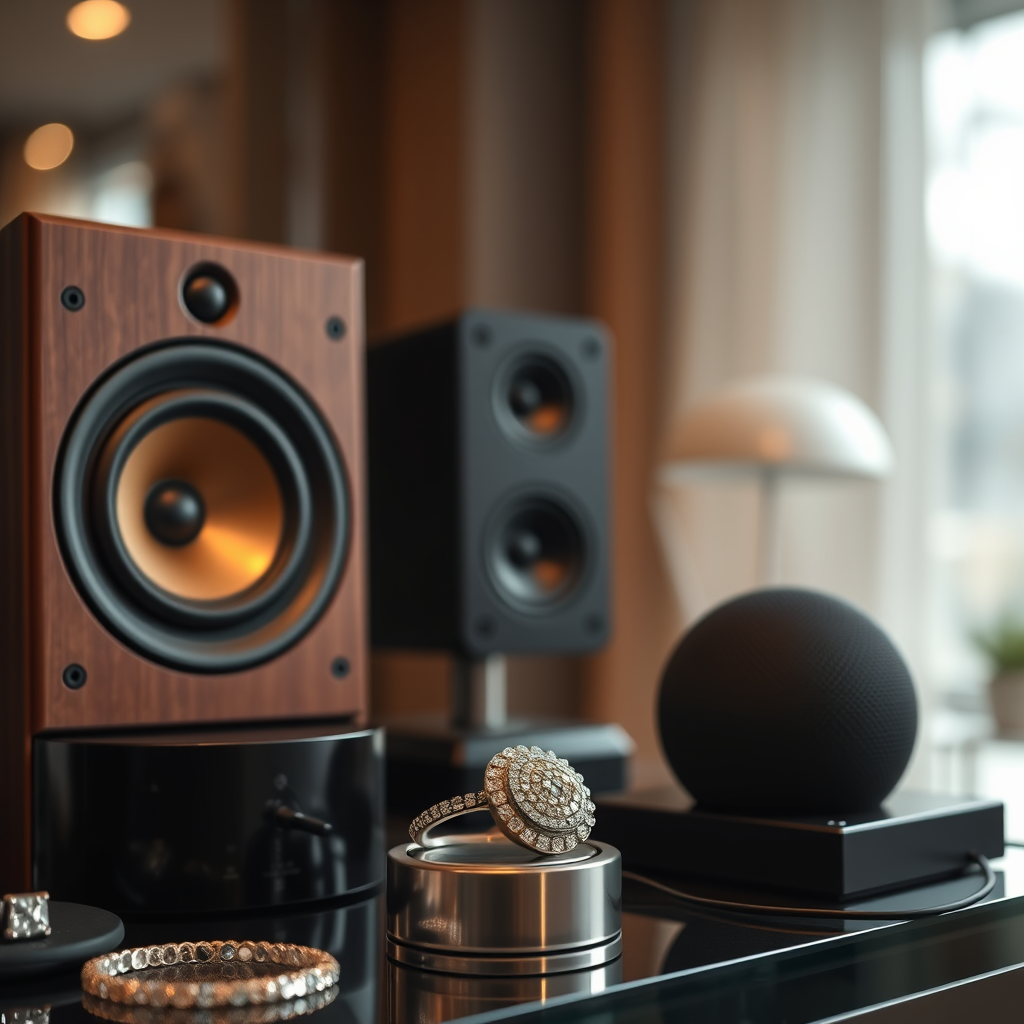

Speakers are devices that convert electrical energy into sound, enabling us to enjoy music, movies, and conversations. These essential audio components play a vital role in enhancing our auditory experiences across various environments. In this article, we will explore the different types of speakers, how they work, their applications, and tips for choosing the right one for your needs.
What Are Speakers?
Speakers are electroacoustic transducers that convert electrical signals into audible sound. Their primary function is to reproduce music, speech, or any audio content by transforming electrical energy into sound waves that we can hear. The essential components of a speaker include:
– Drivers: These are the heart of the speaker, responsible for creating sound. They consist of a diaphragm that vibrates to produce sound waves.
– Voice Coil: A coil of wire attached to the diaphragm that interacts with a magnetic field to create motion.
– Magnet: Provides the magnetic field necessary for the voice coil to function.
– Enclosure: The housing that contains all the components and influences the sound quality by affecting the speaker’s acoustics.
Understanding these components helps in grasping how different speakers produce varying sound qualities and volumes.
Types of Speakers
Speakers come in various types, each designed for specific applications and environments. Here are some of the most common types:
– Passive Speakers: These require an external amplifier to power them. They do not have built-in amplifiers and are typically used in home theater systems or professional sound systems.
– Active Speakers: Equipped with internal amplifiers, these speakers can be plugged directly into a sound source. This type is popular in home audio setups and studio monitors.
– Bluetooth Speakers: Wireless and portable, Bluetooth speakers connect to devices via Bluetooth technology, making them ideal for mobile use.
In terms of physical design, speakers can also be categorized as follows:
– Bookshelf Speakers: Compact and designed to fit on shelves or stands, these speakers are suitable for smaller rooms and provide excellent sound quality.
– Floor-Standing Speakers: Larger and often more powerful, these speakers are designed to stand on the floor and are ideal for home cinema systems.
– Portable Speakers: Lightweight and battery-operated, these speakers are designed for on-the-go use, providing convenience without sacrificing sound quality.
How Speakers Work
The fundamental principle behind speakers is the conversion of electrical energy into mechanical energy, which then produces sound waves. When an audio signal passes through the voice coil, it creates a magnetic field that interacts with the permanent magnet. This interaction causes the diaphragm to move back and forth, producing sound waves that travel through the air.
Sound Frequency Range
The frequency range of a speaker refers to the range of sound frequencies it can reproduce, typically measured in hertz (Hz). The human ear can hear sounds between approximately 20 Hz and 20,000 Hz. A speaker’s ability to cover this range significantly affects its audio quality, with:
– Low Frequencies (Bass): Typically below 250 Hz, these frequencies are vital for a rich sound experience but require larger drivers.
– Mid Frequencies: Ranging from 250 Hz to 2,000 Hz, these are essential for vocals and most musical instruments.
– High Frequencies (Treble): Above 2,000 Hz, these frequencies add clarity and detail to the sound.
A well-balanced speaker should effectively reproduce all these frequencies, providing an immersive listening experience.
Top 7 Speaker Brands by Popularity (2024)
| # | Brand | Type | Price Range | User Rating |
|---|---|---|---|---|
| 1 | Bose | Wireless | $150 – $800 | ★★★★☆ |
| 2 | Sony | Bluetooth | $100 – $600 | ★★★★☆ |
| 3 | JBL | Portable | $50 – $500 | ★★★★★ |
| 4 | Klipsch | Home Audio | $300 – $1,200 | ★★★☆☆ |
| 5 | Bang & Olufsen | Luxury | $700 – $4,000 | ★★★★☆ |
| 6 | Focal | High-End | $1,000 – $6,000 | ★★★★★ |
| 7 | Audioengine | Desktop | $150 – $700 | ★★★★☆ |
Applications of Speakers
Speakers are ubiquitous in modern life, serving diverse purposes across various domains. Here are some common applications:
– Home Entertainment Systems: Speakers are integral to home theaters, providing immersive audio for movies and music. Surround sound systems utilize multiple speakers for a rich experience.
– Public Address Systems: In schools, conferences, and events, speakers amplify voices to ensure clear communication across large spaces.
– Personal Devices: Smartphones, tablets, and laptops come equipped with built-in speakers for casual listening and video conferencing.
In professional settings, speakers play crucial roles as well:
– Recording Studios: High-fidelity studio monitors are used to accurately reproduce sound, enabling sound engineers to make precise mixing decisions.
– Theaters: Powerful speakers are essential in theater environments to deliver clear sound, whether for dialogue or special effects.
Choosing the Right Speaker
Selecting the right speaker requires careful consideration of several factors:
– Size: The dimensions of your space are crucial. Smaller rooms may benefit from bookshelf speakers, while larger spaces might require floor-standing speakers for adequate sound projection.
– Purpose: Determine the primary use—whether for casual listening, gaming, or a dedicated home theater setup. This will influence the type and quality of speakers needed.
– Sound Quality: Look for speakers with a balanced frequency response and good reviews regarding audio performance.
When considering specific use cases, here are some recommendations:
– Music Listening: For audiophiles, high-end brands like Focal or Bang & Olufsen can provide superior sound quality.
– Home Theater Setups: A combination of floor-standing speakers for the front and smaller surround speakers can create an immersive experience.
Maintenance and Care for Speakers
Proper maintenance is essential for ensuring the longevity and performance of speakers. Here are some tips:
– Regular Cleaning: Dust and dirt can accumulate, so it’s advisable to gently clean speakers with a soft cloth. Avoid using harsh chemicals.
– Proper Placement: Position speakers away from moisture and direct sunlight. Ensure they are adequately spaced from walls to enhance sound quality.
– Check Connections: Occasionally inspect cables and connections for wear and tear, replacing any damaged components to avoid audio issues.
Common troubleshooting steps for speaker issues include:
– No Sound: Check the power source, connections, and volume levels.
– Distorted Sound: Ensure that the speaker is not overdriven and check for any damaged components.
Future Trends in Speaker Technology
The audio landscape is continually evolving, with emerging technologies shaping the future of speakers. Notable trends include:
– Smart Speakers: Devices like Amazon Echo and Google Nest have integrated voice assistants, allowing for hands-free control of music and home automation.
– Wireless Sound Systems: Advancements in Bluetooth and Wi-Fi technologies enable seamless audio streaming across devices without the clutter of wires.
The impact of these advancements is profound, enhancing user experience by providing greater flexibility and improved sound quality. Innovations in design, such as more efficient drivers and materials, are also contributing to better audio reproduction.
In summary, speakers are essential devices that enhance our auditory experiences, whether at home, in professional settings, or on the go. By understanding the different types of speakers, their workings, and how to choose and maintain them, you can make informed decisions about your audio needs. Explore your options and elevate your sound experience today!
Frequently Asked Questions
What are the different types of speakers available in the market?
There are several types of speakers, including bookshelf speakers, floor-standing speakers, portable Bluetooth speakers, and in-wall speakers. Each type serves different purposes; for example, bookshelf speakers are great for home audio systems, while portable Bluetooth speakers offer convenience for on-the-go listening.
How do I choose the best speakers for my home audio system?
To choose the best speakers for your home audio system, consider factors such as room size, speaker type, and sound preferences. It’s important to listen to different speakers in person, check their power ratings, and ensure they are compatible with your audio receiver for optimal performance.
Why do speakers sometimes produce distorted sound?
Speakers may produce distorted sound due to several reasons, including incorrect placement, overdriving the speaker with excessive volume, or damaged components like the woofer or tweeter. Ensuring proper speaker setup and maintaining the equipment can help prevent distortion and enhance sound quality.
Which speakers are best for outdoor use?
The best speakers for outdoor use are weather-resistant or waterproof models designed to withstand environmental elements. Brands like JBL and Bose offer high-quality outdoor speakers that provide excellent sound quality and durability, making them ideal for patios, gardens, or poolside listening.
How can I improve the sound quality of my existing speakers?
To improve the sound quality of your existing speakers, consider adjusting their placement for optimal acoustics, using high-quality cables, and ensuring your audio source is of good quality. Additionally, using a sound equalizer or upgrading your amplifier can significantly enhance the overall listening experience.
References
- Loudspeaker
https://en.wikipedia.org/wiki/Loudspeaker - https://www.ncbi.nlm.nih.gov/pmc/articles/PMC7119547/
https://www.ncbi.nlm.nih.gov/pmc/articles/PMC7119547/ - https://www.sciencedirect.com/topics/engineering/loudspeaker
https://www.sciencedirect.com/topics/engineering/loudspeaker - Loudspeaker | Definition, Types, & Facts | Britannica
https://www.britannica.com/technology/loudspeaker - https://www.mayoclinic.org/healthy-lifestyle/consumer-health/in-depth/hearing-loss/art-20046314
https://www.mayoclinic.org/healthy-lifestyle/consumer-health/in-depth/hearing-loss/art-20046314 - https://www.cdc.gov/nceh/hearing_loss/what_is_hearing_loss.html
https://www.cdc.gov/nceh/hearing_loss/what_is_hearing_loss.html - https://www.nature.com/articles/s41598-020-63064-5
https://www.nature.com/articles/s41598-020-63064-5 - Google Scholar Google Scholar
https://scholar.google.com/scholar?q=speaker+design - Google Scholar Google Scholar
https://scholar.google.com/scholar?q=speaker+technology - Google Scholar Google Scholar
https://scholar.google.com/scholar?q=loudspeaker+performance
