


Connecting four speakers to a two-channel amplifier is not only possible, but it can also significantly enhance your audio experience when done correctly. By understanding the wiring methods, speaker impedance, and power distribution, you can optimize the performance of your audio system without risking damage to your equipment. This guide provides essential steps and considerations for successfully connecting four speakers to your two-channel amplifier.
Understanding Speaker Impedance
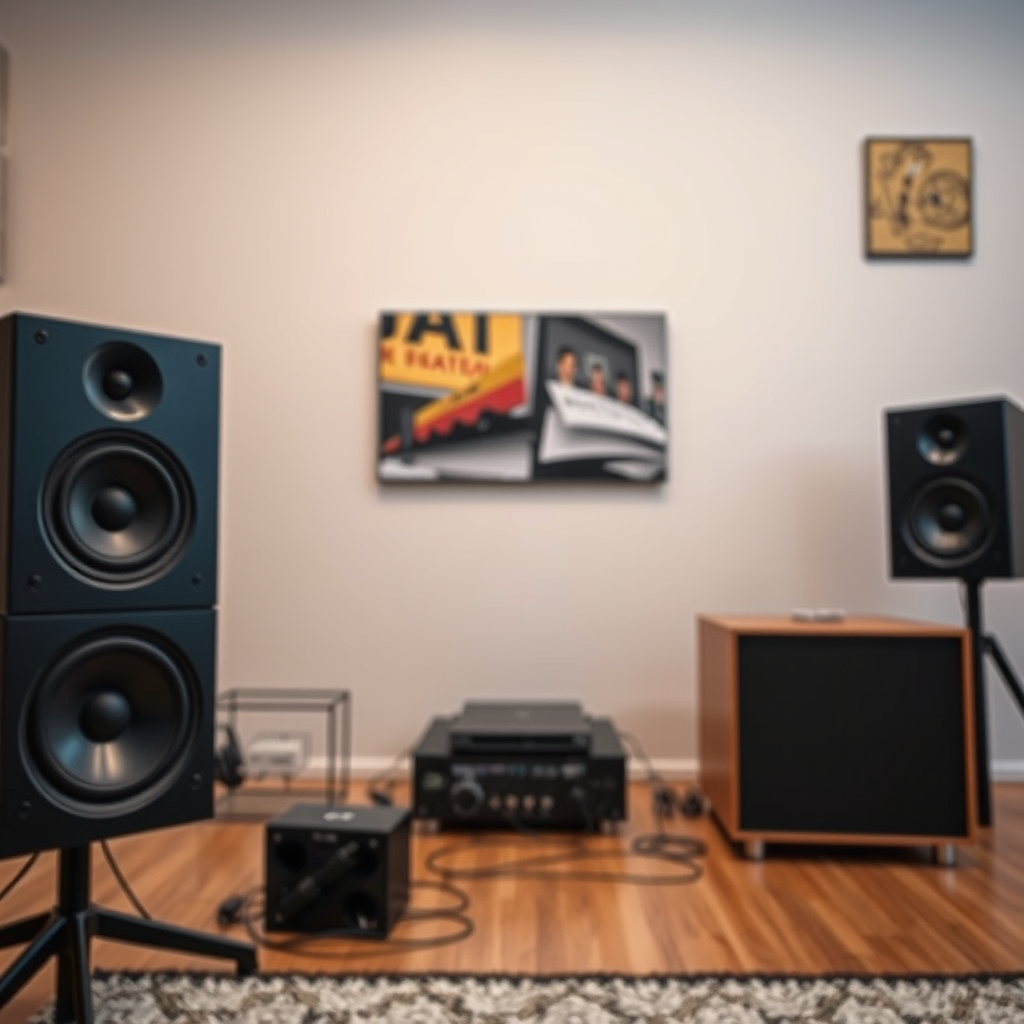
Impedance is the resistance that a speaker presents to the amplifier, and it is measured in ohms. Common impedance ratings for speakers are 4, 6, or 8 ohms. When connecting multiple speakers to a two-channel amplifier, it is crucial to ensure that the total impedance does not drop below the amplifier’s recommended load. Most amplifiers are designed to operate efficiently at a specific impedance, typically 4 to 8 ohms.
If the total impedance is too low, it can cause the amplifier to overheat and potentially fail. Conversely, if the total impedance is too high, the amplifier may not deliver sufficient power to drive the speakers effectively. Therefore, understanding the impedance of both your amplifier and speakers is paramount for achieving optimal sound quality and system longevity.
Wiring Methods for Connecting Speakers
When connecting four speakers to a two-channel amplifier, there are two primary wiring methods you can utilize: parallel wiring and series wiring.
– Parallel Wiring: In this configuration, you connect the positive terminals of all speakers to the amplifier’s positive terminal and the negative terminals to the amplifier’s negative terminal. This method can lower the overall impedance, which may be beneficial if the speakers are of higher impedance (e.g., connecting four 8-ohm speakers in parallel results in a total impedance of 2 ohms). However, this can overload the amplifier if the impedance drops below the recommended level.
– Series Wiring: This involves connecting the positive terminal of one speaker to the negative terminal of the next speaker. For instance, if you connect two pairs of speakers in series, the impedance increases. Connecting two 8-ohm speakers in series yields a total impedance of 16 ohms, which can help prevent overloading the amplifier. However, series wiring can limit the power available to each speaker, potentially resulting in lower volume levels.
Calculating Total Impedance
To ensure that you are within the safe operating range for your amplifier, calculating the total impedance of your connected speakers is essential.
– For Parallel Connections: Use the formula:
\[
\frac{1}{R_{total}} = \frac{1}{R_1} + \frac{1}{R_2} + … + \frac{1}{R_n}
\]
For example, connecting four 8-ohm speakers in parallel would yield:
\[
\frac{1}{R_{total}} = \frac{1}{8} + \frac{1}{8} + \frac{1}{8} + \frac{1}{8} = \frac{4}{8} \Rightarrow R_{total} = 2 \text{ ohms}
\]
– For Series Connections: Simply add the impedances:
\[
R_{total} = R_1 + R_2 + … + R_n
\]
Connecting four 8-ohm speakers in series would yield:
\[
R_{total} = 8 + 8 + 8 + 8 = 32 \text{ ohms}
\]
Power Distribution Considerations
When connecting multiple speakers, it is important to be aware that the amplifier’s power is divided among the speakers, which may lead to lower overall volume levels. Each speaker will receive a portion of the amplifier’s output, and if the speakers are mismatched in terms of impedance and power handling, this can create issues such as distortion or uneven sound levels.
Ensure that each speaker can handle the power output from the amplifier to avoid damage. For instance, if your amplifier outputs 100 watts per channel and you connect four speakers, each speaker may only receive 25 watts if the load is evenly distributed. Make sure the speakers are rated for at least this power level to prevent distortion or potential damage.
Choosing the Right Speakers
Selecting the appropriate speakers is crucial to ensure compatibility with your amplifier. Here are some guidelines to consider:
– Power Rating: Match the power rating of your speakers with your amplifier’s output to prevent damage. If your amplifier outputs 50 watts per channel, choose speakers rated for at least 50 watts RMS.
– Impedance Matching: Use speakers with similar impedance ratings to maintain balanced sound quality. For instance, if your amplifier is rated for 8 ohms, opt for speakers with the same rating to avoid performance issues.
Consider the type of speakers that best fit your audio needs, whether they are bookshelf speakers, floor-standing models, or in-ceiling options. Each type offers different benefits depending on your space and sound requirements.
Troubleshooting Common Issues
When connecting multiple speakers, you may encounter some common issues. Here are some troubleshooting tips:
– Distorted Sound: If you notice distortion, check your connections for any loose wires or shorts. Verify that you have connected the speakers to the correct terminals, maintaining the proper polarity (+ to + and – to -).
– Uneven Sound Levels: If one speaker is quieter than the others, ensure that all speakers have the same impedance and are wired correctly. Mismatched impedance can result in uneven power distribution.
– Amplifier Overheating: If your amplifier overheats, immediately disconnect the speakers and check the total impedance. If it is too low, consider reconfiguring the wiring method or using speakers with higher impedance.
Final Checks Before Use
Before you fully set up your audio system, take the time to perform some final checks:
– Secure Connections: Double-check all wire connections to ensure they are secure and correctly polarized. Loose connections can lead to sound loss or distortion.
– Testing the System: Start by testing the system at a low volume to ensure everything is functioning correctly. Gradually increase the volume while monitoring for any signs of distortion or overheating.
By following these steps, you can successfully connect four speakers to a two-channel amplifier while ensuring sound quality and safety. Always prioritize compatibility and proper impedance to enjoy an enhanced audio experience. If you’re uncertain about your setup, consult with an audio professional or refer to your amplifier’s manual for specific guidance.
Speaker Impedance and Power Ratings for Common Types
| # | Speaker Type | Impedance (Ohms) | Power Rating (W RMS) | Best For |
|---|---|---|---|---|
| 1 | Bookshelf Speakers | 6-8 | 50-100 | Small to Medium Rooms |
| 2 | Floor-Standing Speakers | 4-8 | 100-200 | Home Theater |
| 3 | In-Ceiling Speakers | 8 | 50-100 | Distributed Audio |
| 4 | Outdoor Speakers | 6-8 | 50-150 | Patio or Backyard |
| 5 | Subwoofers | 4-8 | 200-1000 | Bass Enhancement |
| 6 | Portable Speakers | 4-8 | 10-50 | On-the-Go Listening |
| 7 | Active Speakers | 4-8 | 50-150 | Direct Connection |
In conclusion, connecting four speakers to a two-channel amplifier can enhance your audio experience significantly. By understanding speaker impedance, employing the right wiring methods, and ensuring proper power distribution, you can set up an efficient and effective audio system. Always choose compatible speakers and perform final checks to ensure optimal performance. With these considerations in mind, you can enjoy your favorite music or movies with rich, full sound. If you have any doubts about your setup, don’t hesitate to consult an audio professional for personalized advice.
Frequently Asked Questions
How can I connect 4 speakers to a 2 channel amplifier without damaging the equipment?
To connect 4 speakers to a 2 channel amplifier safely, you can use either series or parallel wiring. In series, connect the positive terminal of one speaker to the negative terminal of the next, ensuring the total impedance does not drop below the amplifier’s minimum rating. In parallel wiring, connect all positives together and all negatives together, but this should be done cautiously as it can lower the impedance, potentially overloading the amplifier.
What is the best way to wire 4 speakers to a 2 channel amplifier for optimal sound quality?
The best way to wire 4 speakers to a 2 channel amplifier for optimal sound quality is to use a series-parallel configuration. This method allows you to maintain a balanced impedance load while providing adequate power distribution to each speaker, thereby enhancing sound clarity and minimizing distortion during playback.
Why should I be cautious when connecting multiple speakers to a 2 channel amplifier?
Caution is crucial when connecting multiple speakers to a 2 channel amplifier because improper wiring can lead to impedance mismatches, causing overheating or damage to the amplifier. Additionally, exceeding the amp’s power ratings can result in poor audio quality or speaker failure, so it’s important to calculate the total impedance accurately to avoid these issues.
Which types of speakers are best suited for use with a 2 channel amplifier when connecting multiple units?
When connecting multiple speakers to a 2 channel amplifier, it’s best to use speakers with similar impedance ratings, typically 4 or 8 ohms. Additionally, using speakers with similar sensitivity levels ensures that they produce sound at comparable volumes, providing a balanced audio experience when played simultaneously.
How do I determine the impedance load when connecting 4 speakers to my 2 channel amplifier?
To determine the impedance load when connecting 4 speakers to your 2 channel amplifier, you need to calculate the total impedance based on your wiring method. For series connections, simply add the impedance of each speaker together, while for parallel connections, use the formula 1 / (1/R1 + 1/R2 + … + 1/Rn) to find the equivalent impedance. Ensuring this load is within your amplifier’s specified range is vital for safe operation.
References
- Audio power amplifier
https://en.wikipedia.org/wiki/Audio_amplifier - https://www.ewh.ieee.org/r10/kolkata/IEEE%20Kolkata%20section%20papers/IEEE%20Kolkata%20Section%20Technical%20Papers/Microcontroller%20based%20Multi%20Channel%20Audio%20Amplifier.pdf
https://www.ewh.ieee.org/r10/kolkata/IEEE%20Kolkata%20section%20papers/IEEE%20Kolkata%20Section%20Technical%20Papers/Microcontroller%20based%20Multi%20Channel%20Audio%20Amplifier.pdf - https://www.sweetwater.com/insync/how-to-connect-multiple-speakers-to-an-amplifier/
https://www.sweetwater.com/insync/how-to-connect-multiple-speakers-to-an-amplifier/ - https://www.audioholics.com/audio-amplifier/understanding-impedance-matching
https://www.audioholics.com/audio-amplifier/understanding-impedance-matching - Google Scholar Google Scholar
https://scholar.google.com/scholar?q=connect+multiple+speakers+to+two+channel+amplifier - Google Scholar Google Scholar
https://scholar.google.com/scholar?q=audio+amplifier+speaker+configuration - Google Scholar Google Scholar
https://scholar.google.com/scholar?q=multichannel+audio+amplifier+connections - Google Scholar Google Scholar
https://scholar.google.com/scholar?q=how+to+connect+4+speakers+to+a+2+channel+amplifier - how to connect 4 speakers to a 2 channel amplifier – Search results
https://en.wikipedia.org/wiki/Special:Search?search=how+to+connect+4+speakers+to+a+2+channel+amplifier - https://www.ncbi.nlm.nih.gov/search/research-articles/?term=how+to+connect+4+speakers+to+a+2+channel+amplifier
https://www.ncbi.nlm.nih.gov/search/research-articles/?term=how+to+connect+4+speakers+to+a+2+channel+amplifier
