

Understanding Your Equipment
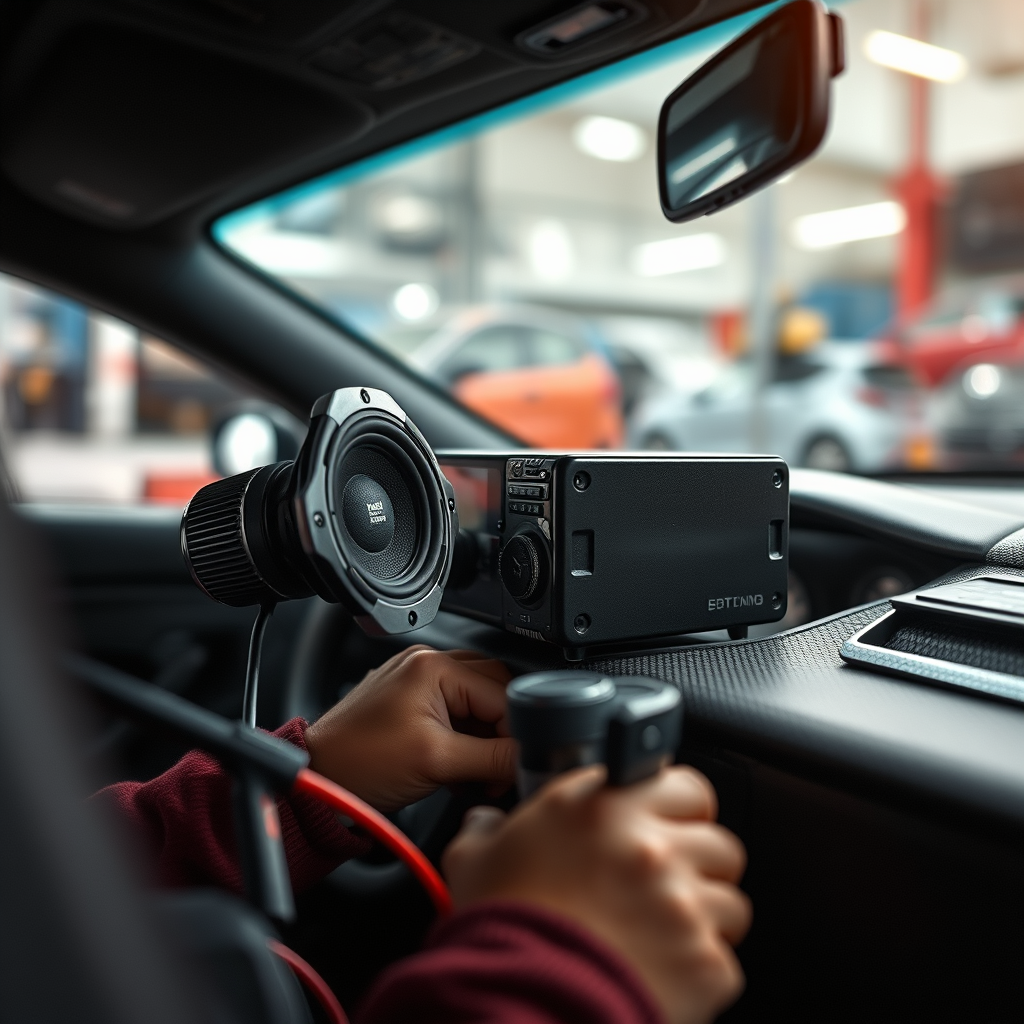
Before you begin the installation process, it is crucial to understand the equipment you will be working with. Identify the type of amplifier and speakers you have, as compatibility is essential for optimal performance. Car amplifiers typically come in two-channel, four-channel, or even mono configurations, which dictate how many speakers they can effectively power. Similarly, speakers vary in their impedance ratings (usually 4, 6, or 8 ohms), so ensure that your amplifier can handle the speaker load.
Gathering essential tools is the next step. You will need wire strippers to prepare the wires, connectors to create secure junctions, and a multimeter to test connections and ensure everything is functioning correctly. Having a soldering iron on hand can also be beneficial for creating permanent connections, especially if you’re working with high-quality speaker wire.
Preparing for Installation
Preparation is key to a successful installation. Start by disconnecting the car battery to prevent any short circuits or electrical hazards during the wiring process. This step is critical for your safety and will protect your vehicle’s electronics.
Once the battery is disconnected, plan the layout of your wiring. Consider the path the wires will take from the amplifier to the speakers and ensure that they do not interfere with other components in your vehicle. Avoid running wires near power sources to prevent noise interference, and use zip ties to secure wires in place, keeping everything organized and safe.
Wiring the Amplifier
Now that you’ve prepared the space, it’s time to wire the amplifier. Start by connecting the power wire from the car battery to the amplifier. It’s essential to use a wire gauge appropriate for the amplifier’s power requirements; a thicker gauge wire is often necessary for higher power amplifiers.
Next, establish a proper ground connection. This connection is critical for minimizing noise and ensuring that your audio system operates efficiently. Ground the amplifier to a clean, unpainted metal surface in your vehicle, using a short piece of wire to create a solid connection.
For signal input, use high-quality RCA cables to connect the head unit (the car stereo) to the amplifier. This connection transfers audio signals from the head unit to the amp, where they will be amplified before being sent to the speakers.
Top 7 Car Amplifiers by Power Rating (2024)
| # | Amplifier Model | Power Rating (W) | Channels | Price ($) |
|---|---|---|---|---|
| 1 | Rockford Fosgate R500X1D | 500 | 1 | 149.99 |
| 2 | Kicker 46CXA4001 | 400 | 1 | 139.99 |
| 3 | Alpine MRV-M500 | 500 | 1 | 199.99 |
| 4 | JBL Club A6001 | 600 | 1 | 149.95 |
| 5 | Pioneer GM-D8601 | 1600 | 1 | 299.99 |
| 6 | MTX Audio THUNDER500.1 | 500 | 1 | 159.99 |
| 7 | Infinity REF1200S | 1200 | 1 | 249.99 |
Connecting the Speakers
After wiring the amplifier, the next step is to connect the speakers. Start by stripping the ends of the speaker wires to expose the copper strands. It is essential to ensure that the wire is stripped evenly to maintain a solid connection at both the amplifier and the speaker ends.
When connecting the wires to the amplifier’s outputs, ensure that you match the positive (+) and negative (−) terminals on both the amplifier and the speakers. This step maintains polarity and prevents phase issues, which could lead to poor sound quality or even damage to the equipment.
If your speakers are component speakers, be attentive to the crossover settings, as these will dictate how frequencies are distributed between the woofer and tweeter. For full-range speakers, a simple connection will suffice.
Testing Your Setup
Once everything is connected, it is time to test your setup. Reconnect the car battery and power on the system. Start by playing audio at a low volume to ensure that all speakers are functioning correctly. Gradually increase the volume to test the system’s performance at different levels, checking for any distortion or imbalance.
Listen carefully for any unusual sounds, such as popping or buzzing, which could indicate an issue with the wiring or connections. If everything sounds good, you can finalize the installation, securing any loose wires and ensuring that all connections are stable.
Troubleshooting Common Issues
Despite careful installation, you may encounter some common issues. If no sound is coming from the speakers, first check the power connections to the amplifier. Ensure that the amplifier is receiving power, and verify that the ground connection is secure.
Distorted audio can indicate a problem with the speaker impedance or incorrect wiring. Ensure that the speakers are rated for the amplifier’s output and that all connections are secure and correctly polarized. If you continue to experience problems, using a multimeter to test the integrity of the wiring may be beneficial.
Lastly, if you notice a humming noise, it could be a sign of ground loop interference. In such cases, check for grounding issues and consider using a ground loop isolator to eliminate the noise.
Your sound system can be dramatically improved with the right wiring setup. By following these steps, you’ll be able to wire your speakers to an amplifier in your car effectively. Whether you’re an audio enthusiast or just looking to enhance your driving experience, ensuring proper connections will provide you with the best sound quality. Don’t hesitate to explore more advanced techniques or consult a professional if needed. Happy listening!
Frequently Asked Questions
What tools do I need to wire speakers to an amp in my car?
To wire speakers to an amp in your car, you’ll typically need tools such as a wire stripper, crimping tool, screwdriver, and possibly a drill. Additionally, having speaker wire, RCA cables, and a multimeter can help ensure a proper connection and troubleshooting if needed.
How do I determine the right speaker wire gauge for my car audio system?
The right speaker wire gauge depends on the length of the wire run and the power of your amplifier. For most car audio systems, 16-gauge wire is sufficient for runs up to 50 feet, but if you’re using an amplifier with higher power, consider using 14-gauge or 12-gauge wire to minimize resistance and ensure optimal performance.
Why is it important to match the impedance of speakers to my amplifier?
Matching the impedance of your speakers to your amplifier is crucial for optimal performance and to prevent damage. If the impedance is too low, the amplifier may overheat or blow a fuse; if too high, the sound quality can suffer. Typically, most car speakers are rated at either 4 or 8 ohms, so check your amp’s specifications for compatibility.
What is the best way to connect speakers to an amplifier in my car?
The best way to connect speakers to an amplifier in your car is to use high-quality speaker wire and secure connections through soldering or using crimped connectors. Ensure the positive and negative terminals are correctly matched to avoid phase issues, and consider using a distribution block if connecting multiple speakers for a cleaner setup.
Which installation steps are essential for wiring my car’s speakers to the amp?
Essential steps for wiring your car’s speakers to the amplifier include disconnecting the battery to prevent shorts, running speaker wire from the amp to each speaker, and ensuring the polarity is consistent. After connecting, double-check all connections and test the system at a low volume to confirm everything is functioning before finalizing the installation.
References
- Vehicle audio
https://en.wikipedia.org/wiki/Car_audio - https://www.sciencedirect.com/topics/engineering/car-audio
https://www.sciencedirect.com/topics/engineering/car-audio - https://www.britannica.com/technology/car-audio
https://www.britannica.com/technology/car-audio - Google Scholar Google Scholar
https://scholar.google.com/scholar?q=how+to+wire+speakers+to+amp+in+car - Google Scholar Google Scholar
https://scholar.google.com/scholar?q=car+audio+installation - Google Scholar Google Scholar
https://scholar.google.com/scholar?q=speaker+wiring+techniques - Spread, Scale, and Sustainability in Population Health: Workshop in Brief | The National Academie…
https://www.nap.edu/catalog/21711/car-audio-systems-an-overview - https://www.edmunds.com/car-audio/
https://www.edmunds.com/car-audio/ - https://www.crutchfield.com/S-WzSgQzJ8Yg/learn/wiring-speakers.html
https://www.crutchfield.com/S-WzSgQzJ8Yg/learn/wiring-speakers.html - https://www.usc.edu/dept/engineering/
https://www.usc.edu/dept/engineering/

[…] safest option is typically a hands-free car audio system or Bluetooth integration that keeps you aware of the road without blocking your hearing. If you use […]
[…] Connect your speakers to a projector by matching the projector’s available audio output (typically 3.5mm AUX, HDMI ARC/eARC, or Bluetooth) to the correct input on your speakers (or receiver), then selecting that output in the projector’s audio menu. In practice, the “no sound” problem almost always comes down to either a wrong port/input selection or an incompatible signal path—so this guide walks you through both. […]
[…] put your speaker into pairing mode. If your Epson model doesn’t support Bluetooth, you can still connect your speakers by using the projector’s audio output with a Bluetooth audio transmitter. This setup typically […]