


The ideal height for surround speakers is typically around 5.1 to 7.1 feet off the ground, depending on the room configuration and seating position. This height helps create an immersive audio experience, allowing sound to envelop the listener effectively. In this article, we’ll explore the best practices for positioning surround speakers to enhance your home theater setup.
Understanding Surround Sound Basics
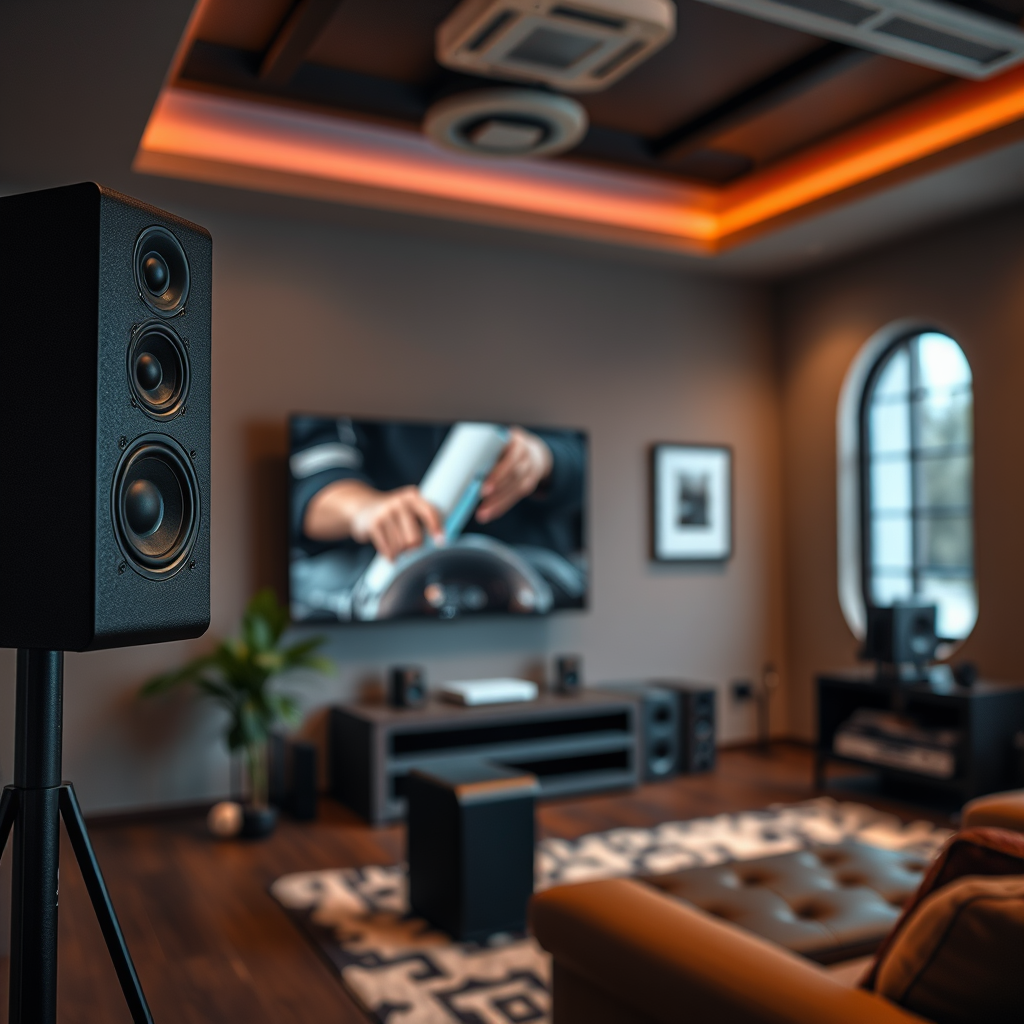
Surround sound systems are designed to immerse listeners in audio by utilizing multiple speakers placed strategically around the room. The primary goal is to create a three-dimensional sound field that enhances the viewing experience of movies, video games, and music. Proper speaker placement is crucial for achieving a balanced and engaging sound experience. Each speaker in a surround sound setup has a specific role, contributing to sound directionality and depth. When positioned correctly, surround speakers can effectively simulate the sensation of sound moving around the listener, making the experience both captivating and realistic.
Recommended Height for Surround Speakers
For optimal performance, surround speakers should ideally be positioned at ear level when seated, which typically ranges from 5.1 to 7.1 feet high. This height allows the audio to be directed towards the listening area without obstruction, ensuring a clear and immersive sound experience. However, it is essential to consider the type of speaker in use—whether ceiling-mounted, wall-mounted, or stand-alone—as this may affect the placement. For instance, ceiling-mounted speakers might be positioned slightly higher, while wall-mounted speakers should ideally be angled downward toward the listening area to optimize sound clarity.
Factors Influencing Speaker Height
Several factors can influence the ideal height for your surround speakers. Room size and shape play a significant role in how sound is distributed. In larger rooms, speakers may need to be positioned higher to ensure sound reaches all areas uniformly. Conversely, in smaller spaces, lower positioning may suffice. Additionally, the presence of furniture and wall structures can necessitate modifications to standard placement recommendations. For example, if the listeners are seated on a lower couch, it may be advisable to lower the speakers accordingly to maintain optimal ear-level alignment.
Recommended Surround Speaker Heights by Room Type (2024)
| # | Room Type | Ideal Height (Feet) | Speaker Type | Angle Adjustment |
|---|---|---|---|---|
| 1 | Home Theater | 5.5 | Wall-Mounted | 10° Downward |
| 2 | Living Room | 6.0 | Ceiling-Mounted | N/A |
| 3 | Bedroom | 5.0 | Stand-Alone | No Angle |
| 4 | Gaming Room | 5.5 | Wall-Mounted | 15° Downward |
| 5 | Theater Room | 7.0 | Ceiling-Mounted | N/A |
| 6 | Basement | 5.5 | Wall-Mounted | No Angle |
| 7 | Outdoor Area | 6.0 | Stand-Alone | 5° Downward |
Surround Speaker Types and Their Placement
Different types of surround speakers can also influence their optimal height and placement. For instance, dipole speakers, which radiate sound in two opposite directions, are often best mounted slightly above ear level to create a diffuse sound field. Conversely, bipolar speakers, which emit sound from both the front and back, can be placed at ear level or slightly above, depending on the room’s acoustics. Wall-mounted speakers should be angled toward the listening area for better audio clarity, enhancing the surround sound experience. Understanding the specific characteristics of your speakers can guide effective placement, maximizing their potential in your home theater setup.
Fine-Tuning Your Audio Experience
Once you have positioned your surround speakers, consider utilizing an audio calibration system to adjust levels for surround sound balance. Most modern AV receivers come with built-in calibration tools that analyze your room’s acoustics and automatically adjust speaker levels for optimal performance. Additionally, it is essential to experiment with minor height adjustments to find the best sound quality suited to your room. Different audio content may also require specific tweaks, so testing your setup with various types of media will help you identify the ideal configuration.
Common Mistakes to Avoid
When setting up surround speakers, several common mistakes could hinder audio performance. One of the most significant errors is placing surround speakers too high. This can create a disjointed sound experience, where the audio feels disconnected from the visuals. Additionally, it’s crucial not to overlook the listener’s height; adjusting for children or taller individuals may be necessary to maintain an optimal listening experience. Always ensure that the speakers are at a suitable height relative to the typical seating positions in your home theater setup.
Additional Tips for Surround Sound Setup
To enhance flexibility in positioning and height adjustments, consider utilizing speaker stands. These allow you to modify speaker heights easily without making permanent changes to your walls or ceiling. Regularly testing your setup with various audio content—such as action films, music concerts, and video games—will help you fine-tune performance. It’s also advisable to seek out professional advice or online resources, as expert insights can provide valuable tips tailored to your specific room and equipment.
The right height for your surround speakers is essential for creating an immersive audio environment. Take the time to adjust and fine-tune your setup based on the factors discussed, and you’ll enjoy a superior listening experience. For further assistance, consider consulting with audio professionals or utilizing online resources to optimize your home theater system. By investing in thoughtful speaker placement, you set the stage for an unparalleled auditory experience that enhances every film, game, and musical performance.
Frequently Asked Questions
How high should surround speakers be mounted for optimal sound?
Surround speakers should ideally be mounted 1-2 feet above ear level when seated, typically around 5 to 7 feet off the ground. This height helps to create an immersive audio experience without overwhelming direct sound, allowing for a balanced surround sound field.
What is the best location for surround speakers in a home theater setup?
The best location for surround speakers is usually on the side walls, slightly behind the listening position, or on the rear wall if side mounting isn’t feasible. This placement enhances the surround sound effect, providing a more immersive experience by allowing sound to come from different angles.
Why is the height of surround speakers important for audio quality?
The height of surround speakers is crucial because it influences how sound waves interact with the listener’s ears, affecting clarity and directionality. Properly positioned speakers can minimize sound reflections and ensure that audio reaches the listener at the right angles, enhancing overall sound quality.
Which types of surround speakers are best for mounting at higher positions?
Bipolar or dipolar surround speakers are often the best choices for higher mounting positions, as they disperse sound in a wide area. This design helps to create a more enveloping sound experience, making them ideal for placement at heights of 5-7 feet, where they can effectively fill the room with ambient audio.
How can I adjust the sound balance if my surround speakers are mounted too high?
If your surround speakers are mounted too high, you can adjust the sound balance by tweaking the audio settings on your receiver to lower the volume of the surround channels. Additionally, experimenting with the speaker angles or using sound-absorbing materials can help to mitigate any harshness or imbalance in the surround sound experience.
References
- Surround sound
https://en.wikipedia.org/wiki/Surround_sound - https://www.sciencedirect.com/topics/engineering/surround-sound
https://www.sciencedirect.com/topics/engineering/surround-sound - https://www.britannica.com/topic/surround-sound
https://www.britannica.com/topic/surround-sound - Google Scholar Google Scholar
https://scholar.google.com/scholar?q=surround+speakers+height - In vitro synergy of isavuconazole in combination with colistin against Candida auris | Scientific…
https://www.nature.com/articles/s41598-020-78588-5 - https://www.ncbi.nlm.nih.gov/pmc/articles/PMC4554166/
https://www.ncbi.nlm.nih.gov/pmc/articles/PMC4554166/ - Google Scholar Google Scholar
https://scholar.google.com/scholar?q=surround+sound+speaker+placement - https://www.theguardian.com/technology/2021/may/12/speaker-placement-tips
https://www.theguardian.com/technology/2021/may/12/speaker-placement-tips - https://www.cdc.gov/nceh/hsb/chemicals/speakers.html
https://www.cdc.gov/nceh/hsb/chemicals/speakers.html - https://www.pubmed.ncbi.nlm.nih.gov/29210246/
https://www.pubmed.ncbi.nlm.nih.gov/29210246/

[…] and “R” markings on earbuds are intended to align each sound driver with your ear anatomy for optimal sound and seal. A proper earbud seal typically reduces ambient noise more effectively than relying on […]
[…] (KLIP-sh)”**. You can also add the product type—like “Klipsch floor speakers” or “Klipsch surround speakers”—so the person you’re talking to can immediately identify what you mean. Using the short […]
[…] Wall-mounting is often the cleanest option because it keeps the soundbar centered and reduces clutter, but it requires precise alignment and safe anchoring. TV bracket mounting can work well when it’s designed for your exact TV/soundbar pairing, yet it may limit cable access. A media shelf or dedicated stand is usually the easiest if you want flexibility, but it can place the soundbar too low or off-center for optimal sound. […]
[…] center aligned closer to eye level made my viewing feel effortless within minutes—confirming that height adjustments can outweigh small distance […]