
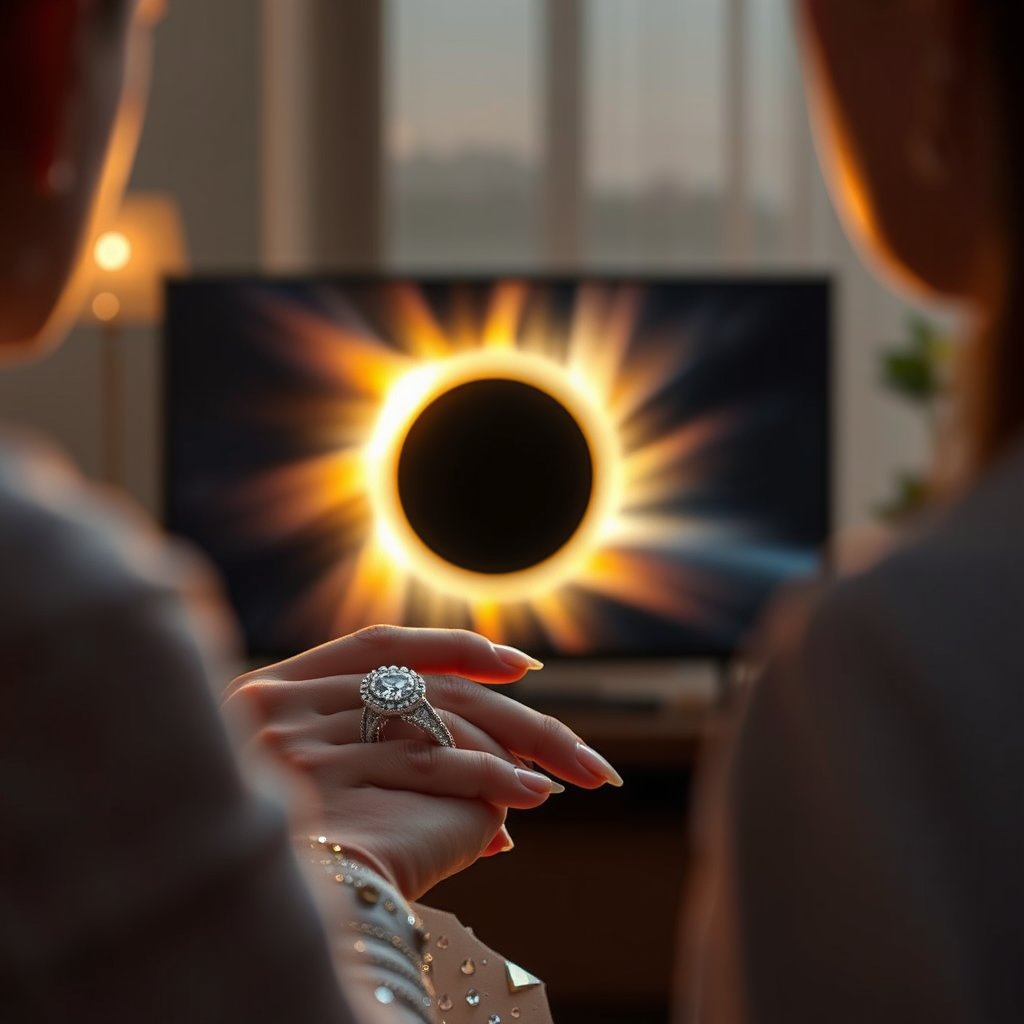

Watching TV during a solar eclipse is generally safe, but the experience might not be as captivating as watching the event itself. While you can certainly tune in to broadcasts and coverage of the eclipse, nothing compares to witnessing the celestial phenomenon live. This article will explore the implications of watching TV during an eclipse, including viewing options, safety concerns, and how to make the most of the experience.
Understanding Solar Eclipses

A solar eclipse occurs when the Moon passes between the Earth and the Sun, blocking all or part of the Sun’s light. This fascinating astronomical event can occur only during a new moon and is categorized into three main types: total, partial, and annular.
1. Total Solar Eclipse: This happens when the Moon completely covers the Sun, allowing viewers in the path of totality to experience a brief period of darkness during the day. The sky darkens, and stars may become visible.
2. Partial Solar Eclipse: In this scenario, only a portion of the Sun is obscured by the Moon. Viewers outside the path of totality may observe a partial eclipse, where the Sun appears to have a “bite” taken out of it.
3. Annular Solar Eclipse: This type occurs when the Moon is too far from the Earth to completely cover the Sun. As a result, a ring of sunlight remains visible around the Moon, creating a “ring of fire” effect.
Understanding these types of eclipses enhances our appreciation of the event and can guide our viewing choices, whether they involve stepping outside or tuning into a live broadcast.
Effects of a Solar Eclipse on TV Programming
During a solar eclipse, television programming can be significantly affected, particularly in areas where the eclipse is visible. Local and national broadcasts may adjust their schedules to include special segments on the eclipse, featuring expert commentary, live feeds, and even educational content about the science behind the event.
For example, major networks like CNN, National Geographic, and local news stations often provide extensive coverage during solar eclipses. They may feature live streams from locations experiencing totality, interviews with astronomers, and discussions about the significance of solar eclipses in culture and science. This type of programming can offer valuable insights and enhance your understanding of the eclipse, even if you choose to watch from indoors.
Safety Considerations for Viewing
While watching TV does not require any special eye safety measures, it is crucial to emphasize the importance of eye protection when observing a solar eclipse directly. Looking at the Sun, even during an eclipse, can cause serious eye damage. Approved eclipse glasses or solar viewers are essential for safely viewing the event without risking permanent eye injury.
For those who prefer to stay indoors and watch the eclipse on TV, there are no specific safety concerns related to eye health. However, if you do step outside to observe the eclipse directly, ensure you have the proper protective eyewear at all times.
Eclipse Viewing Safety Equipment (2023)
| # | Equipment | Visibility | Price Range | Safety Rating |
|---|---|---|---|---|
| 1 | Eclipse Glasses | 100% | $10 – $30 | ★ ★ ★ ★ ★ |
| 2 | Solar Viewer | 100% | $20 – $50 | ★ ★ ★ ★ ★ |
| 3 | Welder’s Helmet | 100% | $30 – $100 | ★ ★ ★ ★ |
| 4 | Pinhole Projector | 100% | $1 – $5 | ★ ★ ★ ★ |
| 5 | Solar Telescope | 100% | $100 – $300 | ★ ★ ★ ★ |
| 6 | Camera with Solar Filter | 100% | $200 – $500 | ★ ★ ★ ★ |
| 7 | Smartphone with Solar App | 100% | Free | ★ ★ ★ ★ ★ |
Enjoying the Solar Eclipse Experience
While watching TV can provide valuable information, experiencing a solar eclipse firsthand is an unparalleled thrill. To enhance your experience, consider the following suggestions:
– Outdoor Viewing: If weather permits, step outside to watch the eclipse. Gather friends and family to share the experience, creating a communal atmosphere that adds to the excitement.
– Themed Activities: Host an eclipse party with themed decorations, food, and drinks. Encourage guests to wear eclipse-themed apparel or glasses, and consider setting up a viewing area with blankets and chairs.
– Educational Content: Prepare for the event by educating yourself and your guests about solar eclipses. Share interesting facts, historical significance, and safety tips as a precursor to the viewing.
By taking these steps, you can transform a simple viewing into a memorable event that celebrates the wonder of nature.
Alternative Viewing Options
For those who prefer to stay indoors, there are various online streaming options or live feeds of the eclipse available on platforms like YouTube and dedicated astronomy websites. These resources often feature high-definition broadcasts and expert commentary, providing a rich viewing experience from the comfort of your home.
Additionally, mobile apps such as SkySafari, Solar Eclipse Timer, and Eclipse Safari can offer real-time updates, maps, and educational content. These tools can help you track the path of the eclipse, ensuring you don’t miss a moment of this extraordinary event.
Planning Your Eclipse Day
Preparation is key to making the most of a solar eclipse. Here are some tips to ensure you have a successful viewing experience:
– Check Local Times: Determine when the eclipse will occur in your area, as times can vary significantly based on your location.
– Weather Conditions: Monitor the weather leading up to the event. Cloud cover can obstruct your view, so consider having a backup viewing location if the weather is unfavorable.
– Safety Equipment: Ensure you have the appropriate viewing equipment ready ahead of time. Eclipse glasses, solar viewers, or other recommended devices are essential for safe observation.
By planning ahead, you can maximize your chances of enjoying the eclipse while ensuring a safe experience.
Sharing Your Experience
Documenting your solar eclipse experience can be a rewarding endeavor. Consider taking photos or videos of the event, especially if you’re capturing moments of totality or unique reactions from friends and family.
Once the eclipse has passed, share your experiences on social media platforms such as Instagram, Twitter, or Facebook. Engage with others who have witnessed the event, using hashtags like #SolarEclipse and #Eclipse2023 to connect with a broader community of eclipse observers.
Sharing your experience not only contributes to the collective excitement but also allows you to reflect on this once-in-a-lifetime event.
Watching television during a solar eclipse can be an enjoyable way to stay informed, but it’s best to consider immersing yourself in the event itself for a truly memorable experience. Make sure to gather the necessary materials and plan ahead to fully appreciate the spectacle of the eclipse. Whether you choose to watch TV, observe it in person, or do both, ensure you make the most of this rare celestial event.
Frequently Asked Questions
Can I watch TV during a solar eclipse without any special precautions?
Yes, you can watch TV during a solar eclipse without any special precautions since the eclipse does not affect broadcast signals. However, if you’re planning to watch the eclipse live on TV, ensure you’re tuned into a reputable channel that covers the event, as some networks may provide expert commentary and safety tips.
What should I do if the solar eclipse is happening while I’m watching TV?
If a solar eclipse occurs while you’re watching TV, you can continue to enjoy your programming without any issues. However, if you’re interested in watching the eclipse, consider switching to a channel that provides live coverage of the event to learn more about the phenomenon and its impact on the environment.
Why is it important to use proper eye protection when viewing a solar eclipse, even if I’m watching it on TV?
It’s essential to use proper eye protection when viewing a solar eclipse in person because looking directly at the sun can cause serious eye damage. However, if you’re watching it on TV, you don’t need to worry about eye safety, but understanding the risks can enhance your appreciation of the event.
What are the best TV channels to watch for solar eclipse coverage?
The best TV channels for solar eclipse coverage typically include National Geographic, NASA TV, and various local news stations that provide live updates and expert commentary. These channels often feature live feeds from locations experiencing totality, offering a comprehensive view of the eclipse as it unfolds.
Which streaming services offer live coverage of solar eclipses?
Many streaming services, such as YouTube and NASA’s official website, offer live coverage of solar eclipses. You can also check platforms like Hulu Live and Sling TV, which may feature channels broadcasting the event, ensuring you don’t miss this spectacular natural phenomenon.
References
- https://www.nasa.gov/feature/what-to-know-about-watching-the-solar-eclipse
https://www.nasa.gov/feature/what-to-know-about-watching-the-solar-eclipse - https://www.who.int/news-room/questions-and-answers/item/what-happens-to-your-eyes-when-you-look-at-the-sun
https://www.who.int/news-room/questions-and-answers/item/what-happens-to-your-eyes-when-you-look-at-the-sun - https://www.cdc.gov/nceh/features/eclipse-safety.html
https://www.cdc.gov/nceh/features/eclipse-safety.html - Solar eclipse | Definition, Meaning, Diagram, & Types | Britannica
https://www.britannica.com/science/solar-eclipse - https://www.nytimes.com/2021/06/14/science/solar-eclipse-safety.html
https://www.nytimes.com/2021/06/14/science/solar-eclipse-safety.html - https://www.sciencedirect.com/topics/earth-and-planetary-sciences/solar-eclipse
https://www.sciencedirect.com/topics/earth-and-planetary-sciences/solar-eclipse - Google Scholar Google Scholar
https://scholar.google.com/scholar?q=watching+tv+during+solar+eclipse - Google Scholar Google Scholar
https://scholar.google.com/scholar?q=solar+eclipse+effects+on+vision - Google Scholar Google Scholar
https://scholar.google.com/scholar?q=can+i+watch+tv+during+solar+eclipse - can i watch tv during solar eclipse – Search results
https://en.wikipedia.org/wiki/Special:Search?search=can+i+watch+tv+during+solar+eclipse

[…] channel lineup for your exact setup first. If Hallmark isn’t available where you are, use the alternative viewing options section to select a service that matches your live vs. on-demand needs—then subscribe with […]