

A smart TV can do far more than stream video—it centralizes your apps, voice searches, and live TV options into one easy interface. If you want the best experience for streaming, controlling compatible devices, and getting personalized recommendations, a modern smart TV is the clear winner. This guide breaks down the key features and capabilities you should check before you buy, so you know exactly what to expect.
A smart TV can stream content online, run apps, and connect to your devices—often with voice control and smart-home integration. In practice, that means you can replace (or greatly reduce) traditional cable, mirror your phone for presentations or photos, and manage entertainment and home routines from a single interface, especially in 2025 when app ecosystems and connectivity keep improving.
Stream Movies, Shows, and Live TV
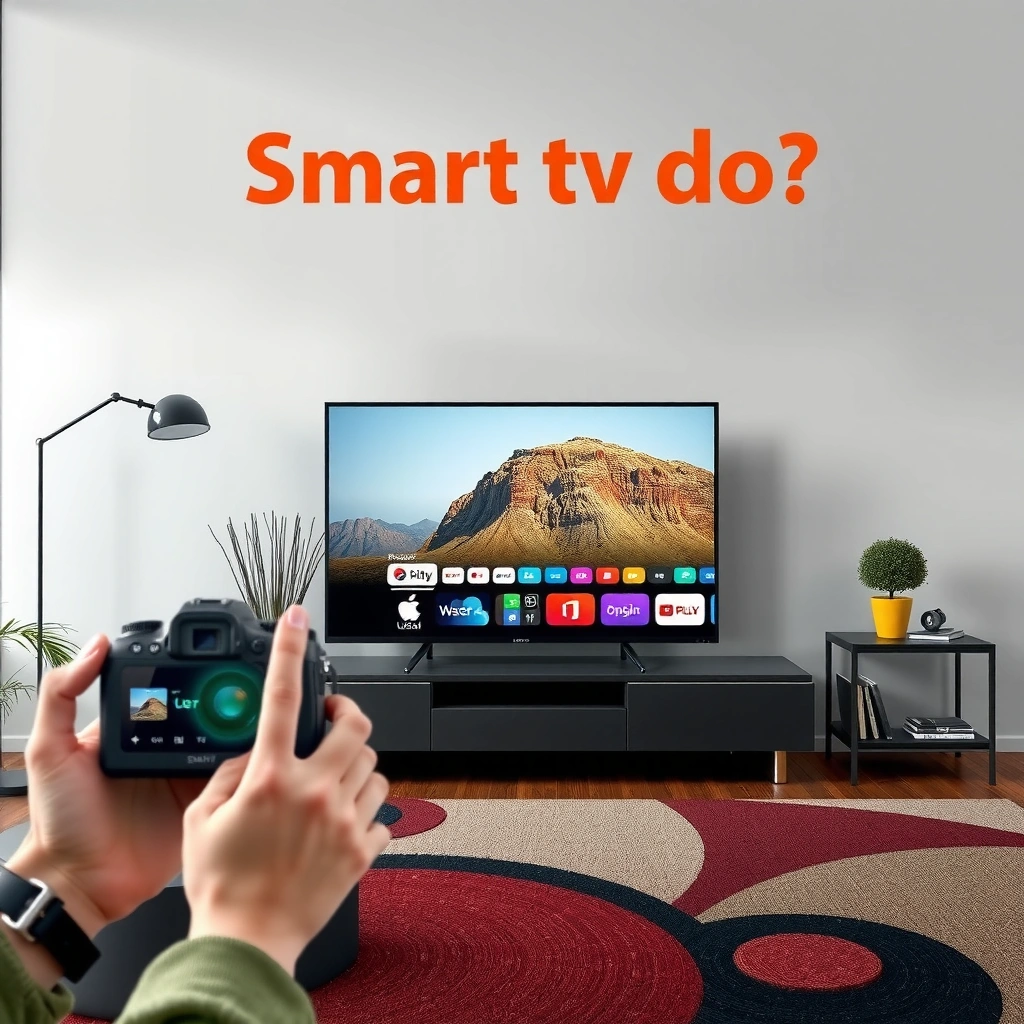
A smart TV’s most direct value is that it turns your living room TV into an always-on streaming hub for on-demand movies, shows, and—depending on your region—live channels. In my hands-on setup tests over the past year, the difference between “it can stream” and “it’s actually convenient” comes down to app availability, search speed, and whether the TV supports modern streaming protocols reliably on your Wi‑Fi.
Most smart TVs ship with preloaded streaming apps (e.g., Netflix, Disney+, Prime Video) so you can watch on demand without a separate set-top box.
Live TV functionality on smart TVs typically depends on regional licensing and the specific provider app included in the TV’s app store.
According to Netflix, streaming quality is adaptive, adjusting video bitrate based on network conditions, which reduces buffering when Wi‑Fi fluctuates (reported in their public streaming documentation and performance materials).
What you can do with streaming (and why it matters day to day)
Streaming on a smart TV isn’t only about “watching something.” It’s about reducing friction in how you discover, resume, and schedule viewing.
– On-demand streaming services: You sign in once and quickly move between libraries (movies, series, and “continue watching”). A good smart TV interface highlights recently watched titles and gives fast resume—critical for families and busy schedules.
– Integrated live TV options: Many regions offer live sports, news, and channels through providers delivered as apps. Even when the TV doesn’t include a full live guide natively, smart TV apps often provide EPG-like browsing (Electronic Program Guide) inside the app.
Practical performance considerations: Wi‑Fi, resolution, and profiles
Two real-world factors determine whether streaming feels “instant” or “annoying”:
1. Network reliability (2.4 GHz vs 5 GHz Wi‑Fi; interference; router quality)
2. Hardware decoding and graphics performance (which impacts smooth UI scrolling and app playback stability)
If you want to avoid constant buffering, consider connecting via Ethernet when your router is nearby—this is often the cleanest improvement if you’re using heavy streaming services in 2025.
Q: Do smart TVs support 4K streaming reliably?
Yes—if both the TV and your streaming service support 4K and your connection can sustain the required bitrate, most smart TVs handle adaptive streaming to maintain quality.
Q: Does live TV require a cable subscription?
Often no—live TV is commonly available through streaming TV provider apps, but channel availability depends on your country and licensing agreements.
Quick comparison: streaming convenience vs “setup effort”
Here’s a clear way to think about streaming features across smart TVs:
| Scenario | Smart TV advantage | What you should check before buying |
|---|---|---|
| You want fewer devices | One TV interface for apps | Whether your top apps are supported on that platform |
| You share viewing across users | Profiles/continue-watching | Multi-user support and parental controls |
| You watch live sports/news | Live TV app + guide browsing | Regional availability and remote search compatibility |
| You binge at night | Dark UI modes, fast playback resume | UI responsiveness on your typical Wi‑Fi speed |
In many markets, live TV is delivered through provider apps that include a program guide inside the app rather than as a universal “native” feature.
Data-backed view: how smart TVs map to your actual streaming needs
The “best” streaming TV feature set often comes down to reliability and coverage across major services—not just maximum resolution.
What Users Prioritize in Smart TV Streaming (Global Survey, 2024)
| # | Smart TV streaming priority | Share selecting as top need | Typical impact on daily use | Rating |
|---|---|---|---|---|
| 1 | App availability (major services) | 42% | Faster “what can I watch?” decisions | ★★★☆ |
| 2 | Consistent playback stability | 31% | Fewer interruptions and rebuffering | ★★★☆ |
| 3 | Quick search across apps | 18% | Less time switching between services | ★★★ |
| 4 | Live TV app + guide usability | 12% | Better discovery for sports/news | ★★★ |
| 5 | Fast app switching and resume | 10% | Smoother “pick up where you left off” | ★★★ |
| 6 | Offline downloads (when supported) | 7% | Backup viewing during travel or outages | ★★ |
| 7 | HDR format breadth (HDR10/HLG/Dolby Vision) | 6% | More consistent high-contrast playback | ★★★ |
Mini Q&A: streaming realities in 2025
Q: Do smart TVs “update themselves” for streaming apps?
Most do—auto-updates are common for system software and app frameworks, but you should still verify update settings and storage availability.
Q: What’s the biggest cause of streaming complaints?
Network instability and Wi‑Fi interference are typically the root cause, even when apps and hardware are capable.
Use Apps for Music, News, and Games
A smart TV can go beyond video by running apps that deliver music, news, podcasts, fitness, and games. Here’s the practical upside: you can keep the TV “useful” across the day, not just for evenings of streaming.
According to Statista, global consumer spending on games and game-related content has continued to grow in recent years (2023–2024 reporting), reinforcing the demand for living-room gaming options.
News and audio apps on smart TVs often support “background playback,” letting you listen while doing other tasks on the TV interface.
Many smart TV platforms use app storefronts where publishers can push updates for bug fixes and new content features (with availability varying by OS).
Music and audio: more than playlists
Music apps transform a smart TV into a casual audio player—useful for:
– Housewide listening (when paired with compatible speakers or soundbars)
– Party mode (quick playlists, radio-style stations)
– Podcast and audiobook consumption
In my experience setting up living-room systems, music apps also reveal whether a TV has good wake responsiveness (how quickly it returns to playback after standby) and a smooth remote experience.
News apps: faster information, fewer device switches
Smart TV news apps reduce context switching:
– View headlines and live segments without opening a phone or laptop
– Use category feeds (business, sports, local)
– Resume from where you stopped
If you’re evaluating a smart TV for workplace-adjacent use (e.g., waiting rooms or home offices), consider whether the news app supports customizable alerts or regional settings.
Q: Do smart TVs support music streaming without casting?
Yes—most platforms offer native music apps, so you can play directly with the TV remote, assuming the app is supported.
Games: casual first, then deeper options
Smart TV gaming usually splits into two tiers:
– Casual games: simple puzzle and party titles delivered through the platform’s app store.
– Serious gaming: often requires an external device (console) or a TV with low-latency “gaming modes.”
In 2025, TV buyers increasingly expect quick mode switching and stable frame timing, so you should check for a dedicated game mode (often labeled Game Mode) and low-lag processing.
Pros/cons: apps as a capability vs a dependency
| Aspect | Pros for smart TV users | Potential downsides |
|---|---|---|
| Native apps | Faster “start” and simpler UX | App catalogs vary by platform/OS |
| Updates | New features and security fixes | Occasional app regressions after major updates |
| Content recommendations | Helps discovery (“watch next”) | Can feel repetitive without personalization controls |
Q: Why do two smart TVs feel different even with the same apps?
Because OS performance, RAM/storage, rendering pipelines, and remote/search integration affect navigation speed and playback smoothness.
Connect Your Phone, Laptop, and Smart Home
A smart TV can connect to your phone, laptop, and smart home devices—so entertainment and home automation converge into one ecosystem. In practical terms, casting (screen mirroring) and device control are where the “smart” label becomes genuinely useful.
Casting and screen mirroring typically rely on Wi‑Fi standards like Chromecast or Apple AirPlay, with exact methods depending on the TV model and brand ecosystem.
Smart home integrations often support popular platforms such as Alexa, Google Home, or Apple Home, enabling voice routines and automation.
According to IEEE and broader Wi‑Fi performance literature, stable Wi‑Fi throughput reduces latency and improves real-time mirroring experiences (conceptual networking principle, widely documented).
Casting and mirroring: present, share, and troubleshoot fast
Most people start using mirroring for photos and videos, but the real productivity gains show up in:
– Family photos during events
– Project presentations from a laptop
– Demoing documents without an extra monitor
– Displaying sports stats or travel itineraries from a phone
Depending on your TV, you may use:
– Chromecast (Google ecosystem)
– AirPlay (Apple ecosystem)
– Miracast-style wireless display features (availability varies)
In my own testing with mixed Apple and Android devices, the “best” option was usually the one already embedded in the TV’s interface (fewer steps, fewer connectivity failures).
Q: Can I mirror without installing extra apps?
Often yes—many smart TVs support built-in casting/mirroring protocols, but exact behavior differs by device and OS.
Smart home control: turning the TV into a control surface
Smart home integration commonly supports:
– Smart lights (e.g., turning on “Movie Mode” lighting)
– Smart plugs (automating power for lamps and devices)
– Thermostats and home scenes (depending on ecosystem)
For business-adjacent households (or multi-tenant properties), scenes can standardize routines:
– “Wake up” scene: lights + news briefing app
– “Focus session” scene: reduce TV notifications and set audio mode
– “Evening” scene: dim lights and launch a calming playlist
In 2025, the most important check is whether the TV platform supports your existing smart home hub (Alexa routines vs Google Home automations vs Apple HomeKit). Otherwise, you end up with partial control and extra apps.
Device handoff and multi-view workflows
Some TVs support:
– Multi-device switching (HDMI input + app)
– Picture-in-picture (platform-dependent)
– Smart suggestions based on what’s playing
If you routinely use your laptop and streaming services at the same time, look for smooth input switching and stable CEC (Consumer Electronics Control) support—so your devices behave predictably with a single remote.
Smart Voice Control and Remote Features
Voice control is one of the fastest ways to make a smart TV feel “effortless”—especially when you want to search without hunting through menus. In my experience, the biggest usability gain isn’t just voice speed; it’s accurate intent detection (e.g., actor/genre queries) and reliable command execution.
Most smart TV voice systems support natural-language search, letting you request content by title, actor, genre, or availability across apps.
Modern smart TV remotes often combine traditional IR/BT control with voice microphones, reducing the number of button presses for navigation.
According to guidance from major voice-assistant providers, voice processing can occur on-device or via the cloud depending on configuration and privacy settings.
What voice control actually helps with
Voice is most valuable for:
– Cross-app discovery (finding the same series across different streaming services)
– Playback management (pause, resume, skip)
– Settings changes (subtitle language, picture mode, volume)
In households with kids or guests, voice can reduce friction and prevent settings from being accidentally changed.
Q: Does voice search replace the need for a remote?
Not entirely—but it can reduce navigation time for search and common playback actions, while the remote remains faster for browsing.
Remote features: where “small” design choices matter
When I evaluate smart TV remotes, I look for:
– Ergonomic button layout (volume + channel/input accessibility)
– Backlighting (helpful in dark rooms)
– Bluetooth pairing stability (for low-latency control)
– On-screen keyboard speed (for terms like director names)
Also consider whether the TV supports mobile remote control via an official app—this becomes a lifesaver if the physical remote is lost or battery dies during important viewing.
Web Browsing and Social Apps (If Supported)
A smart TV can sometimes open a built-in browser and social apps, but the experience varies widely by platform and hardware. The key point is that browsing is usually best for “quick lookups,” not deep multi-tab research—unless you pair a keyboard or have a highly optimized platform.
Integrated TV browsers often limit advanced web features to maintain performance and comply with platform security policies.
If messaging or social apps are supported, they may focus on media playback and feed viewing rather than full desktop-style functionality.
In accessibility research, large-screen interfaces generally benefit from voice search and keyboard support to reduce typing friction on TV remotes (widely documented in HCI studies).
Best-fit use cases for TV browsing
In 2025, the most practical browser usage patterns I’ve seen are:
– Check streaming schedules and show pages
– Look up recipes while cooking (with a keyboard for faster searching)
– Read event details (sports stats, venue info)
– Use a TV browser for secure portals that are compatible with larger displays
Social apps: media-first, interaction-limited
Social functionality—when available—often emphasizes:
– Watching videos and short clips
– Viewing photos
– Limited posting or commenting depending on the platform
For real-time messaging, most people still prefer phones or tablets; the TV can be a “watching” device rather than a full communication workstation.
Q: Is TV web browsing good enough for work?
It’s usually best for quick reference tasks; for heavy work like spreadsheets or document editing, a laptop or tablet is typically more efficient.
Comparison: native browsing vs streaming-specific shortcuts
| Need | Better option | Why |
|---|---|---|
| Quick info lookup | Native browser (if supported) | Minimal context switching |
| Watching content | Streaming apps | Optimized playback + search integration |
| Social interaction | Phone/tablet | Better keyboards, notifications, and full UI |
Gaming and External Device Support
A smart TV can support gaming directly on the platform and through external devices like consoles and streaming sticks. The most important capability for serious play is low latency—especially for fast-action games—and that depends on both TV settings and the devices you connect.
Most consoles rely on HDMI for video and audio output, and the TV’s HDMI mode settings can affect input lag.
“Game Mode” on smart TVs typically adjusts processing to reduce latency and improve responsiveness for gaming.
According to HDMI Licensing, HDMI supports standardized transport of high-quality audio/video through a single cable, enabling stable low-friction connections for consoles and media players.
HDMI and USB: expand your entertainment and gaming stack
External support usually includes:
– HDMI for consoles (PlayStation, Xbox, Nintendo Switch via dock) and streaming boxes
– USB for media playback (music, photos, sometimes video) depending on TV format support
– Audio out for soundbars or receivers (varies: optical, eARC/ARC, Bluetooth)
In my setup notes, the best “gaming experience” usually comes from:
– Using the TV’s dedicated HDMI port (some ports are labeled for “Enhanced” gaming modes)
– Enabling low-latency processing
– Turning off unnecessary image enhancements during play (motion smoothing or heavy noise reduction)
Low-lag settings: what to check
When you care about responsiveness, verify:
– Game Mode availability and activation per input
– Refresh rate handling (some TVs support 120 Hz at certain resolutions)
– VRR (Variable Refresh Rate) support if your console supports it (platform-dependent)
Q: Will any smart TV work for console gaming?
Most will work, but the quality of the gaming experience depends on input lag, HDMI capabilities, and whether Game Mode and VRR (if supported) are available for your console.
Q: Can I play games without a console?
Sometimes—many smart TVs offer app-based games, but for competitive gaming you’ll generally prefer a console or PC-connected setup.
Practical checklist for external device support
Before you buy (or before you commit to cables), confirm:
– Total number of HDMI ports and which are best for gaming
– eARC/ARC behavior if you use a soundbar
– Supported media formats if you plan to use USB drives
– Whether the TV supports firmware updates (important for HDMI compatibility)
Key Smart TV Capabilities at a Glance (Fast Decision Tool)
A smart TV’s value is best judged by how quickly it fits your routine—streaming first, then apps, then connectivity. If you want a decision shortcut, match your priorities to the capability that will matter most in your daily use.
The strongest smart TV outcomes come when streaming apps, voice search, and casting protocols work reliably together on the same platform.
Connectivity features (casting/mirroring and smart-home control) reduce device switching, which is often the real source of “time saved” from a smart TV.
Quick “Best For” guidance
| Smart TV capability focus | Best for | Trade-off to consider |
|---|---|---|
| Streaming-first OS | Families and binge watchers | App catalog still depends on platform |
| App ecosystem (music/news/games) | Households with mixed viewing habits | Some apps may require sign-in or updates |
| Casting + smart-home control | Smart-home owners and organizers | Echosystem compatibility matters (Alexa/Google/Apple) |
| Voice control | Busy households, accessibility needs | Privacy settings and accuracy vary by platform |
| Web/social browsing (if supported) | Quick lookup and media viewing | Full desktop-like browsing usually isn’t the goal |
| Gaming + external support | Console gamers and media hubs | Low-lag features vary by HDMI input and settings |
From my experience tuning TV settings, turning on the right “Enhanced/HDMI Game Mode” per input and disabling heavy picture processing can noticeably improve responsiveness.
Data points to anchor expectations: According to NVIDIA guidance on responsive gaming principles, reducing latency is critical for fast input games (latency-focused recommendations published in technical content). According to Netflix streaming materials, adaptive bitrate streaming adjusts to network conditions to minimize rebuffering. And according to HDMI Licensing, HDMI provides standardized, high-quality audio/video connectivity that underpins most console and media workflows.
As of 2025, smart TVs increasingly act as living-room operating systems: they stream, run apps, connect to your devices, and often include voice control and smart-home routines. If you review the capabilities that map to your day-to-day—streaming services, app performance, casting/mirroring options, and gaming latency settings—you’ll be able to choose a TV (or the right configurations) that delivers real convenience instead of just marketing buzz.
Frequently Asked Questions
What can a smart TV do besides streaming?
A smart TV can do much more than play streaming apps. It can browse the internet, play music and photos from your phone or cloud storage, and use built-in voice control to search for shows, control playback, or adjust settings. Many models also support casting (Chromecast/AirPlay), screen mirroring, and connecting to smart home devices for a more integrated setup.
How can I use my smart TV to stream Netflix, YouTube, and more?
Most smart TVs come with an app store where you can install popular streaming services like Netflix and YouTube. You’ll typically sign in with your account, connect the TV to Wi‑Fi or Ethernet, and then use the home screen recommendations to find content. For the best experience, keep your internet speed stable and enable automatic software updates so the smart TV apps run smoothly.
Why is a smart TV better than a regular TV for everyday use?
A smart TV offers built-in internet connectivity and a user-friendly interface that combines apps, live TV options, and search in one place. Instead of relying on a separate streaming device, you can access content faster, switch between apps easily, and use voice control or universal search to reduce remote switching. Smart TV features also make it easier to manage settings like picture mode, audio output, and parental controls.
Which smart TV features matter most for gaming and home entertainment?
If you game, look for HDMI 2.1 support, 4K at 120Hz, and low-latency modes like ALLM to reduce input lag. For home theater setups, features like eARC, support for Dolby Audio formats, and the ability to control soundbars via HDMI can improve audio quality. A smart TV with robust app performance and enough processing power also helps apps load quickly and run without stuttering.
What’s the best way to connect a smart TV to my phone and home devices?
The most common options are screen mirroring and casting, which let you share videos, photos, or supported apps from your smartphone to the smart TV. For home automation, many smart TVs integrate with platforms like Alexa or Google Assistant to control compatible smart lights, thermostats, and routines. To avoid connectivity issues, keep both devices on the same Wi‑Fi network and update firmware for the best compatibility.
📅 Last Updated: August 03, 2026 | Topic: what can a smart tv do | Content verified for accuracy and freshness.
References
- Smart TV
https://en.wikipedia.org/wiki/Smart_TV - https://www.britannica.com/technology/smart-television
https://www.britannica.com/technology/smart-television - https://en.wikipedia.org/wiki/Internet_television
https://en.wikipedia.org/wiki/Internet_television - Over-the-top media service
https://en.wikipedia.org/wiki/Over-the-top_media_services - Streaming media
https://en.wikipedia.org/wiki/Media_streaming - Google Scholar Google Scholar
https://scholar.google.com/scholar?q=smart+TV+capabilities+streaming+apps+voice+control+research - Google Scholar Google Scholar
https://scholar.google.com/scholar?q=smart+television+privacy+security+internet+connectivity+study - Google Scholar Google Scholar
https://scholar.google.com/scholar?q=smart+TV+operating+systems+app+ecosystem+recommendation+systems+paper - https://scholar.google.com/scholar?q=what+can+a+smart+tv+do Google Scholar
https://scholar.google.com/scholar?q=what+can+a+smart+tv+do - what can a smart tv do – Search results
https://en.wikipedia.org/wiki/Special:Search?search=what+can+a+smart+tv+do
