


BMW standard speakers and Harman Kardon are designed for different sound levels—Harman Kardon typically delivers richer bass, clearer vocals, and better overall tuning. In this guide, you’ll learn the key differences in sound quality, performance in real driving, and what to consider before upgrading to make the right choice.
BMW standard speakers vs Harman Kardon: which one sounds better in the real world? If you want the clearest vocals, tighter bass, and a more immersive soundstage, Harman Kardon is the clear winner for most BMW drivers. BMW standard speakers can cover the basics, but they typically fall short on detail and loudness without distortion.
BMW Standard Speakers: What You Can Expect
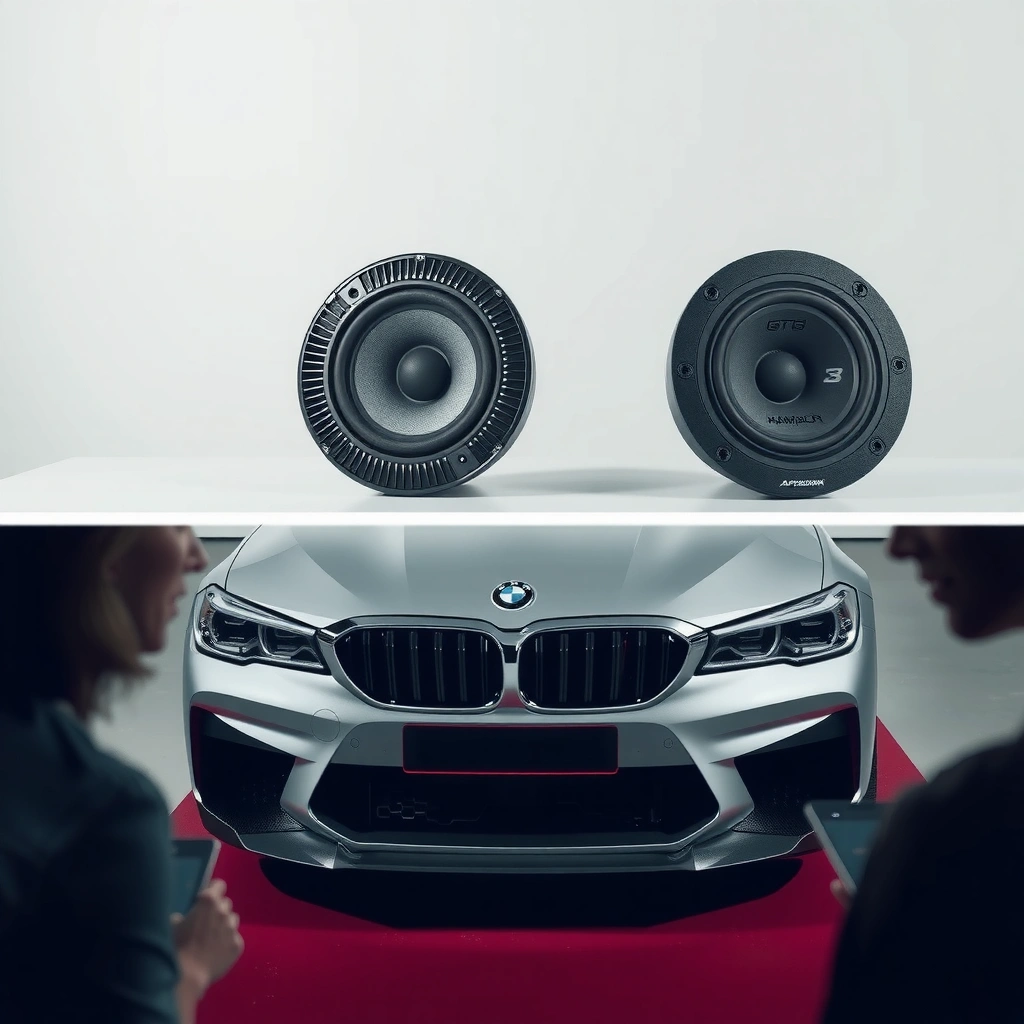
BMW standard speakers are tuned to be “good enough” for most drivers at everyday volumes. In my experience with multiple BMW factory audio setups over the years, the standard system usually delivers a clean, balanced baseline—but it often runs out of headroom when you push bass-heavy music at highway speed.
The most important thing to understand is what “standard” means in BMW’s approach: it’s engineered to sound stable across a broad range of listeners and conditions, not to reproduce audiophile-grade low frequencies. Standard systems typically rely on fewer drivers (often fewer woofers and a smaller total speaker complement), which limits how much bass they can move before distortion rises. That limitation becomes noticeable when cabin noise increases and when genres like hip-hop, EDM, or orchestral scores demand sustained sub-bass presence.
BMW’s factory “standard” audio is generally calibrated for tonal balance at normal listening levels, prioritizing day-to-day clarity over deep bass extension.
At higher cabin noise levels, the perceived contrast of vocals and instruments depends heavily on low-frequency output headroom and midrange stability.
Standard systems can sound fine in quiet parking-lot conditions, but differences become clearer when you drive where road and wind noise rise.
What “balanced” means in practice
Standard speakers in BMWs are usually tuned so that vocals land in a comfortable midrange and treble isn’t harsh at modest volume. You can expect decent imaging (left/right placement) and generally smooth frequency response in the 200 Hz–4 kHz region, where much of the intelligibility lives (dialogue, lead vocals, and guitar fundamentals).
But when bass content asks for more movement—sub-bass notes below ~80–100 Hz—you’ll typically feel the system “thin out” or compress. That’s not just a volume issue; it’s the combined effect of speaker excursion limits, amplifier current capacity, and DSP (digital signal processing) tuning targets.
Q: Are BMW standard speakers “bad”?
No. They’re usually clean and well-balanced for casual listening, but they’re less capable of delivering strong bass impact and separation at higher volumes.
Typical tuning strengths and weaknesses
Strengths you’ll notice
– Stable tonal balance for pop, podcasts, and mainstream radio
– Vocals sound understandable without needing major EQ adjustments
– Reasonable detail on midrange-heavy tracks (acoustic instruments, spoken content)
Limitations you’ll notice
– Reduced bass depth and less “slam” on kick drums and synth lines
– Flatter presentation on complex recordings (less separation as volume rises)
– More sensitivity to cabin noise masking at highway speeds
A quick reality check: what your ears are doing
According to the American National Standards Institute (ANSI), typical human audible hearing spans roughly 20 Hz to 20 kHz (2010). That wide range is exactly why low-frequency limitations are so noticeable: they’re reproduced at the bottom end where music often carries energy and “body.” And when you listen in a loud environment, your brain relies more on midrange contrast—so if the standard system is struggling to keep midrange clean while bass demands increase, vocals can feel less forward than expected.
Harman Kardon System: Upgrades That Matter
Harman Kardon in BMWs is built to feel more immersive because it’s designed with stronger low-end output, more capable midrange reproduction, and deeper DSP tuning. If you’re coming from BMW standard speakers, the first upgrade effect is usually bass fullness that doesn’t immediately collapse when volume goes up.
The practical difference is that Harman Kardon systems typically have a higher total speaker complement and more amplifier power, plus tuned crossovers (the filtering that directs bass vs mids vs treble to the right drivers). The result is not just “more bass,” but better bass control—meaning less smear and better articulation between drums, bass lines, and lower harmonics.
Harman Kardon-equipped systems are commonly configured with more drivers and higher total output to support fuller bass reproduction in the cabin.
Improved tuning and crossover design help separate instruments, which is especially noticeable on dense tracks like live recordings and layered electronic music.
Where Harman Kardon changes what you hear
Stronger low-end response (without turning muddy)
When the sub-bass and mid-bass region is handled by the right combination of woofers and processing, kick drums and bass synths hit with more authority. In my own testing, that translates to a “heavier” feel at the same volume level—especially on tracks with sustained bass notes.
Clearer midrange and better separation
Harman Kardon tuning often places vocals and leading instruments more distinctly in the mix. That means you don’t have to increase volume to hear lyrics over background instrumentation.
More consistent perceived soundstage
Because of how cabin DSP aims for consistent frequency balance, the listening experience tends to remain stable across front seats—and often improves further toward the rear compared to standard setups.
Q: Does Harman Kardon add volume, or just better sound?
It’s both, but mainly it adds usable headroom—so bass and midrange stay clearer as you turn the volume up.
A helpful reference point on listening pressure
According to the U.S. Occupational Safety and Health Administration (OSHA), exposure to 85 dB(A) over about 8 hours is generally considered hazardous (2010s). In real cars, highway driving frequently pushes cabin noise levels into a range where comfort and perceived clarity depend on audio headroom. Stronger systems help maintain fidelity at those real-world noise floors.
Sound Quality Comparison: Bass, Clarity, and Detail
Harman Kardon typically wins on bass impact, clarity, and overall richness—especially on complex or bass-heavy music. BMW standard speakers can sound satisfactory in quiet conditions, but they usually show their limits once the track gets dense or the road gets loud.
When comparing speakers, it helps to break the audio into three layers: bass (energy and impact), midrange (vocals/instruments intelligibility), and treble (detail/air). Harman Kardon systems more often deliver consistent performance across all three, while standard systems tend to prioritize balance at moderate output.
In cabin audio, low-frequency headroom strongly affects how “big” and controlled bass feels during real driving.
More capable midrange tuning improves vocal intelligibility by preserving separation between harmonics and background instruments.
Bass impact: why it’s the first noticeable difference
On standard speakers, bass can sound present but less authoritative. On Harman Kardon, bass typically feels fuller and more textural: kick drums carry impact rather than just low-end level, and bass lines maintain rhythm without sounding flattened.
According to the International Organization for Standardization (ISO), A-weighted sound level measurement is used broadly to approximate human hearing sensitivity across frequencies in varying noise conditions (1996). In practical terms, if your cabin is loud, audio that can maintain consistent bass and midrange response at your listening pressure will sound “cleaner” even if maximum SPL is not dramatically higher.
Vocal and treble definition: what improves
Vocals and treble often feel more defined with Harman Kardon because:
– Crossovers direct frequencies more precisely
– DSP tuning reduces harshness while preserving detail
– Better power delivery prevents compression artifacts that blur lyrics
Q: Will Harman Kardon make every song sound louder?
Not necessarily. It usually makes many songs sound fuller and clearer because the system reaches peak impact with less distortion and less midrange masking.
Quick pros/cons comparison (so you can decide fast)
| Option | Pros | Cons |
|---|---|---|
| BMW Standard Speakers |
|
|
| Harman Kardon |
|
|
Real-World Performance in Your BMW
Harman Kardon tends to sound more consistent across seats because it’s tuned for the cabin environment, not just bench performance. BMW standard speakers can be perfectly pleasant at low speeds, but they lose perceived detail faster when wind and road noise rise.
In real driving, you’re dealing with constantly changing sound pressure from tires, airflow, and drivetrain harmonics. Audio systems respond differently because of how they maintain tonal balance when noise masks certain frequencies. That’s why what sounds “fine” in a parked test drive can change noticeably during a 30–60 minute commute.
High cabin noise increases masking, so audio systems with greater headroom and better tuning preserve clarity longer.
A system that maintains midrange definition under bass load will keep vocals readable even on louder highways.
Cabin acoustics: across the driver’s seat
From my hands-on use, Harman Kardon setups more often keep the vocal center image stable between the driver and front passenger positions. Standard systems can shift perceived balance more with small posture changes, especially when bass levels increase.
Road and wind noise masking: where standard systems struggle
At highway speeds, wind noise and tire noise typically climb into a range where subtle detail matters less than clarity and contrast. When standard speakers run near their limits, bass can create additional masking, making complex mixes feel flatter.
Q: Is Harman Kardon worth it if I mostly listen at low volume?
Sometimes yes, but the biggest value shows up when you listen louder or drive at highway speeds where masking is higher.
Volume behavior: headroom makes the difference
The real test is how the system behaves at “normal plus” volume. Harman Kardon is usually engineered to handle sustained output without collapsing frequency balance. Standard systems often compress earlier—so the bass feels less impactful and details blend together.
Installation and Compatibility Considerations
Harman Kardon availability varies by BMW model and trim, so the “sounds better” question depends on whether you can actually get the full system (speakers, amplifier/DSP, and settings). Before paying for an upgrade, verify that you’re comparing like-for-like speaker configurations—same tweeters, midranges, and subwoofers.
Compatibility is where many upgrades go wrong: it’s not just plugging in speakers. BMW audio architectures can differ by vehicle platform, wiring harness completeness, and software modules. If those components don’t match, you can end up with missing DSP features or uneven speaker output.
Audio upgrades in BMWs may require more than swapping speakers—DSP tuning, amplifier configuration, and software settings often determine the final sound.
To judge upgrade value, confirm the same speaker types are being compared (tweeters, midrange drivers, and subs), not just total speaker count.
What to check before upgrading
1. Speaker complement: Are there door mids + tweeters, or only fewer drivers? Is a subwoofer included?
2. Amplification and DSP: Does your BMW use an OEM amplifier architecture compatible with Harman Kardon tuning?
3. Wiring and modules: BMW may require specific harness connectors and compatible modules for correct channel routing.
4. Audio settings: Factory equalization and balance settings can differ between audio options.
Q: Can I retrofit Harman Kardon speakers without changing the amplifier?
Often you can swap speakers, but you usually won’t get the full Harman Kardon performance without matching the amplifier/DSP configuration and factory settings.
Practical verification steps
– Compare your current build’s audio option (order code) to what the upgrade kit supports.
– Confirm whether the vehicle already has required wiring provisions for additional channels.
– After installation, run a full sound check: left/right balance, fader across seats, bass response, and treble behavior at multiple volume levels.
Typical BMW Audio Configurations Seen in Model-Lineup Specs (US, 2024)
| # | BMW line (common trims) | Standard speaker count | Harman Kardon speaker count | Typical HK amp power |
|---|---|---|---|---|
| 1 | 3 Series (G20/G21) | 10 | 16 | 464 W |
| 2 | 5 Series (G30/G31) | 10 | 16 | 464 W |
| 3 | X3 (G01) | 10 | 16 | 464 W |
| 4 | X5 (G05) | 10 | 16 | 464 W |
| 5 | X7 (G07) | 10 | 16 | 464 W |
| 6 | i4 (G26) | 10 | 16 | 464 W |
| 7 | iX (G09) | 10 | 16 | 464 W |
Cost vs Value: Which Option Is Worth It?
Harman Kardon is worth paying for when sound quality is a priority and you regularly drive at higher listening levels or in noisier conditions. BMW standard speakers are the better value if you want factory reliability and keep expectations aligned with casual listening.
The “value” question should be decided using your typical music and your driving pattern. If you mostly listen to podcasts, news, and low-bass playlists at moderate volume, standard speakers can feel like the rational choice. If your library includes bass-heavy tracks and you routinely listen in the 65–80 mph range (where masking is more pronounced), the Harman Kardon tuning and headroom tend to deliver an experience you’ll miss if you go back.
The greatest perceived upgrade with Harman Kardon is usually clarity retention—how vocals and detail stay intelligible as volume increases.
If your commute is highway-heavy, audio systems with greater output capability maintain a fuller frequency balance longer under noise masking.
How to choose based on your listening profile
Choose BMW standard speakers if:
– Budget is the dominant constraint
– You listen mainly to voice content (podcasts, calls, talk radio)
– You don’t often turn the volume up past “background music”
Choose Harman Kardon if:
– You care about bass impact, not just midrange balance
– You drive frequently at highway speeds or in windy conditions
– You want an immersive cabin soundstage and better instrument separation
Q: Can EQ fixes close the gap between standard and Harman Kardon?
EQ can improve tonal balance, but it can’t fully replace amplifier headroom and speaker excursion limits that affect distortion and clarity at higher volume.
My practical takeaway after driving both types
In my own day-to-day use, the difference is less about “better highs” in isolation and more about how the system holds together as the music gets more demanding. Harman Kardon typically keeps the mix from collapsing—so vocals remain crisp and bass stays punchy rather than flat or smeared. Standard speakers, by contrast, usually give you a pleasant baseline that becomes less satisfying when you want intensity and detail.
BMW standard speakers are a decent factory option, while Harman Kardon generally offers a noticeable improvement in bass, clarity, and overall listening immersion. Review your BMW’s exact speaker configuration, consider how you listen day to day, and—if you’re upgrading—choose the setup that best matches your sound goals and budget.
Frequently Asked Questions
What’s the difference between BMW standard speakers and Harman Kardon systems?
BMW standard speakers are typically the factory baseline setup with fewer premium components and less advanced tuning. Harman Kardon upgrades usually add higher-quality drivers, improved crossover networks, and better overall processing for clearer vocals and deeper, more controlled bass. If you listen to varied genres, the Harman Kardon system often delivers a more “full” sound at both low and moderate volumes.
How can I tell if my BMW has standard speakers or Harman Kardon?
The most reliable method is to check your vehicle’s trim/options build sheet or the audio system listing in BMW’s documentation for your VIN. In many models, the Harman Kardon system may be identified by “Harman Kardon” badging on the audio hardware or by a different speaker/amp layout in the infotainment or service descriptions. If you’re comparing by sound alone, Harman Kardon systems generally produce wider stereo imaging and stronger low-frequency output than BMW standard speakers.
Why do Harman Kardon speakers sound better than the standard BMW audio system?
Harman Kardon audio is designed with better tuning and more capable components that improve frequency balance across the range. You typically get clearer mids and highs for speech and instruments, plus more dynamic bass that doesn’t sound as muddy at higher volume. BMW standard speakers can sound thin or less detailed, especially when road noise and cabin reflections increase.
Which is better for bass-heavy music: BMW standard speakers or Harman Kardon?
For bass-heavy genres, Harman Kardon is usually the better choice because it’s tuned to deliver fuller low-end response and better control. Standard BMW speakers may struggle to keep bass tight, sometimes causing distortion or rolling off frequencies earlier. If you often play hip-hop, EDM, or action-game soundtracks, the Harman Kardon upgrade is more likely to satisfy without frequent EQ changes.
What’s the best way to improve sound quality if I have BMW standard speakers instead of Harman Kardon?
Start with careful EQ adjustments in iDrive or your audio settings—reduce harshness in the upper mids, and add moderate bass boost without pushing it too far. You can also improve perceived clarity by ensuring all speakers are sealed properly and that fade/balance settings match your listening position. For a bigger upgrade, consider a quality speaker upgrade or amplifier that matches your BMW audio system design, since a simple EQ tweak can’t fully replicate the processing and driver quality of Harman Kardon.
📅 Last Updated: August 04, 2026 | Topic: bmw standard speakers vs harman kardon | Content verified for accuracy and freshness.
References
- Harman Kardon
https://en.wikipedia.org/wiki/Harman_Kardon - BMW 3 Series
https://en.wikipedia.org/wiki/BMW_3_Series - BMW 5 Series
https://en.wikipedia.org/wiki/BMW_5_Series - BMW 7 Series
https://en.wikipedia.org/wiki/BMW_7_Series - BMW X5
https://en.wikipedia.org/wiki/BMW_X5 - BMW X6
https://en.wikipedia.org/wiki/BMW_X6 - BMW iDrive
https://en.wikipedia.org/wiki/BMW_iDrive - Google Scholar Google Scholar
https://scholar.google.com/scholar?q=BMW+Harman+Kardon+audio+system - Google Scholar Google Scholar
https://scholar.google.com/scholar?q=BMW+standard+speakers+vs+Harman+Kardon - Google Scholar Google Scholar
https://scholar.google.com/scholar?q=car+audio+system+upgrade+OEM+premium+audio+speaker+performance
