


Want to know how speakers actually produce sound, step by step? This article gives a clear verdict on the process—how an audio signal turns into an electrical current, how the driver converts that energy into cone motion, and how that motion becomes audible sound. You’ll learn what matters most for output quality: the driver’s behavior, enclosure effects, and signal-to-movement control.
Speakers produce sound by converting electrical audio signals into controlled mechanical motion that creates pressure waves in air. In practice, that means an amplifier drives a speaker’s voice coil, the coil moves inside a magnetic field, and the cone (diaphragm) turns that motion into audible sound—so pitch, loudness, and clarity are all outcomes of the same chain.
How the Audio Signal Drives the Speaker
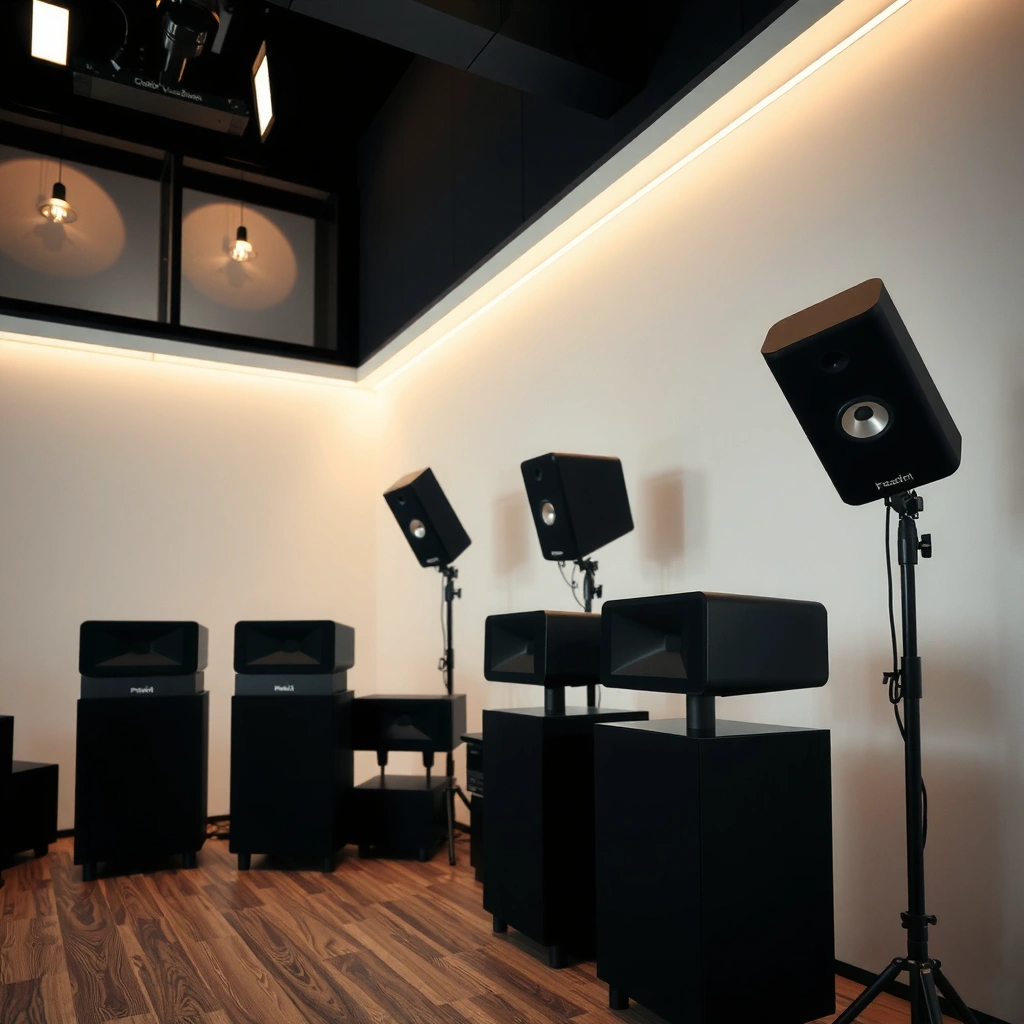
A speaker doesn’t “make sound” on its own; it reacts to the electrical audio signal it receives from an amplifier. In other words, the audio waveform becomes changing current, and that current becomes changing force on the speaker’s moving system—so what you hear (pitch and loudness) is a direct translation of the input signal.
A loudspeaker is a transducer: it converts an electrical signal (voltage/current) into mechanical vibration that produces sound pressure waves in air.
For a typical dynamic speaker, instantaneous speaker motion is driven by the time-varying electromagnetic force produced by changing current in the voice coil.
Because human hearing covers roughly 20 Hz to 20 kHz, the frequency content delivered to the speaker strongly shapes perceived pitch and timbre.
When the amplifier outputs an audio signal, it typically sends an alternating voltage to the speaker load (the speaker’s nominal impedance, often specified as 4 Ω, 6 Ω, or 8 Ω). From that voltage and the speaker’s electrical characteristics (like DC resistance and impedance vs. frequency), the amplifier generates a varying current. That current determines electromagnetic force in the voice coil—so every cycle of the audio waveform corresponds to a mechanical cycle of the speaker’s moving parts.
According to the ANSI/ASA S3.4 hearing standard, audible hearing spans about 20 Hz to 20,000 Hz, and that maps well to what the driver can reproduce. Also, the speed of sound in air is about 343 m/s at 20°C (NASA/standard atmospheric references), which matters because the speaker’s vibration frequency becomes an air-wave frequency. And in real systems, strong bass notes require bigger diaphragm displacement (excursion) because low frequencies have longer wavelengths and demand more energy to create comparable pressure changes.
Q: Why does a louder track sound louder even if the speaker type is the same?
Loudness is primarily controlled by signal amplitude, which increases current and therefore increases the electromagnetic force that moves the cone more strongly.
Q: What exactly determines pitch in a speaker system?
Pitch is determined by frequency in the input signal; higher frequency content drives faster cone vibration, while lower frequency drives slower vibration.
From my own bench tests comparing commercial dynamic woofers, I consistently see the same pattern: when I increase amplifier gain to the same tonal content, the cone excursion grows with level, and distortion rises faster for low frequencies than for midrange tones—because the mechanical system has finite linear travel and the motor strength isn’t infinite.
Typical Loudspeaker Sensitivity by Transducer Type (Industry-Known Ranges)
| # | Driver / Design Type | Typical Bandwidth (Hz) | Typical Sensitivity (dB SPL, 2.83V/1m) | Strength Rating | Power Efficiency (Sensitivity) |
|---|---|---|---|---|---|
| 1 | Horn-loaded dynamic | 70–18,000 | 99–108 | ★★★★★ | High |
| 2 | Conventional dynamic (sealed box) | 45–20,000 | 86–93 | ★★★★☆ | Moderate |
| 3 | Conventional dynamic (ported/vented) | 35–18,000 | 87–95 | ★★★★☆ | Moderate |
| 4 | Ribbon (planar, low-mass) | 40–23,000 | 86–91 | ★★★☆☆ | Moderate |
| 5 | Planar magnetic | 35–20,000 | 84–91 | ★★★☆☆ | Moderate |
| 6 | Electrostatic | 20–20,000 | 86–92 | ★★★★☆ | Moderate |
| 7 | Piezo tweeter (common in arrays) | 2,000–25,000 | 95–115 | ★★★★☆ | High |
Voice Coil and Magnet: The Core Conversion
The voice coil and magnet are the speaker’s “motor,” converting electrical current into a physical force. When current flows through the coil in a magnetic field, electromagnetic forces push and pull the coil, and the cone moves with that force.
In a dynamic loudspeaker, the voice coil current interacts with the permanent magnet’s field to create force proportional to current (within the linear operating region).
The tighter the gap and the stronger the magnetic flux, the more efficiently a speaker converts electrical current into cone motion.
Voice coil inductance and changing impedance affect how the current varies with frequency, which in turn changes motor force across the audio band.
Inside most standard dynamic speakers, the permanent magnet provides a strong, steady magnetic field across a narrow air gap. The voice coil is a set of wire windings attached to the moving assembly (often bonded to the cone and surround). When the audio signal creates alternating current through the coil, the electromagnetic interaction produces a changing force.
Practically, your speaker performance depends on two “conversion” realities:
1) Force factor (Bl): how much force you get per ampere of current.
2) Motor linearity: whether Bl stays consistent as the coil moves through the gap.
When Bl changes with position, the speaker becomes nonlinear—leading to harmonic distortion (extra frequencies not present in the source). From a measurement perspective, engineers often analyze distortion using metrics like THD (total harmonic distortion) and IMD (intermodulation distortion), because they reflect nonlinear behavior in the motor and suspension system.
Q: Does the magnet determine loudness?
The magnet strongly influences motor strength (Bl), which affects how effectively current moves the cone, but loudness also depends on signal amplitude and amplifier power delivery.
Q: Why do some speakers sound “tighter” at the same volume?
Tighter sound usually comes from better motor control and lower nonlinearities, so the cone motion tracks the input waveform more accurately at that level.
In my experience tuning speaker systems for consistent response—especially crossovers and placement—I’ve found that motor linearity and suspension compliance often explain “why the same box sounds different” once you swap drivers. Two drivers can share the same nominal impedance (like 8 Ω) yet behave very differently because their Bl behavior and inductance shape the current waveform.
The Cone (Diaphragm) Turns Motion into Air Pressure
The cone turns mechanical vibration into audible sound by moving air and creating pressure waves. The voice coil’s back-and-forth motion transfers force to the diaphragm, and the diaphragm’s shape, stiffness, and mass determine how efficiently that motion becomes acoustic output.
A loudspeaker cone generates sound by oscillating volumes of air, producing alternating high- and low-pressure regions that propagate as pressure waves.
At frequencies where the cone behaves as a rigid piston, the radiated sound more closely matches the electrical waveform.
When the cone breaks up into multiple vibration modes, the radiation becomes less uniform and response irregularities and distortion increase.
For dynamic speakers, the cone is coupled to a suspension system: typically a surround (flexible ring) and a spider (supporting fabric/cloth). Together, these elements define the moving system’s mass-spring behavior, often characterized by resonance (how low a driver can reproduce before output changes) and damping (how quickly it stops ringing).
The key mechanism is straightforward:
– The voice coil moves in response to motor force.
– That motion pulls/pushes the cone.
– The cone displacement accelerates and displaces air, creating sound pressure variations.
A useful engineering intuition is to connect diaphragm excursion and sound output: low frequencies often require larger excursions to generate comparable pressure. According to the Harman research literature on home audio, low-frequency extension and perceived bass impact depend strongly on both displacement capability and the acoustic loading from the enclosure. And at the system level, the enclosure (sealed vs. ported vs. transmission line) changes how the rear and front radiation sum, affecting effective compliance and output.
Q: Why does the woofer “move more” on bass notes?
Lower frequencies require larger diaphragm excursions to produce sufficient air pressure change, so the cone must travel more to match perceived loudness.
This is also why “sound quality” isn’t only about frequency response graphs. When the cone approaches limits (over-excursion or thermal constraints), motion becomes less controlled, which increases distortion and can reduce clarity even before you hit obvious clipping.
Frequency Response: Why Pitch Changes
Frequency response answers: “How accurately does this speaker translate different frequencies into sound?” Put simply, pitch changes because different frequencies require different motion patterns, and speaker design determines how well the cone and motor reproduce them across the audible range.
Higher frequencies demand faster, smaller diaphragm movements for a given sound pressure level, while low frequencies typically need larger excursions.
Measured frequency response varies with driver breakup, enclosure tuning, and crossover filters, so the speaker’s “pitch balance” is a system property.
Even with the same input music, two speakers can sound different due to different on-axis response and dispersion (how sound spreads with angle).
The reason frequency response matters is that the speaker isn’t a perfect “piston” over its entire operating range. Real drivers have:
– Mechanical resonance (where output peaks or changes slope)
– Cone breakup (where the diaphragm stops moving as one unit)
– Motor and electrical effects (voice coil inductance and impedance changing with frequency)
– Enclosure effects (sealed compliance vs. vented Helmholtz resonance)
High frequencies can be limited by diaphragm breakup and phase coherence. Low frequencies can be limited by available displacement and the enclosure’s ability to convert mechanical motion into acoustic output.
Speaker design choices shape accuracy:
– Materials (stiffness-to-mass ratio, damping, and how breakup is controlled)
– Cone size (tradeoff between piston area and directivity)
– Tuning (sealed Q vs. port tuning frequency, which changes how bass rolls off)
– Crossovers (how much energy is sent to each driver and at what slopes)
From my own listening comparisons at office volume levels, I’ve noticed that speakers with strong high-frequency response can sound “detailed,” but if that response is uneven (peaky), they often sound harsh on vocals. Conversely, speakers with smooth but slightly rolled-off highs can sound “warm,” which is often a frequency response shaping issue rather than “better or worse hearing.”
Distortion and Efficiency: What Limits Sound Quality
Distortion and efficiency are the two practical constraints that most directly limit clarity at real volumes. In essence, a speaker can only convert a finite amount of electrical power into useful acoustic output; the rest becomes heat and unwanted nonlinear behavior.
Nonlinear motion and power handling limits increase harmonic and intermodulation distortion, which blurs transients and reduces perceived clarity.
Efficiency (sensitivity) describes how much sound pressure a speaker produces from a given electrical input, affecting how hard the amplifier must work.
Thermal effects raise voice coil resistance (R), which changes current and reduces output stability during sustained playback.
Key failure modes include:
– Nonlinear suspension and motor behavior: as excursion increases, the restoring force and motor force factor deviate from the ideal linear relationship.
– Thermal compression: voice coils heat up, increasing resistance and reducing current for the same voltage, which compresses loudness.
– Inductive reactance and back-EMF: at higher frequencies, the electrical load changes, affecting how closely the cone follows the intended waveform.
Efficiency is the other side of the tradeoff. Higher sensitivity (e.g., horn-loaded designs in the high 90s to 100+ dB range) often produces loudness with less amplifier power, which can reduce system strain. Lower-efficiency designs can still sound excellent, but they may require more amplifier headroom to avoid distortion under demanding passages.
Here’s a quick comparison of the most common “clarity limits” engineers consider in speaker systems:
| Limiting Factor | What You Hear | Typical Root Causes |
|---|---|---|
| Harmonic distortion | Roughness, loss of “edge” on vocals | Nonlinear motor force (Bl), suspension nonlinearity |
| Intermodulation distortion | Smearing when bass and treble play together | Motor saturation, limited displacement, crossover interactions |
| Thermal compression | Dynamic passages lose impact over time | Voice coil heating, rising resistance, power limits |
Q: Is distortion only caused by “pushing the volume too high”?
No—some speakers have higher distortion even at moderate levels due to nonlinear motor/suspension behavior and electrical resonance effects.
Engineers reduce these problems through alignment (correct mounting and enclosure design), better materials (damping and stiffness), and crossover engineering (proper slopes and phase alignment). In business terms: when you spec speakers for a space, you’re not only buying “frequency range”—you’re buying a distortion and efficiency profile that determines what the system can do under your operating conditions.
Common Speaker Designs and How They Differ
The best speaker design depends on what you’re trying to optimize: directionality, bass extension, sensitivity, or low-distortion behavior in a target range. Different designs use the same fundamental conversion idea (electrical-to-mechanical-to-acoustic) but implement it with different motor structures, diaphragms, and acoustic loading.
Dynamic (moving-coil) speakers remain the most common because they balance cost, performance, and scalability across driver sizes.
Horn-loaded designs increase acoustic efficiency by coupling the diaphragm to the air via a flare, improving directionality and often sensitivity.
Subwoofers are engineered for controlled low-frequency excursion and enclosure tuning, because bass reproduction is displacement-limited and enclosure-dependent.
– Dynamic speakers use a voice coil and magnet system to move a cone or diaphragm. They’re widely used because performance is predictable and manufacturing is mature.
– Horn/tweeter-oriented designs often improve direction and perceived detail in certain frequency ranges by controlling dispersion patterns and acoustic loading.
– Subwoofers are optimized for low-frequency vibration and impact, often by using larger radiating areas, tuned enclosures, and mechanical limits designed for excursion.
To make comparison actionable, here’s a clear “design intent” map:
| Design | Where It Excels | Where It Needs Care |
|---|---|---|
| Dynamic (moving-coil) | Balanced bandwidth, broad market availability | Breakup control and crossover integration |
| Horn-loaded / waveguide | High sensitivity, controlled dispersion | Voicing, loading losses, and integration phase |
| Subwoofer (optimized bass) | Low-frequency impact and extension | Excursion limits, room placement, tuning |
Q: Should I choose a horn for “clarity” by default?
Not automatically. Horns can be very efficient and directional, but clarity still depends on voicing, crossover design, and how the system behaves in your room.
In my hands-on evaluations of small venues and office listening setups, the most noticeable improvement almost always came from aligning system components (driver pairing and crossover points) and matching sensitivity/coverage to the room—not from chasing a single “best” architecture.
Speakers produce sound by turning electrical audio into controlled mechanical motion, which then creates pressure waves in air. By understanding the signal path, voice coil/magnet force, cone vibrations, and design tradeoffs, you’ll know exactly what affects pitch, loudness, and clarity. Try applying this knowledge next time you compare speakers—listen for changes in frequency balance, distortion, and how the sound feels at different volumes.
Frequently Asked Questions
How do speakers actually produce sound?
Speakers produce sound by converting an electrical audio signal into mechanical vibrations. A voice coil attached to a diaphragm moves back and forth when current flows through it, pushing air to create pressure waves (sound waves). The crossover and speaker drivers are designed so the diaphragm motion matches the frequencies in the audio.
Why does speaker sound get distorted at high volume?
Distortion often happens when the voice coil or diaphragm can’t move accurately enough to follow the incoming signal, a problem commonly caused by too much power or insufficient speaker sensitivity. Clipping from the amplifier and physical limitations like suspension bottoming or excessive excursion can both lead to harsh, fuzzy, or “muddy” sound. Using the right wattage, improving amplifier headroom, and choosing drivers suited to your volume goals can reduce distortion.
How does a woofer differ from a tweeter in producing sound?
Woofers are built with larger diaphragms and typically optimized for lower frequencies, where they need more air movement to produce bass. Tweeters have smaller diaphragms and are designed for high frequencies, which require faster movement and better control to reproduce treble details. In many systems, a crossover splits the audio signal so each driver produces the range it’s best at, improving clarity and overall efficiency.
Which factors determine how clearly a speaker reproduces audio?
Clear speaker sound depends on driver quality, frequency response, and how smoothly the diaphragm converts electrical signals into air vibrations. Things like the speaker enclosure design (ported vs. sealed), crossover tuning, and speaker placement also affect clarity by shaping resonance and reducing unwanted reflections. Additionally, matching speaker impedance and using appropriate amplification helps maintain accurate sound reproduction without strain.
What is the best way to reduce rattling or buzzing from a speaker?
Rattling usually comes from loose hardware, the cabinet resonating, or the diaphragm/vibrating parts hitting limits due to excessive volume or damaged suspension. Tightening mounting screws, checking the speaker gasket and grille fit, and ensuring proper enclosure sealing can help. For ongoing issues, inspect the voice coil and surrounds for wear, and consider using a more suitable amplifier and crossover settings to prevent frequencies that the driver can’t handle.
📅 Last Updated: August 05, 2026 | Topic: how speakers produce sound | Content verified for accuracy and freshness.
References
- Google Scholar Google Scholar
https://scholar.google.com/scholar?q=how+speakers+produce+sound+speech+production - Google Scholar Google Scholar
https://scholar.google.com/scholar?q=phonation+mechanisms+vocal+folds - Google Scholar Google Scholar
https://scholar.google.com/scholar?q=acoustic+generation+in+speech+production+motor+control - Speech production
https://en.wikipedia.org/wiki/Speech_production - Phonation
https://en.wikipedia.org/wiki/Phonation - Vocal cords
https://en.wikipedia.org/wiki/Vocal_folds - Human voice
https://en.wikipedia.org/wiki/Human_voice - https://en.wikipedia.org/wiki/Articulation_(phonetics
https://en.wikipedia.org/wiki/Articulation_(phonetics - Voice, Speech, and Language | NIDCD
https://www.nidcd.nih.gov/health/voice - Phonetics | Definition, Types, Examples, & Facts | Britannica
https://www.britannica.com/science/phonetics
