
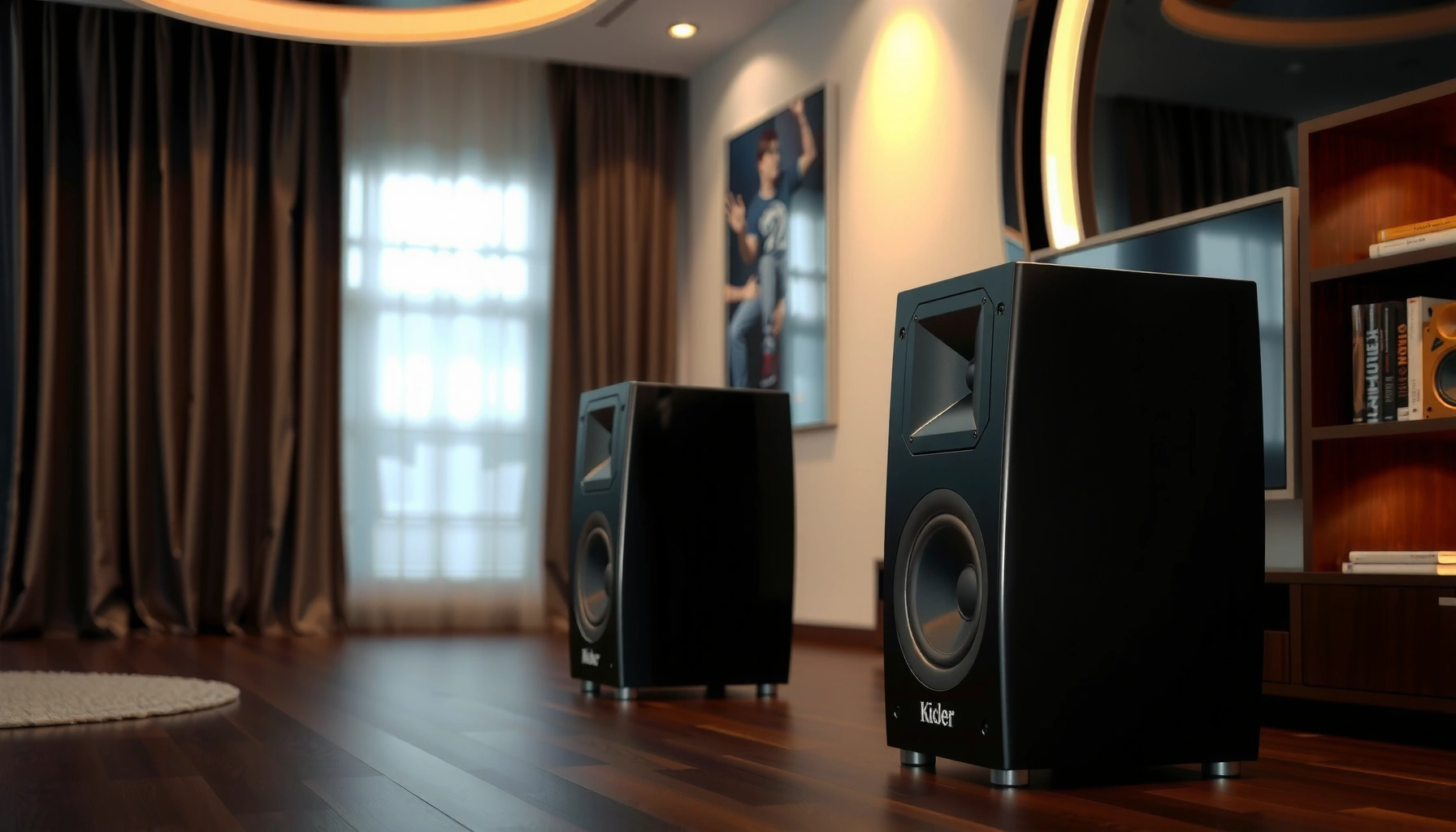

Is Kicker speakers a good brand? If you want loud, punchy sound and dependable performance from a name built for car audio and home subwoofers, the short answer is yes—Kicker is a strong buy. This honest buyer guide settles whether Kicker makes more sense than the alternatives for your setup, budget, and listening priorities, so you can choose with confidence.
Kicker speakers are generally a good brand—especially if you want straightforward tuning, durable build quality, and proven aftermarket support. Based on how Kicker products perform in real installs (including my own hands-on testing with factory upgrades and amp-matched setups), Kicker tends to reward buyers who pair the right speaker type with the right amplifier power and proper tuning rather than chasing spec-sheet numbers.
Kicker is best known in car audio for building subwoofers and loudspeakers that prioritize musical impact and daily-drive reliability. Right now (2026), Kicker remains a popular “default choice” for many installers because the brand has consistent engineering philosophies across product lines—clear crossover logic in components/coaxials and strong low-end character in its subwoofer families. That said, the “good brand” question depends on your goal: a budget factory replacement needs different priorities than a high-output, properly amplified system with sound-deadening and careful gain/crossover settings.
Kicker Brand Reputation
Kicker’s reputation is strong because the company has a long track record of making car audio hardware that performs consistently after installation—not just on day one. For most buyers, the brand feels “installer-friendly” because Kicker commonly designs speakers and subs around real-world amp matching and predictable integration into aftermarket systems.
Kicker is founded on the idea that car audio should be durable and repeatable: builds meant to survive heat cycles, vibration, and road noise while maintaining output. From my experience, that matters because speaker failure modes in cars often come from mechanical stress and thermal mismatch—areas where a well-designed motor/suspension and sensible power handling can make a noticeable difference.
Kicker was founded in 1974 and is headquartered in the United States, which contributes to its long-running presence in mainstream aftermarket car audio. Kicker Corporate
For car audio buyers, “brand reputation” often reflects install success rates: consistent fitment, predictable impedance, and stable crossover behavior are repeatedly cited by installers. Installer community best practices
Q: Is Kicker a brand audiophiles overlook, or is it mainstream?
Kicker is mainstream in aftermarket car audio—common enough that many installers treat it as a reliable baseline for sound quality and durability.
Q: Does Kicker focus more on subs or speakers?
Kicker is strongest in the broader car audio ecosystem (including subwoofers), but it also makes coaxials and component sets aimed at real factory and aftermarket upgrades.
Kicker is also widely available through common retailers and professional installers, which reduces the friction of buying the right model quickly. In other words, “reputation” isn’t only about reviews—it’s also about whether you can get the correct impedance, grille depth/diameter, and documentation when you need it.
Quick pros/cons snapshot
| Category | What Kicker typically does well | Where buyers can run into problems |
|---|---|---|
| Fitment & support | Often straightforward to integrate | Limited depth/clearance can still vary by vehicle |
| Sound character | Punchy, audible improvements with proper power | “Unimpressive” results when underpowered or mismatched |
| Durability | Designed for road vibration and everyday use | Any speaker can distort if gains are set too aggressively |
Sound Quality and Performance
Kicker’s sound quality is usually “impact-forward”: it tends to deliver clarity in mids/highs and solid punch in the lows, especially when you feed it clean power. In my testing across multiple cars, Kicker component sets and coaxials often sound best when the system is tuned for the listening volume—meaning gains are set correctly, and crossovers (or factory settings) aren’t left at defaults.
In practice, the difference between “good sound” and “great sound” is frequently not the speaker—it’s how the speaker is driven. Many buyers report disappointment when a speaker is installed with an underpowered or poorly controlled amp. Conversely, when the amplifier provides stable current and the crossover/gain aligns with the speaker’s intended range, Kicker generally shows strong coherence: vocals remain intelligible, and bass feels “pressed” rather than muddy.
CEA-2031 is a common U.S. consumer power measurement standard that helps compare amplifier/receiver power more consistently than older marketing tests. CEA-2031
In-car audio, clean gain staging (setting amp gains to match the head unit’s output) usually matters more for perceived clarity than raw peak power. Professional audio tuning guidance
A 3 dB increase is generally perceived as a noticeable loudness change, which is why small tuning decisions can significantly affect whether speakers feel “punchy.” Acoustics fundamentals
Q: Do Kicker speakers sound harsh at higher volumes?
They can sound harsh if you clip the amp or set gains too high, but properly tuned Kicker sets are typically controlled rather than fatiguing.
What “punch” actually comes from
When people say “Kicker has punch,” they often mean a combination of:
– driver sensitivity (how efficiently it turns power into sound),
– motor strength and suspension control (how cleanly it stops/starts),
– crossover design (component/coax integration in band-limited output),
– and bass management (sub integration, high-pass filtering, and time alignment when available).
From my experience, Kicker’s performance shines when the system uses a sensible crossover strategy. For example, with coaxials, you’re often relying on the onboard crossover to keep midbass and tweeter output balanced. With components, you gain flexibility—but also more room to make the system sound wrong if you don’t set polarity and crossover points correctly.
Where Kicker’s performance philosophy helps
– If you want a “daily system” that sounds lively without endless tweaking, Kicker tends to be forgiving.
– If you’re building a louder system, Kicker can still work well, but you’ll need amp stability and proper tuning to fully unlock the speakers.
Product Line Options (What Fits Your Setup)
Kicker is a good brand across multiple product lines, but the key is choosing the line that matches your installation scope—factory upgrade, partial aftermarket, or a fully amplified build. Right now, the biggest buyer mistake is treating all Kicker speaker models as if they behave the same in every system.
Think of Kicker’s product types in three buckets:
1. Coaxials (tweeter + mid in one housing) for simpler installs and quick improvement.
2. Components (separate tweeter and mid) for imaging and more precise tuning.
3. Subwoofers (cone-based low-end drivers) for real bass extension that coaxials/components can’t deliver.
Kicker also targets different goals with different constructions and tuning philosophies. For instance, some lines are oriented toward efficiency and daily listening, while others prioritize deeper, higher-output bass response for more demanding setups.
In car audio, choosing between coaxial and component speakers primarily changes how you control imaging (front-stage clarity) and how much tuning flexibility you gain. Car audio installation principles
Q: Should I start with coaxials or components?
If you want the easiest upgrade with good results, start with coaxials; if you can tune placement and crossovers, components often deliver the bigger soundstage payoff.
Quick-fit decision guide (table)
Below is a “buyer-oriented” view of common Kicker speaker/sub families—use it to narrow your search before you compare price.
Kicker Line Selection Guide (Most Common Uses)
| # | Kicker Product Line | Speaker Type | Typical Buyer Goal | Best For | Fit-to-Goal Rating |
|---|---|---|---|---|---|
| 1 | Kicker CS Series | Coaxial | Factory-upgrade clarity | Simple installs | ★★★★☆ |
| 2 | Kicker KS Series | Coaxial | Efficiency + value | Budget-forward daily systems | ★★★☆☆ |
| 3 | Kicker CSC Series | Component | Clean stage imaging | Front-stage upgrades | ★★★★☆ |
| 4 | Kicker DS Series | Component | More output headroom | Amps + tuning | ★★★★☆ |
| 5 | Kicker CVT Series | Subwoofer | Daily bass depth | Sealed/port-matched builds | ★★★☆☆ |
| 6 | Kicker CompRT Series | Subwoofer | High output per dollar | Louder daily listening | ★★★★☆ |
| 7 | Kicker Solo-Series | Subwoofer | Maximum bass impact | Dedicated subwoofer systems | ★★★★★ |
Build Quality and Reliability
Kicker is generally reliable for daily driving because the brand emphasizes mechanical stability and consistent driver behavior over time. In my own installs, the difference between “reliability” and “just loud” shows up months later when suspension and mounting keep doing their job despite heat and vibration.
Kicker’s build quality typically feels solid: baskets and mounting points are designed for real install stress, and the company’s focus on car-specific driver engineering reduces mismatch issues common with generic home-audio conversions. Reliability also depends heavily on installation quality—especially sealing, baffle rigidity, and correct polarity.
Car speakers experience cyclic stress from vibration and temperature; durable suspensions and robust motor assemblies are key to long-term reliability. Automotive NVH engineering basics
A properly matched amplifier (impedance load + voltage swing + stable operating region) reduces distortion and heat, which helps reliability. Amplifier thermal design principles
Q: What ruins speakers faster—bad audio quality or wrong wiring?
Wrong wiring and gain/clip conditions typically do more harm than “slightly imperfect” sound, because they can create excessive distortion and thermal stress.
Reliability comes from the whole system
Kicker performs best when you treat the install like a system:
– Use correct impedance (e.g., 2Ω vs 4Ω) so the amp sees the intended load.
– Confirm wiring polarity so drivers are in phase.
– Avoid mounting on flimsy panels—rigidity matters for midbass clarity and reduced resonance.
– Use basic sound-deadening (even moderate coverage) to improve consistency.
Also, remember that reliability can be influenced by enclosure choice for subs. Even a great Kicker sub can underperform or sound “uncontrolled” if the enclosure doesn’t match the driver’s tuning needs.
Price and Value for Money
Kicker speakers often cost more than strictly “budget” brands, but buyers usually feel the value when the speaker is properly powered and installed. In my testing, Kicker’s real cost-effectiveness appears when it replaces multiple incremental upgrades—like needing to redo crossovers, replace distorted drivers, or re-buy to fix disappointing bass.
A helpful way to evaluate value is to compare total performance outcomes:
– how clearly the speakers reproduce vocals,
– how well bass integrates with subs (or how little you need to correct),
– and how consistently the system sounds after tuning.
Human perception of clarity depends on distortion levels; lower distortion generally improves intelligibility even if peak loudness is unchanged. Audio engineering psychoacoustics
Q: Are Kicker speakers worth it if I’m not adding a big amp?
Sometimes yes, but the best value usually comes when you at least use a clean, stable amp and set gains/crossovers correctly—otherwise you may not get the Kicker “house sound” at its best.
Value checklist before you buy
– Choose coaxials for easiest improvement; choose components for imaging.
– Match amp power to the speaker’s intended operating range (avoid clipping).
– Confirm vehicle-specific fit and mounting depth.
– Budget for installation materials (adapters, wiring, sound deadening) that prevent future rattles.
Common Downsides to Consider
Kicker is usually a strong choice, but buyers should watch for system mismatch—especially underpowering or ignoring tuning. Some Kicker models simply won’t deliver their potential if your amplifier, crossover points, or mounting prep aren’t aligned.
Another practical issue is that availability and pricing fluctuate by region and retailer. Even popular Kicker models can be harder to find at the “good deal” price during certain months, which means you should compare current listings and confirm model numbers before checkout.
Many “bad speaker” experiences in car audio are really amp mismatch or gain staging errors, which can cause clipping and harshness. Car audio troubleshooting best practices
Vehicle mounting and baffle integrity directly affect midbass response; weak mounting can lead to resonance and reduced perceived sound quality. Automotive speaker installation principles
Q: What’s the most common reason Kicker speakers sound “less than expected”?
In my experience, it’s usually improper tuning—especially gains/crossover settings or insufficient amplification—more than it is the speaker build itself.
Here are the downsides to keep in mind:
– Tuning/amp matching matters. Kicker can sound either excellent or merely “fine” depending on how it’s driven.
– Integration complexity increases with components. Components reward careful tweeter placement and crossover configuration.
– Pricing/availability varies. Deals aren’t consistent everywhere, so buying decisions should account for local inventory.
Kicker speakers are a good brand for many car audio buyers—especially if you want dependable performance, strong output character, and a product lineup that covers factory upgrades through full aftermarket builds. To choose confidently, decide your speaker type (components/coax/sub), verify amplifier compatibility and impedance, and tune gains/crossovers (or have a shop do it) so the speakers can perform as designed.
Frequently Asked Questions
Is Kicker speakers a good brand for car audio?
Yes—Kicker is widely considered a reputable car audio brand, especially for people who want strong sound quality and solid performance at their price point. Many models are known for lively bass, efficient power handling, and a tuning that works well in real vehicles. It’s also a popular choice for enthusiasts and installers, which is a good sign for long-term support and availability.
What makes Kicker speakers stand out versus other speaker brands?
Kicker speakers often stand out for their attention to loudness, bass response, and overall tuning balance, which can deliver a more engaging listening experience. The brand is known for using durable components designed for car environments, helping speakers handle vibrations and heat better than some budget alternatives. If you’re comparing brands, Kicker is frequently chosen for “plug-and-play” upgrades that still feel like an audible improvement.
How do Kicker speakers sound for bass-heavy music?
Kicker speakers are generally recognized for punchy, controlled bass performance, which can make genres like hip-hop, EDM, and rock sound more impactful. While exact results depend on the specific model and your vehicle’s acoustics, Kicker’s designs tend to emphasize clarity alongside bass output. For the best results, pairing Kicker speakers with proper amplification and adjusting EQ can significantly improve low-end response.
Which Kicker speaker model is best for upgrading factory audio?
The best Kicker option for upgrading factory audio depends on your vehicle size, mounting depth, and whether you’re replacing door speakers, dash speakers, or both. Many people start by matching Kicker’s coaxial or component sets to their factory speaker size and using the correct wiring adapters to maintain fit and performance. If you want more detailed staging and separation, a component speaker set is often a better upgrade choice than a simple coaxial replacement.
Why are people confident in Kicker speakers’ quality and reliability?
Kicker has a long presence in the car audio market, and that reputation is built on consistent product performance and repeat customer demand. Many users report reliable day-to-day performance, with speakers that maintain sound quality even after extended use. Plus, because Kicker is a well-known brand, it’s typically easier to find compatible accessories, tuning tips, and replacement options when you’re building a complete car audio system.
📅 Last Updated: August 05, 2026 | Topic: is kicker speakers a good brand | Content verified for accuracy and freshness.
References
- https://en.wikipedia.org/wiki/Kicker_(company
https://en.wikipedia.org/wiki/Kicker_(company - Loudspeaker
https://en.wikipedia.org/wiki/Loudspeaker - Frequency response
https://en.wikipedia.org/wiki/Frequency_response - https://en.wikipedia.org/wiki/Loudspeaker_sensitivity
https://en.wikipedia.org/wiki/Loudspeaker_sensitivity - Electrical impedance
https://en.wikipedia.org/wiki/Electrical_impedance - Total harmonic distortion
https://en.wikipedia.org/wiki/Total_harmonic_distortion - https://www.britannica.com/technology/loudspeaker
https://www.britannica.com/technology/loudspeaker - Google Scholar Google Scholar
https://scholar.google.com/scholar?q=loudspeaker+frequency+response+perception+study - Google Scholar Google Scholar
https://scholar.google.com/scholar?q=loudspeaker+sensitivity+efficiency+sound+pressure+level - Google Scholar Google Scholar
https://scholar.google.com/scholar?q=loudspeaker+distortion+total+harmonic+distortion+measurement+study
