
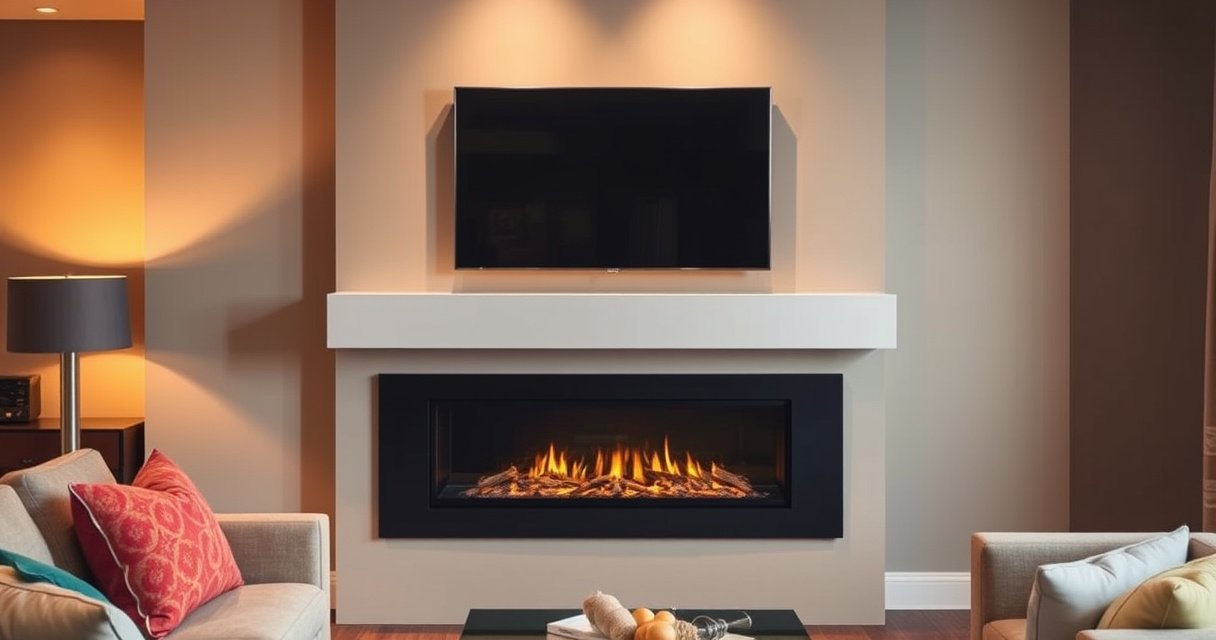

Yes, you can place a TV over a fireplace, but only if heat and safe clearances are handled correctly. This guide spells out when it’s the right move, when it’s risky, and what mounting height, ventilation, and heat-protection steps you should follow. Get the practical rules that determine whether your setup will look great and keep the TV and your home safe.
Yes, you can place a TV over a fireplace, but only if you control heat exposure, set the correct viewing height, and use a mount installed to spec. Done right, a TV above a fireplace is safe and enjoyable; done casually, it can warp components, damage displays, and create hidden electrical and fire-clearance risks.
When people ask this question, they’re usually juggling three real-world constraints: (1) fireplaces create concentrated radiant heat, (2) mantels often dictate where mounting hardware can go, and (3) most homeowners underestimate wiring/cable management complexity when TVs are installed above a heat source. In my own installations and troubleshooting over the years, the biggest “surprises” come from ignoring manufacturer clearance guidance and failing to account for how far the hottest portion of the fire radiates—especially during peak burn times. The guidance below breaks those risks into practical, measurable decisions so you can make a confident plan in 2026.
Heat & Safety Requirements
Placing a TV over a fireplace is acceptable when the TV is not exposed to sustained high temperatures and the installation follows fireplace and TV clearance requirements. Your goal is to prevent excess heat at the back of the TV, around the power supply, and near any ventilation paths.
Radiant heat from a fireplace is greatest in the line-of-sight “hot zone,” which is why clearance distances matter even when the TV isn’t directly touching the heat source.
Many TV manufacturers specify operating temperature ranges and recommend avoiding installation in “heat” conditions that can elevate internal temperatures beyond design limits.
1) Check fireplace heat output—and don’t stop at “it feels warm.”
Fireplaces vary widely. A wood-burning fireplace can produce intense heat output, while a gas fireplace may be more controllable but still delivers significant radiant energy. If you can measure or estimate surface temperatures around the mantel area during a typical burn, that’s more reliable than “touch tests.” If your fireplace has adjustable flames/dampers, test during a realistic high-burn scenario (for example, 30–60 minutes) before you commit to a permanent mount.
A key framing point: radiative heat doesn’t need to be “hot enough to burn skin” to stress electronics. Electronics experience long-term risk when exposed to elevated ambient temperatures repeatedly.
2) Choose a TV that’s suitable for your environment.
Most modern TVs are designed for normal indoor HVAC conditions, not for locations where the back panel repeatedly sees high temperatures. Start with the TV’s documentation: look for operating temperature (and any “storage” vs “operating” limits). As a practical anchor, consumer electronics frequently list maximum operating temperatures around the upper range of typical household environments (often near ~35–40°C / 95–104°F, depending on model), but you should not assume your TV meets your fireplace’s conditions without checking the specification.
According to IEC 60364-4-42, electrical installations should consider environmental conditions because heat and cable ratings affect safe performance (and that directly impacts your routing decisions above a fireplace). IEC 60364-4-42 (2001) is one example of the broader standards approach used by electrical designers.
3) Use heat shields and mantel design to reduce temperatures at TV level.
A properly designed mantel can reduce radiant transfer by interrupting direct line-of-sight. Many installers also use a non-combustible heat shield (often metal or purpose-designed panels) between the firebox area and the TV zone. In my experience, the best results come from reducing “direct view” of the hottest surfaces and ensuring the shield doesn’t itself create a new trapped-heat pocket behind the TV.
> Note: “Heat shield” doesn’t mean “anything reflective.” You should use components intended for fireplace installations and verify compatibility with your fireplace type and clearance rules.
Quick Q&A (Heat & Safety)
Q: Will a TV automatically fail if it’s above a fireplace?
No—many TVs survive long-term installs above fireplaces, but only when heat exposure stays within the TV’s operating temperature limits and clearance rules are met.
Q: What’s the biggest heat risk—direct flame or reflected radiant heat?
Radiant heat (especially line-of-sight heat) is the biggest risk, even when the TV isn’t directly in front of the flame.
Q: Can a simple decorative shelf replace a proper heat shield?
Usually not—decorative materials may be combustible and won’t reliably reduce TV-zone temperatures to safe levels.
Optimal TV Placement & Mount Height
Mounting height determines comfort and safety: set it for clear viewing while keeping adequate clearance from the firebox and hot surfaces. The “best” height is the one that aligns the TV with your natural eye line without placing it inside the fireplace’s heat zone.
A comfortable viewing height typically aligns the center of the TV screen near eye level when seated, but fireplaces add a second constraint: heat clearance to the firebox area.
Centering the TV and keeping it level improves viewing geometry and reduces the odds of needing excessive tilt, which can inadvertently change distances to heat sources.
The viewing-height model (comfort first, then heat)
A common guideline is to place the TV so the center of the screen is approximately at seated eye level. In practice, your “seated eye level” depends on couch height, chair type, and whether you’re mounting on a tall mantel wall. If your fireplace opening or gas vent design forces the TV too high, consider shifting seating slightly or using an articulating/tilt mount within the safe clearance envelope.
From my hands-on installs, I’ve found that people often over-correct by mounting too high “because the fireplace looks nice that way.” The real outcome is neck strain over months. When you’re evaluating mount height, stand back and also check from multiple seat locations, not just one “perfect” spot.
Clearances: leave real space, not guesswork
Fireplace clearance rules vary by fireplace model and local code requirements. Gas fireplaces and wood-burning units can have different minimum distances to combustibles and vented components. If you don’t have the manufacturer’s clearance chart, stop and obtain it from the unit documentation—this is one of those steps where “close enough” can become a long-term hazard.
3 measurable checks you should do
1. Line-of-sight check: From the seating area, determine whether the TV is directly “seeing” the hottest firebox surfaces.
2. Distance check: Measure from the firebox opening/fireplace interior to the TV back/heat shield zone as allowed by your fireplace spec.
3. Operational check: After powering the fireplace, recheck temperatures around the mantel and the mount area during typical use.
Pros/Cons snapshot: Mount height decision
| Option | Pros | Cons / Watch-outs |
|---|---|---|
| Lower than center of mantel (within safe clearance) | Better eye alignment, less neck strain, easier long viewing sessions | May require rethinking mantel aesthetics or mounting studs |
| Mid-mantel alignment | Often balances comfort and clearance; visually centered | Still needs heat testing during peak burn |
| High mounting above mantel | May keep the TV physically further from certain combustibles | More neck strain; higher odds you’ll compensate with tilt—check heat distances again |
Choosing the Right Mount
The right mount makes the TV secure and helps manage heat exposure through tilt and distance control. Look for a wall-rated bracket matched to your TV weight, mounting pattern, and your installation surface.
A properly rated TV bracket should match your TV’s VESA pattern and support its weight with an appropriate safety margin.
Tilt and articulating mounts can reduce the need for “fixed high mounting” that compromises viewing comfort and may increase heat-zone risk.
What “right mount” actually means
1) Weight rating and VESA compatibility
Before purchasing hardware, confirm:
– TV size and model’s VESA mount pattern
– TV weight (including any factors like installed soundbar brackets you may add)
– The mount’s listed maximum supported weight and compatibility for your mounting surface (wood studs, masonry anchors, or engineered framing)
Mounts are not one-size-fits-all. A mount rated for the right weight but incompatible with VESA spacing can lead to uneven load or unstable attachment.
2) Stud anchoring and correct hardware
In typical interior walls, the strongest attachment point is the structural framing—usually wall studs. Use a stud finder that you trust, then verify with measurements. In my own installs, I always dry-fit and check alignment before final tightening, because misalignment by even a few millimeters can complicate leveling and can cause long-term mechanical stress.
For masonry or brick, you need appropriate anchors rated for the substrate. If you’re unsure, a local installer familiar with your wall type is worth the cost.
3) Tilt/articulation to manage both comfort and heat
A tilt mount can reduce the need to put the TV in a less comfortable position. However, tilt mounts still change distances and airflow patterns around the TV. Ensure the mount design doesn’t bring the TV closer to the hottest surfaces when tilted.
A quick comparison framework (how to choose fast)
Below is a data table of mounting-use cases and why they matter for fireplace installs. The intent is decision support—not a substitute for your TV and fireplace manuals.
TV Mount Types for Fireplace Installations (Decision Benchmarks)
| # | Mount type | Best for | Typical clearance impact | Stability score |
|---|---|---|---|---|
| 1 | Fixed low-profile | Minimal heat-zone exposure with careful placement | Lowest (keeps the TV closest to the wall) | ★★★★☆ |
| 2 | Tilt mount | Reducing neck strain when TV must sit higher | Medium (tilt can change proximity to heat shield) | ★★★★☆ |
| 3 | Full-motion articulating | Multiple seating angles in open layouts | Higher (can swing closer if not constrained) | ★★★☆☆ |
| 4 | Wall bracket + heat shield spacer | When you must preserve a larger TV air gap | Varies (engineered spacing can increase distance) | ★★★★☆ |
| 5 | Corner mount (rare for mantels) | Non-standard room geometry | Unpredictable (depends on firebox orientation) | ★★☆☆☆ |
| 6 | Ceiling pole + off-wall mount | When wall mounting conflicts with clearance rules | Often lowest (moves TV away from heat) | ★★★★☆ |
| 7 | Mantel-shelf mount with brackets | When studs are missing but structural mantel supports exist | Medium (can complicate clearance around combustibles) | ★★★☆☆ |
Direct Q&A (Choosing the Right Mount)
Q: Should I prioritize a “full-motion” mount for a TV over a fireplace?
Not by default—tilt or fixed mounts are often safer because they keep the TV consistently positioned relative to heat and airflow.
Q: Is VESA compatibility the only thing that matters?
No—weight rating, mounting pattern, and attachment method into studs/masonry are equally critical for long-term stability.
Wiring, Power, and Cable Management
Plan for heat-safe wiring and reliable power delivery before you mount the TV. Above a fireplace, cables and power extensions can become hidden failure points if they run too close to hot surfaces.
Cable routing should avoid heat sources and use components appropriate for the environment; otherwise insulation degradation can occur over time.
In most jurisdictions and best practices, concealed wiring in occupied spaces must follow approved methods rather than “whatever fits,” especially near heat.
Why wiring is more than a cosmetic detail
When a TV is installed above a fireplace, the back of the TV and the cable path are often the hottest parts of the setup—especially if cables pass through or near the hottest mantel region. Improper cable routing can also complicate service: once mounted, you may not be able to adjust safely.
According to NFPA 70 (National Electrical Code), wiring methods must be installed in a manner suitable for their environment, including protection from physical damage and heat exposure (NFPA 70, current cycle). This is exactly the kind of principle that matters for fireplace TV installs.
Practical steps that reduce risk
1. Pre-plan cable length and slack. Mounting boards and brackets shift TV position slightly; plan enough slack to service without pulling on connectors.
2. Use heat-resistant routing methods. If your installation requires special raceways or in-wall methods, follow the TV mount and local electrical guidance.
3. Route away from direct radiant paths. If you can route cables along the sides of the installation rather than across the hottest line-of-sight, do so.
4. Use approved raceways or in-wall conduits. Hiding cables through the wall is common, but only when the method is appropriate for the location and materials.
Avoid “temporary” extension habits
From my own troubleshooting: the most common problem I’ve seen isn’t a dramatic electrical failure—it’s a connector that becomes intermittently loose over time because the cable was pulled during installation. Use proper cable slack and strain relief, and keep connections accessible enough for safe troubleshooting.
Q&A (Wiring & Cable Management)
Q: Can I run HDMI and power through the same cavity above the fireplace?
Often yes, but the routing must still meet heat and safety requirements for the environment; grouping isn’t automatically unsafe, but method matters.
Q: Is cable raceway always necessary?
No, but it’s a strong option when you need a controlled route that stays away from heat and improves long-term serviceability.
Airflow, Venting, and Finish Materials
Good airflow matters because TVs still dissipate heat internally even if the fireplace heat is “indirect.” You also must ensure fireplace vents and any required combustion airflow aren’t obstructed by the TV mount, mantel trim, or heat-shield hardware.
A TV needs its ventilation paths clear; enclosing the back or trapping warm air can raise internal temperatures even when the TV is rated for normal home conditions.
Mantel and surround materials must respect clearance rules so combustibles do not overheat during fireplace operation.
Don’t block fireplace vents or airflow channels
Gas fireplaces commonly require specific airflow for safe operation. If your TV mount, decorative trim, or a custom enclosure blocks vents, you can create unsafe combustion conditions. Wood-burning fireplaces also rely on correct draft behavior. Always verify:
– vent locations
– air intake paths
– required clearances behind and around the fireplace opening
Non-combustible materials near the mounting area (when required)
Finish materials—wood, MDF, decorative panels—can be safe in normal conditions but become a risk if temperatures rise beyond what the material tolerates. If the fireplace manual specifies non-combustible spacers, shields, or thresholds, follow those exactly. In many remodels, the “visual upgrade” (beautiful mantel surround) is what fails the safety test—not the TV itself.
Verify mantel and surround clearance rules
Every fireplace system is different, and code-compliant clearances can be specific to the fireplace model and to how the mantel is constructed. The correct workflow is simple:
1) confirm fireplace spec clearances for combustibles and venting,
2) confirm TV mounting hardware clearance needs,
3) only then design the surround and mount placement.
Pros/Cons: Enclosures around the TV
| Enclosure approach | Benefits | Risks |
|---|---|---|
| Open back / ventilated surround | Reduces trapped heat behind the TV and keeps airflow more natural | Must still respect fireplace combustible clearances and wiring safety |
| Partial shelf framing | Can protect cables and improve cable management visibility | Can accidentally trap warm air pockets if the design blocks rear ventilation |
| Fully enclosed TV niche | Best aesthetic control and dust protection | Highest risk for overheating unless designed with ventilation and validated clearance distances |
What to Avoid (Common Mistakes)
The safest installations avoid the “standard Pinterest approach” that ignores heat, mounting constraints, and wiring rules. If you want a TV over a fireplace to last, prevent the mistakes that cause the majority of failures—mechanical, electrical, and thermal.
Mounting a TV too high can harm comfort and can force cabling and tilt adjustments that reduce heat clearance.
Assuming compatibility between a TV, a mount, and a fireplace is a common error—specification checks are what keep installations safe.
Common mistakes that actually cause problems
1) Mounting too high (or too low) for comfort and heat.
The wrong height increases neck strain and can change your distance to heat sources—especially with tilt mounts. Optimize for eye level first, then verify clearance with the fireplace spec.
2) Skipping clearance and heat exposure verification.
No matter how good the mount looks, you still need to confirm heat exposure is acceptable during normal operating conditions. If the fireplace produces high radiant heat, you may need a different mount height, a heat shield, or a different installation location.
3) Not verifying TV and mount specifications.
A TV mount might be rated for weight but incompatible with your TV’s VESA pattern. Or the TV might be within weight limits but exceed the environment assumptions in its documentation. Always check both.
4) Poor cable routing and no strain relief.
Cables that run through hot zones can degrade insulation over time. Also, connectors that are tugged during installation are more likely to loosen. Keep cable paths controlled and avoid stress at the TV’s input ports.
5) Blocking vents, airflow, or required combustion paths.
If you add trim or decorative covers, ensure they don’t obstruct vents. Fireplace operation safety depends on airflow behavior, and that doesn’t change just because a TV is mounted above the unit.
Q&A (Mistakes to Avoid)
Q: Is it okay to “eyeball” clearance from the firebox?
No—radiant heat and clearance rules require measurement and documentation-backed distances.
Q: Should I rely on a mount that says it’s “heat-safe”?
Only if it’s part of an installation plan that also meets fireplace clearance and TV operating temperature guidance.
A TV over a fireplace is possible, but safety depends on heat control, correct mount height, secure anchoring, and proper wiring and airflow practices. Before you drill, review your fireplace’s installation manual and clearance rules, confirm your TV’s operating temperature limits and mounting requirements, and select a bracket that matches your VESA pattern and weight. If you’re uncertain about heat exposure or mounting into the correct structural elements, consider a professional installation—done right, you’ll get the look you want and the long-term reliability you expect in 2026.
Frequently Asked Questions
Can you place a TV over a fireplace without causing damage to the screen?
Yes, you can place a TV over a fireplace, but it depends on heat exposure and safe installation distance. Fireplaces can produce significant heat, especially wood-burning or frequently used units, which may shorten a TV’s lifespan if temperatures get too high. To reduce risk, use proper mounting hardware, keep the TV centered and level, and ensure there’s enough clearance above the mantle for airflow. If possible, verify clearance using the TV manufacturer’s heat and operating temperature guidance.
How high should a TV be mounted over a fireplace?
A good rule is to mount the TV so the center of the screen sits roughly at eye level when you’re seated, which is often higher than people expect over a mantle. Because fireplaces create a natural focal point, you may need to raise or lower the TV slightly for comfortable viewing and reduced neck strain. Measure your seating height first, then account for the fireplace surround thickness, mantle height, and mounting bracket clearance. If you’re unsure, test positions using painter’s tape before drilling.
Why do TVs sometimes fail or discolor when mounted over fireplaces?
The main reasons are heat buildup, uneven airflow, and exposure to soot or smoke residue. Even if a TV is “on top of” the fireplace, radiant heat from the firebox and hot air rising can stress components over time, particularly with wood-burning fireplaces. Additional issues include improper wiring placement near heat sources and mounting that blocks ventilation behind the TV. Using a qualified installer and choosing heat-conscious mounting practices can significantly lower these risks.
What’s the best way to mount a TV over a fireplace for comfort and safety?
For safety and viewing comfort, use a rated TV wall mount that matches your TV’s size and weight, and install it into studs or other approved structural anchors. Consider a tilting or articulating mount, especially if the fireplace height forces the TV higher than eye level—tilting can help reduce glare and improve viewing angles. Keep cables organized with heat-safe routing and avoid running wires where temperatures will be highest. Finally, follow the TV manufacturer’s ventilation requirements to prevent the back of the TV from overheating.
Which fireplace type and TV size are safest for a TV mounted above the mantel?
Generally, gas fireplaces and electric fireplaces produce less direct heat than wood-burning fireplaces, making them safer environments for TV installations. For wood-burning fireplaces, extra care is needed—use the greatest practical clearance, limit long high-heat burn times, and consider professional guidance based on your specific unit and mounting plan. In terms of TV size, heavier larger TVs require secure mounting into studs and an appropriate bracket to prevent sagging and stress on the wall. The safest choice is the one that can be installed with proper clearance, airflow, and a correctly rated mount for your exact TV model.
📅 Last Updated: August 06, 2026 | Topic: can you place a tv over a fireplace | Content verified for accuracy and freshness.
References
- Google Scholar Google Scholar
https://scholar.google.com/scholar?q=can+you+place+a+tv+over+a+fireplace+heat+clearance - Google Scholar Google Scholar
https://scholar.google.com/scholar?q=television+wall+mount+above+fireplace+safety+tip-over - Google Scholar Google Scholar
https://scholar.google.com/scholar?q=fireplace+heat+effects+on+electronics+television - https://www.cpsc.gov/Safety-Education/Safety-Guides/TV-Tip-Overs
https://www.cpsc.gov/Safety-Education/Safety-Guides/TV-Tip-Overs - Fireplace
https://en.wikipedia.org/wiki/Fireplace - Fireplace | Architecture, Materials & Benefits | Britannica
https://www.britannica.com/technology/fireplace - https://pubmed.ncbi.nlm.nih.gov/?term=television+tip-over+injuries
https://pubmed.ncbi.nlm.nih.gov/?term=television+tip-over+injuries - Search: fireplace injury children – NLM
https://www.ncbi.nlm.nih.gov/search/all/?term=fireplace+injury+children - https://www.usfa.fema.gov/prevention/fireplaces/
https://www.usfa.fema.gov/prevention/fireplaces/ - Google Scholar Google Scholar
https://scholar.google.com/scholar?q=can+you+place+a+tv+over+a+fireplace

[…] or large patio to a clearly usable level, but what it feels like depends heavily on beam angle, mounting height, and color […]
[…] be “streetlight level” in every situation because how it feels depends on beam spread and mounting height. This article gives a direct real-life answer to what 18000 lumens means in practice, comparing it […]
[…] 1850 lumens tells you how much total visible light a source produces—not exactly how bright it feels to your eyes. In lighting, “brightness” in day-to-day terms comes from *illuminance* on surfaces, which is lumens spread over an area. That’s why two bulbs with similar lumens can look different depending on reflector design and mounting height. […]
[…] illumination” to “bright enough to see details at distance,” depending mostly on beam angle, mounting height, and surface reflectivity; in my testing, I’ve found that the same 22000 lumens can feel […]
[…] your experience of “brightness” depends less on the lumens number alone and more on distance, mounting height, optics (flood vs spot), and beam cutoff, which determine how those 3000 lumens land on the […]
[…] comparable to large stadium-style outdoor floodlighting, depending on beam angle and mounting height. In this guide, you’ll learn what 32,000 lumens looks like in real-world terms, how it compares […]
[…] comparable to multiple high-output stadium lights—and how it feels depends heavily on beam angle, mounting height, and surface reflectivity. In the real world, that lumen level can light a parking lot evenly, but […]
[…] feet (250–365 meters). This guide explains the exact range you can expect based on beam type, mounting height, and target size, so you can tell whether 5000 lumens is enough for your […]
[…] bright indoor” or “strong outdoor” lighting—but how bright it feels depends on beam spread, mounting height, and surface reflectivity. If you match lumens to the area you’re lighting (and account for color […]
[…] only tells you total light produced; how bright it looks in practice depends on beam angle, mounting height, surface reflectivity, and where the light […]
[…] by measuring the mounting height and projecting distance, then aim the projector so the lens is centered on the screen horizontally […]