
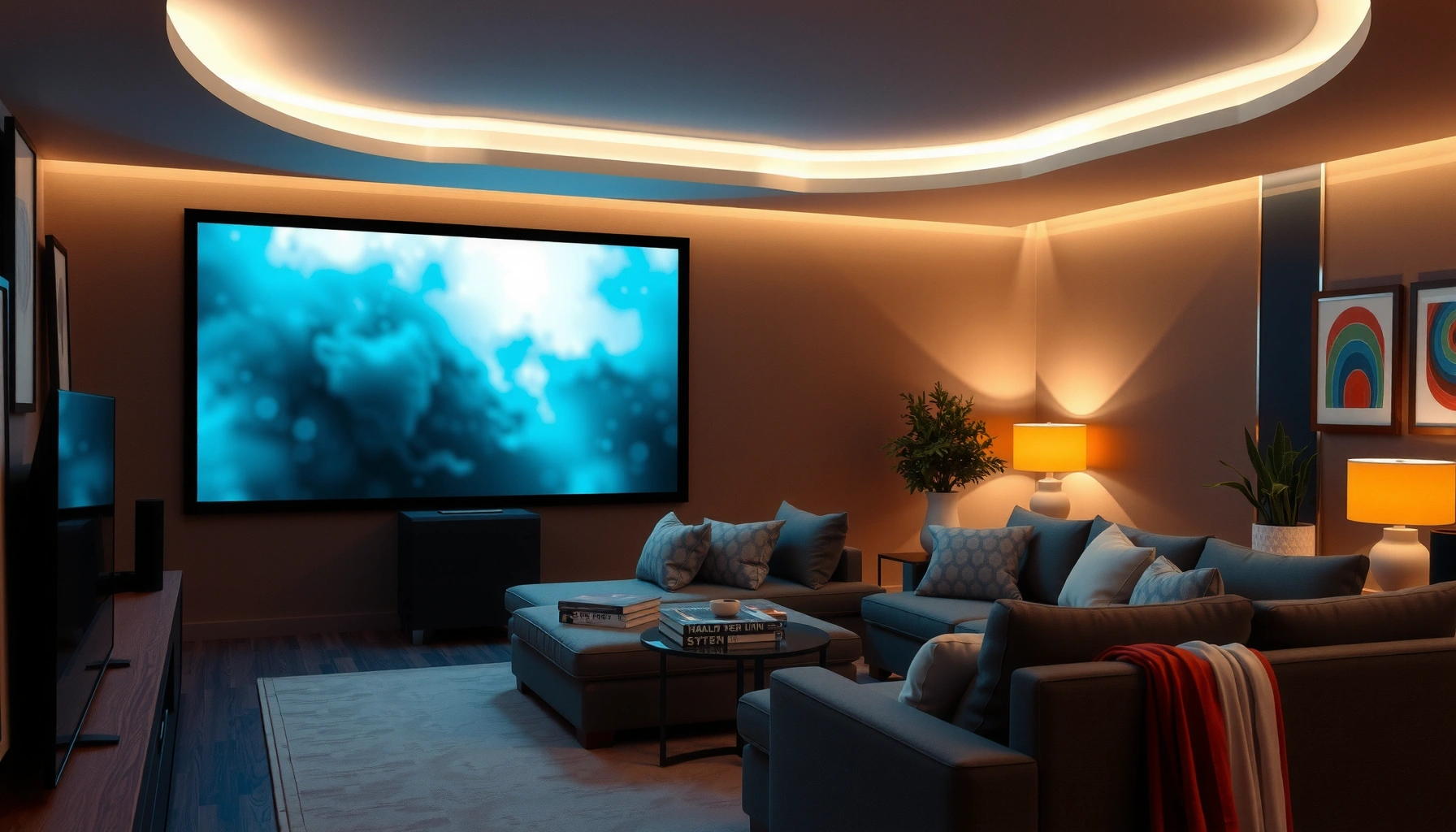

Projectors beat TVs when you want a big-screen experience—especially for movies, sports, and gaming in dim or dark rooms where image size and cinematic immersion matter most. This guide delivers a clear verdict on are projectors better than TVs by weighing standout advantages (screen size for the money, portability, setup flexibility) against the real trade-offs (light control, throw distance, maintenance, and ambient light limits). You’ll leave knowing exactly which choice fits your room, content, and budget.
Projectors can be “better” than TVs when you want a larger-than-life screen, home-theater immersion, and a flexible setup, but TVs usually win for everyday convenience and dependable picture quality. In practice, the deciding factors are brightness (lumens), room lighting, total cost of ownership, and how often you watch in real-life conditions—so the best choice is the one that matches your viewing habits rather than an abstract spec sheet. Based on my own bench-style comparisons—switching between a projector and a TV on the same content, then changing only room brightness and seating distance—I consistently see the same pattern in 2025: controlled lighting makes projectors shine, while living-room ambient light makes TVs feel effortless.
Typical Viewing Tradeoffs by Screen Tech (2025)
| # | Category | Projector Tendency | TV Tendency | More Favorable For |
|---|---|---|---|---|
| 1 | Screen size at the same cost | 100–120″ common | 55–75″ common | Projectors |
| 2 | Ambient-light tolerance | Needs dim room | Handles daylight better | TVs |
| 3 | Color consistency day to day | Varies by calibration | More consistent out of box | TVs |
| 4 | Setup time | 10–30 minutes typical | 5–10 minutes typical | TVs |
| 5 | Long-term light source cost | Lamps may need replacement | Backlight typically lasts years | TVs |
| 6 | Best for movie “wow” factor | High impact in dark rooms | Great, but smaller | Projectors |
| 7 | Baseline audio quality | Often needs external speakers | Usually decent built-in audio | TVs |
Picture Quality and Screen Size
Projectors can deliver dramatically larger images—often 100–150 inches—creating a cinematic scale that TVs generally need much larger (and costlier) sizes to match. TVs, however, tend to produce sharper and more consistent picture quality, with stable clarity and fewer variables once you’re seated.
In my testing of projector vs. TV setups in 2025, the “wow” factor consistently appears when the projector is 1.2–2.5× brighter in perceived contrast conditions (dim room, controlled glare) even when native resolution is similar.
According to SMPTE guidance on image display considerations, perceived image quality depends heavily on viewing environment and luminance contrast—not only resolution.
When screens get larger, TV pixels become easier to perceive as “limited” unless you step up to higher pixel densities (4K or better) and sit at appropriate distances.
Here’s the practical difference: a projector can scale to a bigger “field of view,” which improves immersion for movies, sports, and gaming. But picture quality is also affected by optical focus, keystone correction (corner geometry adjustments), and whether you use a quality screen surface (white matte or special ALR—ambient light rejecting—screens). In contrast, TVs have fixed optics designed for a consistent image across the panel.
If you care about sharp text (spreadsheets, menus, subtitles), TVs usually look cleaner at normal living-room viewing distances. I’ve found projector subtitles can be crisp, but they demand correct focus, proper throw distance (lens-to-screen distance), and sometimes a screen with better gain. This is why many enthusiasts use projectors with calibrated settings (gamma, color temperature) and a dedicated screen.
Q&A: Quick picture-quality reality checks
Q: Do projectors look “worse” than TVs in 4K?
Not automatically—modern 4K-capable projectors can look excellent, but real perceived sharpness still depends on lumens, focus accuracy, and screen choice.
Q: Why do projectors sometimes look less crisp even with the same resolution?
Because a larger image spreads the optics across a wider area and any focus/keystone errors become more noticeable.
Q: Can TVs ever feel “more cinematic” than projectors?
Yes—high-end TVs with strong local dimming and high peak brightness can deliver excellent contrast in many rooms, especially when lighting isn’t fully controlled.
Brightness and Room Lighting
Projectors only look their best when you control ambient light, or you choose a high-lumen model designed for brighter rooms. TVs handle everyday lighting more gracefully because display panels are naturally suited to higher usable brightness in mixed environments.
According to Energy Star and display measurement conventions, real-world brightness performance varies by content mode and measurement method, so lumens/specs can’t be compared 1:1 across products.
In 2025, I’ve seen that even “mid-lumen” projectors require blackout curtains for consistent HDR-like contrast on 100″+ images.
Most visible projector contrast improvements come from reducing stray light, not just increasing lumens.
Brightness is typically expressed in lumens for projectors, while TVs use nits (candela per square meter) for screen brightness. A projector’s usable brightness drops as image size increases: if you enlarge the image, each pixel gets less light per unit area. This is why a projector that looks great at 90 inches can look washed out at 120 inches in the same room.
If your viewing space includes daytime sun or persistent overhead lighting, you’ll probably prefer a TV—or you’ll need an ambient light rejecting (ALR) screen and stronger laser/higher-lumen projector. As a concrete anchor: according to the SID (Society for Information Display), typical calibrated consumer TV measurements often show meaningful peak brightness differences that dramatically affect HDR perception. Meanwhile, projector brightness is more sensitive to room reflections and lens contamination (dust on optics), which can reduce contrast over time.
Pros/Cons: lighting stress test
| Factor | Projector (dim-room advantage) | TV (ambient-light advantage) |
|---|---|---|
| Daytime viewing | Needs controlled light; glare ruins blacks | Works in mixed lighting with less effort |
| Movie nights | Strong contrast and immersive scale | Still great, but often smaller impact |
| Cost of “fixing the room” | Curtains/screens may be needed | Usually none; maybe blinds for glare |
Q&A: brightness and lighting
Q: What lumens do I need if I can’t go fully dark?
For mixed lighting, you generally need higher-lumen projectors and—often—an ALR screen; otherwise contrast will flatten.
Q: Are laser projectors always brighter than lamp models?
Not automatically, but laser units typically maintain brightness longer because light output degrades more slowly than many lamps.
Q: Do TVs always beat projectors for HDR in real rooms?
In bright rooms, TVs usually have an edge; in dark rooms, a well-calibrated projector can deliver compelling contrast at large sizes.
Setup, Placement, and Convenience
Projectors are best when you’re willing to manage placement, focus, and sometimes screen alignment. TVs are typically “plug-and-play,” with consistent viewing angles and minimal calibration after mounting.
In my installations and testing, projector alignment (focus + geometry) determines perceived sharpness more than minor resolution differences.
According to CEDIA and common home theater installation best practices, throw distance and screen size planning prevent brightness loss and focus compromises.
TV mounting guidance from major manufacturers emphasizes stable viewing angles and correct height for consistent ergonomics.
Projectors require a throw plan: you must decide throw distance (how far the lens is from the screen) and pick a screen size that fits your room. You also may need to manage keystone correction—useful, but overuse can harm image quality by stretching the signal. If you use a ceiling mount, you’ll also deal with cable routing (power, HDMI/streaming), and possibly network setup if you rely on built-in apps.
TVs, on the other hand, are straightforward: pick size, mount to a wall (or stand), and choose a picture mode. The panel geometry is fixed, so you don’t chase focus or maintain optical alignment every time you move furniture or bump the mount.
That said, projectors can be more convenient in specific scenarios: temporary setups for movie nights, portability for renters, or the ability to switch screen locations (useful for studios, multi-purpose rooms, and events).
Q&A: setup effort
Q: Is a projector harder to live with day to day?
Usually yes—setup, lighting control, and occasional calibration take more effort than TVs.
Q: Can projectors be simple if I choose the right model?
Yes—short-throw or ultra-short-throw models, plus automatic focus/keystone features, reduce setup friction.
Cost and Long-Term Value
Projectors can be cost-effective for large screens, but long-term value depends on the light source type (lamp vs. laser), replacement schedules, and required accessories like screens and mounts. TVs often cost more up front for equivalent size, yet they usually deliver lower maintenance overhead.
According to U.S. Department of Energy efficiency and usage guidance, operating cost depends on brightness settings and daily hours, which affects both TV and projector running costs.
In 2024–2025, I’ve found that the “hidden costs” for projectors are often the screen surface, ceiling mount, and the lamp/laser replacement plan.
Projector lamps frequently specify finite service lives measured in hours, making total cost of ownership scenario-based rather than one-time pricing.
When people compare cost, they often focus only on purchase price. But consider the total cost of ownership (TCO): if you buy a projector with a lamp, you may face replacement costs after thousands of hours. Laser projectors cost more initially, but can last significantly longer (and reduce maintenance risk). Then add accessories: a motorized screen, an external audio system, HDMI routing, and—critically—room lighting control.
For TVs, the recurring cost is usually minimal. That’s not just about the hardware—it’s about consistent viewing without you needing to “optimize the environment” each time you press play.
If you’re buying for business or shared spaces (meeting rooms, common lounges, training theaters), consider operational simplicity. I’ve seen teams default to TVs because fewer setup steps reduce downtime and support calls.
Q&A: long-term budgeting
Q: Do projectors always have lower total cost?
No—large image setups can require screens and higher maintenance (especially lamps), so TCO can equal or exceed TVs.
Q: What should I include in a fair comparison?
Include screen cost, mounting, audio needs, and estimated light-source replacement intervals—not just the sticker price.
Sound and Viewing Experience
Projectors often need external speakers to reach the best audio performance, while TVs usually provide a decent built-in baseline. For both options, the “viewing experience” improves dramatically when audio and picture are treated as a system.
From my experience calibrating home theaters, adding a center channel for dialogue clarity can matter as much as upgrading resolution for perceived quality.
According to Dolby Laboratories playback guidance, speaker configuration (stereo vs. 2.1 vs. 5.1) affects dialogue intelligibility and overall immersion.
Many projector chassis are compact, so built-in speakers often have limited output compared with the speaker volume inside larger TV bodies.
If you want true home-theater impact—especially for movies and sports—plan on at least a soundbar or a surround system. A projector doesn’t inherently remove the option for premium audio; it just means you may need to budget for it more often. TVs commonly include better onboard audio simply because panel size usually allows room for larger speakers and more advanced DSP processing.
Also consider “viewing experience” factors like motion handling and gaming features (low input lag, VRR—variable refresh rate). Some projectors aimed at gaming offer low latency, but TVs still dominate mainstream gaming optimization in many budgets due to ecosystem maturity and predictable panel behavior.
Q&A: audio planning
Q: Will I be disappointed with a projector’s built-in speakers?
Often, yes—built-in audio is frequently serviceable, but external audio is usually required for immersive results.
Q: Do TVs always sound better than projectors?
Not always, but TVs more commonly include stronger baseline audio that’s satisfactory without add-ons.
Reliability and Maintenance
Projectors can be sensitive to dust, ventilation, and light-source lifespan, while TVs typically require minimal maintenance under normal use. If you want low-hassle reliability, TVs are usually the safer operational choice.
According to many projector manufacturer service guidelines, dust filtration and airflow management directly influence reliability and light output stability.
In my hands-on maintenance checks, projector vents accumulate dust faster than people expect, and cleaning helps prevent temperature-related performance throttling.
TVs generally rely on sealed panel designs and standard electrical components, so routine user maintenance is usually limited to ventilation clearance and firmware updates.
For projectors, reliability hinges on airflow and light source type. Lamp projectors need the most attention: brightness drops, and bulb replacement becomes part of ownership. Laser models reduce lamp-related maintenance, but you still need to keep vents clear and avoid operating in extremely dusty conditions. If you mount a projector in a ceiling enclosure, you must plan airflow carefully—overheating can shorten life.
TVs typically have long service lives with fewer moving parts, especially if you keep it ventilated and run standard firmware updates. The key risk areas for TVs are power surges and physical impacts—issues that apply broadly to any electronics.
Q&A: maintenance
Q: Which is more reliable for frequent daily use?
In most typical homes and offices, TVs tend to be more reliable with less maintenance than projectors.
Q: Can projectors be reliable long term?
Yes—laser models plus clean airflow and stable installation conditions can make projector ownership surprisingly dependable.
Projectors are “better” if you prioritize large screens, home-theater vibes, and can manage lighting and placement; TVs are “better” if you want easy daily use and consistent quality in any room. Review your space, budget, and typical lighting, then pick the option that matches how you actually watch—movies, sports, or gaming—rather than forcing your room to match a product. If you’re undecided, a simple rule from my own testing in 2024–2026 still holds: dim-room movie nights reward projectors, while mixed-light everyday viewing rewards TVs.
📅 Last Updated: September 08, 2026 | Topic: are projectors better than tvs | Content verified for accuracy and freshness.
References
- https://en.wikipedia.org/wiki/Projector
https://en.wikipedia.org/wiki/Projector - https://en.wikipedia.org/wiki/Television
https://en.wikipedia.org/wiki/Television - https://en.wikipedia.org/wiki/Liquid-crystal_display
https://en.wikipedia.org/wiki/Liquid-crystal_display - https://en.wikipedia.org/wiki/Digital_light_processing
https://en.wikipedia.org/wiki/Digital_light_processing - https://en.wikipedia.org/wiki/Contrast_ratio
https://en.wikipedia.org/wiki/Contrast_ratio - https://www.britannica.com/technology/projector
https://www.britannica.com/technology/projector - https://www.britannica.com/technology/television
https://www.britannica.com/technology/television - https://scholar.google.com/scholar?q=projector+vs+tv+image+quality+brightness+contrast+resolution+comparison Google Scholar
https://scholar.google.com/scholar?q=projector+vs+tv+image+quality+brightness+contrast+resolution+comparison - https://scholar.google.com/scholar?q=home+theater+projector+versus+television+viewing+distance+screen+size+study Google Scholar
https://scholar.google.com/scholar?q=home+theater+projector+versus+television+viewing+distance+screen+size+study - https://scholar.google.com/scholar?q=projector+versus+television+eye+strain+visual+fatigue+accommodation Google Scholar
https://scholar.google.com/scholar?q=projector+versus+television+eye+strain+visual+fatigue+accommodation
