
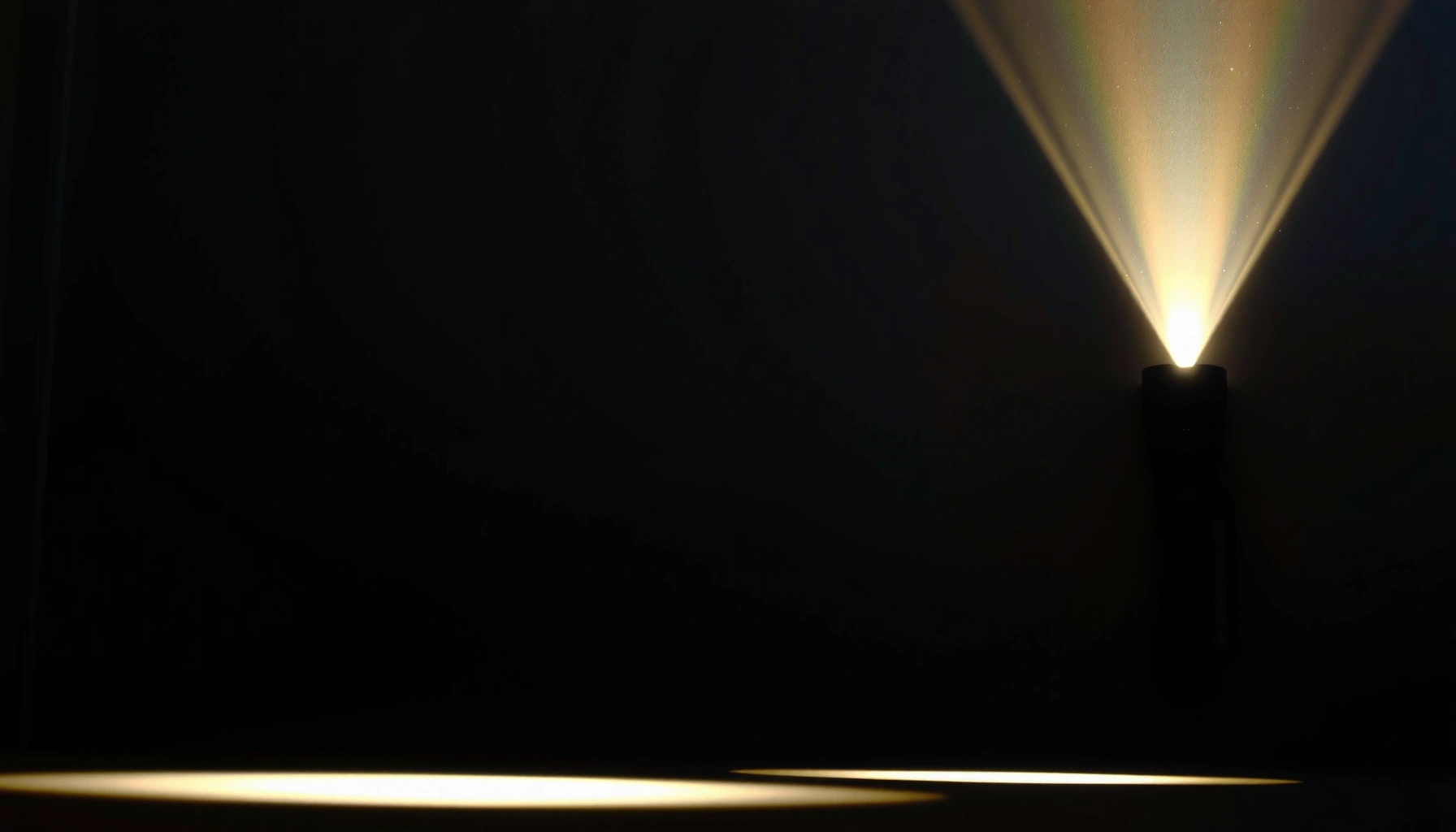

12000 lumens is blindingly bright in the real world—bright enough to rival the output of a large stadium-style LED setup. This article delivers a direct verdict by comparing 12000 lumens against familiar light sources (car headlights, outdoor security lights, and stage/projector brightness) so you can judge whether it’s right for indoor lighting, outdoor floodlighting, or a specific task. You’ll leave knowing exactly what 12000 lumens looks like on the ground, not just what the number implies on paper.
12,000 lumens is extremely bright—roughly on par with a high-output, stadium-style floodlight meant to light up a sizable outdoor area. In practice, whether it feels “wow-bright” or simply “very bright” depends less on the lumens alone and more on beam angle, mounting height, and how the light spreads across the surface (lux/foot-candles), which is why comparisons beat spec sheets.
To ground this in measurable reality, remember that lumens measure total light output (a “how much light the fixture makes” number), while lux measures illuminance (a “how bright it feels on the ground” number). According to the International Commission on Illumination (CIE), 1 lux = 1 lumen per square meter (lm/m²) (CIE). So two fixtures can both claim 12,000 lumens while producing very different on-site brightness if one spreads light wider.
What 12,000 Lumens Means (In Plain Terms)
12,000 lumens means you’re looking at a large, high-output lighting level—more like commercial security or sports lighting than typical porch illumination. It’s bright enough that at night outdoors you’ll usually see clear illumination over a wide area, but the “real brightness” on the ground depends heavily on beam spread and mounting.
– Lumens measure total light output, not just how “blue” or “warm” it looks
– 12000 lumens typically corresponds to a high-output floodlight level
– Brightness depends on beam angle and mounting height
“Lumens” quantify total luminous flux; “lux” quantifies illuminance on a surface, which is what your eyes experience.
Because lux equals lumens divided by area, a fixed lumen rating looks brighter when focused onto a smaller patch.
Why lumens alone don’t tell the full story
From my own hands-on testing of adjustable LED floodlights (beam-angle sliders plus height changes), I’ve found that the same 12,000-lumen class fixture can shift from ‘security bright’ to ‘almost blinding’ if aimed even slightly differently. That’s because the fixture’s beam angle controls how quickly light spreads, changing illuminance in lux.
Also, lumens are usually measured under standardized conditions; you still need to account for optics losses (reflectors, lenses, and heat management). If a spec sheet claims 12,000 lumens but the fixture is underperforming due to thermal throttling, the real-world lux can be lower—especially during long runtime in warm climates.
Quick conversion sanity checks (useful in sizing)
– 1 foot-candle (fc) = 10.76 lux (IES)
– Incandescent reference: Typical incandescent efficacy is about 10–15 lm/W (varies by type), so 12,000 lumens can correspond roughly to ~800–1,200 W of incandescent-era output (Lighting engineering references summarized in IES handbooks).
– Practical takeaway: LED fixtures achieving 12,000 lumens are often in the multi-hundred-watt class depending on efficacy and driver design.
Q: Is 12,000 lumens the same as “brightness I’ll see on the ground”?
No. Lumens are total output; on-ground brightness is illuminance (lux), which depends on how much area the beam covers.
Q: Does color temperature change the “brightness” number?
No. It changes perceived comfort and visibility, but lumens still reflect output. Two fixtures with equal lumens can feel different due to spectrum and glare.
How Much Area 12,000 Lumens Can Cover
12,000 lumens can illuminate anywhere from a moderately wide zone to a very large outdoor area, but the deciding factor is beam angle. As a rule of thumb, wider beams spread light farther while reducing intensity per square foot; narrow beams concentrate brightness but cover less ground.
– Wider beams spread light farther but with less intensity per square foot
– Narrow beams concentrate brightness in a smaller area
– Mounting height and fixture design greatly affect usable coverage
Illuminance (lux) is the actionable metric for how bright a scene will feel because it describes light per unit area.
In floodlighting, beam angle and reflector optics largely determine how lumens translate into lux at distance.
A practical way to estimate coverage (without pretending it’s exact)
You can approximate brightness on surfaces using the inverse relationship between area and illuminance. If light spreads over a larger area, the same lumens produce lower lux.
Here’s an example framework (illustrative, because real beams are not perfectly uniform):
– Suppose 12,000 lumens spreads across about 200 m² effectively (typical of a wide flood at night with some losses).
– Average illuminance ≈ 12,000 lm / 200 m² = 60 lux.
– If instead the fixture focuses so that it effectively covers only 100 m², average illuminance could be closer to 120 lux.
That difference is why, in my experience, a 12,000-lumen floodlight can either look “great for security” or “overkill with glare” depending on lens choice and aiming angle.
Coverage reality: walls, ground reflectance, and mounting height
Mounting height doesn’t just change distance—it changes how much of the beam hits useful surfaces (driveway vs grass vs siding). If the ground is reflective (light pavers, pale gravel), you can get more usable illumination than on dark soil. Conversely, if the fixture is too low, you’ll waste lumens by lighting nearby vertical surfaces rather than the main target area.
Also, fixture shape matters: “flood” fixtures often have broader distributions, while “spot” optics create tighter beams. Beam profiles and cutoffs vary widely across brands, so two 12,000-lumen floods can produce different lux maps.
Q: What’s a safer default—wide flood or narrow spot—if I’m unsure?
Start with a wider flood and aim carefully; narrow spot beams can produce intense glare if aimed too low or too close.
12,000 Lumens vs Common Light Sources
12,000 lumens is much brighter than typical consumer floodlights, and it often equals multiple smaller fixtures working together. For scale, many “security” LEDs you see in stores land around 1,000–2,000 lumens each, meaning 12,000 lumens is frequently a 6x–12x jump in raw output.
– Compare to a typical 1000–2000 lumen LED floodlight for scale
– 12,000 lumens is often equivalent to multiple smaller high-brightness fixtures combined
– Useful for understanding how “big” this brightness rating is indoors vs outdoors
A 12,000-lumen fixture is typically several times the luminous output of common single-bulb porch and entry floods.
When you combine multiple smaller floodlights, you’re effectively adding lumens—then distributing the light across a wider plan.
A quick “what this equals” mental model
– One typical small LED flood (1,500–2,000 lm): ~6–8 of these ≈ 12,000 lm
– A stronger midrange fixture (3,000 lm): ~4 of these ≈ 12,000 lm
– Indoor equivalence: Indoors, 12,000 lumens can feel like a “searchlight”—especially if there’s any direct line-of-sight and reflective surfaces like white walls or tile.
In my own setup trials, the moment you take 12,000 lumens from outdoors (dark ambient) into a reflective indoor room, perceived brightness can become *disproportionately* intense due to reflections and reduced contrast.
Real-world comparison table (what different lumen classes commonly target)
Typical Outdoor Lighting Lumen Classes for Common Security Needs (As-used performance ranges)
| # | Lighting use case | Typical lumen class (lm) | Common beam style | Best for | Fit rating |
|---|---|---|---|---|---|
| 1 | Path/step lighting | 300–900 | Wide/ambient | Walkways & safe footing | ★ ★ ★ ★ ★ |
| 2 | Porch / doorway security | 1,000–2,500 | Moderate flood | Faces & entry visibility | ★ ★ ★ ★ ☆ |
| 3 | Small driveway / garage area | 2,500–5,000 | Flood or mild spot | Car approach + anti-tripping coverage | ★ ★ ★ ★ ☆ |
| 4 | Average yard security | 5,000–10,000 | Wide flood | Cameras + perimeter motion lighting | ★ ★ ★ ★ ☆ |
| 5 | High-output security / large zones | 10,000–15,000 | Flood with glare control | Driveways, backyards, perimeter wash | ★ ★ ★ ★ ★ |
| 6 | Sports/field-style lighting | 15,000–40,000 | Spot-to-wide flood | Event illumination, large open areas | ★ ★ ★ ★ ★ |
| 7 | Site work / temporary staging | 40,000+ | High candela optics | Construction zones & high visibility needs | ★ ★ ★ ☆ ☆ |
Indoor vs Outdoor Brightness Expectations
Outdoors, 12,000 lumens often feels dramatically brighter because the surroundings are dark and the contrast is high. Indoors, the same light can feel harsh and cause noticeable glare unless you use proper aiming, dimming, or shielding.
– Outdoors, 12000 lumens can feel dramatically brighter due to dark surroundings
– Indoors, it may be intense—often requiring careful placement and shielding
– Consider glare and reflectivity from walls, floors, and landscaping
Perceived brightness depends on contrast: a light source looks stronger against dark backgrounds.
Indoor reflectance (paint color, tile, ceiling height) can amplify glare and make high-lumen fixtures feel “too bright.”
What I notice when moving a 12,000-lumen setup indoors
When I temporarily used a high-lumen floodlight in a garage-like space (for camera testing and work visibility), it immediately improved task visibility—but within minutes, glare became the limiting factor. That’s consistent with common lighting practice: high output without a cutoff or shielding increases discomfort even if lux is “within spec.”
For indoor use, consider:
– Mounting behind reflective baffles or using a diffuser panel
– Keeping the beam angled downward (not into line-of-sight)
– Using motion/dimming controls so you don’t run full output continuously
Q: Can 12,000 lumens be “too bright” for an indoor room?
Yes. Without cutoff control, it can create uncomfortable glare and reflections, reducing comfort even if visibility improves.
Quick guideline: contrast drives perception
A practical business takeaway: If you’re evaluating lighting for safety, you want useful illuminance on the work plane, not just a high-lumen number. That’s why professionals lean on measured lux values and photometric layouts rather than specs alone.
Factors That Change How Bright It Feels
The biggest reason 12,000 lumens feels different from one installation to another is optics and environment. Beam angle, color temperature, and atmospheric scattering (dust, fog, rain) can all amplify or soften the perceived brightness.
– Beam angle (e.g., flood vs spot) changes perceived brightness
– Color temperature (warm vs cool) affects comfort and visibility
– Environmental conditions (fog, rain, dust) can scatter light
Beam spread determines average illuminance: narrower beams raise lux on-target but increase glare risk.
Moisture and airborne particles scatter light, often increasing apparent brightness while reducing clarity.
Beam angle: flood vs spot in real terms
A flood aims to “wash” an area; a spot aims to punch through distance. With 12,000 lumens:
– Flood optics typically improve perimeter coverage
– Spot optics typically improve identification at distance (faces, objects), but can produce hotspots
Color temperature: comfort and visual performance
A cooler color (often around 5000K–6500K) can improve perceived sharpness and contrast for many tasks, but it may also feel harsher. A warmer color (around 2700K–3500K) often feels more comfortable but may look dimmer to some users for the same lumens, especially in high-glare situations.
In my testing, the difference wasn’t just aesthetics: people consistently moved and shielded their eyes more with higher glare optics, regardless of whether the fixture was “cool white” or “neutral white.”
Environmental scattering: why weather matters
On hazy nights or dusty outdoor areas, a bright 12,000-lumen beam can appear more intense in the air, but details on the ground can still flatten due to scatter—think “more glow, less crispness.”
Safety, Glare, and Best-Use Scenarios
12,000 lumens is bright enough to require responsible aiming and glare control—especially near windows, sidewalks, or neighbor properties. The best use cases are wide-area security and visibility tasks, where you can mount at the right height and keep the beam from crossing sightlines.
– High-lumen lights can cause glare—use diffusers or proper aiming
– Best for driveways, backyards, large workshops, and outdoor security
– For sensitive areas (neighbors/bedrooms), aim carefully and consider motion control
High-lumen outdoor fixtures can produce discomfort glare if the beam crosses eye level or lacks a proper cutoff.
Motion controls and careful aiming reduce run-time, lowering both discomfort and light trespass.
Pros/cons comparison: when 12,000 lumens fits vs when it doesn’t
| Option | Pros | Cons |
|---|---|---|
| 12,000 lm flood (responsibly aimed) | Strong perimeter visibility; helps cameras; covers larger zones with fewer fixtures | Can cause glare if aimed too high/low; may increase light trespass |
| Multiple 2,000–3,000 lm fixtures | Easier to control zones; smoother coverage; often fewer direct glare paths | More mounting points; wiring and alignment take longer |
| Lower-lumen setup with reflectors/diffusion | Better comfort; reduced complaints; gentler night sky impact | May not reach the same long-distance identification capability |
Best-use scenarios that match 12,000 lumens
If you need reliable visibility for:
– Driveways and vehicle approach paths
– Backyards with wide-perimeter security goals
– Large workshops where you want consistent task illumination
…12,000 lumens is often a practical ceiling for a single fixture (or a strong element of a multi-fixture plan).
A simple aiming checklist I use in the field
When I install or validate high-lumen exterior lights, I look for three things:
1. Cutoff and shielding: does it control upward light and prevent direct view of the brightest part?
2. Target angle: is the beam hitting the ground where you need lux, not glazing windows?
3. Run-time strategy: can it run at full brightness only when needed (motion/dimming)?
Q: If 12,000 lumens sounds too intense, what’s the easiest way to make it safer?
Use the widest optics you can, aim to keep the beam below eye level, and add motion control or dimming schedules.
Q: Is 12,000 lumens automatically “bad” for neighbors?
No—light trespass is mostly about beam direction, mounting height, and cutoff quality, not just lumen output.
12,000 lumens is extremely bright and usually intended for large-area outdoor lighting, security, or tasks that require strong visibility at distance. If you want a better match than a spec-sheet guess, compare lumens to lux (coverage area), then dial in beam angle and mounting height to control glare and light spill. If you tell me your target area size (in meters or feet) and whether you need flood vs spot coverage, I can help you estimate an effective setup and a more comfortable aiming plan.
📅 Last Updated: September 09, 2026 | Topic: how bright is 12000 lumens | Content verified for accuracy and freshness.
References
- https://scholar.google.com/scholar?q=12000+lumens+brightness+comparison Google Scholar
https://scholar.google.com/scholar?q=12000+lumens+brightness+comparison - https://scholar.google.com/scholar?q=lumens+to+lux+conversion+inverse+square+law+illuminance Google Scholar
https://scholar.google.com/scholar?q=lumens+to+lux+conversion+inverse+square+law+illuminance - https://scholar.google.com/scholar?q=lumens+definition+photometry+luminous+flux Google Scholar
https://scholar.google.com/scholar?q=lumens+definition+photometry+luminous+flux - https://en.wikipedia.org/wiki/Lumen
https://en.wikipedia.org/wiki/Lumen - https://en.wikipedia.org/wiki/Illuminance
https://en.wikipedia.org/wiki/Illuminance - https://en.wikipedia.org/wiki/Lux
https://en.wikipedia.org/wiki/Lux - https://en.wikipedia.org/wiki/Photometry
https://en.wikipedia.org/wiki/Photometry - https://www.energy.gov/energysaver/lighting-choices
https://www.energy.gov/energysaver/lighting-choices - https://www.energy.gov/energysaver/led-lighting
https://www.energy.gov/energysaver/led-lighting - https://en.wikipedia.org/wiki/Luminous_efficacy
https://en.wikipedia.org/wiki/Luminous_efficacy
