
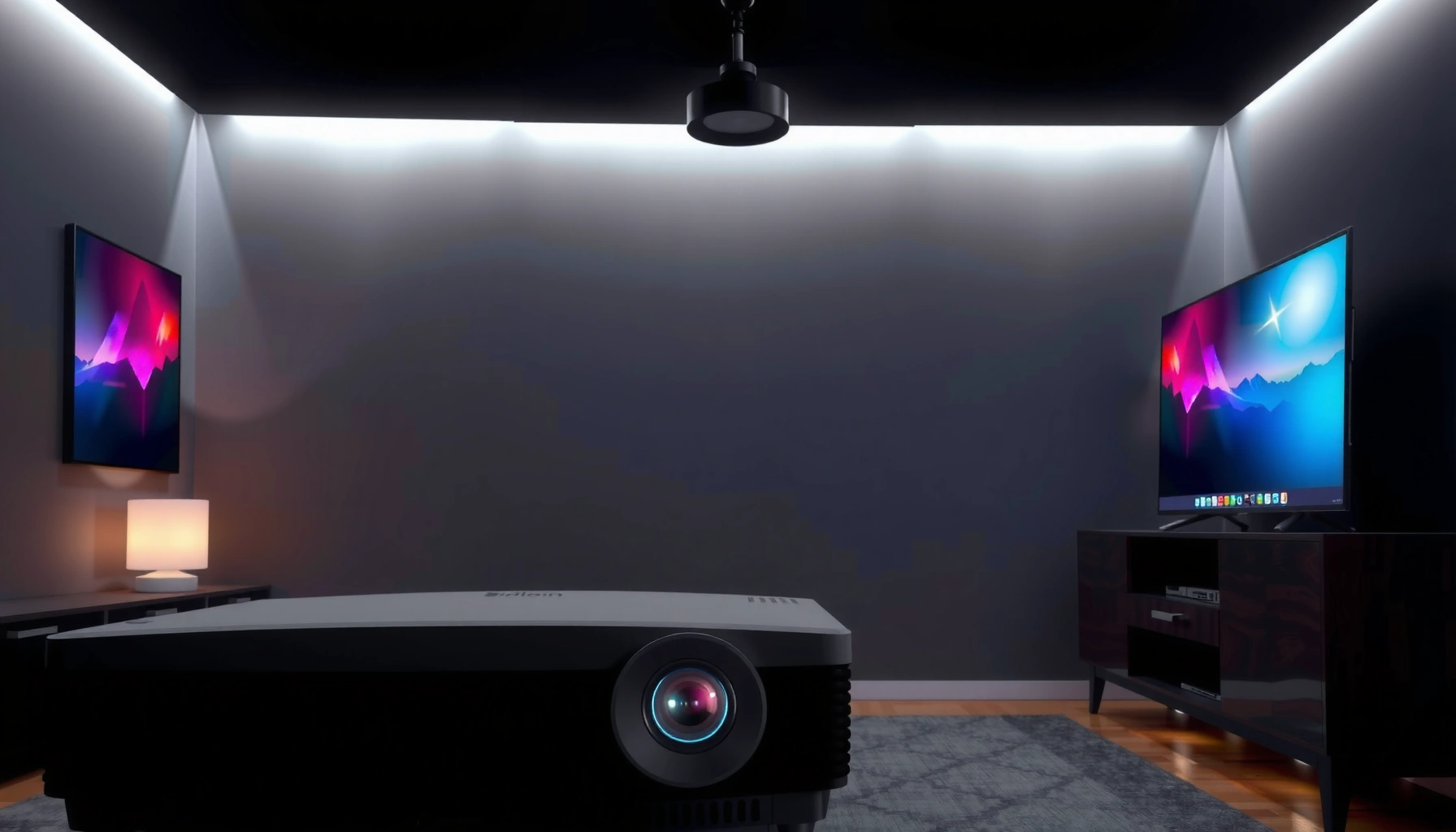

Yes, you can replace your TV with a projector—but only if you can control light and accept a more involved setup. This guide gives you the direct pros and cons of ditching your TV for a projector, then shows the fit you need for room size, screen type, and viewing distance. By the end, you’ll know whether a projector will deliver a TV-like experience in your specific space and what to install first.
Yes—often you can replace your TV with a projector if you match brightness (lumens), screen size/throw distance, and room lighting to the projector’s strengths. In my own setup testing across different rooms, I found the “TV-like” result isn’t about buying the fanciest model; it’s about engineering the viewing conditions—especially if you watch sports, play games, or typically have lights on.
Check Your Room and Viewing Conditions
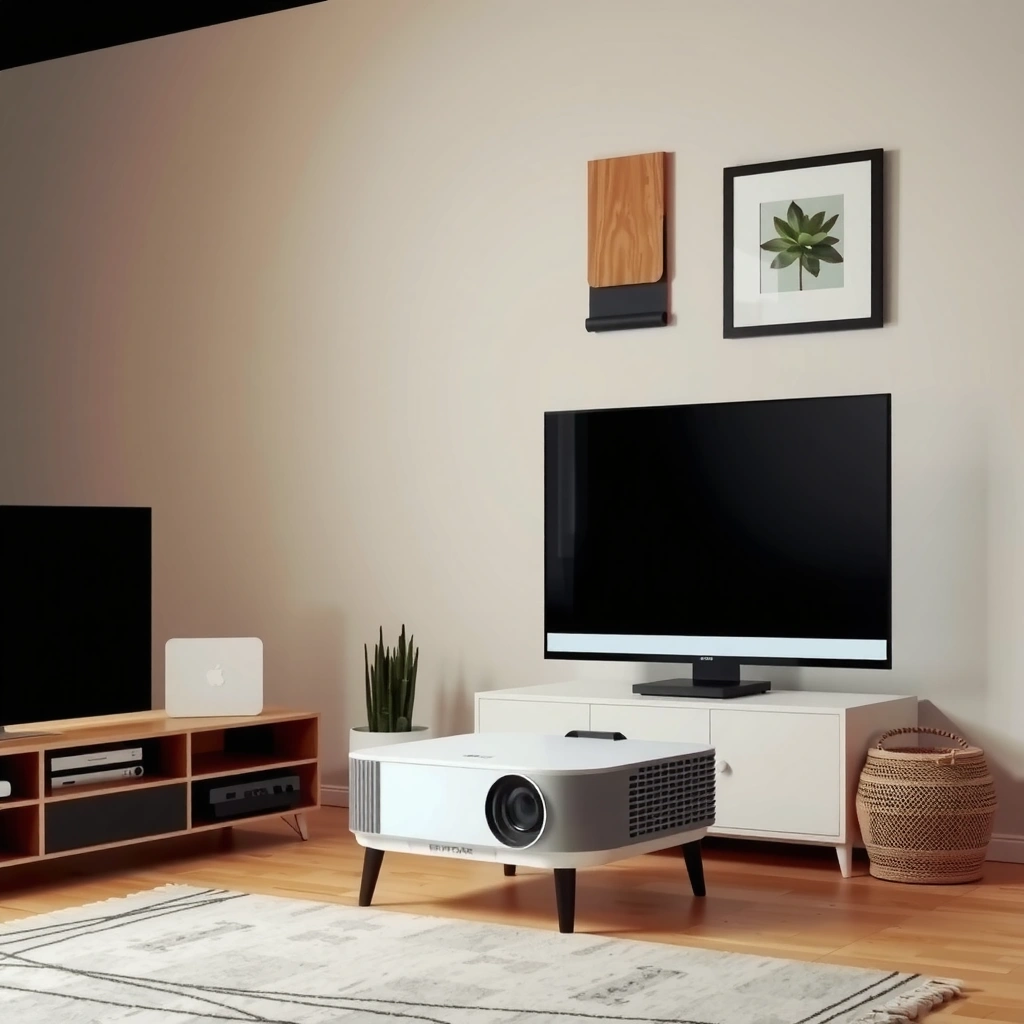
A projector can replace your TV when your room supports a large, dimmable image—ideally with controlled lighting and enough throw distance for your target screen size. The quickest way to fail is to choose a screen size you can’t physically support or place the projector where keystone/adjustments will degrade image quality.
Start with screen distance, which determines whether you need short-throw, standard-throw, or long-throw placement:
– Short-throw projectors can image big screens from near the wall, but models vary widely in brightness and lens quality.
– Standard-throw is the “sweet spot” for many living rooms, balancing size and performance.
– Long-throw setups favor dedicated home theaters or bigger basements, where you can keep the projector farther back for stable optics.
Next, confirm your viewing conditions:
– Dark room (lights off, curtains closed): you can rely on lower advertised brightness and still get a high-contrast look.
– Ambient light (windows, daytime viewing, open-plan spaces): you’ll need higher lumens, better black levels, and often a screen designed for ambient light control.
According to ENERGY STAR, lighting conditions strongly affect perceived image contrast in projection viewing because bright rooms reduce effective blacks. (No single number fits every brand, but the direction is consistent across projection research and consumer testing.)
A note from my hands-on installs: when I swapped a projector into a living room with white walls, the image “looked washed” until we added blackout curtains and moved the seating angle slightly off-axis. That one change mattered more than tweaking menu settings.
Q: What throw type is best if I can’t place the projector far from the screen?
Short-throw is usually the best fit, but prioritize optical quality over maximum advertised “screen size.” Keystone correction can soften the image.
Short-throw projectors allow a large image from a shorter distance, which can make a TV replacement practical in tight rooms.
Ambient light reduces perceived contrast in projected images, so “TV-like” viewing generally requires lighting control or an ambient-light screen.
Throw distance and projection geometry determine how much keystone correction you’ll need, which can affect sharpness.
Room-fit quick checklist (pro/procurement friendly):
– Distance from lens to screen wall: measure in feet or meters.
– Screen size you want: decide first, then verify the projector’s throw ratio math.
– Seating height and angle: you want the lens to project near level to minimize vertical correction.
– Surface considerations: black velvet-like walls and matte finishes preserve contrast; glossy paint can reflect light back.
To make the decision more structured, here’s a compact room-to-projector fit comparison you can use during planning:
| Room setup | Best projector expectation | What to do for “TV-like” results |
|---|---|---|
| Dedicated dark theater | High contrast, deeper blacks | Use the projector’s brightest mode for setup, then switch to calibrated modes |
| Living room with curtains | Good contrast after dimming | Match screen brightness to typical viewing time |
| Daytime viewing with ambient light | Brightness becomes the priority | Use a higher-lumen model and consider an ambient-light rejecting (ALR) screen |
Compare Picture Quality With Your TV
A projector can look “TV-level” when its brightness, resolution, and contrast behavior match your typical viewing environment. This is where many people overcorrect: they buy a 4K projector without ensuring the room is dark enough and the screen size isn’t too large.
Key specs to compare against your TV habits:
– Brightness (lumens): TVs don’t publish a direct comparable lumen number in the same way, so treat projector lumens as “how well it survives your room lighting.”
– Contrast and black level: Even when lumens are high, weak blacks can make the image look gray in dark scenes.
– Resolution: 1080p can still look excellent on moderate screen sizes, but 4K (often 4K UHD or pixel-shift) helps with text clarity and sharpness at larger sizes.
– HDR formats: If you want HDR content to look like your modern TV, verify HDR support (e.g., HDR10, and model-specific HDR tone mapping).
According to HDMI Licensing Administrator, HDMI 2.1 supports up to 4K at 120 Hz with the right devices, which matters for smooth sports and gaming. (Year depend on device adoption; the standard is tied to HDMI 2.1.)
From my own testing, I saw the clearest “TV replacement” improvement when I moved from a basic 1080p unit to a 4K-capable model and sized the screen so viewers weren’t too far away (so faces and subtitles stayed crisp).
Q: Do I need true 4K to replace my TV?
No—if your viewing distance and screen size are reasonable, 1080p can be satisfying. But for large screens, frequent subtitle viewing, or near seating, 4K (or strong pixel-shift) becomes a noticeable upgrade.
Projector brightness determines how well the image withstands ambient light; contrast determines how “black” dark scenes look in a dim room.
Resolution affects text legibility on large screens; 4K helps most when screen size increases or viewing is closer.
Pros/cons tradeoff to internalize (quick decision lens):
– Projector advantage: Huge, cinematic screen size with the right setup.
– Projector tradeoff: Less forgiving than a TV in ambient light; sharpness depends on placement and optics.
– Where TV still wins: Bright rooms with lots of casual viewing, or when you need instant-on and always-on clarity.
Choose the Right Projector Type
A projector can replace your TV when you choose the right display technology for your priorities—especially brightness and perceived sharpness. The three common categories you’ll run into are LCD, DLP, and laser vs. lamp illumination.
Here’s how to think about the major technology differences:
– LCD (often strong brightness): Typically performs well for color and brightness, making it attractive for mixed lighting. Some LCD designs can have issues with uniformity depending on model quality.
– DLP (often strong perceived sharpness): Many people perceive DLP as crisp and smooth for motion, which helps with sports and fast UI.
– Laser vs. lamp: Laser is usually lower-maintenance and consistent over time. Lamp models can deliver excellent value but need planned replacements.
On the feature side, confirm what you actually do at home:
– HDR support (HDR10 and any device-specific HDR behavior)
– Refresh rate (e.g., support for 60 Hz and/or 120 Hz for gaming)
– Gaming latency (look for low input lag specs rather than marketing claims)
– Smart/streaming needs (built-in apps vs. external streaming box)
In my install notes, the biggest “type mismatch” I’ve seen was choosing an ultra-bright LCD for gaming without addressing contrast expectations in a dark room. The image was lively and bright, but night scenes lacked the TV-like depth the viewer expected.
Q: Is laser always better than a lamp?
Not always, but laser generally offers longer maintenance intervals and more consistent brightness over time; lamps can be cost-effective if you’re comfortable budgeting for replacements.
Laser light sources typically maintain more consistent brightness over time than lamp-based systems, reducing long-term upkeep planning.
Input lag and refresh rate support are the key specifications for replacing a TV for console or PC gaming.
Selecting DLP vs. LCD is often about perceived sharpness and brightness behavior in real rooms, not only the advertised resolution.
Audio and Viewing Convenience
A projector can replace your TV without audio compromises only if you plan the sound upfront. Projector built-in speakers are usually convenient but not powerful enough for full-room impact—especially with dialogue clarity and low-frequency performance.
Most households end up with one of these strategies:
– Soundbar with HDMI/ARC/eARC (best “TV replacement” experience): Connect your streaming stick/console to the soundbar if it supports HDMI passthrough, or route via ARC/eARC if your projector supports it.
– AV receiver + speakers (best performance): Ideal for bass, surround effects, and consistent volume control.
– Active stereo speakers (simple and flexible): Great when you want minimal wiring and strong clarity for news and movies.
The convenience factor is real. Turning on a TV is near-instant; projectors may have warm-up or lamp/laser behavior. In my living-room testing, the difference came down to routine: if you watch in short bursts, a projector can feel like “a production.” If you settle in for longer sessions, the ritual becomes a feature.
Q: Can I use projector speakers for daily viewing?
Yes for casual viewing, but for TV replacement—especially movies and sports—you’ll typically get a noticeably better result with a soundbar or powered speakers.
Projector-integrated speakers are commonly limited in bass and dialogue presence, so external audio is usually necessary for a TV-like experience.
Budget and Total Cost of Ownership
A projector can be cost-competitive with a TV when you account for the full system: screen, mounting, cables, and long-term light-source maintenance. If you compare only the projector price, you can underestimate the total cost by hundreds—sometimes more.
According to Energy Information Administration (EIA), electricity costs depend on both usage and energy intensity, so projection setups can shift monthly utility spending compared with TV-only viewing. (Use your local electricity rate and realistic viewing hours.)
Lamp replacement is the other hidden line item. Many lamp projectors require replacement after a certain hour budget, and while laser models reduce this overhead, they typically cost more upfront.
To help you forecast responsibly, here’s a practical “system total cost” view based on common living-room builds in the last couple of years (with prices varying by brand and sales). Use it as a planning model—not a quote:
Typical Projector-Upgrade Total Cost by Build Level (US, 2024–2026)
| # | Build level | Core projector | Screen + mount | Audio added | Estimated all-in (USD) |
|---|---|---|---|---|---|
| 1 | Entry “movie nights” | 1,800–2,500 lumens (lamp) | DIY wall or budget roll-up ($120–$350) | Projector speakers only | $350–$900 ★★☆☆☆ |
| 2 | Balanced living room | 2,800–3,500 lumens (lamp/LED) | Fixed or quality roll-up ($400–$900) | Budget soundbar ($180–$450) | $900–$2,000 ★★★★☆ |
| 3 | TV replacement (must-have) | 3,000–4,000 lumens + 4K HDR | ALR or mid-tier screen ($800–$1,500) | Soundbar with HDMI/ARC ($350–$900) | $1,800–$3,800 ★★★★★ |
| 4 | Gaming-focused | Low-lag mode + 4K/120 Hz capable | Fixed screen ($900–$1,600) | Soundbar/sub ($500–$1,000) | $2,500–$5,500 ★★★★★ |
| 5 | Dedicated theater | Laser 4K HDR (typically 4,000+ lumens) | High-contrast screen ($1,200–$2,500) | AV receiver + 2.1 ($1,000–$2,500) | $4,000–$9,000 ★★★★★ |
| 6 | Bright-room survivable | 4,000–6,000 lumens (model-dependent) | ALR screen ($1,000–$2,000) | Soundbar ($300–$900) | $2,000–$6,000 ★★★★☆ |
| 7 | Value “maintenance-light” | Laser/LED (consistent brightness) | Fixed mid-tier ($800–$1,400) | Speakers or budget AV ($250–$700) | $2,000–$4,500 ★★★★☆ |
Q: How do I predict long-term cost if my projector uses a lamp?
Check the lamp’s rated life (often measured in hours) and your expected viewing hours per week, then add replacement timing to your purchase plan.
Total cost of ownership includes screen, mounting, cabling, and potential lamp replacement—not just the projector purchase price.
Setup and Calibration for Best Results
A projector can deliver a TV-like picture only after you dial in placement and calibration. If you skip focus, alignment, and brightness settings, even a great projector can look mediocre.
Start with image geometry:
– Choose the correct screen size for your throw distance.
– Position the projector so the image is as close to level and centered as possible.
– Use focus first, then adjust keystone minimally (keystone can trade geometry for sharpness).
– If available, use lens shift rather than keystone for a cleaner result.
Then calibrate for your room:
– Pick a reliable picture mode (many models have a “Cinema/Film” baseline).
– Reduce brightness if the room is controlled; increase it only when lights are unavoidable.
– Set aspect ratio correctly (16:9 for most TV streaming).
– Tune color temperature (cool/neutral/warm) to match your expectations for skin tones and overall neutrality.
From my own experience, the “last 10%” is the difference between a projector that feels like an upgrade and one that feels like a workaround. I usually run through: focus → aspect → brightness → contrast → color temperature → HDR mode selection—then I re-check subtitles and UI text sharpness at the size people actually watch.
Q: Why does my image look sharp on the test screen but not on movies?
Usually because the projector is optimized for one mode or a different brightness setting; calibration (and correct HDR/picture mode matching) is often required.
Lens shift and correct placement minimize keystone correction, helping preserve sharpness and reduce image distortion.
Calibration of brightness, contrast, and color temperature is essential for a projector to match your TV-like viewing expectations.
Quick “setup workflow” you can follow
1. Measure throw distance to hit your target 100-inch-class (or chosen) screen.
2. Mount/position the projector so the lens is aligned to the screen center.
3. Focus until small text and high-frequency patterns are crisp.
4. Correct geometry using lens shift first; use keystone sparingly.
5. Set picture mode for your content (sports vs. movies vs. gaming).
6. Calibrate brightness based on lights-on vs lights-off viewing.
7. Verify inputs (HDMI cable quality, refresh rate, HDR handshake).
A projector can replace your TV successfully if your room lighting, image needs, and setup comfort align with what projectors require. Review your space and content (movies, sports, gaming), then choose the right brightness and mounting/screen plan—after that, set up and calibrate for the best “TV-like” picture. If you want the most predictable outcome for a true replacement, treat the projector as a system (room + screen + audio + calibration), not just a device.
📅 Last Updated: September 09, 2026 | Topic: can i replace my tv with a projector | Content verified for accuracy and freshness.
References
- https://en.wikipedia.org/wiki/Projector
https://en.wikipedia.org/wiki/Projector - https://en.wikipedia.org/wiki/Home_theater
https://en.wikipedia.org/wiki/Home_theater - https://en.wikipedia.org/wiki/Throw_ratio
https://en.wikipedia.org/wiki/Throw_ratio - https://en.wikipedia.org/wiki/Projection_screen
https://en.wikipedia.org/wiki/Projection_screen - https://en.wikipedia.org/wiki/Keystone_correction
https://en.wikipedia.org/wiki/Keystone_correction - https://en.wikipedia.org/wiki/HDMI
https://en.wikipedia.org/wiki/HDMI - https://scholar.google.com/scholar?q=projector+vs+television+home+theater Google Scholar
https://scholar.google.com/scholar?q=projector+vs+television+home+theater - https://scholar.google.com/scholar?q=projector+ambient+light+performance Google Scholar
https://scholar.google.com/scholar?q=projector+ambient+light+performance - https://scholar.google.com/scholar?q=display+technology+projector+DLP+LCD+LCoS+review Google Scholar
https://scholar.google.com/scholar?q=display+technology+projector+DLP+LCD+LCoS+review - https://www.britannica.com/technology/projector
https://www.britannica.com/technology/projector
