
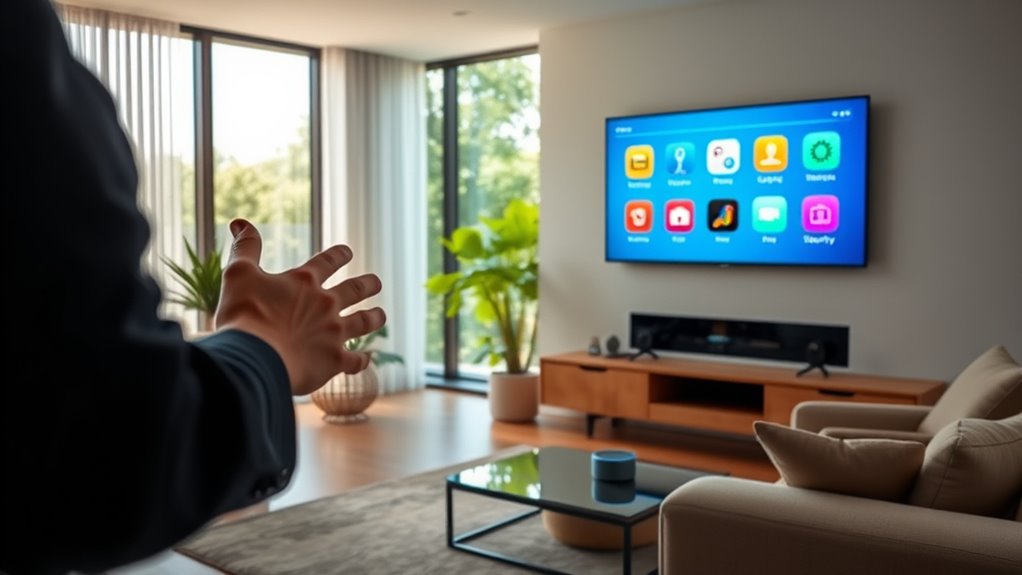

AI enhances smart home control through intuitive display interfaces that make interactions seamless and efficient. With features like touchscreen control and custom dashboards, you can personalize your experience and easily manage devices. Visual notifications keep you informed about system statuses, bridging the gap between your intent and the system’s response. This not only simplifies operations but also boosts user satisfaction. Explore how these advancements contribute to larger trends in smart home technology for a more connected living experience.
The Role of AI in Smart Home Technology
As smart home technology continues to evolve, AI plays an essential role in enhancing its capabilities. One major advancement is voice recognition, which allows you to interact with your home effortlessly. Instead of fumbling with switches or apps, you can issue commands and expect immediate responses, creating a seamless experience. Additionally, AI streamlines automation protocols, enabling devices to communicate and function together intelligently. This means your smart home can learn your preferences over time, adjusting lighting, temperature, and security settings without constant input. The combination of voice recognition and refined automation protocols not only simplifies daily tasks but also empowers you with greater control and freedom in managing your living environment. Ultimately, AI transforms how you engage with your smart home.
Intuitive Display Interfaces: Bridging the Gap
Voice recognition and automation have greatly improved how you interact with smart home systems. Intuitive display interfaces are key in this evolution, as they provide essential visual feedback that fosters user engagement. You can easily navigate through your smart devices, feeling empowered and in control.
| Feature | Benefit |
|---|---|
| Touchscreen Control | Direct interaction |
| Custom Dashboards | Personalized experience |
| Visual Notifications | Immediate awareness |
These interfaces not only simplify operations but also enhance your overall experience. By bridging the gap between user intent and system response, they allow for seamless interactions, making your smart home feel more like an extension of your lifestyle rather than a set of disconnected gadgets.
Personalization Through Learning Algorithms
While many smart home systems rely on predefined settings, personalization through learning algorithms transforms your interactions into tailored experiences. These algorithms analyze your user preferences over time, allowing your smart home to adjust automatically to your habits and needs. For instance, it learns when you prefer brighter lighting or cooler temperatures, creating an environment that feels just right. By delivering adaptive responses, your smart home becomes more intuitive, reducing the effort you need to put into managing it. This level of customization not only enhances comfort but also empowers you with greater control. Ultimately, embracing AI-driven personalization means your home adapts to you, fostering a sense of freedom that traditional systems simply can’t provide.
Enhancing Security With Ai-Driven Systems
Smart home technology not only personalizes your living experience but also greatly enhances security through AI-driven systems. With features like facial recognition, you can guarantee that only authorized individuals gain access to your home. This technology analyzes patterns in real-time, giving you peace of mind that your space is protected against unauthorized entry. Additionally, AI-powered intrusion detection systems monitor your property around the clock, alerting you to any unusual activity. These systems learn from past incidents, continuously improving their response capabilities. By integrating these advanced security measures, you not only safeguard your home but also empower yourself with greater control and awareness. Embracing AI-driven security means embracing a more secure and liberated living environment.
Energy Management and Efficiency Optimization
As energy costs continue to rise, leveraging AI for energy management and efficiency optimization has become essential for homeowners seeking to reduce their utility bills. Smart thermostats, powered by AI, can analyze your daily routines and adjust heating or cooling systems accordingly, minimizing energy consumption without sacrificing comfort. By utilizing these advanced technologies, you can achieve significant savings while maintaining control over your home environment.
| Feature | Smart Thermostat | Traditional Thermostat |
|---|---|---|
| Energy Usage Reports | Yes | No |
| Remote Access | Yes | No |
| Adaptive Learning | Yes | No |
| Custom Schedules | Yes | Limited |
| User-Friendly Interface | Yes | Basic |
Embrace this technology to enhance both efficiency and autonomy in your home.
Future Trends in AI and Smart Home Integration
The integration of AI in smart home technology is poised for significant advancements, promising even greater convenience and efficiency. You’ll likely see predictive maintenance becoming a standard feature, where your devices anticipate issues before they escalate, reducing downtime and repair costs. Imagine your thermostat automatically adjusting based on your preferences and energy usage patterns, optimizing comfort and savings. Voice interaction will also evolve, enabling more natural conversations with your smart home systems. This means you won’t just give commands; you’ll engage in dialogues, making your experience more intuitive. As these technologies evolve, they’ll empower you with autonomy, allowing for seamless control and enhanced personalization in your living space, ultimately redefining how you interact with your home.
Frequently Asked Questions
What Types of Smart Devices Can Be Controlled via AI Interfaces?
You can control various smart devices through AI interfaces, including smart thermostats, voice assistants, security cameras, lighting systems, kitchen appliances, and entertainment systems, allowing you to manage your home efficiently and effortlessly.
How Do Ai-Driven Displays Learn User Preferences Over Time?
AI-driven displays learn your preferences through analyzing user behavior, adapting over time to suggest settings and actions that suit your lifestyle. This preference adaptation creates a more seamless, personalized experience, enhancing your freedom in managing smart devices.
Can AI Enhance the Aesthetic Design of Smart Home Interfaces?
Yes, AI can markedly enhance the aesthetic design of smart home interfaces, improving visual appeal and user engagement. By analyzing user behavior, it tailors designs that resonate with individual preferences, creating a more personalized experience.
What Are the Privacy Concerns With AI in Smart Home Systems?
Privacy pitfalls persist with AI in smart homes. You’ve got to contemplate data security and user consent carefully. Without clear boundaries, your personal information could be compromised, threatening your freedom and privacy in everyday life.
How Do Updates Impact AI Performance in Smart Home Displays?
Updates play a vital role in AI performance for smart home displays. Higher update frequency often leads to improved performance metrics, enhancing responsiveness and user experience while ensuring your system remains secure and efficient over time.
