
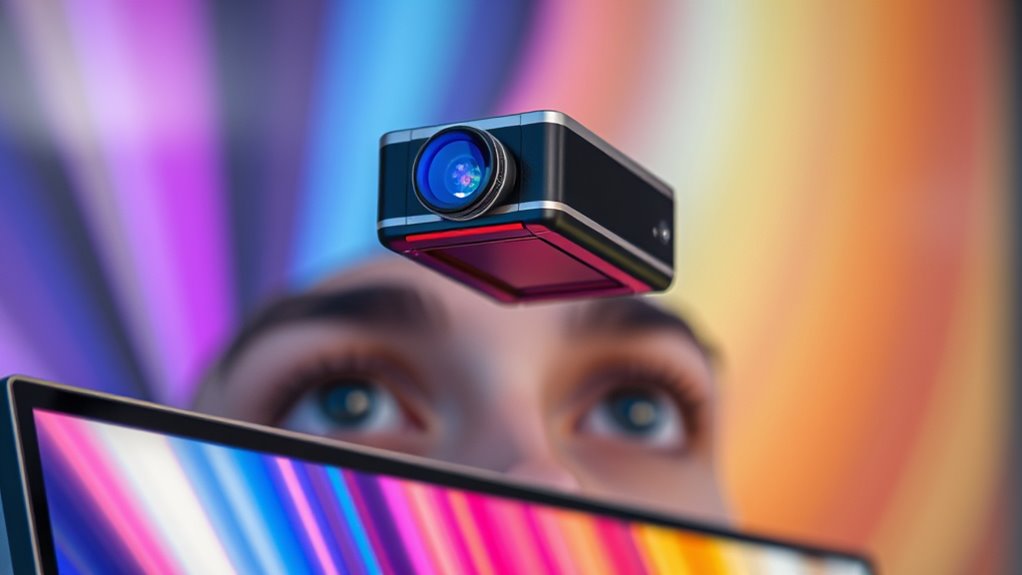

AI-powered eye tracking adjusts display brightness by analyzing your gaze patterns and surrounding light conditions. It captures your eye movements in real-time and determines where you're focusing. Based on this analysis, algorithms dynamically modify brightness levels for ideal visual comfort, reducing eye strain. This adaptation enhances your overall viewing experience, promoting better engagement and relaxation. If you explore further, you'll discover more about the implications of this technology across different industries and future developments.
Understanding Eye Tracking Technology
Eye tracking technology has evolved considerably, enabling us to understand how people interact with visual stimuli more deeply. By analyzing eye movement and gaze patterns, you can gain insights into attention, engagement, and preferences. This technology captures where your gaze lingers, revealing not just what catches your interest but also how your focus shifts over time. Understanding these dynamics allows designers to create more intuitive interfaces and optimize user experiences. It's all about freedom—freedom to engage with content that resonates with you. Additionally, eye tracking can inform marketing strategies, helping brands connect more authentically with their audience. As you explore this field, you'll discover how these insights shape both technology and human interaction.
The Role of Artificial Intelligence in Eye Tracking
As technology advances, the integration of artificial intelligence (AI) in eye tracking is revolutionizing how we interpret visual attention and engagement. AI algorithms enhance gaze prediction, allowing for more precise insights into user interaction. By employing machine learning techniques, these systems analyze vast data sets, considerably improving data accuracy and behavioral analysis. This means that visual perception can be better understood, leading to more tailored user experiences. Imagine a world where your device adjusts its display based on where you're looking, optimizing your interaction without you even realizing it. With AI's ability to adapt, the potential for innovative applications in various fields is limitless, ultimately granting you a more intuitive and engaging interaction with technology.
How Eye Tracking Determines Gaze and Focus
In understanding how eye tracking determines gaze and focus, you'll find that gaze detection technology plays a vital role. By analyzing where your eyes are directed, these systems can pinpoint your focus areas with remarkable accuracy. This combination not only enhances user experience but also opens doors for innovative applications across various fields.
Gaze Detection Technology
While many technologies rely on physical inputs, gaze detection technology offers a fascinating alternative by interpreting where you're looking. This innovative approach leverages eye-tracking systems to understand your gaze interaction and visual attention, enhancing user experience in various applications.
Here's a breakdown of how gaze detection works:
| Component | Function | Impact |
|---|---|---|
| Eye Trackers | Capture eye movements | Provides real-time gaze data |
| Algorithms | Analyze gaze patterns | Determines focus areas |
| Interface | Adjusts display based on gaze | Enhances visual clarity and comfort |
| Feedback Systems | Respond to user gaze | Improves interaction and engagement |
| Applications | Range from gaming to accessibility | Broadens usability and freedom |
With gaze detection, you can enjoy a more intuitive interaction with technology, making your experience effortless and fluid.
Focus Area Analysis
Understanding how eye tracking determines gaze and focus is essential for leveraging its full potential in various applications. By analyzing focus metrics, eye tracking technology identifies where your attention lies, allowing devices to adapt in real-time. It captures gaze patterns, revealing not just what you're looking at, but how long you focus on specific areas. This information is invaluable in fields like marketing, usability testing, and gaming, as it provides insights into user engagement and experience. With this data, designers can refine interfaces to enhance interaction, ultimately granting you a more intuitive experience. By embracing this innovative technology, you're not just consuming content; you're engaging in a dynamic relationship that respects your focus and preferences.
Real-Time Brightness Adjustment Mechanism
As you explore the world of eye tracking technology, you'll notice how essential real-time brightness adjustment is for enhancing user experience. Adaptive brightness algorithms analyze your gaze and focus, ensuring that displays are ideally lit according to your surroundings. This real-time data processing not only improves visibility but also reduces eye strain, making your interaction with digital content more comfortable and effective.
Eye Tracking Technology Overview
Eye tracking technology has revolutionized the way we interact with digital environments, and one of its most fascinating features is the real-time brightness adjustment mechanism. This innovation stems from eye tracking advancements that enable devices to detect where you're looking and adjust display settings accordingly. Imagine a user interface that responds dynamically to your gaze, enhancing your viewing experience while reducing eye strain. By analyzing your focus, these systems can optimize brightness levels, ensuring that you always have the best visibility. This adaptive approach not only saves energy but also makes your interaction with screens more intuitive and user-friendly. Embracing this technology empowers you to enjoy a more personalized digital experience, seamlessly blending form and function.
Adaptive Brightness Algorithms
The integration of adaptive brightness algorithms marks a significant leap in enhancing user interaction with digital displays. These adaptive algorithms analyze your environment and eye position in real-time, ensuring that brightness optimization is tailored to your specific needs. By adjusting brightness based on ambient light and your gaze, these systems create a more comfortable viewing experience, reducing eye strain and improving visibility. You'll notice that the display dynamically responds, making it easier to engage with content without constant manual adjustments. This level of personalization not only boosts your overall experience but also aligns with your desire for freedom in technology use. Embracing such intelligent systems empowers you to enjoy a more seamless interaction with your devices.
Real-Time Data Processing
While traversing through various environments, you may not realize the complexity behind real-time data processing in brightness adjustment mechanisms. This technology employs real-time analysis to monitor your surroundings and assess light conditions instantaneously. By capturing data through AI-powered eye tracking, it enables a dynamic adjustment of display brightness, ensuring ideal visibility without straining your eyes. As you move from bright outdoor settings to dimly lit rooms, the system adapts almost seamlessly, enhancing your viewing experience. This responsive capability not only improves comfort but also conserves energy, extending device battery life. Ultimately, real-time data processing empowers you with a display that adjusts fluidly, allowing you the freedom to engage with your device in any environment without interruption.
Benefits of AI-Powered Brightness Control
As you navigate through various lighting conditions, AI-powered brightness control adapts seamlessly to your environment, ensuring ideal visual comfort. This technology not only enhances your viewing experience but also promotes energy efficiency. By automatically adjusting brightness based on ambient light, it reduces power consumption, allowing you to enjoy longer usage without worrying about battery life. Additionally, it fosters user engagement by creating a more immersive experience. You'll find it easier to focus on content, whether you're working, gaming, or streaming. Ultimately, AI-powered brightness control empowers you to take command of your display's performance, ensuring that your device works harmoniously with your surroundings, providing freedom and convenience in your daily activities.
Impact on Eye Strain and Comfort
AI-powered eye tracking technology considerably reduces eye fatigue by adjusting screen brightness and contrast based on your gaze patterns. This responsiveness not only enhances visual comfort but also promotes longer, more productive viewing sessions without discomfort. As you engage with this technology, you'll likely notice a marked improvement in your overall eye health and satisfaction.
Reduced Eye Fatigue
When you spend long hours in front of a screen, eye fatigue can sneak up on you, impacting both your comfort and productivity. AI-powered eye tracking technology helps combat this issue by adjusting display brightness based on your gaze patterns. By optimizing lighting conditions, it promotes eye comfort, allowing your eyes to relax and focus better. This proactive approach not only reduces strain but also supports your visual health, making those extended hours more bearable. Additionally, when your display adapts to your needs, you're less likely to experience discomfort, leading to a more enjoyable viewing experience. Embracing this technology empowers you to take control of your screen time, ensuring your eyes feel good while you work or play.
Enhanced Visual Comfort
While spending prolonged periods in front of screens, many people don't realize how subtle changes in visual comfort can greatly reduce eye strain. By leveraging AI-powered eye tracking, your device can make real-time comfort adjustments based on your eye movements and environmental conditions. This technology enhances visual ergonomics, ensuring that brightness levels are optimized for your specific situation. When your screen adapts to your needs, you're less likely to experience fatigue and discomfort. These adjustments not only improve your overall viewing experience but also promote longer periods of focused work without the typical strain associated with static settings. Ultimately, embracing these advancements in visual comfort frees you from the limitations of traditional display technologies, allowing for a more enjoyable and productive screen time.
Enhancing Viewing Experience Across Devices
As technology continues to advance, enhancing the viewing experience across devices has become a priority for developers and users alike. AI-powered eye tracking plays an essential role in this evolution by boosting viewer engagement through dynamic content personalization. Imagine watching your favorite show on a tablet that adjusts its brightness based on your gaze, ensuring you never miss a detail. This technology not only tailors the visual experience to your preferences but also creates a seamless shift between various screens, whether you're on a smartphone or a large display. By aligning the visual output with your needs, AI eye tracking fosters an immersive environment, transforming how you interact with content across all your devices.
Applications in Different Industries
AI-powered eye tracking isn't just revolutionizing personal entertainment; it's also making significant strides in various industries, enhancing productivity and user experience. In healthcare applications, it aids in patient monitoring, while automotive innovations improve safety through driver awareness. Gaming enhancements create immersive experiences by adjusting graphics based on your gaze. Educational tools personalize learning environments, and retail experiences optimize product displays to catch your eye. Smart home integration allows you to control devices effortlessly, and workplace ergonomics promote well-being by adapting workstations to your visual habits. Virtual reality benefits from eye tracking by creating more engaging environments.
| Industry | Applications | Benefits |
|---|---|---|
| Healthcare | Patient monitoring | Improved care |
| Automotive | Driver awareness | Enhanced safety |
| Gaming | Immersive environments | Deeper engagement |
| Education | Personalized learning | Better retention |
Future Trends in Eye Tracking and Display Technology
The landscape of eye tracking and display technology is set for transformative advancements that promise to redefine user interaction across various platforms. As we look to the future, you'll see eye tracking seamlessly integrated into everyday devices, enhancing accessibility and personalizing experiences. Future applications may include adaptive learning systems that cater to individual needs or immersive gaming environments that respond to your gaze. Technological advancements will likely lead to more precise tracking and quicker response times, making interactions feel more natural. In addition, the integration of augmented and virtual reality will expand the boundaries of how you connect with digital content. Embracing these innovations can empower you to engage more intuitively and freely in an increasingly digital world.
User Privacy and Ethical Considerations
While advancements in eye tracking technology promise enhanced user experiences, they also raise significant concerns regarding user privacy and ethical implications. As this technology gathers data about your eye movements, there's a fine line between personalization and intrusion. You might appreciate the convenience of adaptive brightness, but at what cost? Questions about data privacy loom large—who owns the information collected from your gaze? Companies could exploit this data, leading to targeted advertising or manipulation without your consent. It's crucial to advocate for transparency and robust ethical standards. Ultimately, as you embrace these innovations, stay informed and demand accountability from developers, ensuring your freedom and privacy aren't compromised in the name of progress.
Frequently Asked Questions
Can Eye Tracking Technology Work in Low-Light Conditions?
You might find that eye tracking technology struggles in low light conditions. Its performance can be hindered by sensor limitations, affecting accuracy. Yet, advancements are continuously improving low light performance, expanding its potential applications.
How Is User Data Encrypted During Eye Tracking?
When it comes to user data during eye tracking, robust encryption methods are employed to guarantee data privacy. This protects your sensitive information, granting you the freedom to interact confidently without compromising your personal data.
What Devices Are Compatible With Ai-Powered Eye Tracking?
You're probably surprised to learn that AI-powered eye tracking isn't just for high-end tech. Most smartphones and gaming devices are compatible, making it accessible for everyone. Embrace the freedom of enhanced visual experiences with this technology!
How Long Does It Take to Calibrate the Eye Tracking System?
Calibration time for eye tracking systems typically ranges from a few seconds to a couple of minutes, enhancing your user experience. Quick calibration guarantees you enjoy seamless interaction without disruption, maximizing your freedom to engage effortlessly.
Will Eye Tracking Technology Require Frequent Software Updates?
As technology evolves like a river carving through rock, eye tracking systems will need regular software maintenance to keep pace with advancements, ensuring your experience remains smooth and cutting-edge without interruptions or frustrations.

[…] Q: Does choosing 5000K make 1080 lumens “actually brighter”?No—lumens are the same—but it can feel brighter because the light’s hue changes contrast and visual comfort. […]
[…] can produce different perceived brightness due to beam angle, aiming, and glare. IES guidance on visual comfort and […]
[…] cm) for many desk monitors—so your eyes don’t constantly refocus. Increase font size and reduce display brightness when needed, because screen distance alone can’t solve every ergonomics issue. Pair the right […]
[…] usually about 1.5–2.5 times the screen’s diagonal size (measured corner to corner). If you feel eye strain, blurry focus, or neck discomfort, adjust the distance first—then tweak brightness and text […]
[…] extreme closeness that amplifies visual strain. [ADD: source or guidance for gaming readability/visual comfort—e.g., THX/media viewing […]
[…] viewing. Go farther and you’ll notice less fine detail; sit too close and you can increase eye strain and make individual pixels more obvious—especially on non-4K sources. In this guide, you’ll […]
[…] ANSI/IES IT7.227-2018 — Projector and display brightness measurement methodology for “ANSI lumens” style […]
[…] small) can override improvements from a decent viewing distance by increasing legibility demand. Visual comfort recommendations emphasize individualized fit—your eyes, prescription, and task demands determine […]
[…] Going too large can cause eye strain and more frequent head/eye movement to scan the […]