
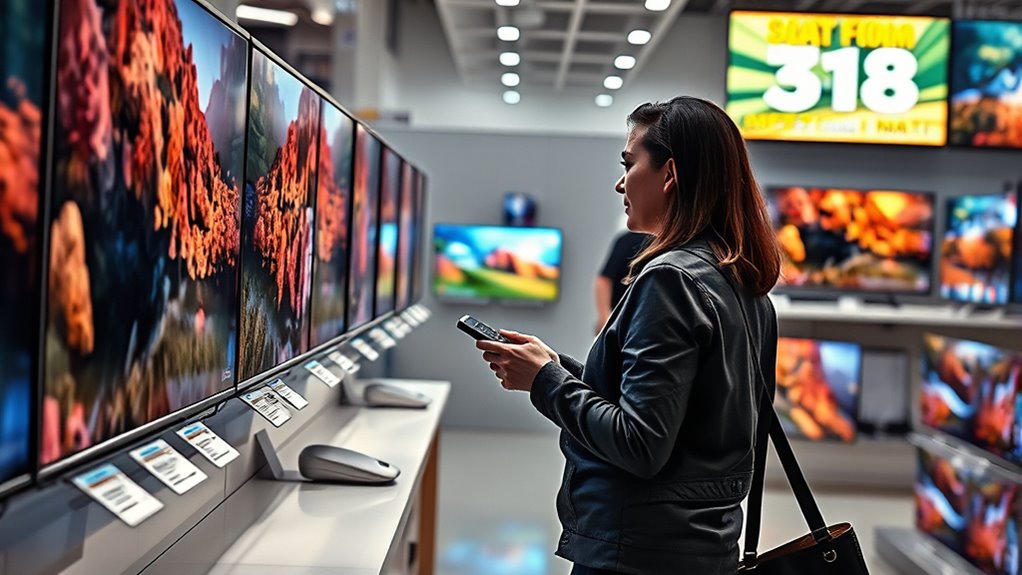

When buying a smart TV, it’s essential to take into account features like resolution and picture quality, alongside streaming compatibility with platforms like Netflix and Hulu. Evaluate the user interface for ease of navigation and check connectivity options for your devices. Don’t forget to assess size and space requirements based on your room. Finally, set a budget while comparing brands for warranty and customer support. There’s much more to explore, so keep examining your options for the best choice!
Understanding Smart TV Features
When you immerse yourself in the world of Smart TVs, it’s like stepping into a universe of connectivity and entertainment options. Understanding smart TV features is essential in making an informed purchase. You’ll encounter various smart TV types, from LED to OLED, each offering unique benefits. Popular smart TV brands like Samsung, LG, and Sony provide platforms that integrate streaming services, apps, and voice control, enhancing your viewing experience. Look for features like built-in Wi-Fi, 4K resolution, and compatibility with smart home devices, as these elements can greatly impact your enjoyment. By analyzing these options, you’ll gain the freedom to customize your entertainment setup, ensuring it aligns well with your lifestyle and preferences.
Evaluating Picture Quality
When it comes to picture quality, you’re looking at several key factors that can make or break your viewing experience. Resolution and clarity set the foundation, while color accuracy guarantees what you see is true to life. Finally, contrast and brightness levels can dramatically enhance how vibrant and detailed your favorite shows and movies appear on screen.
Resolution and Clarity
As you explore the world of smart TVs, understanding resolution and clarity is essential for evaluating picture quality. The resolution types can greatly impact your viewing experience, particularly with the popular 4K options that offer sharper images and greater detail. Here’s a quick reference to help you compare common resolutions:
| Resolution Type | Pixels | Clarity Level |
|---|---|---|
| HD (720p) | 1280 x 720 | Basic clarity |
| Full HD (1080p) | 1920 x 1080 | High clarity |
| 4K UHD | 3840 x 2160 | Exceptional clarity |
| 8K UHD | 7680 x 4320 | Unmatched clarity |
When choosing, consider your viewing distance and the content you’ll watch. Higher resolutions can enhance your overall viewing enjoyment, so aim for the best clarity that fits your lifestyle.
Color Accuracy Assessment
Color accuracy plays an essential role in determining the overall quality of your viewing experience. When evaluating a smart TV, you’ll want to explore color calibration techniques. These methods guarantee that the colors on your screen are true-to-life, much like an artist’s palette. A TV that excels in color gamut evaluation will display a wider range of colors, enriching your viewing experience and drawing you into the story. Look for models that support advanced calibration settings, allowing you to tweak saturation and hue according to your preferences. Remember, a TV that accurately reproduces colors can transform mundane scenes into vibrant spectacles, giving you the freedom to fully enjoy your favorite movies and shows just as the creators intended.
Contrast and Brightness Levels
Picture quality hinges greatly on contrast and brightness levels, which together create the dynamic range in your viewing experience. When you adjust the contrast settings, you’re fundamentally determining how dark and light areas of the image interact, enhancing depth and detail. A well-calibrated contrast can make shadows richer and highlights pop, making everything you watch more engaging. On the other hand, brightness adjustment is equally important. It guarantees that the image isn’t washed out or overly dim, preserving detail in both bright and dark scenes. You’ll want to find the right balance between these settings to suit your environment and preferences, ultimately leading to a more immersive viewing experience. Take the time to tweak these levels for the best results.
Exploring Streaming Services Compatibility
When buying a smart TV, it’s essential to check its compatibility with major streaming platforms like Netflix, Hulu, and Amazon Prime. Not all smart TVs support every service, so you’ll want to verify your favorite apps are available. Additionally, consider how well the TV works with other devices you own, as seamless integration can enhance your viewing experience.
Major Streaming Platforms
Maneuvering the landscape of streaming services can feel overwhelming, especially with over a dozen major platforms vying for your attention. When evaluating your smart TV, consider the compatibility of these popular streaming subscriptions, as platform availability can greatly impact your viewing experience. Here are some essential platforms to keep in mind:
- Netflix: A pioneer in original content and a vast library.
- Amazon Prime Video: Great for Prime members with added perks.
- Disney+: Home to beloved franchises and exclusive releases.
- Hulu: Offers a mix of current shows and classic content.
Device Compatibility Considerations
As you explore the world of smart TVs, understanding device compatibility is vital for the best streaming experience. You’ll want to verify your TV supports the major streaming services you enjoy. Check its compatibility with various device ecosystems, like Apple, Google, or Amazon, as this can greatly influence your viewing options.
Connectivity options also play an important role; look for HDMI ports, USB connections, and Wi-Fi capabilities. These features help you effortlessly connect other devices like gaming consoles or streaming sticks. By considering device compatibility, you can create a seamless entertainment setup that fits your lifestyle. Ultimately, the right smart TV enhances your freedom to access your favorite content anytime, anywhere.
Assessing User Interface and Ease of Use
How intuitive is the user interface of a smart TV? Evaluating this can greatly enhance your user experience. A smooth, user-friendly interface makes maneuvering through apps and settings effortless. Pay attention to these aspects:
Assessing the intuitiveness of a smart TV’s user interface can significantly elevate your viewing experience.
- Navigation Simplicity: Is it easy to find what you’re looking for?
- Customization Options: Can you personalize your home screen?
- Voice Control: Does the TV respond well to voice commands?
- User Feedback: Are there frequent updates based on user suggestions?
When choosing a smart TV, prioritize interfaces that streamline your viewing experience. A well-designed user interface not only saves you time but also enriches your interaction with the device, allowing you to truly enjoy your entertainment freedom.
Considering Size and Space Requirements
When you’re choosing a smart TV, it’s essential to contemplate both size and the space where it’ll be placed, since the right fit can greatly enhance your viewing experience. First, measure your room dimensions to determine the maximum screen size that complements your space. A common guideline is to sit at a viewing distance of 1.5 to 2.5 times the screen size for ideal immersion. For instance, if you’re sitting 8 feet away, a 55 to 75-inch TV might be perfect. Don’t forget to account for the TV’s stand or wall-mounting requirements, ensuring it fits seamlessly without overwhelming your room. Balancing these factors will let you enjoy your new smart TV without sacrificing comfort or aesthetics.
Budgeting for Your Smart TV Purchase
What factors should you consider when budgeting for your smart TV purchase? Understanding your financial limits is essential, especially since smart TVs come in various price ranges. Here are some key aspects to keep in mind:
- Your budget: Set a clear limit to avoid overspending.
- Price range: Research different brands and models to find one that fits your needs.
- Financing options: Explore deals that allow you to pay over time, easing the immediate financial burden.
- Additional costs: Don’t forget about installation, warranties, or accessories that might add to your overall expense.
Frequently Asked Questions
What Brands Are Most Reliable for Smart TVS?
When considering reliable smart TV brands, you can’t go wrong with Samsung’s quality, LG’s features, Sony’s performance, TCL’s affordability, and Vizio’s reliability. Each offers unique advantages, catering to different preferences and budgets.
How Long Do Smart TVS Typically Last?
Smart TVs typically last around 7 to 10 years. Longevity factors include usage patterns and brand quality. By choosing wisely, you can maximize your smart TV lifespan and enjoy uninterrupted entertainment for years to come.
Can I Upgrade the Software on My Smart TV?
Yes, you can upgrade the software on your smart TV. Regular software updates enhance smart features, ensuring you enjoy the latest apps and improvements. Just check your settings to initiate the update process and stay current.
Are Extended Warranties Worth It for Smart TVS?
Extended warranties can be worth it for smart TVs, especially if you’re concerned about costly repairs. They offer peace of mind, covering unexpected smart TV repairs and often include benefits like accidental damage protection.
What Accessories Do I Need for My Smart TV?
You’ll need a smart remote for seamless control and soundbar options for enhanced audio. These accessories elevate your viewing experience, giving you the freedom to enjoy your favorite shows and movies with ideal convenience and sound quality.
