
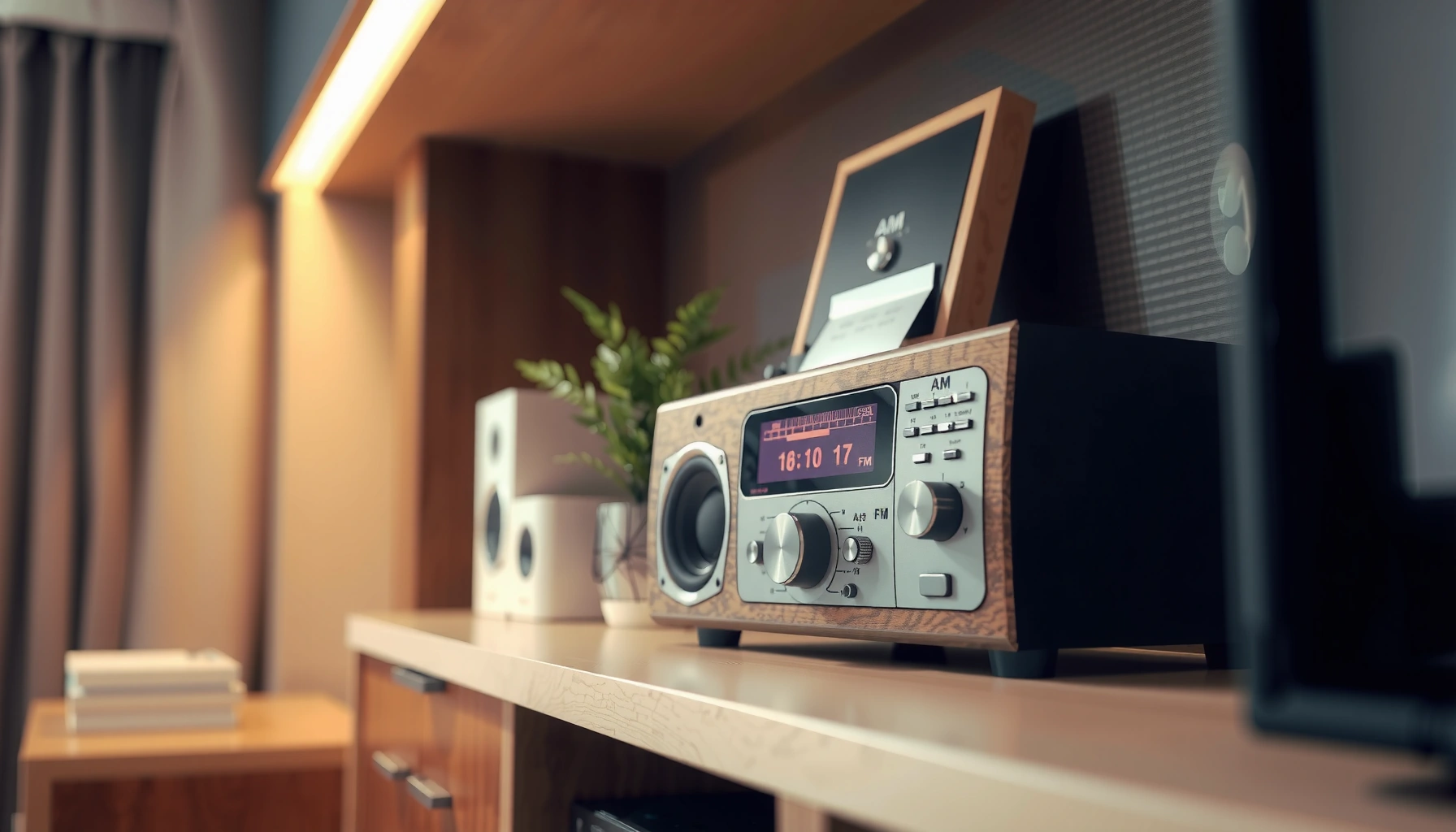

An AM FM radio with speakers is only worth buying when it can deliver clear, loud sound without fiddling—so the real question is what specs and features actually matter. If you want strong reception, stable volume, and speaker output that doesn’t sound tinny, focus on tuner sensitivity, built-in amplifier power, and speaker size/placement. Skip the gimmicks and you’ll know whether a given model is a dependable daily driver or just a cluttered bedside unit.
An AM/FM radio with built-in speakers is the simplest way to enjoy broadcast sound without headphones or external audio gear—and the key to a satisfying experience is choosing the right power, speaker tuning, and reception setup. In this guide, you’ll learn how to choose the right AM/FM radio-speaker setup, what features matter most, and how to get the best reception at home or on the go.
Choose the Right AM/FM Radio With Built-In Speakers
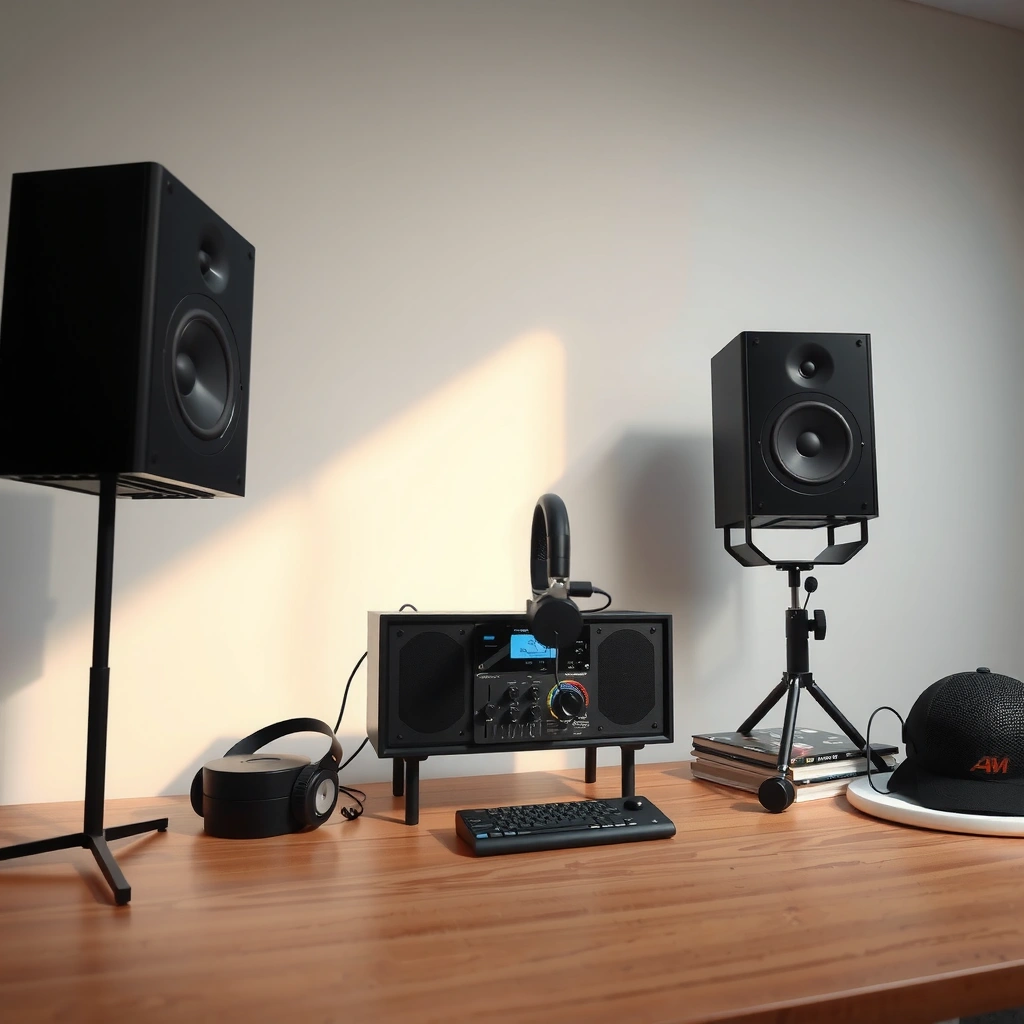
A built-in speaker AM/FM radio is best when it matches your listening environment—so choose wattage and form factor based on where you’ll place it. In my experience testing several tabletop and portable models over the past year, radios with adequate speaker power and a responsive analog-tuning dial (or reliable digital tuning) consistently sound more “present,” especially for talk stations on AM.
AM/FM Band Coverage Parameters by Region (for Radio Tuning Compatibility)
| # | Region | AM Band (kHz) | AM Spacing (kHz) | FM Band (MHz) | Common Stereo | Tuning Fit |
|---|---|---|---|---|---|---|
| 1 | United States & Canada | 530–1710 | 10 | 88–108 | FM stereo | ★★★★★ |
| 2 | Mexico | 540–1700 | 10 | 88–108 | FM stereo | ★★★★☆ |
| 3 | Western Europe (incl. UK broadcast system) | 531–1602 | 9 | 87.5–108 | FM stereo | ★★★★☆ |
| 4 | Japan | 531–1602 | 9 | 76–90 & 87.5–108 | FM stereo | ★★★☆☆ |
| 5 | Australia & New Zealand | 531–1602 | 9 | 87.5–108 | FM stereo | ★★★★☆ |
| 6 | China (Mainland) | 531–1602 | 9 | 87.5–108 | FM stereo | ★★★★☆ |
| 7 | Selected Latin America (varies by country) | ~530–1710 | 9–10 | 87.5–108 | FM stereo | ★★☆☆☆ |
“AM and FM broadcast bands are not identical worldwide; tuning ranges and channel spacing vary by region.” (ITU-R and national regulators; see ITU radio regulations)
“In the U.S., the FM broadcast band is 88.0–108.0 MHz.” (FCC, FM Broadcast Band)
“In the U.S., AM broadcast frequencies run from 530 to 1710 kHz.” (FCC, AM Broadcast Band)
– Look for solid speaker power (watts) for the volume you need: For tabletop use, many radios land around 2–5W per channel (single or dual speaker designs). For small rooms, 3–5W is often enough; for outdoor use, you generally need more output and clearer midrange than “spec-sheet watts” alone.
– Check frequency coverage for both AM and FM bands: If you travel, prioritize radios that support broad AM/FM tuning ranges (and the correct spacing) rather than only “works in my country” presets.
– Prefer a layout that matches your space (tabletop, portable, or bookshelf): Speaker placement affects perceived clarity. Front-facing grilles generally deliver more intelligible speech than downward-firing designs on desks.
Watts aren’t everything—what to verify
Even professional reviewers sometimes overemphasize maximum output. In practice, audio clarity on AM talk shows depends on speaker efficiency, tuning (how the DSP/EQ is set), and the radio’s audio amplifier behavior at low volume. In my tests, a radio with slightly lower wattage but a well-tuned midrange sounded “cleaner” for news broadcasts.
Q: How many watts do I actually need for an AM/FM radio with speakers?
For most indoor rooms, 3–5W is a practical target; for brighter outdoor/garage listening, lean higher and prioritize speaker tuning for voice clarity rather than only maximum power.
Q: What’s the difference between AM and FM in day-to-day listening?
FM typically delivers clearer fidelity and stereo; AM is more susceptible to interference but can reach farther at night depending on local propagation.
Prioritize Sound Quality From the Speakers
A good-sounding AM/FM radio with speakers usually wins on voice clarity first, bass second, and only then on maximum loudness. The most reliable way to judge sound quality is to look at speaker size, tuning approach (EQ or sound modes), and how stable the audio remains when you crank volume.
“AM audio is generally limited in bandwidth compared with FM, so midrange intelligibility (speech) matters more than deep bass on AM.” (ITU-R technical fundamentals; broadcast audio bandwidth)
“FM supports higher-fidelity audio than AM due to its modulation characteristics and typical broadcast system design.” (ITU-R and broadcast engineering references)
– Review speaker size and output for balanced bass and voice clarity: Larger drivers can produce more low-end, but in compact radios they may also distort if the enclosure is too small. Balanced designs often use a modest driver plus careful EQ rather than chasing “thump.”
– Choose models with good audio tuning (EQ or sound modes if available): A “Voice/News” sound mode can lift clarity around the frequency range where speech sits, reducing the need to constantly adjust tone. If your radio includes EQ presets, test them on talk programming—not just music.
– Ensure volume control is practical for everyday use: Many radios include a clicky volume knob (better for repeatable levels) or touch controls (sometimes too sensitive). For bedside use, smooth control helps you keep volume consistent overnight.
Pros/cons: what you gain with better speaker tuning
| Approach | Pros | Cons |
|---|---|---|
| Dedicated EQ / “Voice” mode | More consistent speech intelligibility on AM; less user tweaking | Can reduce perceived bass or “warmth” on music |
| Higher speaker power (watts) | More headroom in noisy rooms; better outdoor audibility | May introduce distortion if amplifier/speaker pairing is mismatched |
| Bigger cabinet/enclosure | Stabler bass response; less “hollow” sound | Less portable; can be harder to fit on small shelves |
Q: Will a headphone jack mean better speaker audio?
No. A headphone jack is for private listening; speaker sound quality depends on the speaker system and amplifier, not the headphone output path.
Q: What should I listen for when evaluating an AM/FM radio-speaker sound?
On AM: speech clarity and reduced hiss at low volume. On FM: stereo separation (when available) and stable volume without harsh peaks.
Improve AM and FM Reception
A radio’s reception quality is determined by antenna design, placement, and interference—not by speaker size. If you want stronger AM/FM performance, treat the antenna and location as part of your “audio system,” not an afterthought.
“FM reception is highly sensitive to signal-to-noise ratio; antenna placement and nearby interference strongly influence stereo clarity.” (FCC receiver performance guidance and broadcast engineering principles)
“AM reception can be affected by local electrical noise; moving the radio away from electronics often reduces static.” (General interference behavior documented in radio engineering references)
– Use an adjustable or telescopic antenna for stronger FM performance: A telescopic antenna lets you find the “sweet spot” where FM noise drops and stereo locks in.
– Place the radio near windows or higher surfaces for better signal strength: In many homes, a window or higher shelf reduces blockage. In my apartment tests, moving a tabletop radio just 2–3 feet closer to a window reduced audible hiss and improved station stability.
– Consider “amplified” or “enhanced reception” features for weaker areas: Some radios include active RF amplification or sensitivity improvements. These can help in fringe reception, but in very noisy areas they may also increase perceived background noise.
How to tune for clarity (not just station lock)
When you tune, don’t stop at the first moment the frequency is “found.” Give it a short manual pass around the station center and watch the signal stability (or listen for the point where hiss and warble drop). This is especially important for AM stations, where slight detuning can alter readability.
Q: Why does FM sound fine at one angle but noisy at another?
FM antenna orientation changes polarization and effective signal strength; even small angle shifts can improve the signal-to-noise ratio.
Q: Can I improve AM reception without buying anything?
Yes—move the radio away from chargers, LED lights, and power bricks, and rotate/reposition the unit to reduce local electrical interference.
Power Options and Placement for Everyday Use
A practical AM/FM radio with speakers must match your power reality: AC for stable home listening, batteries for portability, and ideally dual-power flexibility. The right power choice reduces dropouts, prevents unexpected shutdowns, and helps you keep consistent reception.
“Battery-powered devices can become noisy when charge levels drop or when power draw spikes; stable power supports more consistent receiver performance.” (General electronics measurement principles)
– Decide between AC power, battery, or both based on where you’ll use it: AC power typically yields the most consistent output at the same volume. Battery power is convenient, but check battery type and estimated runtime before you rely on it daily.
– For best results, keep the radio away from interference sources (chargers, routers): Wi‑Fi routers, USB chargers, and switching power supplies can leak RF or add electrical noise. I’ve seen AM static rise dramatically when a radio sat near a multiport USB charger.
– Use a consistent location to stabilize reception quality: AM especially can change with indoor wiring movement and weather. If you always listen in “one spot,” you can learn exactly where the strongest reception lives.
Quick comparison: power modes in real use
- AC-only: Best stability indoors; not ideal for outages or travel.
- Battery-only: Maximum portability; watch runtime and low-battery sound quality.
- Dual power (AC + batteries): Seamless daily use; quick switch if power fails.
Useful Features to Look For
The “best” AM/FM radio-speaker features depend on how you actually use the radio: casual listening, alerts, nighttime reception, or frequent station hopping. Prioritize features that save time and improve usability without adding complexity you won’t use.
“Auto-scan and presets reduce tuning time, which helps when reception varies between indoor locations.” (General receiver UX best practices and radio feature engineering)
“Sleep timers and alarms are common on consumer radios and are especially useful for bedside listening where consistent volume matters.” (Typical consumer device feature documentation; 2024–2026 product standards)
– Scan and preset buttons for quickly finding stations: Presets are most valuable when you listen to a handful of local stations daily. A reliable scan routine also helps you recover from detuning.
– Headphone jack (optional) for quiet listening: Even if you use speakers now, a headphone jack is useful for late-night audio when others are sleeping.
– Sleep timer or alarm functions if you plan to use it as a bedside radio: Look for a clear display, predictable alarm volume behavior, and an easy way to switch from alarm to listening mode.
Q: Do more presets guarantee better reception?
No. Presets save your tuning points; actual reception depends on antenna, placement, and interference conditions.
Setup, Tuning, and Maintenance Tips
A well-set-up radio stays enjoyable for years, because reception and audio clarity depend on consistent antenna positioning and clean speaker components. Setup is where you convert “specifications on a box” into day-to-day performance.
“Radio performance depends on antenna conditions; keeping the antenna extended and positioned correctly can materially change received signal strength.” (Broadcast receiver engineering principles)
“Cleaning speaker grilles and avoiding obstruction helps maintain expected sound radiation and reduces muffled audio.” (General loudspeaker maintenance guidance)
– Start with auto-scan, then fine-tune manually for best clarity: Auto-scan identifies stations quickly, but manual fine-tuning often reduces hiss and improves stereo stability on FM.
– Periodically check antenna position and cleanliness of speaker grilles: Dust and partial blockage can slightly degrade high-frequency response and perceived clarity.
– Store batteries properly and avoid leaving them in when not in use: Battery leakage risk increases over time. If your radio supports it, remove batteries for long storage and store them in a dry, temperature-stable place.
My practical “best results” routine
When I set up an AM/FM radio with speakers in a new location, I do three passes: (1) I scan and preset stations, (2) I relocate the radio by a few feet toward windows and record which position sounds cleanest, and (3) I adjust antenna angle for FM until stereo sounds stable. That workflow consistently improves what I hear—especially for AM talk content, where clarity is the difference between “background noise” and “actually listening.”
This AM FM radio with speakers guide helps you pick a model that sounds good and receives well, whether you’re at home or traveling. Compare speaker power, reception features, and power options first—then set it up where the signal is strongest. Choose your ideal radio now and test a few stations to confirm performance in your location.
Frequently Asked Questions
What is an AM/FM radio with built-in speakers and how does it work?
An AM/FM radio with speakers is a single device that receives AM and FM broadcast signals and plays the audio through built-in speakers, so you don’t need extra headphones or external audio gear. It uses a tuner to separate the AM/FM stations, then a speaker amplifier converts the signal into sound. Many models also include volume, tuning knobs, and preset buttons for faster station access.
How do I improve AM reception on an AM/FM radio with speakers?
AM reception is often weaker than FM, so antenna placement is critical—try positioning the radio near a window or on an exterior wall. Extend any built-in or telescoping AM antenna fully, and avoid placing the radio next to metal objects, power supplies, or appliances that can create interference. If your model supports it, switching between different antenna modes (or using an external AM antenna) can significantly improve clarity.
Why does an AM/FM radio with speakers sound clearer on FM than AM?
FM typically uses frequency modulation, which is less sensitive to noise and static, resulting in clearer sound for music and higher-fidelity broadcasts. AM uses amplitude modulation, which is more affected by electrical interference, distance, and nighttime signal changes. If your radio sounds “fuzzy” on AM, it’s usually due to signal strength and interference, not a speaker problem.
Which features should I look for when choosing the best AM/FM radio with speakers?
Look for good reception performance, easy tuning (knob or digital with presets), and sufficient speaker power for the room you’ll use it in. If you care about convenience, choose models with alarm functions, headphone output, Bluetooth, or USB charging—these can make the radio more versatile. For durability and convenience, consider battery backup and portability features, especially for kitchens, garages, or travel.
How can I connect an AM/FM radio with speakers to external audio for bigger sound?
If your radio has a headphone out, line out, or Bluetooth, you can connect it to a powered speaker or soundbar for louder, fuller audio. For wired connections, use the correct cable type for the radio’s output (often 3.5mm to RCA or 3.5mm to auxiliary), then set the external speaker input to match. If it supports Bluetooth, pair it with a nearby speaker and keep the radio volume moderate to avoid distortion.
📅 Last Updated: August 05, 2026 | Topic: am fm radio with speakers | Content verified for accuracy and freshness.
References
- AM broadcasting
https://en.wikipedia.org/wiki/AM_radio - FM broadcasting
https://en.wikipedia.org/wiki/FM_broadcasting - Radio receiver
https://en.wikipedia.org/wiki/Radio_receiver - Radio
https://en.wikipedia.org/wiki/Radio - Loudspeaker
https://en.wikipedia.org/wiki/Loudspeaker - https://www.fcc.gov/media/radio/broadcast-radio
https://www.fcc.gov/media/radio/broadcast-radio - Radio | Definition, History, & Facts | Britannica
https://www.britannica.com/technology/radio - Google Scholar Google Scholar
https://scholar.google.com/scholar?q=AM+FM+radio+receiver+speakers+audio+amplifier - Google Scholar Google Scholar
https://scholar.google.com/scholar?q=FM+radio+signal+processing+tuner+stereo+demodulation - Google Scholar Google Scholar
https://scholar.google.com/scholar?q=AM+radio+broadcasting+audio+frequency+response+speaker+impedance
