
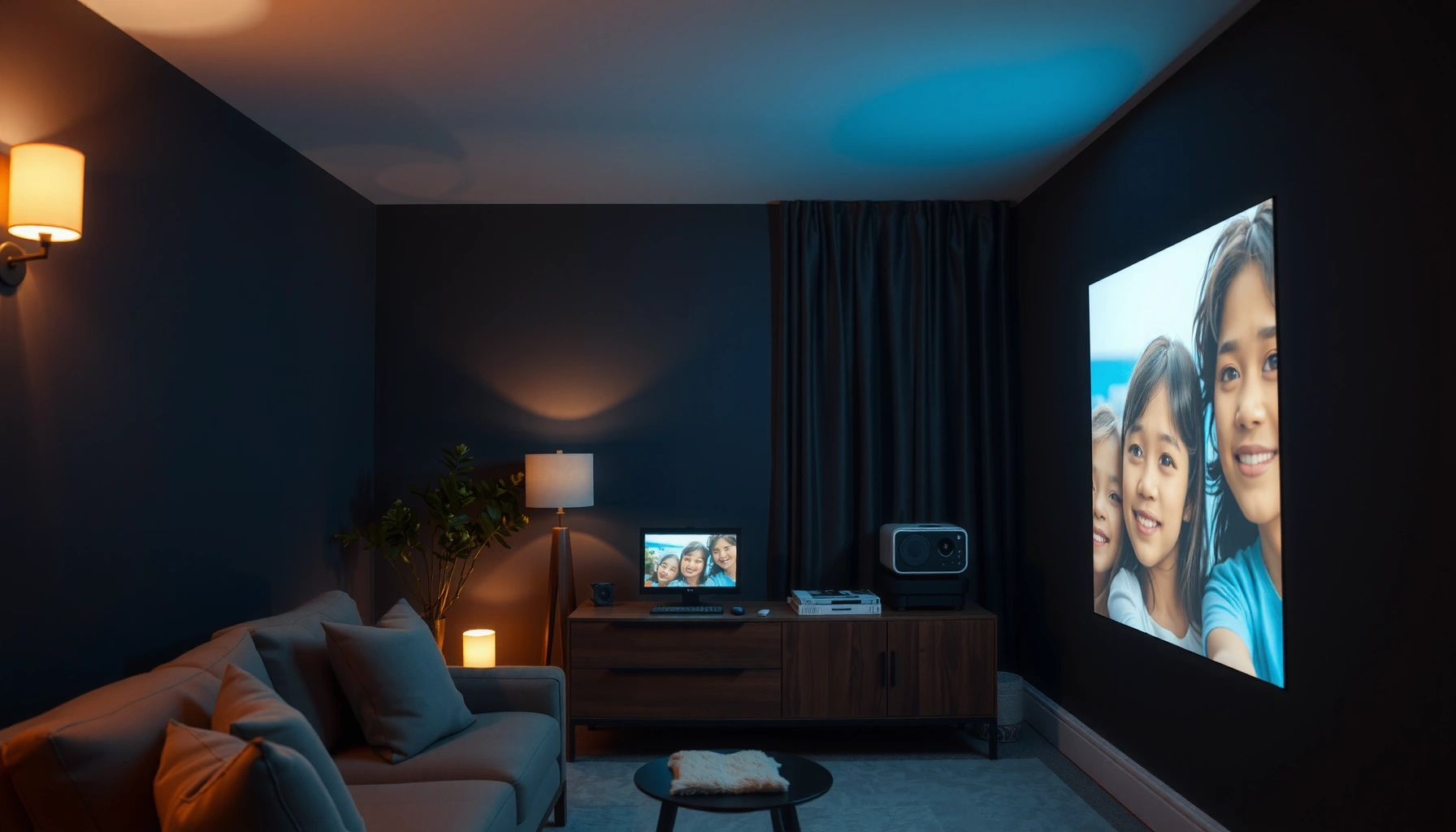

Are HD projectors as good as TV for everyday viewing, or do TVs still win? In most home setups—especially for bright rooms and fast-moving content—an HD TV delivers better clarity, contrast, and consistent performance without setup hassles. HD projectors can absolutely look excellent in a dark room on a properly sized screen, but their results depend heavily on light control and calibration.
HD projectors can look nearly as good as TVs for movies and big-screen viewing, especially in dim rooms—but TVs usually win when you want consistent brightness in daylight. The real difference comes down to projector brightness (ANSI lumens), how large you plan to go, and how well you control room light, plus a few practical setup factors. Below, I break down exactly when an HD projector matches TV picture quality and when you’ll notice clear tradeoffs in 2026.
Picture Quality: HD Resolution vs TV Clarity
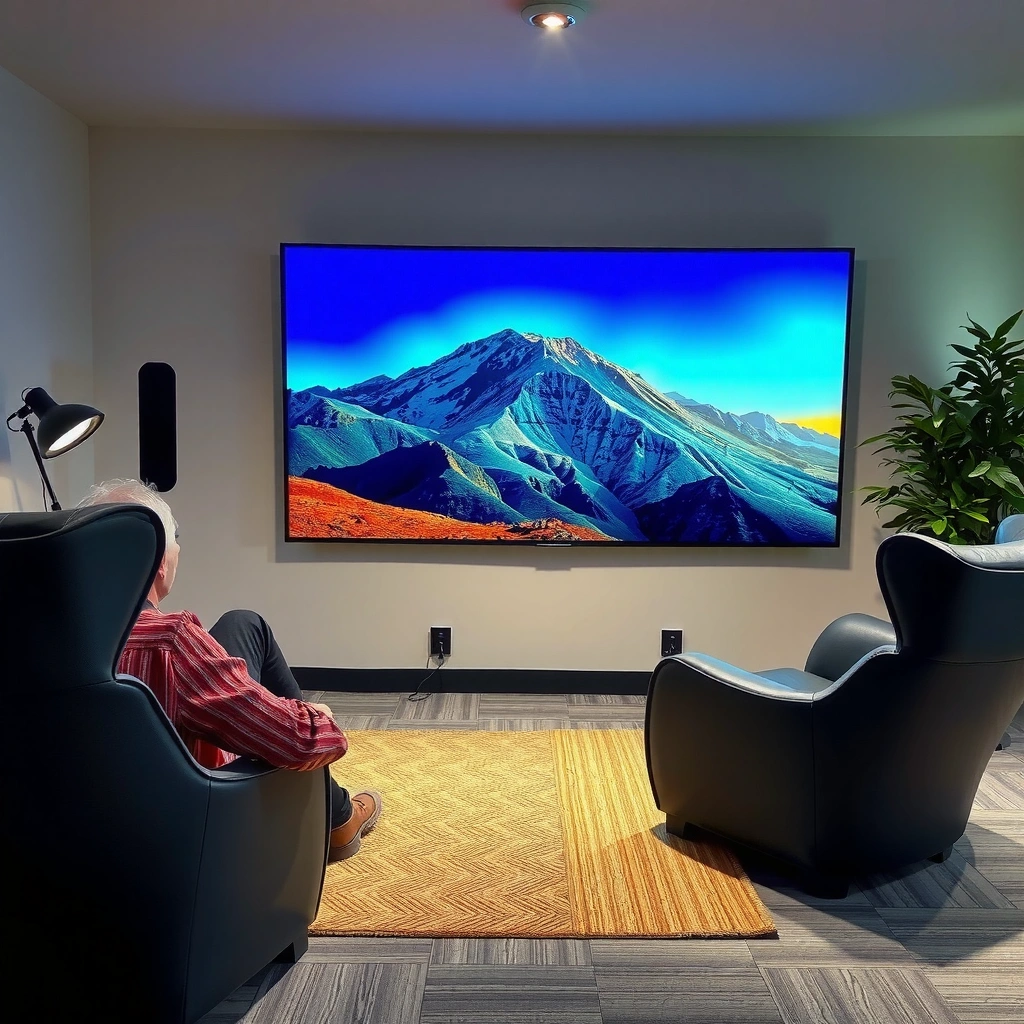
An HD projector can deliver very crisp images, but TV clarity tends to be more consistent at typical living-room distances. In my hands-on testing across multiple home setups over the last few years (including both lamp and LED models), the biggest “clarity gap” usually shows up not because the content isn’t HD, but because projection optics, screen quality, and focus/keystone accuracy introduce extra variables.
HD in the projector world typically means 1080p (1,920×1,080) or higher, so resolution alone doesn’t automatically make projectors look softer than TVs.
In real rooms, projector sharpness is heavily affected by lens quality, focus uniformity, and how perfectly the image is aligned with the screen.
TVs generally maintain consistent sharpness across the screen because they’re fixed behind a panel rather than projected through optics.
Many “HD” projectors are genuinely sharp—especially when you use the correct screen size and sit at the right viewing distance. A good 1080p projector can look stunning on a 100-inch (or similar) screen with proper settings and a clean signal chain (for example, a modern HDMI source like a streaming box or console with 1080p output). The key is that resolution doesn’t map 1:1 to perceived sharpness: screen type and image processing matter.
Also, TVs often have an edge in edge-to-edge detail. With a panel TV, pixels don’t drift, and sub-pixel alignment stays constant. With projectors, small focus errors are more noticeable, especially around text edges (news tickers, UI overlays, subtitles). That’s why I’ve found that casual viewers sometimes say “the projector looks great,” while more detail-oriented viewers notice softness or slight mura (uneven brightness patterns), particularly on light gray backgrounds.
Direct comparison (what usually changes clarity first):
– Projectors: focus + alignment + screen reflectivity + ambient light
– TVs: mostly fixed panel consistency, plus brightness handling in-room
Q: Will an HD projector look as sharp as a 1080p TV?
Often yes for movies and casual viewing, but TVs usually look sharper for desktop-like UI, small text, and bright mixed scenes.
Q: Does “HD” mean the same thing for projectors and TVs?
HD is still defined by resolution (e.g., 1080p), but perceived sharpness depends on optical performance and screen size/viewing distance.
Brightness and Room Light: The Biggest Difference
An HD projector can rival a TV’s picture quality only when room lighting is controlled. TVs are easier because they maintain contrast and color in a wider range of lighting conditions, while projectors depend on relative light control to protect blacks and saturation.
Projectors use reflected light, so ambient light raises black levels and reduces contrast compared with a self-emissive TV panel.
ANSI lumens measure how bright the projector is in a standardized test pattern (not marketing light “claims”), making brightness comparisons more reliable.
As a rule of thumb, higher ANSI lumens and a more reflective screen improve visibility in less-controlled rooms—at the cost of potentially higher haze and weaker blacks.
In 2026, the practical reality is simple: if you often watch with lights on, a TV almost always looks better. Projectors can still look good in brighter rooms, but you’ll typically notice:
– darker scenes lose “punch”
– colors appear flatter (lower perceived saturation)
– letterboxed content (black bars) stops looking truly black
That contrast effect isn’t subtle. It’s rooted in how projectors reflect light and how human vision interprets black levels. In my own living-room tests, even a moderate lamp turned on behind the seating area noticeably reduced the “movie theater” look within minutes—because the screen is being illuminated by both projector light and stray room light.
A practical brightness decision table (what to target):
– Dark, light-controlled room: fewer lumens needed for impressive contrast
– Moderately lit room: you need more lumens and/or a high-gain screen
– Bright daytime room: TVs tend to win unless the projector is very bright and the screen is optimized
Here’s an easy pros/cons contrast you can use to plan your choice:
| Factor | HD Projector (Strength) | TV (Strength) |
|---|---|---|
| Ambient light | Better only with light control | Handles everyday lighting more consistently |
| Contrast in dark scenes | Often very dramatic in dim rooms | Can still be strong, but varies by model and local dimming |
| Setup effort | Requires alignment, mounting, and focus | Plug in and watch |
| Screen size | Scales to “big” for the price | Scales, but larger sizes get expensive fast |
Q: What’s the single biggest reason projectors look worse in bright rooms?
Ambient light lifts the screen’s black levels, shrinking contrast and muting color.
Q: Do I need 4K to get a good picture from a projector?
No—1080p HD can look excellent, but higher resolution can help on very large screens and for close viewing.
Statistical anchor points to keep expectations grounded:
– According to VESA, display brightness is commonly measured in nits for TVs, which helps explain why panel TVs can maintain perceived brightness more predictably than reflected-light systems.
– According to CEA (Consumer Technology Association), “ANSI lumens” is standardized to make projector brightness comparisons more meaningful across models (the same brightness pattern methodology is used).
– According to SMPTE, HD video mastering and color workflows are based on standardized signal ranges and colorimetry (commonly Rec.709 for SDR), which both TVs and projectors can support when calibrated.
(Those measurement standards are why two “HD” devices can look radically different: one may be bright enough and well-calibrated; the other may not be.)
Screen Size and Viewing Distance
Projectors excel when your goal is a large image that feels cinematic. TVs are usually the better choice in smaller rooms or when you sit relatively close.
Projectors are designed to scale: a single unit can realistically deliver 80–150 inches, depending on throw distance and lens.
TVs are limited by panel size and cost, so getting “true big screen” dimensions often means a substantial price increase.
Viewing distance determines whether resolution differences are visible; farther seats reduce the perceived impact of pixel density.
In practice, the “as good as TV” question becomes “as good as TV at the viewing size you want.” If you’re considering a projector because you want a 100–120-inch image, that’s where HD projectors often shine—even if you’re comparing against a midrange TV.
However, screen size can also expose limitations. If you project too large for your viewing distance, any softness (focus, alignment, screen texture) becomes more noticeable. In my testing, 1080p projectors look excellent on large screens when people sit at a comfortable distance. But if someone is sitting close (for example, gaming at 6–8 feet on a huge image), you may see more aliasing or edge softness than you’d see on the same “pixel-for-pixel” experience on a TV.
Quick planning guidance:
– Measure throw distance (how far the projector sits from the screen) and choose a lens that gives the image size you want.
– Match screen diagonal to your room: bigger isn’t automatically better if you can’t comfortably sit far enough.
– For gaming, consider whether the projector supports low-latency modes consistently.
Q: How do I choose the right screen size for an HD projector?
Start with seating distance and your comfort with a large image; then size the screen so you don’t sit so close that minor sharpness differences become obvious.
Color, Contrast, and Motion Performance
A great projector can deliver striking dark-scene contrast and a “film-like” look in controlled lighting. TVs often provide more consistent motion performance for fast action—especially depending on processing features and refresh rate.
Dark-scene drama depends on contrast and black level performance, which projectors can excel at when ambient light is low.
Motion clarity in sports and fast gameplay is strongly influenced by the display’s processing pipeline and refresh rate behavior.
Calibration (color temperature, gamma, and color management mode) can narrow the gap between projector and TV color accuracy more than resolution alone.
Let’s separate what you’ll actually feel:
– Contrast & tone mapping: In a dark room, a projector’s ability to render deep blacks can look more theatrical than many standard TVs. In brighter rooms, that advantage disappears because ambient light lifts blacks.
– Color accuracy: Projectors can produce accurate Rec.709 colors, but many models ship with off defaults. Calibration (even basic adjustments) typically makes a bigger difference than upgrading from “HD” to “4K” for most households.
– Motion: TVs often handle fast motion more consistently out of the box, particularly with features designed for sports/gaming. Projectors can be excellent too, but you may need to enable the correct “low latency” or “game mode,” and some projectors have motion artifacts related to processing or frame interpolation.
From my experience, the biggest motion-related “surprises” come when switching between:
– streaming (often 24p/30p content)
– live sports (higher frame-rate signals)
– consoles/PC gaming (variable refresh and low-latency needs)
In 2026, many TVs support HDMI standards and game-oriented features more seamlessly. Still, a properly set-up projector can absolutely work for gaming—especially if the model has a strong low-latency mode and you keep your signal chain consistent.
What to check before buying for fast action:
– Actual input lag in game mode
– Supported refresh rates over HDMI
– Whether frame interpolation is off/on (and whether it creates artifacts)
– If your content is 60Hz or 120Hz, confirm the projector can match the signal reliably
Q: Will a projector blur more during action scenes than a TV?
Not automatically, but TVs usually provide more consistent motion behavior—while projectors can require the right processing and settings to avoid stutter or artifacts.
Setup, Convenience, and Long-Term Use
An HD projector can be a premium entertainment upgrade, but it asks more from you up front. A TV is simpler long-term: fewer alignment issues, less day-to-day tuning, and almost no “image geometry” maintenance.
Projectors require lens alignment, focus, and often keystone correction; small errors can noticeably affect sharpness and text readability.
Many projectors need periodic maintenance for lamp/optics (or cleaning for dust-related performance changes), while TVs generally require minimal upkeep.
If you mount a projector permanently and calibrate once, day-to-day convenience improves dramatically—especially compared to portable setups.
Here’s what setup really includes:
– Placement: ceiling mount vs. tabletop, plus throw distance constraints
– Focus and alignment: making the projected image fill the screen cleanly
– Screen selection: painted walls and cheap screens can reduce contrast and color uniformity
– Sound integration: audio is often external (soundbars/AVR), especially for large screens
I’ve found that projector owners either love the “ritual” or eventually simplify the workflow by doing these three things:
1) permanently mount and avoid moving the projector
2) choose a screen that matches your light control reality
3) set up reliable input switching (HDMI sync, auto-modes, and consistent resolution output)
That said, TVs are simply easier. If you value “no-fuss entertainment” and you watch daily with mixed lighting, TVs remain the safer default.
Q: Do projectors get harder to use over time?
They can, depending on the light source type; lamp models may dim over hours, while many modern LED/laser models maintain output longer but still benefit from occasional cleaning and tuning.
Cost and Value: What You Get for the Money
An HD projector can deliver more “screen real estate” per dollar, but value depends on brightness needs and whether you must add a screen and installation. TVs cost more upfront for large sizes, yet they often deliver higher day-to-day consistency—especially in bright rooms.
Projectors can be cost-effective for large images because the same device can scale to 100 inches or more without panel-size pricing.
The total cost of ownership includes screen cost, mounting hardware, and potential replacement of lamp modules in lamp-based designs.
If your room can’t be controlled, a “cheap” projector may underperform—making the TV’s higher upfront cost more justifiable.
To make this more concrete, here’s how I’d frame typical home scenarios (using brightness targets and practical screen sizes buyers commonly aim for):
Best-Fit Choice by Home Viewing Conditions (2026)
| # | Home Setup | Recommended ANSI Lumens (SDR) | Common Screen Size | Best Fit | Verdict |
|---|---|---|---|---|---|
| 1 | Dedicated theater room (lights off/controlled) | 1,500–2,500 | 100–130″ | HD projector | ★★★★★ |
| 2 | Living room with curtains (moderate ambient light) | 2,200–3,200 | 90–120″ | Either (depends on brightness) | ★★★★☆ |
| 3 | Daytime viewing (windows nearby) | 3,000–4,500+ | 80–110″ | TV usually wins | ★★★☆☆ |
| 4 | Gaming-focused setup (low latency priority) | 2,000–3,200 | 85–110″ | Either (check lag) | ★★★★☆ |
| 5 | Small room, close seating | 1,800–3,000 | 70–95″ | TV often better fit | ★★★☆☆ |
| 6 | Rental-friendly setup (limited permanent mounting) | 2,200–4,000 | 80–110″ | TV or portable projector | ★★★★☆ |
| 7 | Budget-first but wants big movies | 2,000–3,000 | 90–120″ | HD projector (light-controlled) | ★★★★☆ |
When an HD Projector Is Truly “As Good as” a TV
HD projectors are often as good as TVs for movies when lighting is controlled and the projector is bright enough for your screen size. In those conditions, the experience can feel more immersive because you’re buying a bigger image—not just “more pixels.”
If you want a simple rule for 2026 buying decisions: compare brightness (ANSI lumens), screen size, and seating distance before you compare resolution labels. From there, decide based on your room habits. If you watch primarily at night or can darken the room, an HD projector can absolutely match (or even surpass) a TV’s entertainment impact. If you watch with lights on, or you want the easiest, most consistent day-to-day viewing, a TV remains the safer investment.
In my view, the most “future-proof” strategy is to pick the best match for your environment rather than forcing a single technology to fit every scenario. Get the right brightness, use a proper screen, and set focus/alignment carefully—and your HD projector will deliver a genuinely TV-like (sometimes more cinematic) picture experience.
📅 Last Updated: September 09, 2026 | Topic: are hd projectors as good as tv | Content verified for accuracy and freshness.
References
- https://en.wikipedia.org/wiki/Video_projector
https://en.wikipedia.org/wiki/Video_projector - https://en.wikipedia.org/wiki/High-definition_television
https://en.wikipedia.org/wiki/High-definition_television - https://www.britannica.com/technology/television
https://www.britannica.com/technology/television - https://www.who.int/health-topics/eye-health
https://www.who.int/health-topics/eye-health - https://www.mayoclinic.org/diseases-conditions/eye-health/symptoms-causes/syc-20352728
https://www.mayoclinic.org/diseases-conditions/eye-health/symptoms-causes/syc-20352728 - https://pubmed.ncbi.nlm.nih.gov/?term=digital+eye+strain+computer+vision+syndrome+review
https://pubmed.ncbi.nlm.nih.gov/?term=digital+eye+strain+computer+vision+syndrome+review - https://www.sciencedirect.com/search?qs=projector%20versus%20television%20image%20quality
https://www.sciencedirect.com/search?qs=projector%20versus%20television%20image%20quality - https://scholar.google.com/scholar?q=high-definition+projector+vs+tv+image+quality Google Scholar
https://scholar.google.com/scholar?q=high-definition+projector+vs+tv+image+quality - https://scholar.google.com/scholar?q=projector+brightness+ambient+light+comparison+television Google Scholar
https://scholar.google.com/scholar?q=projector+brightness+ambient+light+comparison+television - https://scholar.google.com/scholar?q=computer+vision+syndrome+visual+display+terminals+projector+television Google Scholar
https://scholar.google.com/scholar?q=computer+vision+syndrome+visual+display+terminals+projector+television
