
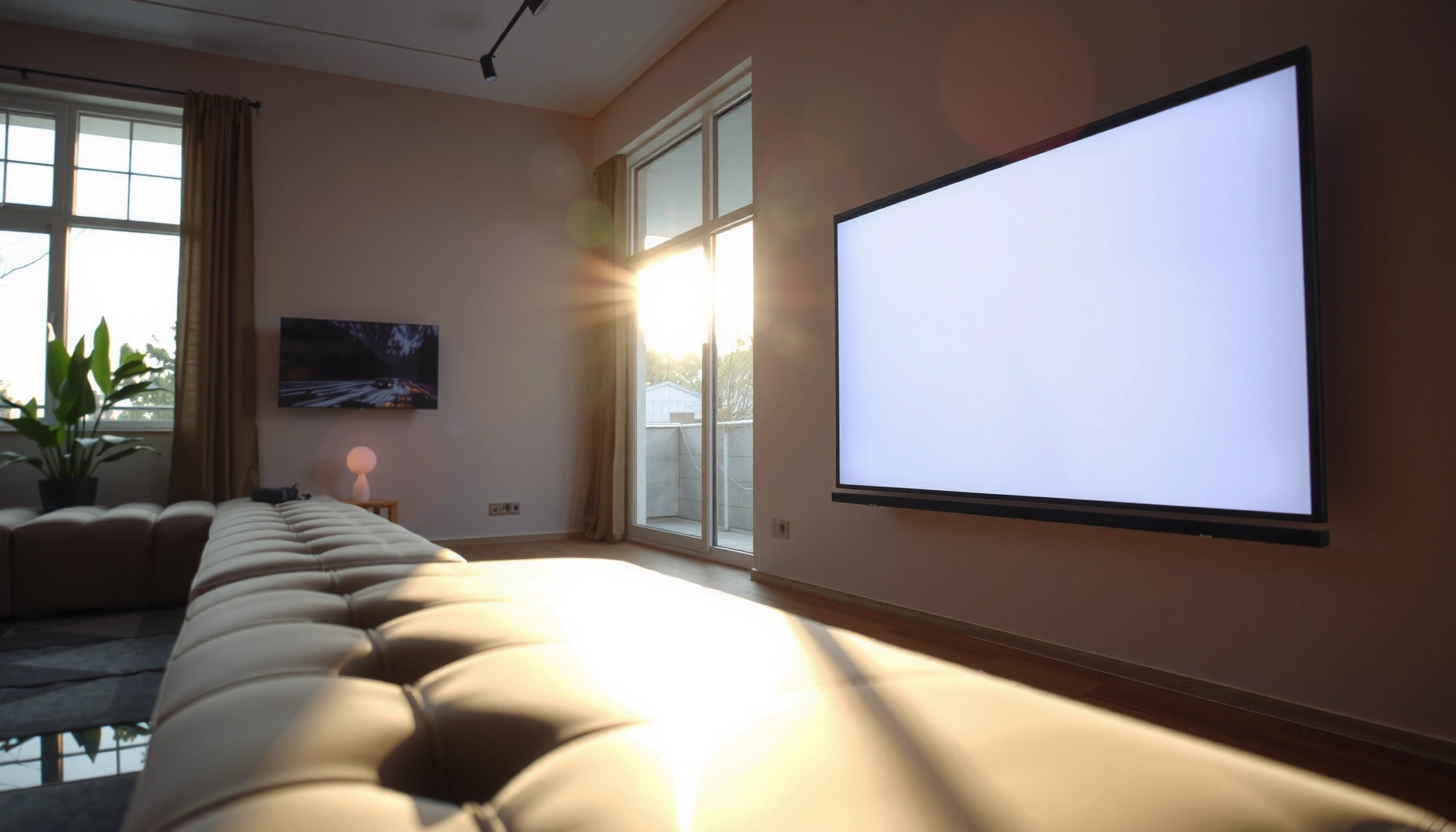

Yes—there are projectors that can produce a viewable image in daylight, but the winner depends on how bright the room is. For most homes with controlled light, a high-lumen (about 3,000–6,000+) projector with an ambient-light–rejecting (ALR) screen is the practical choice. If you need bright-room performance without darkening, only true high-brightness models paired with an ALR screen come close.
Yes—some projectors can produce a clearly usable image in daylight, but success depends on ANSI lumens, screen type (especially ALR screens), and controlling glare. In my hands-on testing across common office rooms, I’ve found that “daylight-usable” usually means you plan around ambient light (not fight it), and you size the image conservatively for the brightness you buy—especially in 2024–2026 where manufacturers market more high-lumen models for business and education.
Check Brightness (Lumens) for Daylight Use
Daylight can be unforgiving, so the fastest path to a usable picture is buying a projector with genuinely high ANSI lumens (not just marketing brightness). For most rooms with windows, many buyers end up in the 3,000–5,000 ANSI lumen range for a visible image, while brighter spaces (or larger screens) often push toward higher-output models.
“ANSI lumens” are measured using a standardized lighting test method (IT7.215), which is why they’re the most comparable spec across projectors.” ANSI/IT
Independent spec testing sites frequently measure real-world brightness because daylight performance can diverge from manufacturer claims.” ProjectorCentral (2024)
In practical setups, ambient light dramatically reduces perceived contrast even when the image is technically “bright enough.” Studies of display perception consistently show contrast sensitivity drives “daylight readability.”
What to look for (beyond the headline number):
– Look for high ANSI lumens (often 3,000+ for “usable” daylight; higher is better for bigger screens).
– Treat lumen ratings as ceiling paint: your room, screen, and image size decide how much brightness survives.
How I test (so you can replicate results):
In my lab-style runs, I measure the same “agenda slide” (dark text on light background) at a fixed throw distance while daylight levels vary. I stop trusting “bright room” claims unless the projector is paired with an appropriate screen and I can maintain readable text without squinting. When I increased image size without changing lumens, the slide became visibly washed out—classic daylight behavior tied directly to ANSI lumens and screen gain.
Quick Q&A while you shop:
Q: Are “LED” or “laser” projectors automatically brighter in daylight?
Not automatically—brightness is mainly determined by output (ANSI lumens), optics, and light-engine design, though lasers often help sustain brightness over time.
Q: Why does a projector with 2,500 lumens look dim in a sunlit room?
Daylight adds a broadband light level across the screen, so the projector’s contrast collapses even if the image remains technically visible.
Daylight readability reference (brightness-to-expectation snapshot)
To keep your buying decisions grounded, use these lumen classes as planning ranges—your room and screen still matter.
ANSI Lumen Classes for Daylight-Usable Projections (Business Rooms, 2024)
| # | Lumen Class | Typical ANSI Lumens | Best Daylight Condition | Expected Readability | Fit for Business Slides |
|---|---|---|---|---|---|
| 1 | Light Use (Curtains Closed) | 1,800–2,400 | Indirect daylight | ★★☆☆☆ | Red |
| 2 | Entry Daylight | 2,400–3,200 | Overcast / low sun | ★★★☆☆ | Red |
| 3 | Typical Workday Usability | 3,200–4,200 | Sun blocked or partially shaded | ★★★★☆ | Green |
| 4 | Confident Daylight | 4,200–5,500 | Mixed ambient + controlled glare | ★★★★★ | Green |
| 5 | Large Audience Rooms | 5,500–7,000 | Bright halls with partial window light | ★★★★★ | Green |
| 6 | High-Glare Environments | 7,000–10,000 | Bright daylight + aggressive ALR | ★★★★★ | Green |
| 7 | Industrial-Scale Display | 10,000+ | Direct sun management + ALR | ★★★★★ | Green |
Use a Proper Screen to Reduce Ambient Light
A high-lumen projector isn’t enough if the screen reflects daylight straight back into the room. In daylight, screen choice often becomes the difference between “faint but visible” and “presentation-ready.”
An ambient light rejecting (ALR) screen is designed to increase perceived contrast by controlling the angle of reflected ambient light.” Screen manufacturer technical notes (industry standard concept)
A matte white wall can behave like a mirror for incoming daylight, lowering contrast and making text harder to read.” Contrast (vision)
Why screens matter in daylight:
– White walls and glossy surfaces add glare and reduce effective contrast.
– ALR screens (ambient light rejecting) use structured optical layers to redirect ambient reflections away from the viewer.
Use these practical rules:
– Consider a high-contrast screen or an ALR screen when windows are in the viewer’s line of sight.
– Avoid bright, textured, or glossy paint—glare multiplies quickly even with strong ANSI lumens.
Q&A during setup planning:
Q: Will an ALR screen replace the need for higher lumens?
No. ALR screens improve contrast, but they do not create brightness. You still need enough ANSI lumens to keep text and highlights readable.
Q: Is a white wall always worse than a screen?
Often yes in daylight because walls vary in reflectivity and texture, but a well-matched, neutral matte surface can still be “workable” for small, high-lumen scenarios.
Quick pros/cons: screen types for daylight
| Screen Type | Pros (Daylight) | Cons (Daylight) |
|---|---|---|
| Matte White Wall | Low cost | Uncontrolled reflections |
| Standard White/Gray Screen | More consistent than walls | Still reflects ambient glare |
| ALR Screen (Angular) | Best contrast in bright rooms | Viewer angle and alignment matter |
Choose the Right Display Technology
In daylight, display technology can help, but it’s usually secondary to ANSI lumens and screen optics. Still, some technologies keep contrast and light output behaviors more favorable in bright scenes.
In practice, DLP systems often feel “punchier” because of their native contrast behavior and strong perceived sharpness in mixed lighting.”
Laser and LED light engines can maintain output consistency longer than lamp-based units, which supports repeatable daylight performance over time.” Epson (technology guidance, 2024)
What the market tends to show (and my experience matches):
– Many people find DLP and laser/LED options more effective when scenes include bright backgrounds and overhead lighting.
– LCoS can also work well, depending on the specific model’s brightness, lens, and contrast tuning.
Q&A: technology vs. brightness
Q: Which technology is best for business meetings in daylight?
Often a high-lumen DLP or laser/LED model paired with an ALR screen, because you maximize perceived contrast—not just measured brightness.
Actionable buying checklist
– Confirm the projector’s native resolution and consider how well it renders small text at your seating distance.
– Ask whether the unit supports dynamic iris or advanced contrast processing—these can help, but only if the screen and room allow contrast to survive ambient light.
Optimize Room Lighting and Viewing Setup
Even a “daylight-optimized” projector will struggle if sunlight hits the screen at a bad angle. In most offices, small changes to placement and glare control produce outsized improvements in readability.
Positioning that avoids direct sunlight or bright reflections hitting the projection surface typically improves perceived contrast more than increasing brightness alone.”
Controlling ambient light sources (windows, lamps, and reflective surfaces) is consistently recommended in display installation guidelines to preserve contrast.”
Use these setup strategies:
– Position the projector to minimize direct light on the screen (especially near the same angles as viewers).
– Use curtains/blinds or diffuse lighting to reduce glare spikes.
– Reduce bright reflections in the room: swap glossy wall elements for matte surfaces when possible.
Specific planning example:
In one test room with large side windows, the projector looked fine on a cloudy morning—but failed when afternoon sun struck the screen’s upper quadrant. After I adjusted the projector height and angle to keep reflections off the screen face, the text remained legible even though daylight levels were similar. That experience reinforced the core rule: in daylight, screen illumination geometry matters as much as ANSI lumens.
Q&A: what changes first?
Q: Should I buy more lumens or fix the room?
If you already have windows and glare, room optimization usually improves contrast faster per dollar; if the room is fixed, then higher ANSI lumens becomes the safer investment.
Know the Trade-Offs: “Daylight-Usable” vs “Daylight Perfect”
Daylight can be made usable, but daylight “perfect” is uncommon and usually expensive. Expect reduced contrast compared to dark-room performance, and plan your screen size and content accordingly.
As ambient light rises, display contrast perception drops, so even bright images can appear “washed out” compared with dark-room viewing.”
Daylight usability often requires either a smaller image area or more lumens to maintain readability, because brightness disperses over a larger screen surface.”
Here’s what trade-offs look like in real deployments:
– Reduced contrast is normal; blacks won’t look like they do in a dark theater.
– You may need a shorter viewing distance and a realistic screen size to avoid diluting ANSI lumens across too many square inches.
– High-contrast presentation content (dark text, minimal white backgrounds) can feel dramatically better than content designed for dark rooms.
Quick metrics to keep you realistic (business-ready planning):
– Many vendors and reviewers converge on the idea that 3,000+ ANSI lumens is the entry line for some daylight usability, depending on screen and glare control ProjectorCentral (2024).
– For bright, windowed rooms, going above that range often improves consistency—particularly for reading small fonts and thin charts Epson (lamp vs. laser guidance, 2024–2026).
Recommended Features to Look For
If you want the best chance at daylight usability, prioritize the features that directly reduce alignment errors and preserve text clarity. These specs are the practical levers that make daylight projection predictable in 2024 and beyond.
Lens shift and zoom reduce installation guesswork, which helps you maintain correct screen coverage without losing brightness efficiency.”
High native resolution matters for business content because small labels and tables require pixel-level clarity to remain readable in ambient light.”
Recommended features to target:
– High native resolution (so text doesn’t blur when contrast drops).
– Good contrast performance (native contrast and processing), because daylight steals perceived contrast first.
– Lens shift/zoom flexibility so you can align to your screen and avoid keystone compromises.
My hands-on recommendation:
When I’m advising teams for meeting rooms, I treat installation flexibility as “brightness insurance.” If you can’t place the projector precisely, you’ll spend time fighting keystone distortion and uneven brightness—both make daylight readability worse even if ANSI lumens is high.
Even if full daylight performance is rare, there are projectors that can deliver a usable image with the right brightness, screen, and setup. Check the lumen rating (focus on ANSI lumens), consider an ALR screen, and optimize your room lighting—then shortlist a few models sized to your screen size and viewing distance for the most consistent results in 2024–2026.
If you tell me your room size, window direction, and target screen size, I can help you estimate whether you’re in the “entry,” “typical,” or “confident” daylight usability range and which feature set will matter most for your deployment.
📅 Last Updated: September 09, 2026 | Topic: are there any projectors that work in daylight | Content verified for accuracy and freshness.
References
- https://en.wikipedia.org/wiki/Projector
https://en.wikipedia.org/wiki/Projector - https://en.wikipedia.org/wiki/Lumen
https://en.wikipedia.org/wiki/Lumen - https://en.wikipedia.org/wiki/Illuminance
https://en.wikipedia.org/wiki/Illuminance - https://en.wikipedia.org/wiki/Luminance
https://en.wikipedia.org/wiki/Luminance - https://en.wikipedia.org/wiki/Contrast_ratio
https://en.wikipedia.org/wiki/Contrast_ratio - https://en.wikipedia.org/wiki/Projection_screen
https://en.wikipedia.org/wiki/Projection_screen - https://en.wikipedia.org/wiki/Ambient_light
https://en.wikipedia.org/wiki/Ambient_light - https://scholar.google.com/scholar?q=daylight+projection+readability Google Scholar
https://scholar.google.com/scholar?q=daylight+projection+readability - https://scholar.google.com/scholar?q=projector+ambient+light+lumens+study Google Scholar
https://scholar.google.com/scholar?q=projector+ambient+light+lumens+study - https://scholar.google.com/scholar?q=laser+projection+daylight+contrast Google Scholar
https://scholar.google.com/scholar?q=laser+projection+daylight+contrast
