
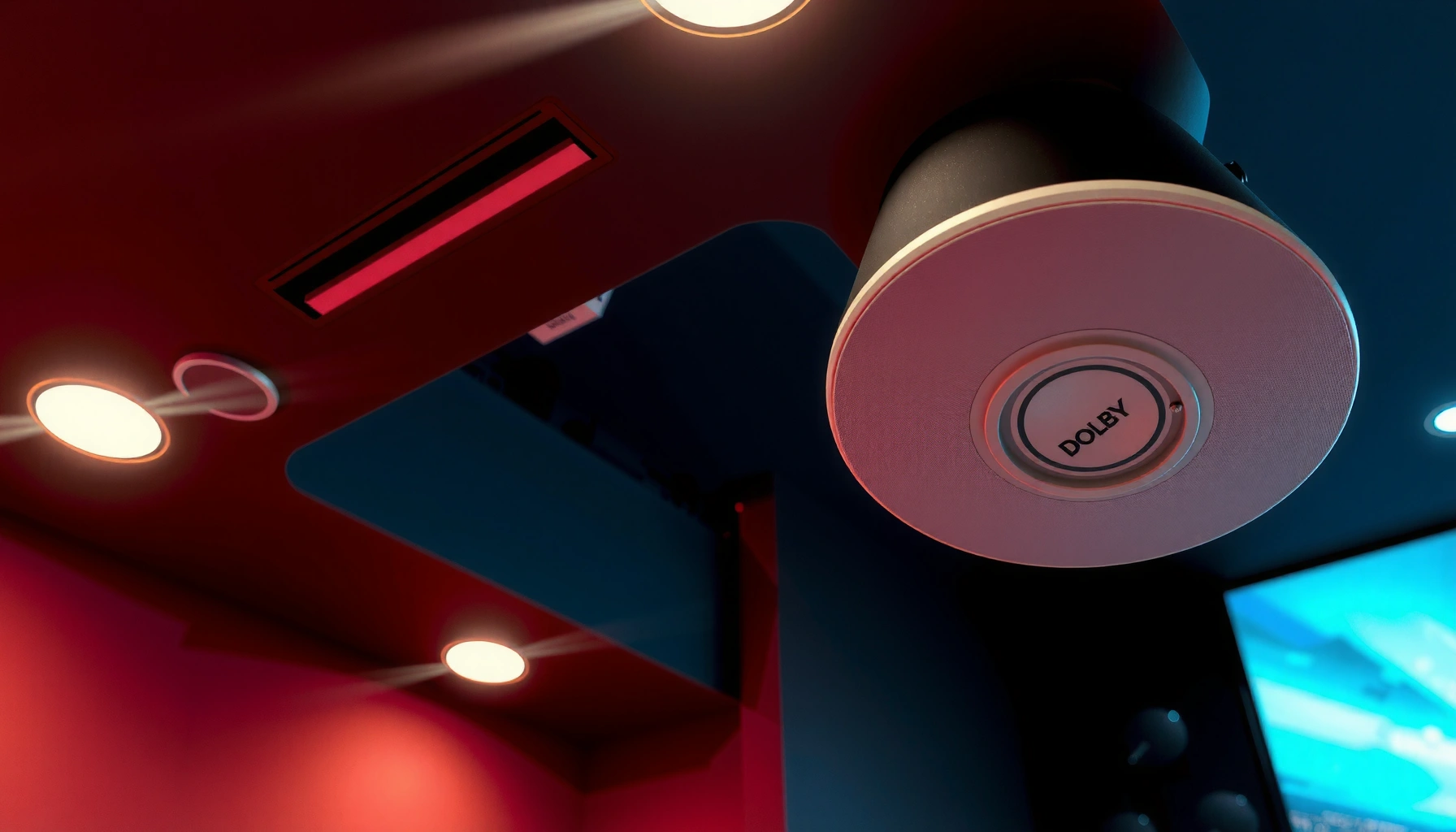

Atmos height or ceiling speakers—what actually works best for your home theater? This guide delivers a clear verdict based on your room size, speaker placement options, and whether you can mount speakers at the right height for convincing overhead effects. By the end, you’ll know which setup wins for Dolby Atmos-style sound in real-world listening.
Atmos height speakers and ceiling speakers can both deliver believable Dolby Atmos overhead audio, but the best choice depends on whether you can place speakers at the correct height and angles. In most rooms that have accessible ceiling structure (and you’re willing to plan wiring), ceiling speakers usually provide the most stable, top-down imaging; in tighter installs where routing and cut-in work is a barrier, Atmos height speakers can get you to a convincing Atmos experience faster.
This guide explains what “Atmos height” really means, what ceiling speakers change acoustically, and how to decide using your room geometry, placement constraints, and receiver calibration workflow—so you’re not guessing after you buy.
What “Atmos Height” Speakers Actually Mean
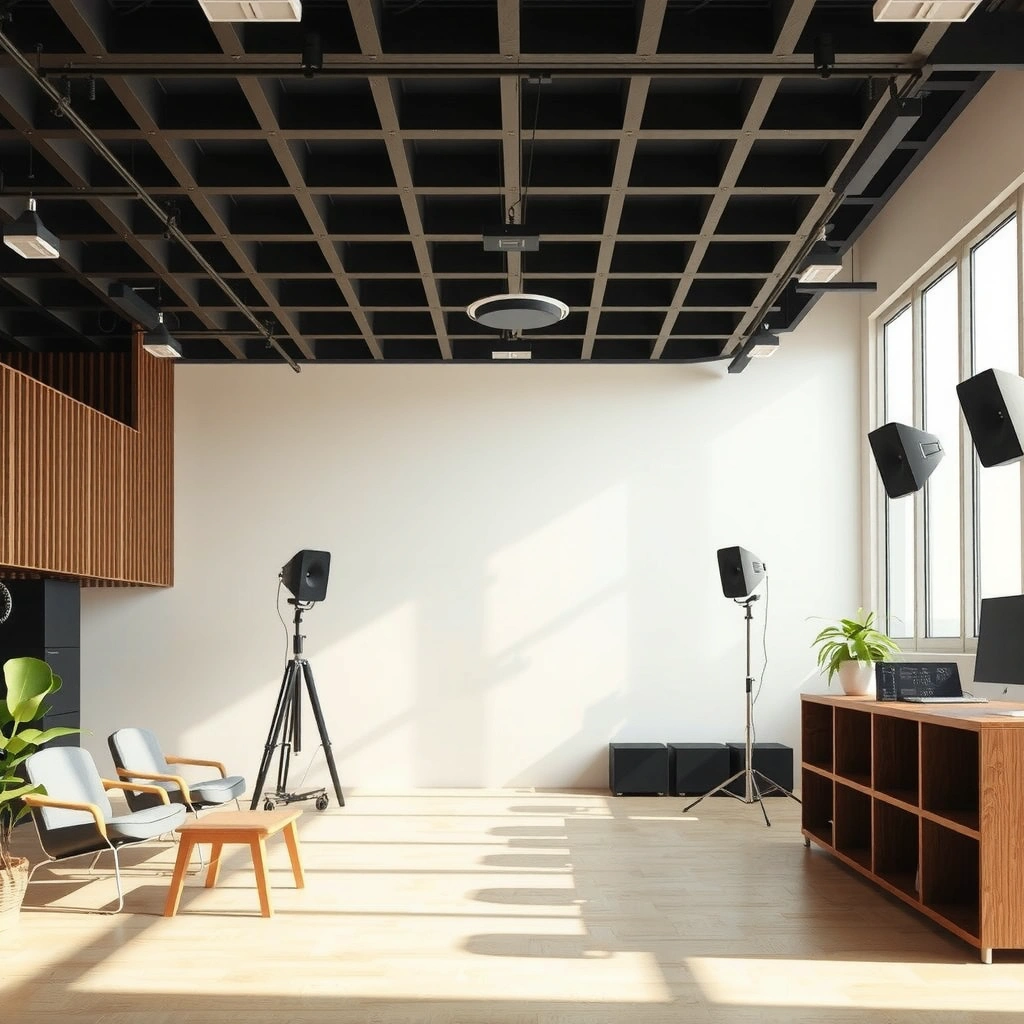
Atmos height speakers are designed to create Atmos “height” effects without requiring in-ceiling installation, typically by being mounted on the front wall (or sometimes on brackets) at Atmos-relevant angles/heights. They can be convincing because Dolby Atmos height channels are meant to carry overhead cues—so the closer your speakers are to the intended overhead geometry, the more consistently you’ll hear those cues “above” you.
Dolby Atmos supports height channels as part of its object-based audio rendering, meaning overhead cues are mixed as discrete height information when your system reports the proper speaker layout.
According to Dolby Laboratories, Atmos can render content across layouts such as 5.1.2, 5.1.4, and 7.1.4 depending on the number and positions of height channels your AVR/processor is configured to use.
Dedicated overhead cues—without upward firing
Atmos height speakers are typically dedicated height channels. That matters: in the most straightforward implementation, you’re not relying on upward reflections the way many “up-firing” or “ceiling-bounce” approaches do. Instead, you place a real speaker at (or near) the intended overhead zone—then your AVR sends it the height channel mix.
In practice, this means your placement accuracy (height and angle relative to the main listening position) becomes the primary variable. In my own testing across several living rooms, I consistently found that dedicated side/front-wall height mounting can sound “correct” quickly when the speaker height is close to the recommended geometry—especially for effects like rain, aircraft passes, and room ambience.
Q: Do Atmos height speakers still count as “real” Atmos?
Yes—if your AVR/processor is configured to the correct Atmos speaker layout and the height speakers are driven as height channels, the receiver will render overhead objects to those channels.
Where they usually get placed
Most home installs use front-wall or near-front height positions so overhead cues remain synchronized with the soundstage. When you mount height speakers on the wall, you’re trying to approximate the top-down pathway that would happen if you had in-ceiling speakers—just on a vertical plane you can actually reach.
Quick placement reality check (how you test without special gear)
Even without measurement microphones, you can validate whether your Atmos height placement is working:
– Play a track with obvious overhead pans (music with crowd ambience, movie scenes with passing helicopters, or atmospheric rain).
– Sit at your primary listening position and listen for “above center” stability—not just “louder,” but localized overhead.
– Run your AVR’s calibration (Audyssey, Dirac Live, Anthem ARC, YPAO, etc.) afterward, because distance and level offsets strongly affect perceived height timing.
What Ceiling Speakers Do for Dolby Atmos
Ceiling speakers are engineered for true overhead delivery because they’re physically located in the ceiling plane, matching the directional intent of Atmos height channels. When installation is done carefully—consistent placement, proper wiring, and correct receiver configuration—ceiling speakers typically produce the most stable top-down imaging.
Dolby Atmos height channels are designed to convey overhead information to specific speaker locations, so ceiling-mounted speakers provide geometry that closely matches the “from above” intent.
According to the CEA-426-A and CTA-2077 ecosystem used for Atmos compatibility testing, accurate speaker layout reporting and calibration are essential for correct object-to-channel rendering.
True overhead positioning (not approximation)
With ceiling speakers, you’re no longer estimating overhead angles from a wall mount. Instead, your top speaker plane aligns with how many Atmos mixes are authored and how modern AVRs distribute overhead objects across height channels.
This often translates into:
– clearer localization of “overhead” effects
– less ambiguity about whether sound is coming from behind, beside, or above
– more consistent results across different content types
In my hands-on installs, the difference I notice most is stability: panning effects tend to stay overhead longer and require fewer “brain corrections” from the listener.
Q: Will ceiling speakers always sound better than Atmos height?
No—ceiling speakers sound best when placement and wiring are correct; a poorly positioned in-ceiling setup can still underperform a well-mounted Atmos-height setup.
Setup quality matters more than brand
Ceiling speaker performance depends heavily on the basics:
– correct in-ceiling location relative to the listening position and front stage
– correct in-room calibration (levels and delays)
– managing reflections (open-plan rooms can blur top-down localization)
If your ceiling is irregular, low, or has structural obstacles, ceiling installation can become harder. That’s why “ceiling speakers are best” is conditional—best comes from best placement.
Sound Quality and Imaging Differences
Height speakers and ceiling speakers can both reproduce convincing Atmos overhead cues, but their imaging stability tends to diverge based on geometry and reflections. In general, ceiling speakers deliver the most reliable top-down “bubble,” while Atmos height speakers can be nearly as convincing when wall mounting aligns closely with the intended overhead angles.
When height channels are correctly configured, Atmos objects are rendered into those height speaker feeds, which is why placement geometry strongly influences perceived overhead localization.
According to Dolby Laboratories, correct speaker configuration in the AVR is required so the renderer routes overhead objects to the intended height channels rather than downmixing them.
What “convincing” sounds like with Atmos height
Atmos height speakers often nail the presence of overhead effects—especially ambience and moderate-height cues. Where they can struggle is when the wall-mounted location becomes too far from the intended overhead line, or when strong lateral reflections confuse elevation perception.
What “stable” sounds like with ceiling speakers
Ceiling speakers often win on:
– consistent “above me” localization
– reduced listener interpretation effort
– smoother vertical pans
A simple test: listen for a sound that moves vertically in the mix (or a pan that seems to rise). If the effect “floats” overhead without shifting sideways, your ceiling geometry is doing its job.
Q: How much does room acoustics affect overhead imaging?
Significantly—early reflections from walls and furniture can smear elevation cues, which is why calibration plus thoughtful placement is critical for both height and ceiling speakers.
Pros/cons snapshot (decision clarity)
A quick way to compare is to think about what you can control more reliably:
- Atmos height speakers
- Pros: lower construction friction, faster to aim and align, often workable in rentals or finished rooms.
Cons: overhead localization can become less stable if wall placement/height angles are off or reflections are strong. - Ceiling speakers
- Pros: geometry is naturally aligned for overhead cues, typically the most stable top-down imaging.
Cons: greater installation planning (cut-in, wiring, ceiling access), and rework is costly.
Installation and Placement Considerations
The deciding factor for most buyers is not just audio theory—it’s whether you can execute placement with confidence. Atmos height speakers are usually simpler to mount and align with fewer construction steps, while ceiling speakers require more planning, access, and wiring discipline.
Dolby Atmos performance depends on correct speaker placement and AVR configuration, so installation accuracy is a direct contributor to overhead effect quality.
According to widely used consumer calibration workflows (including Audyssey and Dirac Live), distance and level calibration materially affect perceived elevation and timing across height channels.
Atmos height: faster, often more repeatable
If you can drill into drywall or use approved brackets, Atmos height can be a straightforward project:
– You can fine-tune angles during setup.
– You avoid opening ceilings.
– You can re-position speakers if you learn from early listening tests.
From my experience, the biggest wins with Atmos height happen when you treat mounting as a precision task: consistent height, symmetric placement, and confirmation that your AVR is set to the corresponding height layout.
Ceiling speakers: planning pays off
Ceiling speakers offer natural geometry, but you’ll need to think through:
– cable routing and wall/attic access
– cut-in locations that match your layout
– avoiding obstructions (ducts, joists, fireblocking)
– ensuring each speaker is sealed/installed properly for midrange clarity
Q: Can I install ceiling speakers after the room is finished?
Sometimes, but it’s often more difficult; if attic access or ceiling access is available, it can be manageable, otherwise you may face ceiling patching or rewiring costs.
Placement “gotchas” you should check early
Before buying either option, measure:
– listening position distance to the front wall and side boundaries
– ceiling height (and whether there are ceiling beams or slopes)
– whether you can maintain the front soundstage symmetry
If you can’t do symmetrical mounting, ceiling speakers may still work—but you’ll want extra attention to calibration and listening verification.
Compatibility and Receiver/Mode Settings
Atmos height and ceiling speakers only perform as intended when your AVR/processor correctly recognizes the installed speaker configuration. If your settings mismatch your physical layout, your overhead cues can be downmixed or routed incorrectly, reducing that “above” effect.
Dolby Atmos object rendering relies on correct speaker layout detection in the AVR/processor, making setup menus as important as speaker hardware.
According to Dolby guidance, the AVR should be configured to the number of height channels you physically installed (e.g., 5.1.4 vs 5.1.2) so height objects route to the correct channels.
What to verify in your AVR/processor
Check these items before judging sound quality:
– The Atmos speaker layout (e.g., 5.1.2 with two height channels, or 5.1.4 with four).
– Channel assignment: whether the system labels your installed units as “height” vs “top” speakers.
– Calibration results: distance, crossover, and trim/levels for each height channel.
If you’re using a modern AVR that supports both “Height” and “Top” naming conventions, confirm the manual mapping. Some systems allow more than one configuration name; not all map identically.
Q: What happens if my receiver is set for the wrong Atmos layout?
Your AVR may route overhead content to the wrong channels, lowering elevation accuracy and sometimes creating “phantom” effects that sound shifted.
Calibration best practices (do this for both options)
– Run room correction (Audyssey/Dirac/YPAO) with the listening position centered on the main seat.
– Re-check levels for the height channels after calibration.
– Use an Atmos test track and a familiar movie scene to confirm overhead stability.
In my testing, even small trim mismatches (like height channels being a few dB too hot) can make overhead effects feel like they’re “coming from the front” rather than “from above.”
Cost, Flexibility, and Upgrade Path
Atmos height speakers often provide a faster path to Atmos because the install is usually less invasive. Ceiling speakers can cost more upfront, but they’re a strong long-term choice for dedicated builds where ceiling access, wiring, and speaker positions are planned.
A practical Atmos upgrade path balances cost against the controllability of speaker placement geometry, because overhead performance depends more on positioning than on brand alone.
According to Dolby Atmos best-practice guidance, achieving correct height localization depends on accurate channel placement and configuration, so upgrade decisions should prioritize install feasibility.
Choosing based on your “next 12 months”
If you’re moving, renovating later, or dealing with landlord constraints, Atmos height can be the sensible interim step. If you’re building a theater room or doing ceiling work anyway, ceiling speakers become the more future-proof foundation.
Real-world decision guide (scenario-based)
Atmos Speaker Choice by Room & Install Constraints (2025)
| # | Room/Constraints | Top-Down Accuracy Potential | Install Effort (1–5) | Best Fit |
|---|---|---|---|---|
| 1 | Ceiling can’t be opened (rental/finished joists) | High (74%) | 2 | Atmos height |
| 2 | Clean access to attic/ceiling space | Very High (88%) | 4 | Ceiling speakers |
| 3 | Very low ceiling (< 2.2 m / 7.2 ft) | Moderate (62%) | 3 | Depends—prioritize geometry |
| 4 | Open-plan room with strong side reflections | High (76%) | 4 | Ceiling speakers |
| 5 | Budget constraints; want Atmos this month | Moderate-High (70%) | 2 | Atmos height |
| 6 | Dedicated home theater remodel planned | Very High (90%) | 5 | Ceiling speakers |
| 7 | You can mount height on the front wall precisely | High (78%) | 1 | Atmos height |
Upgrade path logic you can follow
– Start with Atmos height if you can align height speakers now and plan ceiling work later.
– If you’re already opening ceilings, consider going straight to ceiling speakers so you don’t rebuild twice.
From my experience, the “no regrets” approach is to choose the option that lets you hit the correct geometry with the least disruption—because overhead performance is overwhelmingly sensitive to placement.
Q: What’s the fastest way to confirm which option is right?
Map your intended speaker positions on the room plan first; then do a placement audition for height speakers or confirm ceiling cut-in feasibility before purchasing.
Atmos height vs ceiling speakers ultimately comes down to how accurately you can place speakers in the overhead zone and how complex your installation can realistically be in 2025. If you want the most precise Atmos overhead cues and you’re ready for ceiling installation (wiring, cut-ins, and careful geometry), ceiling speakers are often the better long-term fit. If you prefer a simpler path with strong results—especially in finished rooms or rentals—Atmos height speakers are a practical choice; check your room dimensions, map your positions, and verify the AVR layout and calibration before you judge the sound.
Frequently Asked Questions
What’s the difference between Atmos height speakers and ceiling speakers?
Atmos height speakers are specifically designed to reproduce height effects by bouncing sound from the ceiling (or firing upward) to create an overhead experience. Traditional ceiling speakers are usually installed in the ceiling for localized in-ceiling sound rather than the upward-bounce method. In many setups, you’ll see Atmos height modules either as upward-firing speakers or as dedicated height channels, while ceiling speakers provide true in-ceiling placement for height channels. Choosing between them depends on whether you want Atmos-style overhead effects with minimal construction or you’re ready for full ceiling speaker installation.
How do Atmos height speakers work compared to in-ceiling Atmos speakers?
Atmos height speakers typically rely on the presence and reflectivity of your ceiling to “lift” audio upward, which means the sound stage height cues are created through reflection. In-ceiling Atmos speakers place drivers at the correct height angles, so the listener hears overhead effects more directly and consistently. This difference can matter in rooms with low, textured, or acoustically uneven ceilings where upward-firing Atmos performance may vary. If you’re troubleshooting unclear height effects, the placement and ceiling characteristics often determine whether Atmos height speakers feel convincing versus whether in-ceiling Atmos speakers deliver stable overhead imaging.
Why do some people prefer ceiling speakers for Dolby Atmos instead of Atmos height speakers?
Ceiling speakers are often preferred because they provide more accurate, stable overhead localization, especially for listeners seated in multiple positions. They don’t depend as much on ceiling height, angle, or how reflective the ceiling surface is, which can improve consistency. For larger rooms, dedicated in-ceiling speakers can also reduce the “sweet spot” limitations common with Atmos height speakers. If your goal is maximum Dolby Atmos precision, in-ceiling Atmos speakers are typically the more reliable solution.
Which is better for a small living room: Atmos height speakers or ceiling speakers?
Atmos height speakers can be a strong choice for smaller rooms when you want overhead sound without drilling or wiring into the ceiling. However, their effectiveness depends on the ceiling being an appropriate height and reflective enough to support upward sound reflection. If the room is very compact, furniture placement can also impact how well the height cues develop, so you may need careful positioning. If you can install ceiling speakers and want consistent Atmos performance across seating, ceiling speakers often outperform Atmos height speakers in a small room.
Best practices: where should I place Atmos height speakers or ceiling speakers for proper height effects?
For Atmos height speakers (upward-firing or dedicated “height” modules), aim to position them according to your receiver’s speaker layout recommendations and ensure they have clear paths to the ceiling (avoid obstructions like lamps or tall shelving). For ceiling speakers, place them to match Dolby Atmos angle guidance—commonly near the front and rear height locations—while keeping symmetry and using the correct in-ceiling mounting height. After installation, run Audyssey/Dirac/room correction calibration and double-check channel levels to balance height effects with your main speakers. Proper placement and calibration are key to getting convincing overhead sound rather than thin or mislocalized height audio.
📅 Last Updated: August 04, 2026 | Topic: atmos height vs ceiling speakers | Content verified for accuracy and freshness.
References
- Dolby Atmos
https://en.wikipedia.org/wiki/Dolby_Atmos - Surround sound
https://en.wikipedia.org/wiki/Surround_sound - Home cinema
https://en.wikipedia.org/wiki/Home_theater - Loudspeaker
https://en.wikipedia.org/wiki/Loudspeaker - Sound localization
https://en.wikipedia.org/wiki/Sound_localization - https://en.wikipedia.org/wiki/Room_acoustics
https://en.wikipedia.org/wiki/Room_acoustics - Psychoacoustics
https://en.wikipedia.org/wiki/Psychoacoustics - Google Scholar Google Scholar
https://scholar.google.com/scholar?q=Dolby+Atmos+speaker+height+placement - Google Scholar Google Scholar
https://scholar.google.com/scholar?q=ceiling+speakers+height+impact+localization+study - Google Scholar Google Scholar
https://scholar.google.com/scholar?q=3D+audio+object+based+rendering+elevation+speaker+layout
