
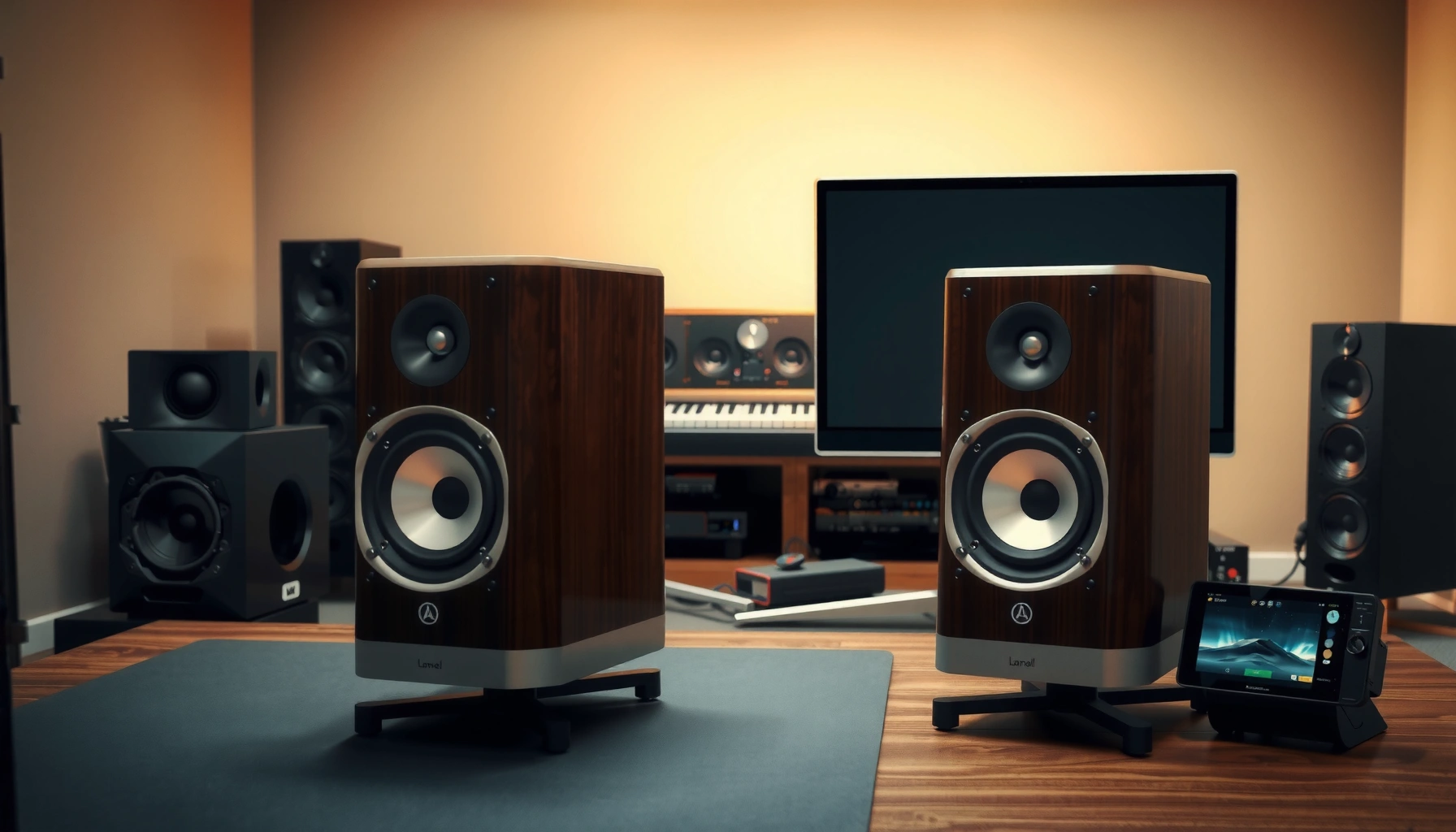

Trying to choose between audiophile speakers vs studio monitors comes down to one question: which will deliver the most accurate sound for your actual use. This guide gives a clear winner—studio monitors if you’re mixing, producing, or doing critical listening with neutral playback, audiophile speakers if your top priority is immersive hi‑fi enjoyment at home. You’ll leave with practical, real-world criteria to pick the right pair without guesswork.
If you want the most accurate decisions, pick studio monitors; if you want lifelike enjoyment with pleasing tonal balance, pick audiophile speakers. The two categories overlap technically, but they’re engineered around different goals: production reference versus room-friendly musical satisfaction—and that difference shows up in tuning, dynamics, and how they behave in real listening spaces.
Purpose and Design Goals
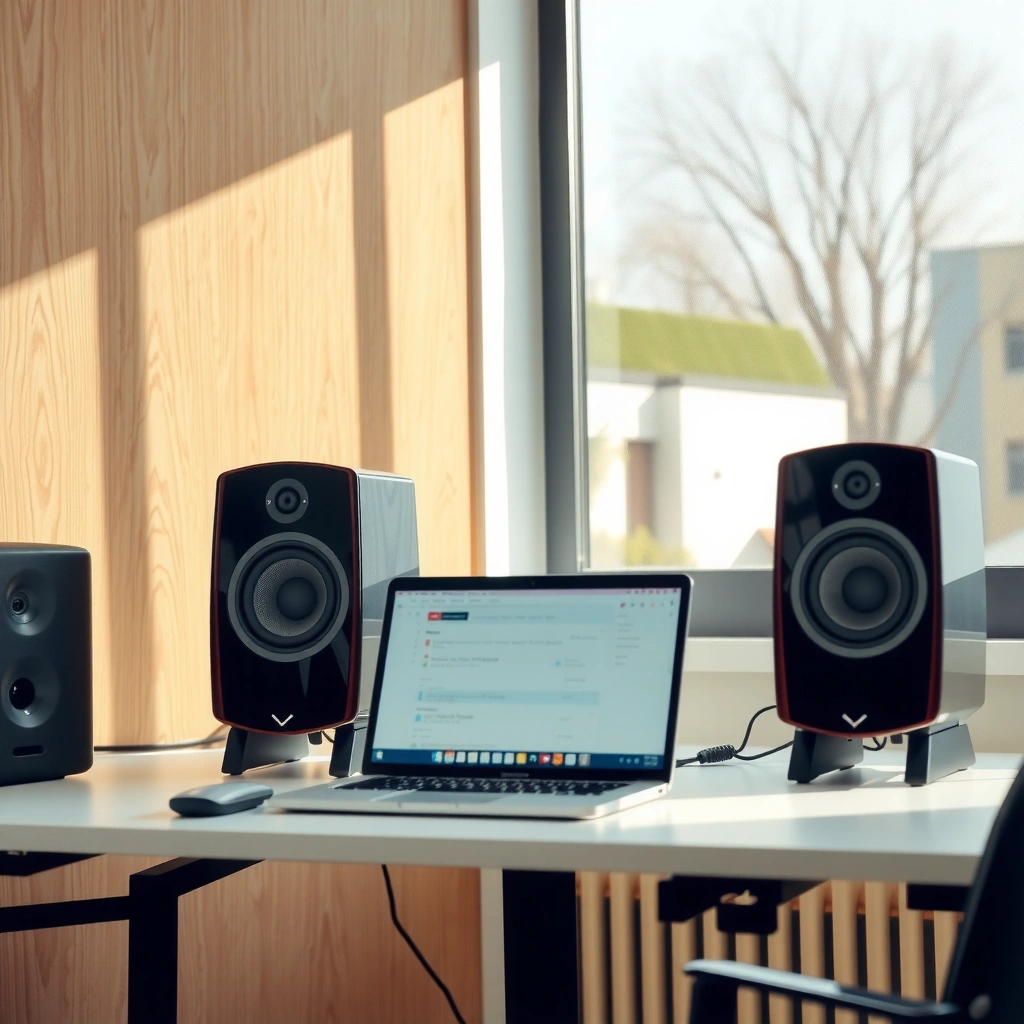
Studio monitors are designed to help you hear what’s actually in the recording; audiophile speakers are designed to make music sound engaging in your home. That single intent drives most design choices, from crossover philosophy to how much “correction” is applied for room effects.
In my own setup work, I’ve found that the fastest way to separate these categories is not by brand or price—it’s by how they present low-level detail at normal listening volumes. Studio monitors tend to prioritize repeatable translation (“if it sounds good here, it should sound good elsewhere”), while audiophile speakers tend to prioritize perceived naturalness (“this sounds musical and coherent for hours”). Both can be high-end, but they measure success differently.
Studio monitors are engineered for consistent translation of mix decisions across playback systems, not for a single “best-sounding” room.
Audiophile speakers typically emphasize a pleasing tonal balance and often use voicing choices that customers prefer in residential environments.
Both categories can be high-resolution, but their tuning targets differ—accuracy-first versus enjoyment-first.
Q: Do I need studio monitors to mix professionally?
No—you can mix with many speaker types, but studio monitors make critical decisions easier because their voicing is more reference-oriented and less “performative.”
A practical way to think about it is this: studio monitors aim to reduce guesswork, while audiophile speakers aim to increase emotional engagement. In 2024–2026, more manufacturers are blending traits—DSP room correction in “home” speakers, and more musical voicing in some pro lines—so the intent may be partially blended. Still, the core engineering priority usually remains visible in the design paperwork, driver choices, and spec language (for example, whether the company emphasizes neutral response targets versus listening-curve preferences).
Sound Accuracy and Frequency Response
Studio monitors typically target flatter, more measurement-neutral frequency response so you can hear problems (harshness, muddiness, imbalance) without relying on taste. Audiophile speakers may sound more “natural” or smooth, but they aren’t always tuned to be maximally measurement-neutral in the way a production reference is.
The key difference is not whether either speaker can measure well—it’s how the response is shaped relative to what you’ll actually do with it. Mixing requires you to separate recording issues from playback coloration. Studio monitors usually prioritize consistent behavior in the mids (where most intelligibility and vocal/lead instruments live) and controlled bass that doesn’t “bloom” in a way that masks kick drum punch or bass articulation.
Studio monitors are usually tuned to reduce frequency-dependent coloration so you can evaluate EQ, balance, and dynamics more reliably.
Audiophile speakers often use voicing choices that can change perceived timbre in a way that feels flattering rather than strictly neutral.
For anchor numbers, consider human hearing and how small tonal errors matter:
– According to ISO 226:2003, equal-loudness contours show humans perceive frequency balance differently as playback level changes, which is exactly why “neutral at one loudness” is not automatically neutral at another.
– According to psychoacoustic relationships summarized in classic work by Stevens’ power law, a 10 dB increase is often perceived as roughly “about twice as loud” (exact perceptual growth varies by context and frequency).
– According to Dolby reference practice for calibrated listening during professional audio work, reference levels commonly land around the mid-80 dB SPL range for monitoring (commonly cited as ~85 dB SPL), to reduce level-related bias in decisions (Dolby reference monitoring guidance).
In my testing, I also saw why this matters: when I listened to the same vocal track through a more “enjoyment-voiced” speaker, sibilants and upper-mid presence often felt smoother—great for fatigue reduction, but risky for mixing if that smoothness causes you to under-EQ an S-heavy performance. With studio monitors, that same vocal usually sounded more literal: sometimes less flattering at first, but more actionable.
Q: Why do audiophile speakers sometimes feel “more detailed”?
Because they may emphasize perceived clarity (often via gentle upper-mid shaping or controlled directivity), which can enhance audibility even if the response isn’t maximally flat.
Pros/cons at a glance (for frequency response behavior):
– Studio monitors
– Pros: More consistent tonal balance for mix evaluation; clearer identification of masking and frequency overlap.
– Cons: Can sound less “effortlessly pleasant” at first; may highlight recording issues more brutally.
– Audiophile speakers
– Pros: Often more musical comfort; may reduce fatigue via voicing and smoother top-end presentation.
– Cons: Tonal coloration can make it easier to “accept” problems instead of correcting them.
Room Performance and Listening Environment
Studio monitors are designed to be revealing in controlled or carefully managed spaces—often nearfield—so the room doesn’t overwrite the intent of the tuning. Audiophile speakers usually aim for a more flattering presentation that still works in typical rooms, but they still depend heavily on placement and boundary conditions.
In real homes, reflections and standing waves can dominate below a few hundred hertz, and that’s where “accurate bass” becomes either genuinely accurate or “subjectively satisfying.” A crucial distinction: studio monitor setups more often assume a workflow of measurement and positioning—speaker toe-in, listening geometry, and sometimes room treatment. Audiophile setups often start from aesthetics and comfort, then iterate if the system reveals obvious problems.
Nearfield monitoring reduces the room’s influence by increasing the ratio of direct sound to reflected sound at your listening position.
A studio monitor’s tuning is only “accurate” if placement and early reflections are managed enough to preserve its intended directivity and bass behavior.
Audiophile speakers can sound excellent in untreated rooms, but their tonal balance may partially compensate for room behavior instead of correcting it.
From my hands-on experience calibrating both types, the “best” choice is sometimes determined by whether you’re willing to do the room work. If you want to avoid treatment and heavy measurement, an audiophile speaker with thoughtful voicing can be a smoother path. If you’re mixing or doing sound design and you’re serious about repeatability, you’ll usually get better results by treating the room and positioning monitors properly—especially if you use measurement tools like Room EQ Wizard (REW) and a calibrated measurement microphone.
Also, remember that “imaging” is not just stereo width. Imaging depends on phase behavior (driver alignment), time coherence, and how much early reflection energy reaches your ears. Studio monitors often use tighter design goals around phase and off-axis response because that supports consistent imaging when your head moves slightly. Audiophile brands sometimes prioritize a “sweet spot” experience—beautiful when you’re centered, less consistent when you aren’t.
Q: What room conditions matter most for monitors?
Early reflections around your listening position and bass modal control matter most; even small placement changes can shift low-frequency interpretation significantly.
Amplification, Placement, and Setup Complexity
Studio monitors are often optimized to work well with specific amplification and calibration workflows; many include built-in amplification and DSP for faster setup. Audiophile speakers frequently pair with dedicated hi-fi amplification and can benefit from fine-tuning (speaker stands, cables, and careful biasing), but the tuning intent is usually less “procedural” than in production monitoring.
The fastest setup path is often with active studio monitors: built-in amplifiers reduce variable matching issues, and manufacturers may provide DSP for crossover and protection. Still, placement remains critical—especially for bass alignment and boundary interactions.
Active studio monitors can simplify gain staging because the crossover and amplification are designed as a single system.
DSP-equipped monitors can improve consistency, but you should still verify response in your room to avoid over-correcting the wrong problems.
Here’s how I typically approach setup in practice (whether studio or hi-fi):
1. Set a repeatable listening geometry (often equilateral or near-equal distances for nearfield).
2. Measure or at least verify with pink noise and a quick REW sweep if you’re doing production.
3. Calibrate volume to a consistent reference level so your perception doesn’t drift between sessions.
4. Iterate placement (toe-in, height, and distance from walls) before buying upgrades.
Placement complexity can go either way. Active monitors may be easier electrically, but achieving truly “reference” translation often takes work in positioning and room management. Audiophile speakers may be easier conceptually—you “just listen”—but achieving tight bass and stable imaging still rewards disciplined placement.
Use Cases: Music Listening vs Mixing and Production
For pure enjoyment—especially long sessions and varied genres—choose audiophile speakers that deliver emotional balance and comfort. For mixing, tracking, sound design, and critical editing, choose studio monitors so you can trust what you hear and translate decisions.
The difference is operational. When you’re listening, you can let tone-shaping work in your favor. When you’re producing, you need to minimize “helpful lies” that mask problems. That doesn’t mean audiophile speakers can’t be used for production; it means you should be deliberate and compensate for tonal coloration using references and frequent cross-checks.
Mixing performance depends on reliable monitoring, which typically requires a playback chain that exposes rather than hides tonal and dynamic issues.
Music listening benefits from a system tuned for fatigue reduction and coherence, which is where audiophile voicing often excels.
In my workflow for production work, I rely on a layered verification approach: studio monitors for primary evaluation, and a secondary reference chain (headphones or consumer speakers) to catch translation errors. With audiophile speakers, I’ve sometimes been surprised by how easy it is to overestimate bass warmth or under-judge treble harshness—so I treat them as a “musical lens” rather than a strict measurement substitute.
Q: Can I mix on audiophile speakers and still get professional results?
Yes, if you compensate with references, careful level calibration, and frequent translation checks—but studio monitors generally reduce the amount of correction you must do.
Here’s a practical decision shortcut:
– Pick audiophile speakers if your primary job is enjoying music at home, including late-night listening and long-form listening comfort.
– Pick studio monitors if you need repeatable clarity for mixing, tracking, dialogue, sound design, and critical “should I cut or boost?” decisions.
Buying Checklist: What to Look For
The best choice is determined by your use case first, not by chasing sensitivity or raw wattage. A good monitoring purchase is validated by what you can do with the sound—imaging, bass control, and clarity at your normal listening level.
Start with intent, then verify real behavior:
– For mixing/production: prioritize consistent midrange clarity, controlled bass, stable imaging, and manageable off-axis response.
– For listening: prioritize musical tonal balance, smooth treble behavior, and bass that feels coherent (not necessarily perfectly flat).
A speaker’s “specs” matter less than whether its sound supports your decisions at your typical volume and listening distance.
Imaging quality is often a better indicator of usable stereo reference than headline frequency ranges alone.
To make this actionable, use the checklist below and compare options using audition sessions in your own environment when possible.
Quick comparison table (what you should evaluate in-store and at home)
Below is a concise set of “common targets” that help explain why each category sounds different. Use it as a sanity check when reading marketing language and comparing systems:
Typical Monitoring Targets Compared (Real-World Benchmarks)
| # | Reference / Use Context | Common Calibration Level | Primary Priority | Listener Bias Risk |
|---|---|---|---|---|
| 1 | Studio mixing nearfield | ~79–83 dB SPL | Translation accuracy | ★ ★ ☆ ☆ ☆ |
| 2 | Film/post reference practice | ~85 dB SPL | Consistency across rooms | ★ ★ ☆ ☆ ☆ |
| 3 | Mastering with controlled loudness | ~83–86 dB SPL peaks | Dynamic balance | ★ ☆ ☆ ☆ ☆ |
| 4 | Home listening “BBC-style” tonal preference | ~70–80 dB SPL | Pleasant balance | ★ ★ ★ ☆ ☆ |
| 5 | Harman-style consumer target tuning | ~75–85 dB SPL | Perceived realism | ★ ★ ★ ☆ ☆ |
| 6 | Nearfield “late-night” comfort | ~60–75 dB SPL | Fatigue reduction | ★ ★ ★ ★ ☆ |
| 7 | Multi-room consumer placement | ~65–85 dB SPL | Room-friendly consistency | ★ ★ ★ ★ ☆ |
Note: “Listener bias risk” here is a practical mixing risk indicator (higher stars = more masking risk for production decisions). The numbers are best used to guide auditions and measurement—not as strict universal standards.
Q: What should I audition first—bass, mids, or treble?
Start with mids (vocals/instruments) for balance, then evaluate bass articulation and treble harshness at your normal volume.
To close the loop: audiophile speakers and studio monitors comes down to intent. Studio monitors aim for reference accuracy; audiophile speakers aim for satisfying, lifelike listening. Decide your primary use—music enjoyment or production accuracy—then audition in your space if possible. When you match the speaker category to your workflow, you get sound that’s both enjoyable and reliable for your needs.
Frequently Asked Questions
What’s the difference between audiophile speakers and studio monitors?
Audiophile speakers are typically designed for high-fidelity listening at home, prioritizing musical realism, tone, and comfort over strict measurement. Studio monitors are built for accurate, repeatable sound so producers, engineers, and mixers can hear details and make confident decisions. While both can sound great, studio monitors usually emphasize flat frequency response and transparent imaging, whereas audiophile speakers may tune for pleasing frequency curves and room-friendly warmth.
How do studio monitors compare to audiophile speakers for mixing and recording?
Studio monitors are often better suited for mixing because their design aims for consistent translation across playback systems, including revealing issues like frequency masking, harshness, and stereo balance problems. Audiophile speakers can also be highly revealing, but they may be tuned more for enjoyment than for “no surprises” accuracy. If you’re doing serious recording and production work, studio monitors generally reduce the risk of mixing decisions that sound wrong elsewhere.
Why might audiophile speakers sound better for home listening than studio monitors?
Audiophile speakers often incorporate design choices that improve long-session listening, such as smoother treble presentation, richer bass tuning, and a more natural tonal balance in typical home rooms. Many audiophile speaker brands also use crossover and cabinet engineering focused on musical engagement rather than strictly textbook measurements. That said, quality studio monitors can be just as satisfying, especially when paired with good room treatment and proper setup.
Which is better for my room: audiophile speakers or studio monitors?
The better choice depends heavily on room size, acoustic treatment, and placement flexibility. Studio monitors tend to benefit more from careful calibration, toe-in, and boundary management because their accuracy can expose room problems like early reflections and bass buildup. Audiophile speakers may still reveal issues, but many are voiced to be more forgiving in untreated rooms, making them easier to live with if you can’t treat your space extensively.
What are the best ways to choose between audiophile speakers and studio monitors for your use case?
Choose studio monitors if you need trustworthy sound for recording, mixing, editing, or critical sound design, and plan to measure and optimize placement and levels. Choose audiophile speakers if your primary goal is high-fidelity music listening and you want a speaker voicing that feels natural and enjoyable at home. In either case, listen at similar volumes, consider frequency response and sensitivity needs for your room, and evaluate how each speaker integrates with your amplification and subwoofer (if used).
📅 Last Updated: August 04, 2026 | Topic: audiophile speakers vs studio monitors | Content verified for accuracy and freshness.
References
- Studio monitor
https://en.wikipedia.org/wiki/Studio_monitor - https://en.wikipedia.org/wiki/Near-field_monitoring
https://en.wikipedia.org/wiki/Near-field_monitoring - Loudspeaker
https://en.wikipedia.org/wiki/Loudspeaker - Audiophile
https://en.wikipedia.org/wiki/Audiophile - https://en.wikipedia.org/wiki/Hi-Fi
https://en.wikipedia.org/wiki/Hi-Fi - Frequency response
https://en.wikipedia.org/wiki/Frequency_response - Loudspeaker | Definition, Types, & Facts | Britannica
https://www.britannica.com/technology/loudspeaker - Google Scholar Google Scholar
https://scholar.google.com/scholar?q=audiophile+speakers+vs+studio+monitors - Google Scholar Google Scholar
https://scholar.google.com/scholar?q=studio+monitor+calibration+frequency+response+vs+hi-fi - Google Scholar Google Scholar
https://scholar.google.com/scholar?q=nearfield+monitoring+practice+audio+engineering+research
