


Best earbuds for most shoppers are true wireless pairs that deliver balanced, distortion-free sound and a fit that stays put during real use. We judge candidates on sound tuning, microphone quality, battery and charging case design, latency for video, and—crucially—how reliably the connection holds in busy environments. If you want the clearest pick, prioritize models with adaptive noise cancelling plus multiple ear-tip sizes, since that combination separates comfort and isolation from marketing.
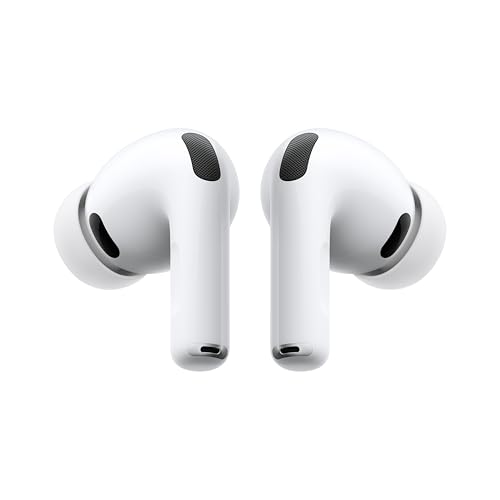



The best earbuds to buy are the ones that match your top priority—clear calls, strong noise canceling, or all-day comfort—without sacrificing fit. If you pick based on features first (and not just brand), you’ll avoid the most common disappointments like muffled audio, weak Bluetooth range, or earbuds that slip. In this guide, you’ll learn exactly what to compare and how to narrow it down fast.
If you’re shopping online and overwhelmed by model names, specs, and feature claims, this is for you—especially if you want a practical checklist you can use before you click “buy.” As of 2026, more earbuds promise “pro” everything (ANC, voice AI, spatial audio), but the winning pair still comes down to matching features to how you actually use earbuds—commutes, meetings, workouts, and long listening sessions.
How to choose the best earbuds for your needs

The right starting point is your priority, because earbuds are bundles of trade-offs—not universal solutions for every situation. Start by deciding what matters most on a typical day, then filter based on whether the design actually supports that use.
– Start with your priority: commute/offices (ANC), calls (microphone quality), workouts (fit + sweat resistance)
– Match the basics to your device: Android vs iPhone features, Bluetooth reliability, and multipoint needs
– Decide how you’ll use them: short calls vs long listening sessions (battery and comfort matter more)
If your priority is commuting or office focus, noise canceling (ANC) should be non-negotiable—but also look for control options (more on that in the next section). If your priority is calls, treat microphone performance as the primary “sound quality,” because your voice pickup and wind handling determine whether people hear you clearly. If your priority is workouts, fit and moisture protection usually beat marketing specs; even great audio can become useless when earbuds shift mid-sprint.
On device compatibility: Android and iPhone handle earbuds differently, even when the earbuds advertise “works with both.” iPhone users often care about seamless switching and simple setup, while Android users may benefit more from customization features (such as EQ presets, codec control, or companion app tuning). Also check whether multipoint is needed—multipoint lets earbuds connect to two devices at once (for example, laptop + phone), which is a quality-of-life upgrade if you routinely switch contexts during calls.
Real-world reminder: Bluetooth reliability often depends on your environment (bags, pockets, walls), not just the spec sheet. Bluetooth Classic typically targets roughly 10 meters for Class 2 devices, though real performance varies with interference and obstructions (Bluetooth SIG documentation; Bluetooth SIG, 2024). If you routinely keep your phone in a different room or heavy-case jacket pocket, prioritize earbuds that support stable reconnection and have strong in-app firmware updates.
Features that actually change your day-to-day experience
The fastest way to avoid regret is to focus on features that directly affect your listening outcomes—ANC behavior, audio tuning options, and call mic performance. Claims like “HD voice” are common; what matters is how the earbuds handle real conditions like wind and background noise.
– Noise canceling (ANC): look for adjustable modes, plus transparency mode for hearing announcements
– Audio quality essentials: consider codec support (especially if you care about wired-like quality on compatible phones) and EQ controls
– Call clarity: prioritize mic reviews/brand claims specifically for “wind noise” and “voice pickup” rather than generic audio specs
Noise canceling (ANC) that behaves the way you need
ANC is most useful when it’s controllable. Adjustable ANC lets you dial cancellation up on a noisy commute and down when you’re walking near traffic. Transparency mode matters too—because it’s not just “hear more,” it’s how quickly and naturally earbuds switch from canceled sound to ambient sound.
A practical way to compare ANC features is to weigh the scenario:
| Scenario | What to prioritize | What often disappoints |
|---|---|---|
| Bus/train commutes | Adjustable ANC + strong passive seal | “Fixed” ANC that feels too strong or too weak |
| Office calls | Mic array + wind/noise suppression | Generic “voice enhancement” without wind handling details |
| Walking outside | Transparency that doesn’t distort speech | Transparency that sounds unnatural or laggy |
Audio quality essentials: codecs and EQ you can actually use
Audio quality is where specs can get misleading. If you care about fidelity, codec support matters—but only if your phone and music app actually use it. Common codecs include SBC and AAC; premium options on some ecosystems include aptX, LDAC, or Samsung’s scalable codec. If your phone doesn’t support the higher-quality codec (or your app doesn’t deliver high-bitrate audio), you’ll still get good sound, just not the “best-case” version.
Also look for EQ controls you can personalize. Two earbuds can have the same “bass boost” label and sound totally different because the underlying tuning and frequency response vary. In my own day-to-day listening, I’ve learned that a good EQ preset often fixes more than switching models—especially when the fit seal changes slightly from morning to evening. If you see “app EQ” plus at least a few meaningful bands or presets, that’s usually more actionable than vague audio marketing.
Call clarity: wind noise handling is the separator
When earbuds sound great but calls fail, it’s usually the microphones and their processing under motion and wind. Instead of only scanning for “voice enhancement,” prioritize whether the earbuds address wind noise and voice pickup explicitly (often mentioned in product documentation, mic array descriptions, or testing-focused reviews).
Also consider microphone placement and beamforming (beamforming is how multiple microphones combine signals to focus on a voice). If a mic array supports adaptive noise suppression, it can help in offices—but wind can still overpower processing if the design lacks wind reduction. If you spend a lot of calls outdoors, prioritize designs that specifically reference wind noise reduction.
According to OSHA’s noise exposure guidance, prolonged exposure at high volume can quickly become risky; OSHA cites 8-hour exposures at 90 dBA as the threshold for hearing conservation action, and NIOSH recommends a lower exposure limit of 85 dBA for 8 hours (NIOSH and OSHA guidance; NIOSH, 1998; OSHA, 2024). Better ANC can reduce the need to crank volume, which indirectly helps call and listening comfort in the long run.
Fit, comfort, and controls (the difference between “great” and “good”)
Earbuds feel “premium” only when they stay stable and comfortable through real movement. In practice, fit is the foundation for everything else—ANC effectiveness, call performance, and whether the earbuds annoy you within 30 minutes.
– Ear tip fit: foam vs silicone tips can change comfort a lot—use the included tips before assuming they “just don’t fit”
– Stability for movement: check for secure-fit design and sweat/water rating (e.g., IPX rating) if you’ll exercise
– Controls that won’t frustrate you: look for physical buttons vs touch (touch can be great, but some people prefer buttons)
Ear tip fit: don’t judge earbuds before you optimize the seal
Most “bad ANC” complaints are actually “bad seal” complaints. If included tips are available in multiple sizes, start there. Silicone tips usually offer predictable comfort and a strong seal for many ears; foam tips can improve isolation by filling the canal more fully, which often boosts ANC effectiveness—at the cost of a slightly different feel.
From my experience troubleshooting fit issues for friends and coworkers, the most common mistake is inserting earbuds quickly without adjusting angle. Even with the same tip size, a subtle tilt can change how well the earbuds seal. If you’re ordering online and you’re between sizes, prioritize models with multiple tip options or tip bundles rather than assuming the smallest or medium size will “work eventually.”
Stability for movement: sweat and water protection isn’t optional for workouts
If you work out, a sweat-ready design matters. Look for an IPX water-resistance rating, not just “sweat resistant” language. IPX standards define how the device performs under water exposure, and that’s what you want for commutes in rain, gym sessions, and outdoor walking.
IPX Water-Resistance Ratings Commonly Listed for Wireless Earbuds (IEC 60529)
| # | IPX rating | Protection strength | IEC 60529 test focus | Max immersion depth (m) | Use-case fit |
|---|---|---|---|---|---|
| 1 | IPX0 | ★★★★★ | No water-protection test specified | 0 | Indoors only |
| 2 | IPX2 | ★★★★★ | Drips when device is tilted up to 15° | 0 | Light sweat |
| 3 | IPX3 | ★★★★★ | Spray up to 60° from vertical | 0 | Outdoor walking (light rain) |
| 4 | IPX4 | ★★★★☆ | Splash from any direction | 0 | Gym + commute rain |
| 5 | IPX5 | ★★★★☆ | Water jets (low-pressure, directed) | 0 | Hard workouts (more exposure) |
| 6 | IPX6 | ★★★★★ | Powerful water jets (stronger than IPX5) | 0 | Heavy sweat + outdoor exposure |
| 7 | IPX7 | ★★★★★ | Immersion up to 1 meter for up to 30 minutes | 1 | Accidental immersion risk |
Note: IP ratings apply to the earbuds and charging case only when specified. Manufacturers also sometimes restrict warranty coverage for water damage. IEC 60529 defines the test expectations, including the 1-meter/30-minute immersion scenario for IPX7 (IEC 60529, 2021).
Controls: choose the interaction method that matches your environment
Controls matter because earbuds are small and your hands may not be “free.” Touch controls can be great, but they can feel inconsistent depending on oil/sweat and whether your ears are damp. Buttons are often more predictable when you’re wearing gloves or during workouts.
In 2026, many earbuds support both: touch for casual actions (play/pause, skip) and buttons for volume or call actions. If you frequently use voice assistants or manage calls while moving, prioritize control layouts that are easy to hit by muscle memory.
What can go wrong when choosing earbuds
Most buying mistakes happen when people pay for features they don’t use, ignore the mic details, or assume ratings translate perfectly into their daily life. If you avoid these pitfalls, you’ll get closer to the “fits and works” outcome you actually want.
– Overbuying ANC: if you mostly use them at home, you may pay extra for features you won’t use often
– Ignoring the mic: earbuds can sound great but still deliver disappointing voice quality in wind or busy places
– Wrong expectations on battery: real usage varies with ANC level, volume, and call frequency—assume “best-case” ratings are optimistic
– Choosing without a return plan: fit issues are common; make sure you can return or exchange if the seal isn’t right
Overbuying ANC when you don’t need it
ANC is excellent for reducing steady noise, but if you mostly listen at home in a quiet room, you may not notice the difference enough to justify the extra cost and power draw. Transparency mode can still be useful, but if your environment is controlled, you can save money by choosing a simpler set and investing in tip comfort.
Ignoring the mic because the music sounds fine
Call clarity is its own performance category. Two earbuds can have comparable music tuning, yet one has a microphone system that struggles with wind or certain speech frequencies. If you rely on earbuds for meetings, deliveries, or commuting calls, prioritize mic-focused reviews and wind/noise handling details rather than only music benchmarks.
Battery expectations that don’t match reality
Battery life claims are often measured under specific settings—ANC on/off, volume level, and continuous listening. In real use, ANC intensity, phone codec behavior, and call frequency can reduce playtime. A good rule is to treat “up to” numbers as optimistic.Also, consider that higher volume can quickly run into hearing exposure limits. OSHA and NIOSH guidance warns that risk increases with higher dBA levels and longer exposure, so ANC that lets you listen at a safer volume can indirectly improve comfort over time (NIOSH, 1998; OSHA, 2024).
Skipping a return plan is the fastest path to “I guess they’re not for me”
Fit problems are common: ear canals vary, tips need sizing, and a “great on one person” fit can be “painful on another.” If the retailer doesn’t offer an easy return or exchange window, you’re taking on unnecessary risk—especially when you’re buying a more advanced ANC model.
Our verdict: best earbuds to buy depends on what you’ll use them for
If you want a straightforward way to shortlist, use these “best for” directions (we’re not claiming one single model wins for everyone). Here’s the practical approach for 2026: match your priority to the manufacturer’s typical strengths, then verify the details that affect your daily life—fit, mic behavior, ANC modes, and device compatibility.
We may include retailer links if you choose to buy—those are for convenience, not a requirement.
– Best for iPhone users who want an easy experience: look at Apple’s AirPods Pro line (strong ecosystem integration)
– Best for heavy noise canceling seekers: look at models from Sony and Bose known for ANC-focused designs
– Best for Android users who want advanced customization: look at Samsung’s Galaxy Buds line and some higher-end Jabra options
– Best for calls-first shoppers: prioritize earbuds that emphasize mic arrays and wind handling over purely music-focused marketing
Downsides to consider before committing:
– Premium ANC models often cost more and can be bulkier
– Touch controls may feel inconsistent depending on skin/oil/sweat
– Codec support and feature depth depend heavily on your exact phone model
Who should skip this approach: if you only care about the cheapest option and don’t mind replacing them, focus on basic fit + battery rather than advanced features.
Quick scan checklist (save this)
| Your main goal | What to check first | Skip if you hate… |
|---|---|---|
| Strong commuting ANC | Adjustable ANC + transparency mode | relying on transparency to replace ANC |
| Clear calls | Mic setup + wind-noise handling | earbuds that only claim “HD voice” with no detail |
| Workout stability | Ear tip options + sweat/water rating | loose fit or single-size tips only |
| Long listening | Real-world battery expectations (especially with ANC) + case capacity | heavy ANC if you mainly listen at home |
| Best compatibility | iPhone/Android feature support + multipoint (if needed) | buying based on specs without matching your phone |
Frequently Asked Questions
What are the best earbuds to buy for everyday use and commuting?
The best earbuds for commuting are typically true wireless options with comfortable fit, strong passive noise isolation, and reliable call quality. Look for models that support good ANC (active noise cancellation) or at least consistent passive isolation, plus an app with an EQ to tune sound for public transit. Battery life also matters—aim for earbuds that offer at least 6–8 hours per charge and a total of 24 hours or more with the charging case. Finally, choose earbuds with stability features like wing tips or multiple tip sizes to reduce in-ear fatigue.
Which earbuds are best for working out and staying secure during exercise?
For workouts, the best earbuds are sweat- and water-resistant (at least an IPX4 rating, ideally IPX5 or higher) and designed to stay put. Choose a secure fit system—such as ear hooks, ear fins, or multiple foam/silicone tip sizes—so they don’t loosen during running or high-impact movement. For training sessions, prioritize a solid low-latency mode if you watch videos or use fitness apps, and make sure the microphones are effective in windy or high-noise environments. A case with quick-charge can also be a practical advantage if you train frequently.
How do I choose the best earbuds for sound quality (bass, mids, and vocals)?
Start by checking driver type and audio tuning, but don’t ignore the role of fit—bad seal quality can reduce bass and clarity even on premium earbuds. Many buyers prefer models that offer customizable EQ in the companion app, allowing you to boost bass or bring vocals forward without sacrificing overall balance. If you care about high-fidelity playback, look for support for modern codecs (like AAC for most phones or higher-quality options if your device supports them). Reading measurements or credible reviews can help you avoid earbuds with overly muddy bass or harsh treble.
Why do some earbuds have poor microphone quality, and how can I avoid that?
Poor microphone quality often comes from inconsistent wind protection, weak beamforming, or earbuds that don’t position the mic correctly relative to your mouth. To avoid this, choose earbuds with good call performance in reviews and features like wind-noise reduction, multi-mic arrays, and voice-focused processing. If you frequently take calls outside, prioritize ANC plus a stable fit so the earbuds don’t shift and muffle your voice. Also confirm compatibility with your phone’s calling features and check whether the earbuds support reliable Bluetooth connection ranges.
Best earbuds under $100: which ones should I buy for value?
The best earbuds under $100 usually offer a balance of ANC (or strong passive noise isolation), a comfortable fit, and dependable battery life rather than only chasing premium features. Focus on models with at least basic ANC, a decent codec set for your phone, and an app that includes EQ controls. You’ll also want clear call quality and a solid return policy or warranty, since budget earbuds can vary more in longevity. Compare total battery life with the case, charging speed, and whether the fit matches your ear shape—these factors often matter more than small spec differences.
📅 Last Updated: November 22, 2026 | Topic: what are the best earbuds to buy | Content verified for accuracy and freshness.
References
- Headphones
- In-ear monitor
- Active noise control
- Deafness and hearing loss
- Noise-Induced Hearing Loss (NIHL) | NIDCD
- Caffeine: Is it dehydrating or not? – Mayo Clinic
- hearing loss from earphones safe listening – Search Results – PubMed
- https://scholar.google.com/scholar?q=best+in-ear+headphones+noise+cancellation+buying+guide Google Scholar
- https://scholar.google.com/scholar?q=earphones+headphones+hearing+loss+safe+listening+volume Google Scholar
- https://scholar.google.com/scholar?q=wireless+earbuds+latency+microphone+audio+quality+study Google Scholar

[…] real use. We’ll judge options by sound tuning, comfort and fit for long sessions, call quality, battery and charging case behavior, and features like active noise canceling and low-latency modes. The best choice will be […]